
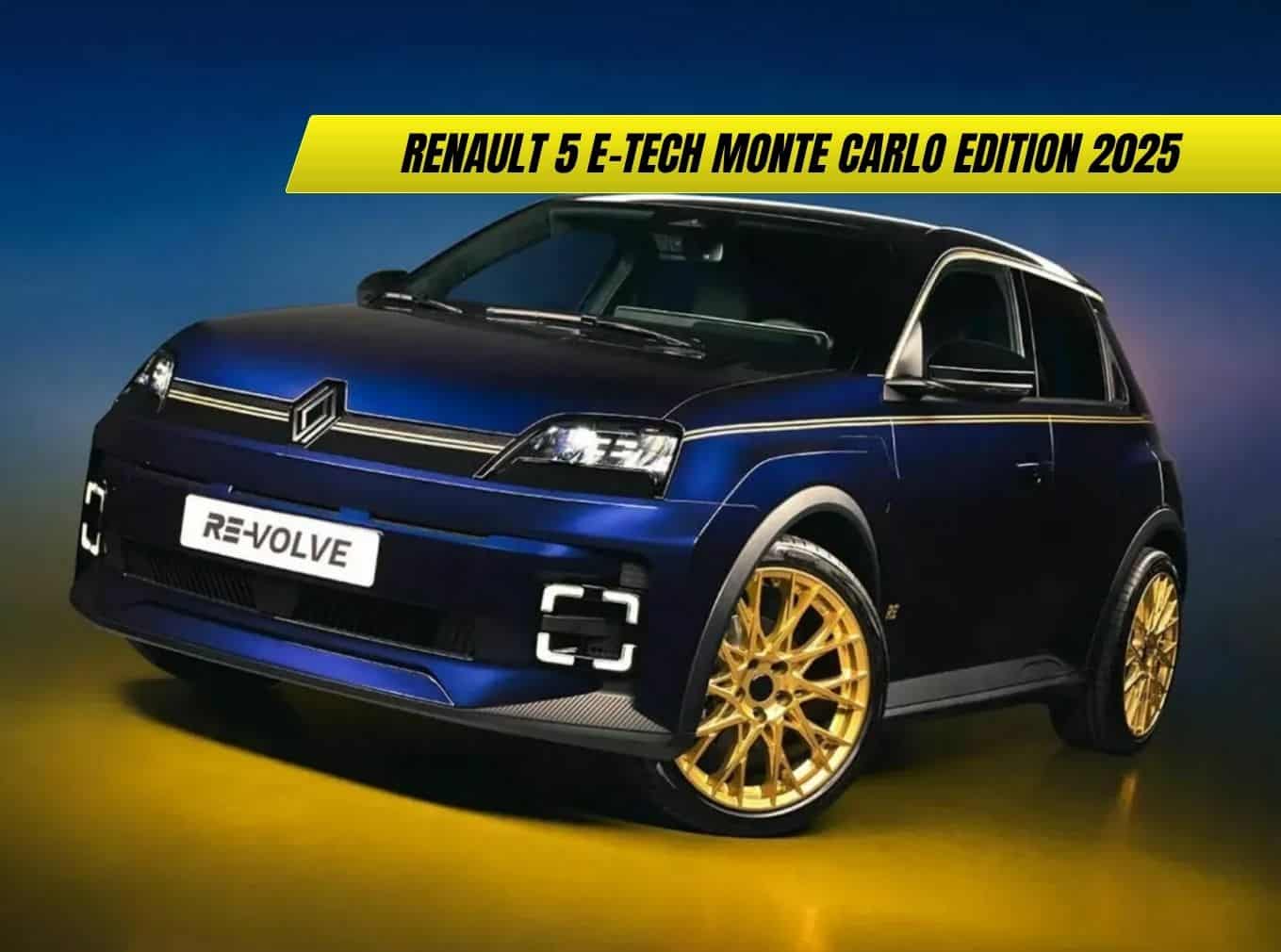
The ghosts of hot hatch legends past have returned to haunt us – but not in the way you might expect. A Dutch Renault dealer has created the most beautifully pointless tribute car we’ve seen in years: the Renault 5 E-Tech Monte Carlo Edition, a limited-run homage to the legendary Clio Williams that manages to capture every visual cue while missing the entire point.
According to our analysis at AutoHit, this represents everything fascinating and frustrating about modern automotive nostalgia. We’ve examined this curious creation closely, and our verdict is conflicted – it’s simultaneously gorgeous and disappointing, a perfect recreation of 1990s hot hatch aesthetics wrapped around thoroughly modern electric mediocrity.
The Monte Carlo Edition showcases the challenge facing manufacturers trying to bridge automotive heritage with electric reality. While the Clio Williams epitomised raw performance and driving purity, this electric tribute prioritises style over substance. It’s a beautifully executed love letter to an era when hot hatches meant business, delivered in a package that wouldn’t threaten a modern diesel supermini.
Just 25 examples of this Clio Williams tribute will be built, exclusively for the Netherlands market. Price: €37,995 – nearly €8,000 more than the standard R5 it’s based on, for a car that looks sensational but drives like a city runabout.
Key Highlights
• Authentic Williams Aesthetic: Midnight Blue paint with contrasting black roof and signature gold details throughout • Limited Production: Just 25 examples exclusively for Dutch market, making it instantly collectible • Premium Interior Treatment: Black leather and Alcantara upholstery with gold stitching and commemorative plaque • Period-Correct Wheels: Bespoke 19-inch gold alloy wheels echoing the original Speedline designs • Dealer-Led Project: Created by Zeeuw & Zeeuw in partnership with Re-Volve design specialist • Underwhelming Performance: Base 121hp motor with 9-second 0-62mph time fails to match Williams legacy
The Legend That Started It All
To understand why the Monte Carlo Edition exists, we need to revisit the automotive icon that inspired it. The Clio Williams was the first hot hatch to put the legendary Peugeot 205 GTI in the shade. Launched in 1993 as an homage to the Williams Formula 1 team, it represented everything a hot hatch should be: compact, powerful, and utterly engaging.
The original Williams packed a naturally-aspirated 2.0-litre four-cylinder producing 150hp – modest by today’s standards but devastating in a car weighing just 1,025kg. Sold with the compelling marketing tinsel of an F1 team association, the Williams was actually an homologation special in the familiar mould. Those iconic gold Speedline wheels, the distinctive Sports Blue paint, and that purposeful stance made it instantly recognisable.
For a car to be an icon it must have its own signature, and sound is often one of the elements that makes up that unique scrawl. The Williams is no exception. The engine’s presence never fades, with a harmonic in the mid-range that sends a fizz through the shell and the seat, and an under-bonnet chuckle on the overrun that reinforced the notion that this was a tiny car with a mightily powerful engine.
The Reinterpretation Challenge
Fast-forward three decades, and we have this curious homage. Dutch dealer Zeeuw & Zeeuw worked with Re-Volte to create a special edition EV. The Renault 5 Monte Carlo Edition wears a livery inspired by the iconic Clio Williams. Production is limited to just 25 units, all exclusively available in the Netherlands.
The visual execution is flawless. This electric R5 is finished in Midnight Blue with a contrasting black roof, a color combination already seen in Renault’s standard configurator. What sets the Monte Carlo Edition apart is a distinctive gold livery that runs across the grille, sides, and rear hatch, echoing the gold accents of its ’90s ancestor.
The attention to detail extends to every surface. A gold pinstripe runs along the grille, flanks, roof arches, and tailgate, with matching logos at the base of the front wings. The rear pillars are badged “Monte Carlo” in – naturally – gold lettering. It rides on bespoke 19-inch gold alloy wheels, adding a stronger visual link to its rally-inspired roots.
Interior: Nostalgia Done Right
Inside, the special R5 gets black leather and Alcantara upholstery with gold stitching, alongside a commemorative plaque on the center console. The standard bucket seats already carry a retro-inspired design, but here the familiar blue “W” emblem from the Clio Williams is replaced with a gold “5”, bringing the tribute full circle.
The cabin treatment demonstrates how effective visual homages can be when executed properly. While the technology is thoroughly modern – 10.1-inch infotainment screen, digital instruments, Google-based connectivity – the aesthetic language speaks directly to Williams enthusiasts. The gold stitching and commemorative details create genuine emotional connection without feeling gimmicky.
This represents the Monte Carlo Edition at its best: faithful to the original’s visual language while embracing modern convenience and usability. It’s a masterclass in automotive interior design that honours heritage without being enslaved by it.
The Performance Problem
Here’s where admiration turns to disappointment. Surprisingly, it is not even based on the more potent version of the R5 with 148 hp that would closely match the 145 hp of the naturally-aspirated 2.0-liter engine found in the original Clio Williams. Instead, it uses the 121 hp electric motor paired with a 40 kWh battery, offering up to 309 km (192 miles) of WLTP range.
Renault says this setup allows for a 0–100 km/h (0–62 mph) time of 9 seconds, with a top speed of 150 km/h (93 mph). Performance like this doesn’t live up to the legacy of the Williams badge. For context, the original Williams could achieve 0-62mph in around 7.5 seconds and reach 137mph – figures that remain respectable today.
The Monte Carlo Edition’s 9-second sprint time places it firmly in city car territory, considerably slower than a modern diesel Clio and barely quicker than the original R5 GTL from the 1970s. It’s the automotive equivalent of wearing Lewis Hamilton’s race suit while driving a mobility scooter.
Missing the Point Entirely?
This performance deficit highlights the fundamental challenge of creating electric tributes to ICE legends. The original Williams succeeded because it was genuinely fast, not just pretty. While the Monte Carlo Edition captures every visual element perfectly, it completely abandons the performance philosophy that made the Williams special.
From a UK perspective, this raises interesting questions about automotive heritage in the electric age. British buyers have always appreciated cars that combined style with substance – the Williams succeeded here precisely because it looked purposeful and delivered on that promise. The Monte Carlo Edition offers the former without the latter.
Market Context and Pricing
For those willing to trade performance for exclusivity and nostalgic flair, the Renault 5 Monte Carlo Edition is priced at €37,995. That’s about €8,000 more than the standard R5 E-Tech Urban Range Techno trim it’s based on, which starts at €29,990 in the Dutch market.
This pricing puts the Monte Carlo Edition in peculiar territory. At nearly €38,000, it costs more than many genuinely quick electric cars while offering performance that wouldn’t embarrass a Toyota Yaris. The premium pays entirely for exclusivity and visual appeal – a proposition that might work for collectors but struggles to justify itself rationally.
In UK context, this pricing would translate to roughly £32,000 – considerably more than the standard R5’s £22,995 starting price. That’s serious money for what amounts to a very pretty city car with gold wheels.
The Broader Electric Tribute Trend
The Monte Carlo Edition represents a growing trend of electric vehicles attempting to channel ICE legends. Similar projects include electric Mini tributes, Tesla Model S “Shooting Brake” conversions, and various Porsche 911 electrification attempts. Most share the Monte Carlo’s fundamental problem: they capture the aesthetics while abandoning the driving experience.
This raises philosophical questions about automotive heritage. Is visual homage sufficient, or does authentic tribute require performance parity? The Monte Carlo Edition suggests the former approach – prioritising emotional connection over objective capability.
For UK enthusiasts, this trend feels particularly relevant. British buyers have historically valued driving dynamics alongside visual appeal, making pure aesthetic tributes harder to justify. The success of cars like the modern Mini and Fiat 500 demonstrates that retro styling can work, but both maintained at least adequate performance levels.
UK Market Implications
While the Monte Carlo Edition remains Netherlands-exclusive, its existence highlights opportunities for similar projects in the UK market. British enthusiasm for automotive heritage runs deep, and the success of limited-edition models suggests appetite for well-executed tributes.
However, UK buyers tend to be more demanding about value for money. A £32,000 city car with 9-second acceleration would face sceptical reception, regardless of its visual appeal. British market success would likely require either more compelling performance or significantly lower pricing.
The timing is interesting, given Renault’s renewed focus on the UK market with the standard R5. The car has won numerous awards including European Car of the Year, demonstrating that modern electric vehicles can successfully channel heritage appeal. A UK-specific tribute edition might work if it addressed the performance shortcomings.
| Specification | Monte Carlo Edition | Standard R5 E-Tech 120 | Original Clio Williams | Our Take |
|---|---|---|---|---|
| Power | 121hp | 121hp | 150hp | Electric version lacks performance heritage |
| 0-62mph | 9.0 seconds | 9.0 seconds | 7.5 seconds | Slower than the 30-year-old original |
| Top Speed | 93mph | 93mph | 137mph | Significant deficit in maximum performance |
| Weight | ~1,500kg | ~1,500kg | 1,025kg | Modern weight penalty obvious |
| Price | €37,995 | €29,990 | £15,000 (1993) | Expensive for the performance offered |
| Production | 25 units | Unlimited | 12,100 total | Genuine rarity vs. mass market |
The Collector Car Perspective
Despite performance limitations, the Monte Carlo Edition possesses genuine collector appeal. Limited to 25 examples and beautifully executed, it captures a specific moment in automotive history when electric vehicles first attempted to channel ICE legends.
Future collectibility seems assured, though for unexpected reasons. Rather than being remembered as a great driver’s car, the Monte Carlo Edition will likely be valued as an early example of electric nostalgia – a curious artifact from the transitional period between ICE and EV dominance.
For collectors, the visual authenticity and extreme rarity compensate for performance limitations. This isn’t a car you’d buy for track days or spirited driving – it’s automotive jewellery that happens to be road-legal.
Frequently Asked Questions
Will the Monte Carlo Edition ever be available in the UK? This specific model is exclusively for the Netherlands market, with no indication that Zeeuw & Zeeuw plans expansion. However, the success of retro-themed limited editions in the UK suggests a similar project from UK dealers could work. Renault UK would need to approve any such initiative, and demand would need to justify the development costs.
How does it compare to driving the original Clio Williams? There’s simply no comparison in terms of performance or driving character. The original Williams was genuinely fast and engaging, with that distinctive naturally-aspirated soundtrack and mechanical precision. The Monte Carlo Edition is quiet, smooth, and thoroughly unremarkable to drive – it’s a visual tribute rather than a dynamic one.
Is €38,000 reasonable for what you get? From a rational perspective, absolutely not. You’re paying €8,000 extra over the standard R5 for paint, wheels, and interior trim – no performance enhancement whatsoever. However, for collectors seeking automotive jewelry or Williams enthusiasts wanting something unique, the exclusivity might justify the premium.
What about reliability and running costs compared to the original Williams? The electric powertrain should prove far more reliable than the original’s naturally-aspirated 2.0-litre engine, which could suffer from timing belt and head gasket issues. Running costs will be dramatically lower – electricity vs. premium petrol, plus minimal servicing requirements. For daily use, the Monte Carlo Edition is undoubtedly more practical.
Could Renault create an official high-performance version? Technically, yes – the Alpine A290 demonstrates that the R5 platform can handle significantly more power and sportier dynamics. However, Renault seems content letting Alpine handle performance variants while keeping the R5 positioned as a stylish city car. An official Williams tribute would need to justify development costs against limited sales volumes.
How does this compare to other electric tribute cars? The Monte Carlo Edition represents one of the more successful visual homages we’ve seen. Unlike some electric conversions that feel forced or compromise the original’s proportions, this maintains aesthetic integrity while embracing electric vehicle benefits. However, the performance gap remains a fundamental limitation shared with most electric tributes.
Would UK buyers accept this kind of tribute car? British enthusiasm for heritage models suggests potential interest, but UK buyers tend to demand substance alongside style. The performance deficit would likely prove more damaging in the UK market than in the Netherlands. Success would probably require either genuine performance enhancement or positioning as a pure collector’s item rather than a driver’s car.
The Bottom Line
The Renault 5 E-Tech Monte Carlo Edition represents automotive nostalgia at its most beautifully conflicted. As a visual tribute to the legendary Clio Williams, it’s virtually flawless – capturing every aesthetic detail that made the original special. As a driving experience, it’s a fundamental betrayal of everything the Williams represented.
Our verdict is necessarily split. For collectors seeking automotive art or Williams enthusiasts wanting something unique for special occasions, the Monte Carlo Edition succeeds brilliantly. The visual execution is extraordinary, the build quality appears excellent, and the extreme rarity ensures future collectibility.
For anyone hoping to recapture the Williams driving experience in electric form, this is the wrong car entirely. The 9-second acceleration and 93mph top speed place it firmly in city car territory, regardless of the evocative styling. It’s a tribute that honours the original’s appearance while completely abandoning its soul.
Perhaps that’s inevitable in the electric age. The instant torque and silent operation of electric powertrains create fundamentally different driving experiences from naturally-aspirated ICE engines. The Monte Carlo Edition doesn’t pretend otherwise – it’s honest about being a visual homage rather than a performance recreation.
For the UK market, this raises interesting questions about heritage and electric transition. British buyers appreciate authenticity and value for money – qualities that could make electric tributes successful if executed thoughtfully. The challenge lies in creating cars that honour heritage without insulting intelligence, offering genuine capability alongside nostalgic appeal.
The Monte Carlo Edition succeeds as automotive sculpture while failing as a driver’s car. Whether that constitutes success or failure depends entirely on what you’re seeking from your automotive nostalgia. Just don’t expect it to feel anything like the legend that inspired it.
Meta Description: Renault 5 E-Tech Monte Carlo Edition 2025 pays visual tribute to iconic Clio Williams with stunning aesthetics but disappointing 121hp performance – our complete analysis.





