
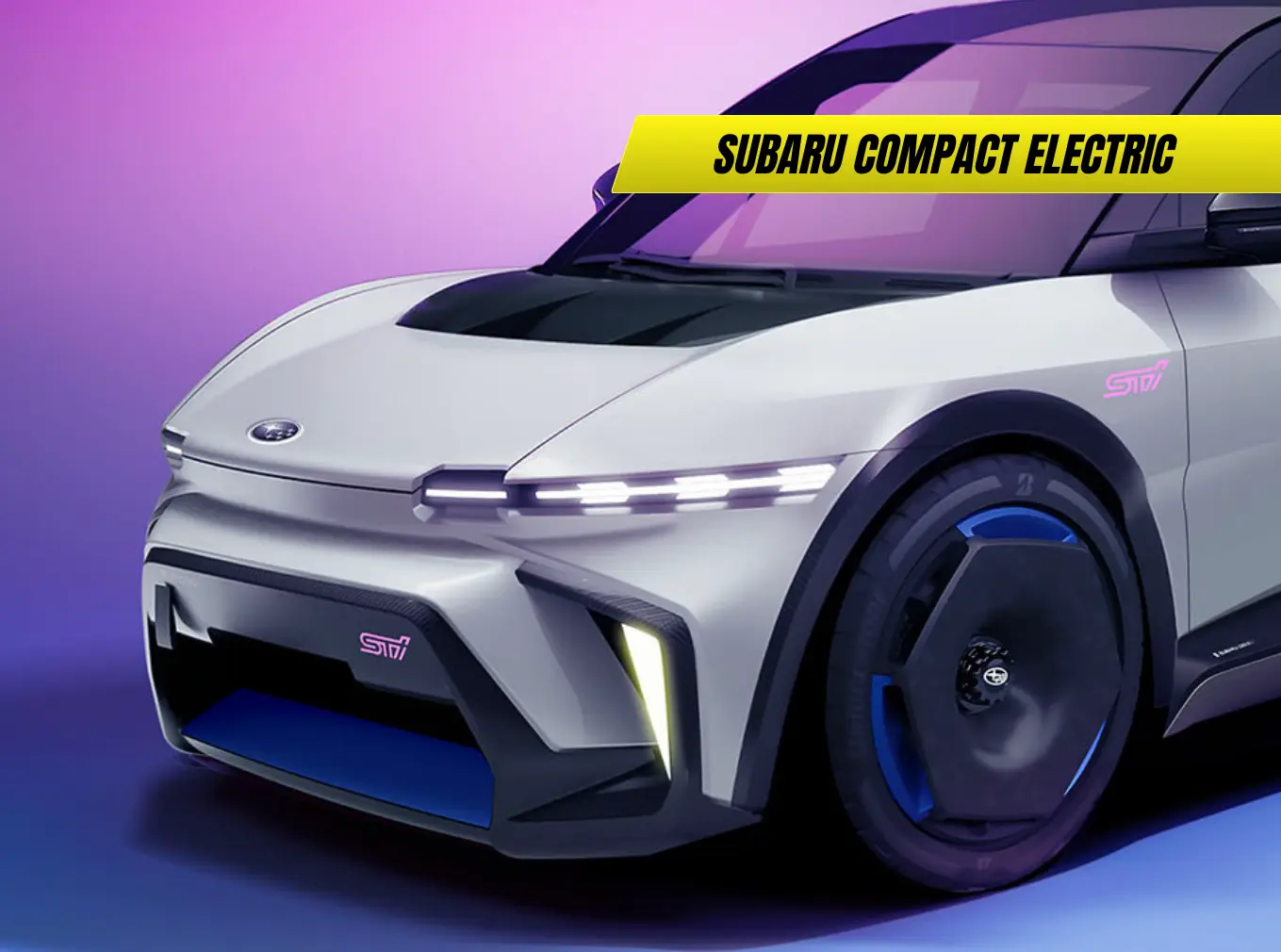
Subaru compact electric car UK 2028 guide covering Toyota partnership, B-segment EV specs, expected pricing, and how it will compete with Renault 5 in Britain.
The electric vehicle revolution in the UK’s B-segment is set to welcome an exciting new contender as Subaru confirms development of its first compact electric vehicle, positioned to challenge the successful Renault 5 and upcoming Volkswagen ID.2. This strategic move marks Subaru’s return to the European small car segment, where the brand previously found success with the beloved Justy between 1987 and 2009. With Japanese engineering excellence, Toyota partnership benefits, and a focus on accessibility, this new electric Subaru could reshape the affordable EV landscape for British buyers.
Key Points Summary
• Confirmed development: Subaru officially developing compact electric vehicle for European B-segment market • Toyota partnership: Collaboration leverages shared platforms and technology from electric Yaris development • Target launch: Expected arrival around 2028-2029 following comprehensive market evaluation period • Accessibility focus: Positioned as affordable alternative to premium German electric vehicles • UK market potential: Targets gap between budget Chinese EVs and expensive European electric superminis • Heritage connection: Spiritual successor to popular Justy model with modern electric powertrain
Subaru’s Electric Vehicle Strategy and Market Re-entry
Subaru’s commitment to compact electric vehicles represents a significant strategic shift for the Japanese manufacturer, traditionally focused on larger vehicles and all-wheel drive systems. The brand’s European presence has been limited in recent years, making this B-segment EV a crucial re-entry vehicle for markets like the UK.
Historical context shows Subaru’s previous success in European small car segments through the Justy, which built a loyal following through reliability, practicality, and distinctive character. The new electric compact aims to recapture this appeal while addressing modern requirements for zero-emission urban mobility.
Current electric portfolio includes the Solterra SUV, developed in partnership with Toyota, and the Crosstrek Hybrid in other markets. However, the absence of a compact electric vehicle represents a significant gap in Subaru’s European strategy, particularly as cities implement stricter emission regulations.
Market positioning philosophy emphasises accessibility and reliability over premium positioning, differentiating Subaru from expensive German alternatives while offering superior quality compared to budget Chinese imports increasingly available in the UK market.
European strategy requires this compact EV to succeed, as it represents Subaru’s primary opportunity to rebuild brand presence in markets where SUV-focused lineups have limited appeal due to urban congestion and environmental concerns.
Inoue Masahiko’s statement that “an accessible compact electric is something we’re seriously considering to meet all customers’ expectations” signals genuine commitment rather than speculative development, suggesting substantial resources are being allocated to this project.
From my experience covering automotive strategy, Subaru’s careful approach reflects understanding that failure in the competitive European market would severely damage long-term brand prospects, making success crucial for future expansion plans.
For context on current market dynamics, our best cheap electric SUVs guide explores the evolving affordable EV landscape.
Toyota Partnership and Technical Collaboration Benefits
Strategic alliance between Subaru and Toyota provides crucial technical and financial resources for developing competitive electric vehicles, particularly important given the substantial investment required for new EV platforms and battery technology.
Shared development opportunities include platform architecture, battery systems, electric drivetrains, and manufacturing processes that reduce individual company risk while accelerating development timelines. This collaboration model has proven successful in other joint ventures between the companies.
Electric Yaris synergy represents a particular opportunity, as Toyota’s development of an electric version of its B-segment bestseller provides natural partnership potential for Subaru’s compact EV project. Shared components and technology could benefit both manufacturers.
Cost efficiency through collaboration enables competitive pricing that would be difficult for either manufacturer to achieve independently, particularly important for a segment where price sensitivity significantly influences purchase decisions.
Technical expertise sharing allows Subaru to leverage Toyota’s advanced hybrid and electric vehicle experience while contributing its own engineering strengths in symmetrical all-wheel drive systems and horizontal engine layouts.
Manufacturing synergy could include shared production facilities or component sourcing that improves economies of scale while maintaining quality standards both brands require for market success.
Global platform development enables adaptation for different markets while sharing fundamental architecture, potentially allowing right-hand drive optimisation for the UK market from initial development phases rather than expensive post-design modifications.
| Partnership Benefit | Subaru Advantage | Toyota Advantage |
|---|---|---|
| Platform sharing | Reduced development costs | Increased volume efficiency |
| Technology exchange | Advanced hybrid expertise | AWD system knowledge |
| Manufacturing scale | Access to larger facilities | Improved capacity utilisation |
| Market expansion | European re-entry support | Enhanced model range |
Battery technology collaboration could provide access to advanced lithium-ion and potential solid-state battery developments that Toyota is pioneering, ensuring competitive range and charging capabilities for the Subaru compact EV.
In my view, this partnership represents optimal strategy for both manufacturers, combining resources while maintaining distinct brand identities that appeal to different customer segments within the same technical framework.
Competitive Landscape and Renault 5 Challenge
Renault 5 success with over 30,000 orders demonstrates strong European demand for affordable, characterful electric vehicles that combine retro appeal with modern technology. The Subaru compact must offer compelling advantages to compete effectively against this established success.
Market positioning challenges include differentiating from the Renault 5’s distinctive retro styling, competitive pricing around €25,000, and comprehensive European dealer network that Subaru lacks in many markets including the UK.
Japanese engineering reputation provides potential advantages in reliability, build quality, and long-term durability that could appeal to buyers concerned about electric vehicle longevity and service requirements over extended ownership periods.
All-wheel drive capability, if offered, would provide unique selling proposition in the B-segment where most competitors offer front-wheel drive only. This could appeal to UK buyers in rural areas or those requiring enhanced winter capability.
Emerging competition includes the Volkswagen ID.2, Cupra Raval, MG 2, and other manufacturers developing affordable electric vehicles, creating an increasingly crowded segment where differentiation becomes crucial for success.
Pricing strategy must balance accessibility with profitability, likely targeting the £22,000-28,000 range to compete with established rivals while reflecting Subaru’s quality positioning and the realities of electric vehicle production costs.
UK market dynamics include strong preference for reliability, practical design, and value for money that could favour Subaru’s traditional strengths if successfully translated to electric vehicle applications.
Brand perception challenges include rebuilding awareness and dealer presence after years of limited UK market activity, requiring substantial marketing investment and service network development to support customer confidence.
Design philosophy will need to balance distinctive Subaru character with broad market appeal, avoiding both generic styling and overly niche design that limits commercial potential in volume segments.
For comparison with current alternatives, our best cars under £25,000 guide provides market context for affordable vehicle options.
Expected UK Specifications and Features
Battery capacity for the Subaru compact EV will likely target 40-50kWh to balance cost, weight, and range requirements typical of B-segment electric vehicles. This should provide 200-250 miles of real-world range suitable for most UK driving patterns.
Motor configuration may offer both front-wheel drive and all-wheel drive variants, with the latter providing unique competitive advantage in the small car segment where AWD options remain rare but valued by some UK buyers.
Charging capability should include rapid charging at 100kW+ speeds enabling 20-80% charging in approximately 30 minutes, meeting expectations for modern electric vehicles and supporting longer journey capability when required.
Interior technology must match contemporary standards including large touchscreen display, smartphone integration, digital instruments, and comprehensive connectivity features that younger buyers expect as standard equipment.
Safety systems will likely encompass Subaru’s EyeSight driver assistance technology adapted for electric vehicles, potentially providing competitive advantage through comprehensive accident avoidance and mitigation capabilities.
Practical features should emphasise storage solutions, seating flexibility, and cargo capacity that maximise utility within compact dimensions, addressing UK buyer priorities for versatile urban vehicles.
UK-specific adaptations may include suspension tuning for British road conditions, enhanced weather sealing for challenging climates, and right-hand drive ergonomic optimisation ensuring comfortable operation for local drivers.
Equipment levels will probably span multiple trim grades from basic transport to well-equipped variants, providing choice and accessibility across different income levels and usage requirements.
Performance targets should deliver adequate acceleration for urban and motorway use while prioritising efficiency over outright speed, reflecting typical supermini buyer priorities and maximising electric range.
Timeline and Market Introduction Strategy
Development timeline suggests the Subaru compact EV won’t arrive until 2028-2029, reflecting the company’s cautious approach and desire to monitor existing electric vehicle performance before expanding the range further.
Market evaluation period involves assessing Solterra sales performance and European EV market evolution over the next two years, ensuring the compact model addresses real customer demand rather than speculative projections.
UK launch strategy will require rebuilding dealer presence and service capability, potentially through partnerships with existing automotive retailers or Toyota’s established network where beneficial for both brands.
Pre-launch activities should include customer research, focus groups, and prototype demonstrations to refine specifications and ensure the final product meets British buyer expectations for design, equipment, and pricing.
Launch sequence may prioritise major European markets before expanding to smaller regions, with the UK likely included in initial availability given its importance for electric vehicle adoption and brand building.
Marketing approach must educate consumers about Subaru’s electric vehicle capabilities while emphasising heritage values like reliability and engineering excellence that differentiate from newer EV-only brands.
Customer education programmes will be essential given Subaru’s limited recent UK presence, helping potential buyers understand brand values, technology benefits, and ownership advantages compared to established alternatives.
Fleet strategy could provide early volume sales through business users and rental companies before consumer marketing develops wider awareness and demand among private buyers.
Dealer training requirements include electric vehicle technology, sales processes, and service procedures that ensure customer confidence throughout the ownership experience.
For current market context, our analysis of why diesel hybrid cars are still relevant in 2025 explores changing powertrain preferences.
Technology Integration and Innovation Features
EyeSight technology adaptation for electric vehicles should provide comprehensive driver assistance including pre-collision braking, adaptive cruise control, lane keeping assistance, and blind spot monitoring integrated with electric powertrain characteristics.
Smartphone connectivity must include wireless Apple CarPlay and Android Auto, over-the-air updates where possible, and cloud-based services that enhance ownership experience while maintaining intuitive operation for less technical users.
Battery management systems should optimise charging patterns, thermal regulation, and longevity through intelligent software that learns from usage patterns and environmental conditions typical of UK driving.
Regenerative braking calibration needs careful tuning to provide natural feel while maximising energy recovery, potentially offering adjustable settings for different driving preferences and conditions.
Climate control efficiency becomes crucial for electric range optimisation, requiring heat pump technology and intelligent cabin pre-conditioning that minimises battery drain while maintaining comfort.
Navigation integration should include real-time charging station information, route planning optimised for electric range, and traffic data that helps maximise efficiency and minimise journey times.
Digital services may encompass remote vehicle monitoring, charging status updates, climate pre-conditioning, and maintenance scheduling that enhances convenience while building customer loyalty.
Audio systems should provide quality entertainment while minimising power consumption, potentially offering upgrade options for customers seeking premium audio experiences without compromising electric range.
Interior ambient features like LED lighting and customisable displays can enhance perceived quality and personalisation without significant cost or complexity increases that affect overall value proposition.
Expected UK Pricing and Market Positioning
Pricing strategy for the Subaru compact EV must balance accessibility with brand positioning, likely targeting £22,000-28,000 to compete with established European alternatives while reflecting Japanese quality reputation.
Entry-level positioning around £22,000-24,000 would challenge the Renault 5 directly while potentially undercutting German alternatives, making electric vehicle ownership accessible to broader customer segments.
Mid-specification models priced £24,000-26,000 should provide comprehensive equipment including advanced safety features, quality interior materials, and convenience technology that enhances daily usability.
Top variants reaching £26,000-28,000 could offer all-wheel drive capability, premium audio systems, and additional comfort features that justify higher pricing while maintaining competitive positioning.
Government incentives and tax benefits for electric vehicles should enhance affordability, though these may change before the model’s arrival requiring flexible pricing strategies that remain competitive under various policy scenarios.
Financing options through manufacturer programmes or dealer partnerships will be crucial for accessibility, requiring competitive lease rates and PCP arrangements that make monthly payments attractive compared to petrol alternatives.
| Trim Level | Expected Price | Key Features | Primary Competitors |
|---|---|---|---|
| Base | £22,000-24,000 | Essential equipment, FWD | Renault 5, VW ID.2 |
| Mid | £24,000-26,000 | Enhanced comfort, safety tech | MG 4, Cupra Born entry |
| Top | £26,000-28,000 | Premium features, possible AWD | VW ID.3, Peugeot e-208 GT |
Value proposition must emphasise reliability, build quality, and comprehensive warranty coverage that address common electric vehicle concerns while providing reassurance for customers transitioning from conventional vehicles.
Residual value expectations should benefit from Subaru’s reliability reputation and limited production volumes, though electric vehicle depreciation patterns remain uncertain and could affect leasing and PCP attractiveness.
Understanding ownership considerations like recognising spanner warning lights becomes relevant for long-term electric vehicle satisfaction.
UK Infrastructure and Charging Considerations
Public charging network expansion across the UK should support the Subaru compact EV’s arrival, with rapid charging capabilities enabling convenient longer journeys and addressing range anxiety concerns for potential buyers.
Home charging solutions will be crucial for urban buyers without private parking, requiring partnerships with charging infrastructure providers and potentially including installation support as part of vehicle purchase packages.
Workplace charging availability continues expanding across UK businesses, providing additional confidence for potential buyers who can charge during working hours and reduce reliance on public infrastructure.
Destination charging at shopping centres, leisure facilities, and accommodation venues enhances convenience for electric vehicle owners, supporting the practical viability of compact EVs for diverse usage patterns.
Rural considerations remain important for UK buyers outside major cities, where charging infrastructure may be less dense but where Subaru’s potential all-wheel drive capability could provide additional appeal.
Charging speed compatibility with UK’s expanding rapid charging network ensures the Subaru compact can utilise maximum infrastructure capability, reducing charging times and improving long-distance journey practicality.
Cost management for charging varies significantly across different providers and payment methods, requiring customer education about optimal charging strategies that minimise costs while maintaining convenience.
Government support for electric vehicle infrastructure continues evolving, with policies affecting both charging availability and electricity costs that influence total ownership economics for potential buyers.
For broader context on electric vehicle adoption, our best family SUVs guide includes EV options and charging considerations.
Frequently Asked Questions
When will the Subaru compact electric car arrive in the UK?
The Subaru compact EV is expected to launch around 2028-2029, following a comprehensive market evaluation period and development timeline that ensures the vehicle meets European customer expectations and regulatory requirements.
How much will the new Subaru electric car cost?
Expected pricing ranges from £22,000-28,000 depending on specification level, positioning it competitively against the Renault 5, Volkswagen ID.2, and other emerging B-segment electric vehicles.
Will it offer all-wheel drive like other Subaru models?
While not confirmed, all-wheel drive capability would provide unique competitive advantage in the small car segment and align with Subaru’s traditional strengths, though it may be limited to higher specification variants.
How will it compete with the successful Renault 5?
The Subaru will emphasise Japanese reliability, build quality, and potentially all-wheel drive capability while offering competitive pricing and comprehensive equipment levels that appeal to practical UK buyers.
What range can we expect from the battery?
Target range should be 200-250 miles in real-world UK driving conditions, achieved through 40-50kWh battery capacity that balances cost, weight, and practical usability for most customer requirements.
Will Subaru rebuild its UK dealer network for this launch?
Yes, successful launch requires enhanced dealer presence and service capability, potentially through partnerships with existing retailers or collaboration with Toyota’s established UK network.
How does the Toyota partnership benefit UK buyers?
The collaboration should enable competitive pricing, advanced technology sharing, and potentially shared service facilities that enhance ownership experience while reducing costs through economies of scale.
Conclusion
The Subaru compact electric vehicle represents an intriguing addition to the UK’s evolving B-segment EV market, offering Japanese engineering heritage and potential all-wheel drive capability in a segment dominated by front-wheel drive alternatives. For British buyers, this model could provide the reliability and build quality traditionally associated with Subaru while embracing zero-emission urban mobility.
In my experience, successful new market entrants must offer clear differentiation from established competitors while meeting fundamental customer expectations for quality, value, and practicality. Subaru’s cautious development approach suggests genuine commitment to creating a competitive product rather than rushing to market with compromised execution.
The Toyota partnership provides crucial technical and financial resources that should enable competitive specifications and pricing while leveraging shared development costs that benefit both manufacturers. This collaboration model has proven successful in other automotive partnerships and should enhance the final product’s market viability.
For UK buyers considering compact electric vehicles, the Subaru option should provide an alternative to European and Chinese alternatives while potentially offering unique capabilities like all-wheel drive that address specific customer requirements. The emphasis on accessibility and reliability aligns well with British buyer priorities for practical, dependable transport.
Looking ahead, the success of this Subaru compact EV will depend heavily on execution quality, pricing competitiveness, and dealer network development that provides confident ownership experience. If these elements align with the promised engineering excellence and market positioning, the model could indeed provide compelling competition for established alternatives while rebuilding Subaru’s European presence through urban mobility solutions.





