
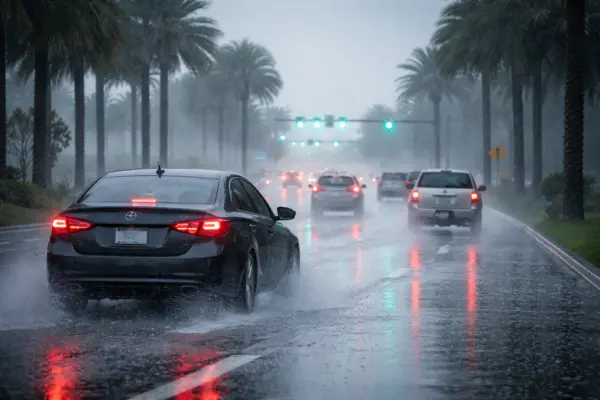
April driving in the UK often means dry roads one minute and a sharp downpour the next. That fast switch in conditions is what catches drivers out, because visibility drops, grip changes and stopping distances rise before many people have fully adjusted their speed or spacing.
Spring rain can also be more deceptive than winter rain. After a dry spell, the first shower often lifts oil, dust and road grime to the surface, making the road feel unusually slippery even when the rainfall itself does not yet seem severe.
Key Points
- Sudden April rain can reduce grip and visibility much faster than drivers expect.
- Wet-weather stopping distances are much longer, so you need to slow down earlier and leave more space.
- Dipped headlights, working wipers and a clear windscreen are basic essentials in heavy rain.
- Standing water increases the risk of aquaplaning, especially at higher speeds.
- If the steering feels light or unresponsive, ease off gently rather than braking sharply.
- Flood water should be avoided unless you are completely sure it is safe and shallow.
Why April Showers Are So Problematic
Spring showers in the UK are often abrupt rather than gradual, which means there is little time to adapt. A road that looked perfectly safe a minute ago can suddenly become shiny, greasy and harder to read, particularly on roundabouts, bends and approach roads to junctions.
That first burst of rain can be especially awkward in towns and on commuter routes. Surface contamination mixes with the water, and drivers who continue at normal dry-road speeds often discover too late that the car no longer has the same braking or cornering grip.
What to Do Immediately When Rain Starts
The first step is to reduce speed smoothly, not suddenly. Sharp inputs are exactly what you want to avoid once the road begins to lose grip.
Switch on your dipped headlights so other road users can see you more clearly, and make sure the windscreen stays fully clear using the wipers and demister. If visibility becomes poor enough that you are straining to read the road ahead, it is already time to back off further.
Increase Distance and Think Earlier
One of the simplest and most effective adjustments in heavy rain is to increase the gap to the vehicle in front. In wet weather, you need more time not only to stop but also to see what is happening through spray and reflected light.
That means planning earlier for brake lights, queues, bends and lane changes. In my experience, wet-weather driving is much safer when treated as a visibility problem first and a grip problem second, because once you see later, every other decision becomes more rushed.
How to Deal with Standing Water
Standing water is one of the biggest hazards in sudden rain because it may be deeper than it appears and often hides potholes or broken road edges. Even a shallow patch can unsettle the car if you meet it at speed.
If you see standing water ahead, slow down in a straight line before you reach it. Avoid sudden steering or hard braking as you pass through, and once you are clear, test the brakes gently if they have become wet.
What to Do If the Car Starts Aquaplaning
Aquaplaning happens when the tyres lose proper contact with the road because a layer of water builds between the rubber and the surface. The steering may suddenly feel light, vague or unresponsive, which can be alarming if you have never experienced it before.
The key is to stay calm. Ease off the accelerator, keep the steering as straight and steady as possible, and avoid stamping on the brakes. As the tyres regain contact, steering feel will return and you can then reduce speed progressively.
Vehicle Checks That Matter Most
Heavy spring rain exposes weaknesses quickly, especially worn wiper blades, poor tyre condition and low screenwash. If the wipers smear, judder or leave streaks, visibility drops sharply just when you need it most.
Tyres matter just as much. Good tread depth and correct tyre pressures help the car clear water more effectively and reduce the risk of aquaplaning. From a practical point of view, tyres, wipers and lights are the three most important checks before any wet-weather journey.
Flooded Roads and When Not to Continue
Not all heavy rain leads to flooding, but when it does, caution matters more than confidence. Water can hide kerbs, debris, potholes and open drains, and depth is often difficult to judge from the driver’s seat.
If you are unsure, turn around and find another route. That is usually the smarter option, especially on unfamiliar roads or in rural areas where floodwater may be moving across the carriageway rather than sitting still.
Is the speed limit lower when it rains in the UK?
The posted speed limit normally stays the same, but that does not mean it is a safe speed for the conditions. In rain, you are expected to drive at a speed appropriate to visibility, grip and traffic.
Should I use fog lights in heavy rain?
Only if visibility is seriously reduced. They should not be used automatically in every shower, and they should be switched off once conditions improve.
Why do roads feel extra slippery after the first rain?
Because water mixes with oil, dust and residue already on the surface, especially after a dry period. That creates a greasy film before the rain has properly washed the road clean.
What does aquaplaning feel like?
The steering often feels lighter and less connected, and the car may seem to glide instead of track normally. It can feel as though the front tyres are no longer responding properly.
Is it safe to drive through large puddles?
It depends on depth, speed and what may be hidden underneath, but caution is always needed. Even if the water is not deep enough to damage the car, it can still affect steering and braking.
What should I check on the car before driving in heavy rain?
Wipers, washer fluid, tyre condition, tyre pressures, headlights and demisters. These are the basics that make the biggest difference in poor visibility and wet grip conditions.
Are April showers worse than normal rain for drivers?
They can be, because they arrive suddenly and often after dry spells. That combination can make the surface more slippery than drivers expect in the first few minutes of rainfall.
Conclusion
Sudden April rain is not just a mild inconvenience for UK drivers; it is one of those seasonal conditions that changes the road faster than most people change their driving. The safest response is simple: slow down early, leave more space, treat standing water seriously and make sure the car is prepared before the weather turns.





