
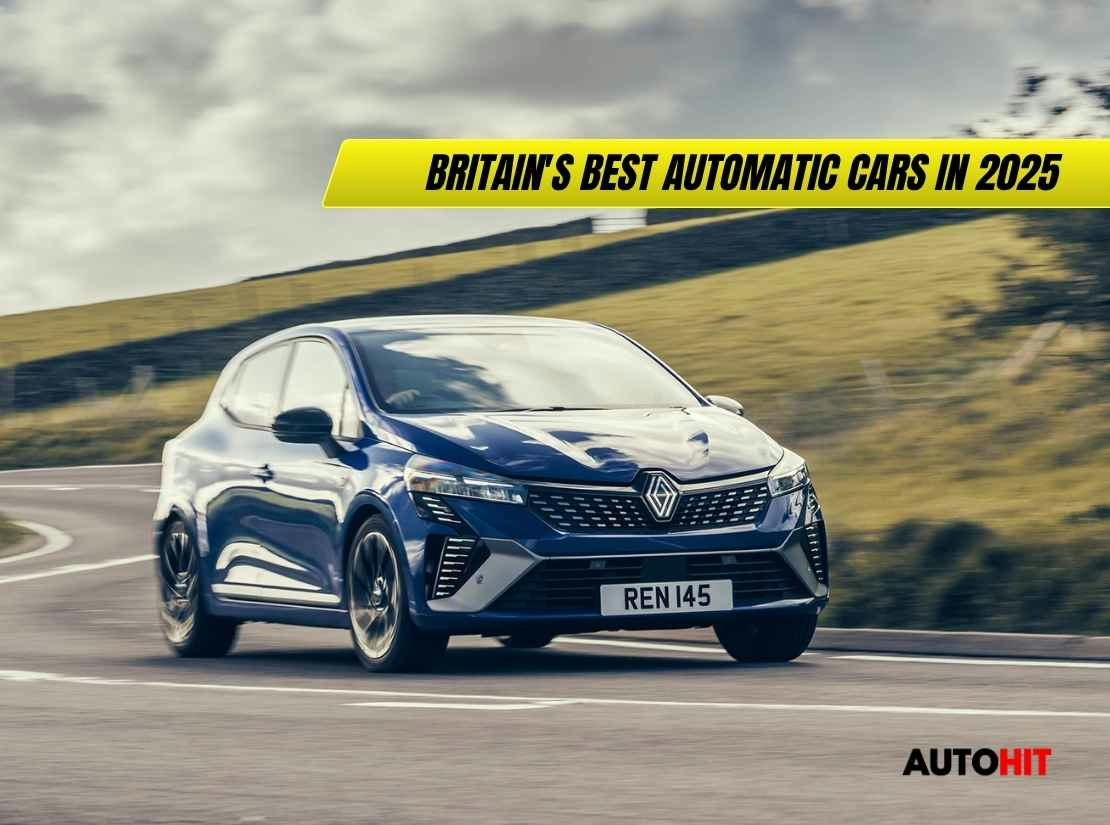
Discover the best automatic cars for 2025 in the UK. From smooth torque converters to efficient CVT systems, our expert guide reveals which automatic transmissions deliver the ultimate driving experience for British roads.
The automatic transmission revolution has well and truly arrived in Britain. Gone are the days when choosing an automatic meant sacrificing performance or fuel economy – today’s self-shifting gearboxes are faster, more efficient, and significantly more refined than their predecessors. According to our analysis at AutoHit, automatic gearboxes now account for the majority of new car sales, with manufacturers increasingly abandoning manual options entirely.
This transformation reflects broader changes in driving patterns across the UK. Automatic gearboxes take the strain out of changing gear and add that touch of luxury as any car always feels a little more opulent when you slide the lever into Drive. For drivers navigating London’s congested streets or tackling the M25 during rush hour, an automatic transmission offers a stress-free alternative to constant clutch work and gear changes.
But here’s where things get interesting for UK buyers: not all automatic transmissions are created equal. From traditional torque converters to cutting-edge dual-clutch systems, today’s market offers a bewildering array of technologies, each with distinct characteristics that can dramatically affect your driving experience. We’ve tested them all, and this comprehensive guide reveals which automatic cars deliver the perfect combination of smoothness, efficiency, and driving pleasure for British conditions.
Key Highlights
- Market Dominance: Automatic transmissions have increased by 118% in the UK, with only 15 of 40 mainstream car brands still offering manual options across their ranges
- Technology Variety: Modern automatics include torque converters, CVTs, dual-clutch systems, and hybrid-specific transmissions, each offering different driving characteristics
- Performance Revolution: High-performance dual-clutch systems can now swap cogs in just milliseconds, making them faster than any manual transmission
- Efficiency Gains: Modern automatic gearboxes are just as fast and fuel-efficient as equivalent manual cars, with some hybrid systems achieving over 60mpg
- Cost Considerations: Automatic-equipped cars typically cost £1,000-£1,500 more than manual equivalents, but offer significant convenience benefits
- Future Direction: The upcoming ban on non-electric cars will accelerate the switch to automatics, with manual gearboxes becoming increasingly rare
Understanding Automatic Transmission Types
Torque Converter Automatics: The Traditional Choice
The conventional epicyclic automatic transmission (the infamous ‘slushbox’) remains quite popular – and it does a great job in average cars. This is the most common automatic option, found in everything from family hatchbacks to luxury SUVs. The majority of Mazda automatics, BMWs, MINIs and larger Audis are torque converter autos, demonstrating the technology’s widespread acceptance.
The torque converter allows the engine to remain connected to the transmission through a fluid coupling rather than a mechanical clutch. This arrangement permits you to come to a complete stop indefinitely without stalling the engine, whilst the system’s inherent shock absorption delivers exceptionally smooth operation. Torque converters also allow you to creep forward at low speeds without consequence – invaluable for navigating tight parking spaces or heavy traffic.
However, the torque converter isn’t a perfect solution. It absorbs energy during operation, traditionally making these transmissions less fuel-efficient than manual alternatives. Modern examples have largely addressed this concern through improved programming and additional gear ratios, with many now offering eight or nine speeds to optimise efficiency.
Dual-Clutch Transmissions: Performance Perfection
Dual-clutch transmissions represent the pinnacle of automatic gearbox technology, offering the closest thing to instantaneous gear changes available in production cars. These advanced gearboxes use two separate gear sets, each with its own clutch, allowing the next gear to be pre-selected whilst driving in the current one.
When it’s time to shift, the computer simply releases one clutch and engages the other for an almost seamless change. An effective, modern DCT-equipped car can swap cogs in just milliseconds, making them faster than any human could manage with a manual transmission. This technology explains why you can’t even buy a new Ferrari, Lamborghini or Nissan GT-R with a manual gearbox.
The reality, however, is more nuanced for everyday driving. Dual-clutch transmissions excel in performance situations but can be jerkier than torque converter units at lower speeds. They work best when driven decisively rather than being used for gentle urban commuting. If you frequently encounter stop-start traffic or need to perform low-speed manoeuvring, a traditional torque converter might prove more suitable.
CVT Systems: Infinite Efficiency
Continuously Variable Transmissions offer a fundamentally different approach to automatic gear changing. Instead of fixed gear ratios, CVTs use belt-and-pulley systems to provide virtually infinite gear ratios, keeping the engine operating at peak efficiency regardless of vehicle speed.
CVTs remain the most fuel-efficient transmission type available, particularly beneficial in stop-start urban conditions. The Honda Civic demonstrates how effective this technology can be – its CVT system seamlessly integrates with the hybrid powertrain to deliver exceptional fuel economy whilst maintaining refinement. Where some cars with a CVT can make a lot of noise but seemingly little progress, the Honda proves that proper calibration eliminates these concerns.
The main criticism of CVT systems concerns their driving characteristics. Under acceleration, the engine may rev to a high RPM and remain there whilst the CVT adjusts ratios, creating a sensation some drivers find unnatural. Modern examples increasingly use stepped programming to simulate conventional gear changes, addressing this concern whilst retaining efficiency benefits.
Best Automatic Cars by Category
Premium Luxury: Mercedes-Benz C-Class
Comfort is the Mercedes C-Class’ speciality and the car’s luxuriously quiet cabin and plethora of driving aids mean it’s also a very relaxing car to drive. If you’re going to conquer the small posh saloon class, you’ll need a great automatic gearbox, which is exactly what the latest Mercedes-Benz C-Class has.
The C220d might be the entry-level diesel, but with loads of power and near 60mpg fuel economy, it’s an accomplished all-rounder that demonstrates how modern automatics can deliver both performance and efficiency. Mercedes’ nine-speed automatic provides seamless operation whether navigating London traffic or cruising the M4 to Wales for a weekend getaway.
Interior refinement reaches exceptional levels, with barely perceptible gearchanges complementing the whisper-quiet cabin. The transmission’s adaptive programming learns your driving style, pre-selecting appropriate gear ratios for different conditions. For families prioritising comfort and prestige, few automatics match the C-Class’s accomplished blend of luxury and efficiency.
Executive Excellence: BMW 3 Series
Following a mid-life facelift in 2022, the BMW 3 Series can no longer be ordered with a manual gearbox for the first time in its lengthy history. That’s no bad thing because the eight-speed automatic BMW uses instead is very impressive. The 3 Series demonstrates that automatic transmissions needn’t compromise driving engagement.
The ZF eight-speed unit found in the 3 Series represents one of the finest automatic transmissions available. When cruising, it operates with seamless refinement, but select a sportier drive mode and the changes become lightning-fast. The system responds instantly to paddle input whilst providing intelligent gear selection in automatic mode.
Whether you choose the efficient 320i, powerful M340i, or plug-in hybrid 330e, the automatic transmission enhances rather than detracts from the driving experience. For families who refuse to compromise on driving dynamics, the 3 Series automatic delivers performance that would be impossible to match with a manual transmission.
Hybrid Efficiency: Honda Civic
The Honda Civic is proof that a CVT (continuously variable transmission) gearbox can not only work well but add to the driving experience. Available solely as an automatic, driving a Civic has never been more relaxing, with the transmission seamlessly integrating with Honda’s innovative hybrid system.
The Civic’s power delivery impresses through its sophisticated arrangement of petrol engine and electric motors. The engine primarily acts as a generator, with electric motors providing direct drive through the CVT system. This configuration eliminates the typical CVT concerns whilst delivering exceptional efficiency – real-world fuel economy often exceeds 60mpg.
Refinement levels impress throughout the rev range. Quiet and composed, it couldn’t be further removed from its wild child sibling, the Civic Type R. The automatic transmission contributes significantly to the Civic’s relaxed character, making it ideal for families prioritising comfort and running costs.
Compact Performance: Ford Puma
If you need the space of a tall-bodied crossover, but you also like to drive ‘enthusiastically’, then the Ford Puma is perfect for your needs. The Ford Puma demonstrates that automatic transmissions can enhance rather than compromise driving enjoyment in smaller vehicles.
The Puma’s seven-speed dual-clutch automatic transmission provides sharp, responsive gear changes that complement the car’s agile handling characteristics. It’s one of those cars that just feels right from the moment you pull away, with the automatic contributing to rather than detracting from the engaging driving experience.
All engines can be equipped with a seven-speed dual-clutch automatic transmission that’s reactive and comfortable to use. The system works particularly well with Ford’s efficient EcoBoost engines, maintaining performance whilst achieving respectable fuel economy of around 50mpg. For families seeking an automatic that retains driving engagement, the Puma delivers an excellent compromise.
Electric Simplicity: Fiat 500 Electric
Don’t let size fool you – the 500 Electric delivers one of the smoothest driving experiences in the city car market. Electric vehicles represent the ultimate automatic transmission, requiring no gear changes whatsoever thanks to their single-speed drivetrains.
The 500 Electric combines classic Italian styling with effortless urban driving. Its single-speed drivetrain eliminates any transmission concerns whilst delivering instant torque response that makes city driving delightfully stress-free. The regenerative braking system even allows one-pedal driving in many situations.
For urban families, the 500 Electric demonstrates how electric vehicles represent the logical evolution of automatic transmission technology. No gear changes, no clutch concerns, no transmission maintenance – just pure, effortless driving pleasure combined with zero local emissions.
Automatic Transmission Comparison Guide
| Transmission Type | Efficiency | Smoothness | Performance | Maintenance | Best For |
|---|---|---|---|---|---|
| Torque Converter | Good | Excellent | Good | Low | General use, comfort priority |
| Dual-Clutch | Good | Variable | Excellent | High | Performance driving, enthusiasts |
| CVT | Excellent | Good | Fair | Medium | Fuel economy, urban driving |
| Electric Single-Speed | Excellent | Perfect | Excellent | Minimal | City driving, environmental priority |
| Hybrid e-CVT | Excellent | Excellent | Good | Low | Efficiency with refinement |
Cost Considerations and Ownership
Purchase Premiums and Running Costs
Automatic-equipped cars normally cost more to buy than their manual equivalents, typically requiring an additional £1,000-£1,500 investment depending on the transmission type. However, this premium often proves worthwhile considering the convenience and refinement benefits, particularly for drivers covering high annual mileages or frequently encountering heavy traffic.
Different automatic types command varying premiums. CVT systems typically add the smallest cost increment, whilst sophisticated dual-clutch transmissions command the highest premiums. Electric vehicles eliminate this consideration entirely, as single-speed drivetrains are inherently less complex than multi-ratio transmissions.
Maintenance and Reliability
Modern automatic transmissions generally prove reliable when properly maintained, though different technologies have varying service requirements. Torque converter automatics typically require transmission fluid changes every 60,000-80,000 miles, whilst dual-clutch systems may need more frequent attention.
The easiest way to abuse an auto is to fail to service it. The oil has a fixed life and performs crucial lubrication and cooling functions. Following manufacturer service schedules proves essential for long-term reliability, regardless of transmission type.
CVT systems require specific transmission fluids and should never be subjected to aggressive driving when cold. Electric drivetrains require minimal maintenance beyond occasional gear oil changes, making them the most cost-effective long-term option.
Regional Considerations for UK Drivers
Urban Driving Benefits
British cities present unique challenges that automatic transmissions address effectively. London’s expanding ULEZ zone, Birmingham’s Clean Air Zone, and similar initiatives across the UK make smooth, efficient automatics increasingly attractive. They’re much easier if you spend a lot of time in stop/start traffic, eliminating the constant clutch work that manual transmissions require.
Automatic transmissions integrate seamlessly with modern safety systems including adaptive cruise control, lane-keeping assistance, and autonomous emergency braking. These technologies work most effectively with automatic transmissions, providing enhanced safety for family driving.
Motorway Efficiency
Modern automatic transmissions excel on Britain’s motorway network, where their multiple ratios optimise fuel efficiency at cruising speeds. Eight and nine-speed automatics often provide better motorway fuel economy than manual alternatives through precise ratio selection and torque converter lock-up at cruising speeds.
For families regularly travelling between cities or visiting relatives across the country, automatic transmissions reduce driver fatigue significantly. The relaxed driving experience proves particularly beneficial on lengthy journeys, allowing drivers to focus on traffic conditions rather than gear selection.
Weather Adaptability
British weather conditions favour automatic transmissions in several scenarios. Hill starts in wet conditions become effortless without clutch control concerns, whilst automatic systems integrate seamlessly with traction control and stability systems during adverse weather.
Winter driving benefits particularly from automatic transmission refinement, as smooth power delivery reduces wheel spin risk on slippery surfaces. Many automatic vehicles also feature snow or eco modes that modify transmission behaviour for optimal performance in challenging conditions.
Future of Automatic Transmissions
Electric Vehicle Transition
The upcoming ban on new petrol and diesel car sales by 2030 will accelerate the transition to automatic transmissions. Electric vehicles inherently use single-speed transmissions, making them the ultimate automatic cars. This transition eliminates traditional transmission complexity whilst providing instant torque delivery and silent operation.
BYD has unveiled a megawatt fast-charging system that reportedly delivers 249 miles of range in just 5 minutes, addressing charging speed concerns. As charging infrastructure improves, electric vehicles will become increasingly attractive for families seeking the ultimate automatic driving experience.
Hybrid Evolution
Manufacturers continue developing sophisticated hybrid systems that combine electric efficiency with petrol flexibility. Toyota’s e-CVT system, found in the latest Prius and other hybrid models, demonstrates how automatic transmissions can deliver exceptional efficiency whilst maintaining refinement.
These systems represent the perfect stepping stone for families transitioning from conventional automatics to full electric vehicles, providing automatic convenience with enhanced environmental credentials.
Choosing Your Perfect Automatic
Budget-Conscious Families
For families prioritising value, CVT-equipped models like the Honda Civic or Toyota Corolla offer excellent efficiency with proven reliability. These vehicles provide automatic convenience without premium pricing, making them ideal first automatics for families transitioning from manual transmissions.
Consider certified pre-owned examples of premium automatics like the BMW 3 Series or Mercedes C-Class, which often provide luxury automatic experiences at mainstream prices when purchased second-hand.
Performance Enthusiasts
Families who refuse to compromise on driving engagement should consider dual-clutch equipped vehicles like the Ford Puma or Hyundai i30 N. These transmissions provide automatic convenience with manual-matching performance, satisfying both practical requirements and driving enthusiasm.
Urban Specialists
City-dwelling families benefit most from electric vehicles like the Fiat 500 Electric or larger options like the Tesla Model 3. These vehicles eliminate transmission complexity entirely whilst providing instant response and zero local emissions – perfect for navigating Britain’s increasingly congested urban centres.
Frequently Asked Questions
Are automatic cars more expensive to maintain than manual cars?
Automatic cars can cost more to service and repair in the long run, due to their additional complexity, but the difference isn’t as significant as many believe. Traditional torque converter automatics require transmission fluid changes every 60,000-80,000 miles, typically costing £200-£400. However, they don’t require clutch replacements, which can cost £800-£1,500 in manual cars. CVT systems need specific fluids but rarely require major repairs when properly maintained. Dual-clutch transmissions are the most complex and potentially expensive to repair, though modern examples prove much more reliable than early versions. Electric vehicles require minimal transmission maintenance, making them the most cost-effective long-term option.
Which automatic transmission type offers the best fuel economy?
CVTs remain the most fuel-efficient transmission type available, particularly in urban driving conditions where their infinite gear ratios keep engines operating at peak efficiency. The Honda Civic hybrid achieves over 60mpg in real-world conditions through its sophisticated CVT system. However, modern eight and nine-speed torque converter automatics achieve similar efficiency on motorways through precise ratio selection. Electric vehicles obviously provide the ultimate efficiency, with typical running costs of 3-4p per mile compared to 12-15p per mile for petrol automatics. For maximum efficiency, hybrid systems combining CVT transmissions with electric assistance deliver the best of both worlds.
Can I tow with an automatic car, and which type is best?
Most automatic cars can tow effectively, but transmission type significantly affects capability. Torque converter automatics handle towing best due to their fluid coupling design, which provides smooth power delivery and heat dissipation. The majority of BMW automatics, Mercedes models, and larger SUVs use torque converter systems ideal for regular towing. Dual-clutch transmissions aren’t suitable for heavy towing or frequent low-speed manoeuvring with trailers, as the clutch packs can overheat. CVT systems vary – some can handle light towing, but check manufacturer limits carefully. For families regularly towing caravans or trailers, choose torque converter automatics from manufacturers with strong towing credentials.
How do I know which automatic transmission my car has?
Unfortunately, marketing materials often simply state “automatic” without specifying the type, making identification challenging. Torque converter automatics typically provide the smoothest low-speed operation and gentle acceleration from standstill. Dual-clutch systems deliver sharp, rapid gear changes and may hesitate during parking manoeuvres. CVT transmissions allow engine revs to rise and stay constant during acceleration rather than dropping between gear changes. Your handbook should specify the transmission type, or a quick internet search using your car’s exact model and year usually reveals the technology used. When test driving, torque converter autos feel most like traditional automatics, whilst dual-clutch systems feel more aggressive and CVTs sound different during acceleration.
Are automatic cars suitable for new drivers?
Automatic cars are often ideal for new drivers as they eliminate clutch control and gear selection concerns, allowing focus on road positioning, hazard awareness, and traffic conditions. However, UK driving licenses obtained in automatic cars restrict holders to automatic-only vehicles permanently. Many driving instructors now recommend learning in automatics to reduce lesson requirements and stress levels. The smoother operation reduces stalling risks and makes hill starts effortless. For nervous drivers or those struggling with manual controls, automatics provide significant confidence benefits. However, consider future flexibility – manual licenses permit driving both transmission types, whilst automatic licenses limit options, particularly for older or budget vehicles that remain manual-only.
Will automatic cars become mandatory in the future?
While not legally mandatory, market forces are rapidly making automatics the default choice. Only 15 of 40 mainstream car brands still offer manual options across their ranges, with this number decreasing annually. The upcoming ban on new petrol and diesel car sales by 2030 will accelerate this transition, as electric vehicles inherently use automatic transmissions. Many manufacturers are discontinuing manual options to reduce complexity and costs – even the BMW 3 Series, long a manual stalwart, is now automatic-only. Within a decade, finding new manual cars will become increasingly difficult outside specialist sports cars. For families purchasing cars to keep long-term, choosing automatic now future-proofs against diminishing manual availability and ensures compatibility with advancing safety technologies.
What’s the difference between automatic and semi-automatic transmissions?
The terms can be confusing, but “semi-automatic” typically refers to dual-clutch or automated manual transmissions that allow manual gear selection via paddles or sequential shifters. True automatics (torque converter types) also offer manual control but usually through electronic commands rather than direct mechanical control. Some manufacturers use “semi-automatic” to describe CVT systems with simulated gear steps. In practical terms, all these systems provide two-pedal operation with automatic mode available. The key difference lies in how they operate: torque converters use fluid coupling, dual-clutch systems use automated clutches, and CVTs use variable pulleys. For most drivers, these distinctions matter less than overall refinement, efficiency, and reliability – areas where modern automatics excel regardless of underlying technology.
The Verdict: Britain’s Automatic Revolution
The automatic transmission has evolved from luxury curiosity to mainstream necessity, fundamentally transforming the British driving experience. Today’s automatics deliver performance, efficiency, and refinement that manual transmissions simply cannot match, whilst eliminating the stress and fatigue of constant gear changes in our increasingly congested cities.
Our analysis reveals that the best automatic for your family depends on specific requirements rather than abstract superiority. Urban families benefit most from CVT-equipped hybrids or electric vehicles, whilst those prioritising driving engagement should consider dual-clutch systems. For general family use, modern torque converter automatics provide the optimal balance of refinement, reliability, and capability.
The transition to automatic dominance reflects broader changes in British motoring. As we approach the 2030 deadline for new petrol and diesel sales, automatic transmissions represent not just convenience but future compatibility. Electric vehicles inherently use automatic transmissions, making today’s automatic purchase a logical stepping stone toward inevitable electrification.
Whether you choose the refined efficiency of a Honda Civic hybrid, the engaging performance of a Ford Puma, or the luxurious comfort of a Mercedes C-Class, modern automatic transmissions deliver driving experiences that enhance rather than compromise family motoring. The revolution is complete – automatic really is the new manual.





