
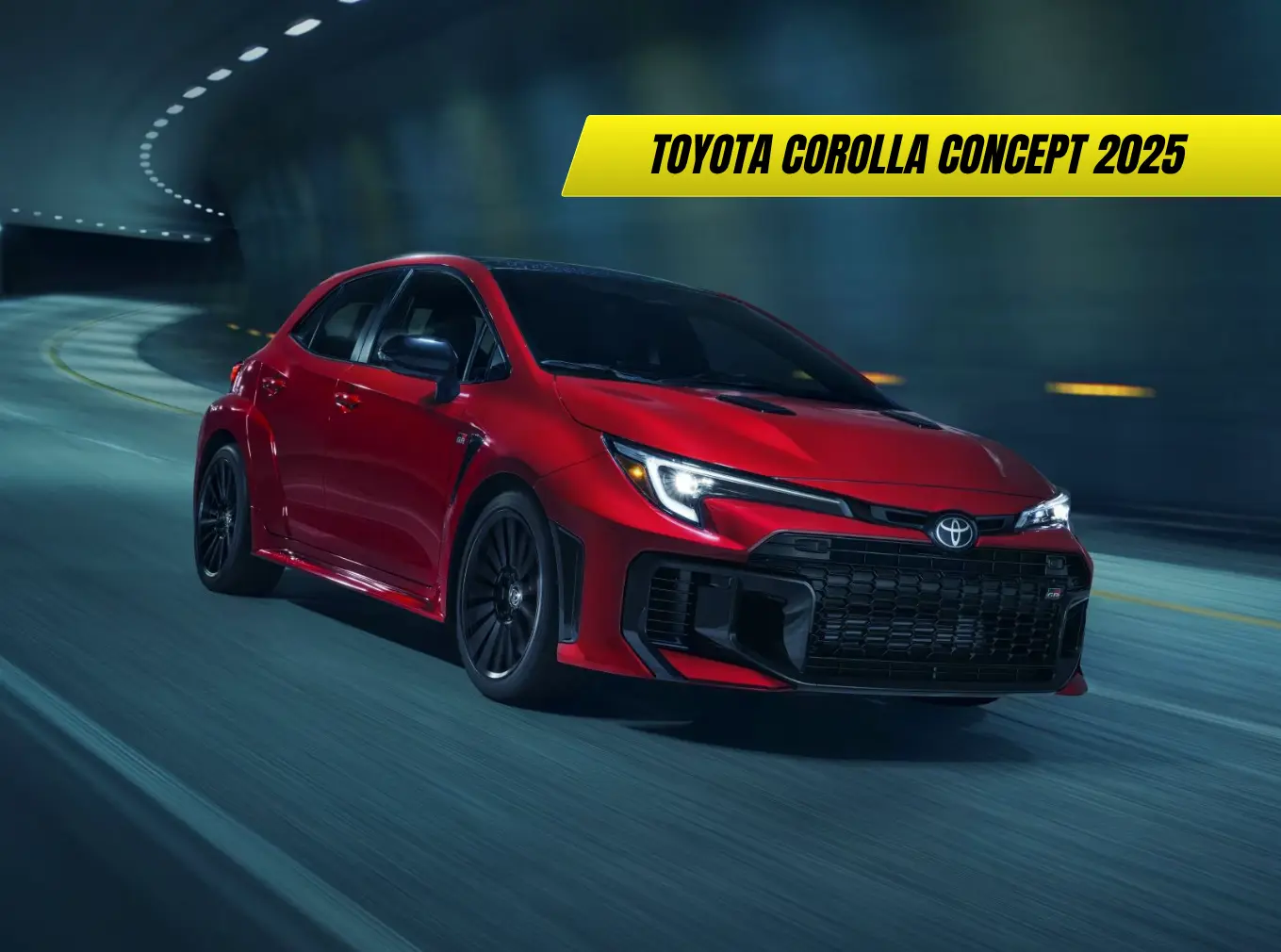
The Toyota Corolla continues to be one of the most rational hatchback choices for UK buyers, and the 2026 update only reinforces that position. With UK-built hatchback and Touring Sports versions, a choice of efficient full-hybrid powertrains and a solid reputation for reliability, the Corolla is aimed squarely at cost-conscious families, commuters and fleet drivers who prioritise low running costs and day-to-day ease of use over outright excitement.
Toyota has refined its formula rather than reinventing it: the Corolla stays compact enough for UK cities, stable enough for motorways and efficient enough to keep fuel and tax bills under control.
Key points (summary)
- Full-hybrid only: 1.8-litre and 2.0-litre hybrid petrol engines, no diesel.
- UK-built hatchback and estate (Touring Sports), supporting local production and parts availability.
- Real-world fuel economy often around 55–60 mpg in mixed driving when driven sensibly.
- Boot space is adequate but not class-leading in hatchback form; Touring Sports offers a much larger load area.
- Strong reputation for reliability, low stress ownership and predictable running costs.
Corolla 2026 in the UK: positioning and range
In the UK, the Corolla sits at the heart of the C-segment family hatchback market. It is available as:
- Hatchback – the main choice for most private buyers.
- Touring Sports estate – aimed at those who need plenty of luggage space.
- Corolla Commercial – a van-style derivative for light commercial use.
Both hatchback and Touring Sports are built at Toyota’s Burnaston plant in Derbyshire, while the 1.8-litre engines are produced in North Wales. That local manufacturing presence is a plus for UK buyers, adding reassurance on spares and specialist know-how at dealers.
The 2026 updates focus on details: new colours (including a matt-finish option on certain GR Sport models), wider use of recycled interior materials and enhanced driver-assistance features such as a driver-monitoring camera fitted across the range.
Engines and performance
The Corolla range is deliberately simple: it is fully hybrid, with no diesel engines offered.
Two primary hybrid powertrains:
- 1.8-litre hybrid
- Power output around 138 bhp.
- 0–62 mph in roughly 9 seconds.
- Focused on efficiency and smoothness.
- 2.0-litre hybrid
- Power output around 175–190 bhp, depending on calibration.
- 0–62 mph in the mid-7-second range.
- Offers noticeably stronger performance and more relaxed overtaking.
Both use an e-CVT style transmission and are tuned to deliver strong fuel economy, especially in town and suburban driving where the electric motor can do more of the work at low speed. On the motorway, the 2.0-litre version feels more effortless, while the 1.8 excels for those who mainly care about economy.
In my experience, the Corolla hybrid suits drivers who are happy to adopt a smoother, measured driving style. Drive it gently and it can reward you with impressively low fuel consumption and a very relaxed, quiet feel at low speeds.
Fuel economy, emissions and UK costs
The Corolla’s biggest strength is the combination of efficiency and ease of use:
- Real-world mixed driving can often return roughly 55–60 mpg or better.
- CO₂ emissions are around the low-100 g/km area depending on engine, wheels and spec.
- There is no need to plug in: it operates as a self-charging hybrid, harvesting energy under braking and coasting.
For UK drivers, this translates into:
- Competitive Benefit-in-Kind (BIK) rates for company car users compared with traditional petrols.
- Lower annual Vehicle Excise Duty (road tax) bands than many non-hybrid rivals of similar size.
- Good future-proofing for Ultra Low Emission Zone (ULEZ) and similar schemes, given its petrol-hybrid powertrain and low emissions profile.
A useful infographic here would be a bar chart comparing estimated annual fuel spend for Corolla 1.8, Corolla 2.0, a typical non-hybrid petrol rival and a small diesel at the same annual mileage.
Interior, quality and technology
Inside, the Corolla aims for a modern but sensible layout. You typically get:
- A digital instrument cluster and central touchscreen with smartphone integration.
- Physical buttons retained for major functions such as climate control.
- A mix of soft-touch materials and durable plastics aimed at long-term use rather than flashy showroom impact.
The design is not the most adventurous, but it is clear and functional. From my point of view, the Corolla interior is about calm, predictable usability rather than “wow factor”. It is easy to get in, adjust the seat and wheel and feel at home within minutes.
The 2026 update also increases the use of recycled upholstery materials on certain trims, improving the car’s sustainability credentials without sacrificing comfort.
This section connects well with internal content on warning lights and simple maintenance – guides on spanner warning lights, handbrake or AdBlue lights are exactly what Corolla owners may find helpful when the digital dash starts surfacing alerts.
Space, practicality and boot capacity
The Corolla hatchback is practical enough for most everyday tasks, but it is not the most spacious car in the class:
- Hatchback boot capacity typically lies in the low- to mid-300-litre range with the seats up (depending on engine, as the 2.0-litre hybrid uses more space for its battery).
- With the rear seats folded, the hatchback offers just over 1,000 litres of space, which is fine for occasional big loads.
Where the Corolla really impresses is in Touring Sports estate form:
- Around 590–600 litres of boot space with the seats up.
- Over 1,600 litres with rear seats folded, making it a very capable load carrier.
If you regularly carry pushchairs, suitcases or larger items, the Touring Sports is the smarter choice. For a couple or a small family living in a city, the hatchback remains perfectly adequate, but rivals like the Astra or Golf can offer slightly more space in their most practical versions.
A comparison table could show approximate boot volumes:
| Model | Boot with seats up | Notes |
|---|---|---|
| Corolla hatchback | ~313–361 litres | Lower with 2.0 hybrid battery |
| Corolla Touring | ~598 litres | Much roomier for families |
| VW Golf hatchback | ~380 litres | Squarer shape |
| Vauxhall Astra | ~400+ litres | Slightly larger than Corolla |
Driving experience on UK roads
The Corolla is not designed as a driver’s car in the same way as a Mazda 3 or Ford Focus, but it offers a quietly competent, comfortable drive that suits UK roads very well.
Key traits:
- Smooth low-speed running in town thanks to the hybrid system’s electric assistance.
- Comfortable suspension tuning that handles potholes and rough surfaces without feeling too soft.
- Stable motorway behaviour with secure, predictable handling rather than sporty responses.
The e-CVT transmission can cause the engine to rev more under hard acceleration, which some drivers may notice, but in everyday driving the gearbox is unobtrusive. If you accept that the Corolla is about calm progress rather than performance, it works extremely well.
From my point of view, this is a car that excels when driven in a relaxed, anticipatory way – exactly how many UK commuters and family drivers use their cars day to day.
Safety, equipment and driver assistance
The Corolla is typically well-equipped in terms of safety and assistance features as standard, with trim names such as Icon, Design, GR Sport and Excel marking different equipment levels.
Common features include:
- Adaptive cruise control and lane-keeping assistance.
- Pre-collision systems with pedestrian and cyclist detection.
- Traffic sign recognition and driver-monitoring functions on newer models.
Top trims add more comfort and convenience features, but even entry-level versions usually feel well specified compared with some rivals.
This area can be linked internally to UK articles about speed camera regulations and driving licence points, since drivers who choose safety-focused hybrids often also want to understand how to keep points off their licence and avoid fines.
Corolla vs key rivals
| Model | Key strengths | Main compromises |
|---|---|---|
| Toyota Corolla | Hybrid efficiency, reliability, smooth drive | Boot and rear space not class-leading |
| VW Golf | All-round balance, refinement, image | More complex powertrain choice and pricing |
| Vauxhall Astra | Strong value, plug-in and EV options | Less “set-and-forget” than Corolla |
| Mazda 3 | Driving fun, premium-feel cabin | Less efficient, smaller boot |
| Hyundai i30 | Good value and warranty | No full hybrid equivalent in many specs |
In essence, the Corolla is the “easy” choice for those who want dependable, low-stress motoring with excellent efficiency and minimal complexity. It is less about excitement, more about being consistently good at everything that matters in everyday UK use.
FAQs
Is the Toyota Corolla 2026 a good family car?
Yes. It is well suited to small families, especially in Touring Sports estate form, where the boot space is generous and the hybrid system keeps running costs low.
Which Corolla hybrid engine should I choose: 1.8 or 2.0?
If you prioritise fuel economy and mainly drive in town or at moderate speeds, the 1.8 is ideal. If you regularly drive on motorways or prefer stronger performance, the 2.0 offers more power and a more relaxed feel.
Is the Corolla hatchback big enough for UK family use?
For most families, yes. The boot and rear space are acceptable, but if you frequently carry lots of luggage or passengers, the Touring Sports estate is a better option.
How economical is the Corolla in real-world UK driving?
With a gentle driving style, many owners see fuel economy in the mid-50s to around 60 mpg on mixed routes, making it one of the most efficient non-plug-in family cars available.
Does the Corolla work well in ULEZ and clean-air zones?
Yes. Its low-emission hybrid powertrains make it well-suited to current and likely future city clean-air schemes in the UK, helping avoid or reduce charges compared with older petrol or diesel cars.
Conclusion
The 2026 Toyota Corolla is not the flashiest hatchback on sale in the UK, but it remains one of the most intelligent choices. With refined full-hybrid powertrains, UK-built hatchback and estate versions, a strong reliability record and very competitive running costs, it delivers exactly what many British drivers need: a calm, efficient, low-stress family car. For those who value easy ownership, sensible fuel bills and long-term dependability over outright excitement, the Corolla continues to be a benchmark in the hybrid hatchback class.





