
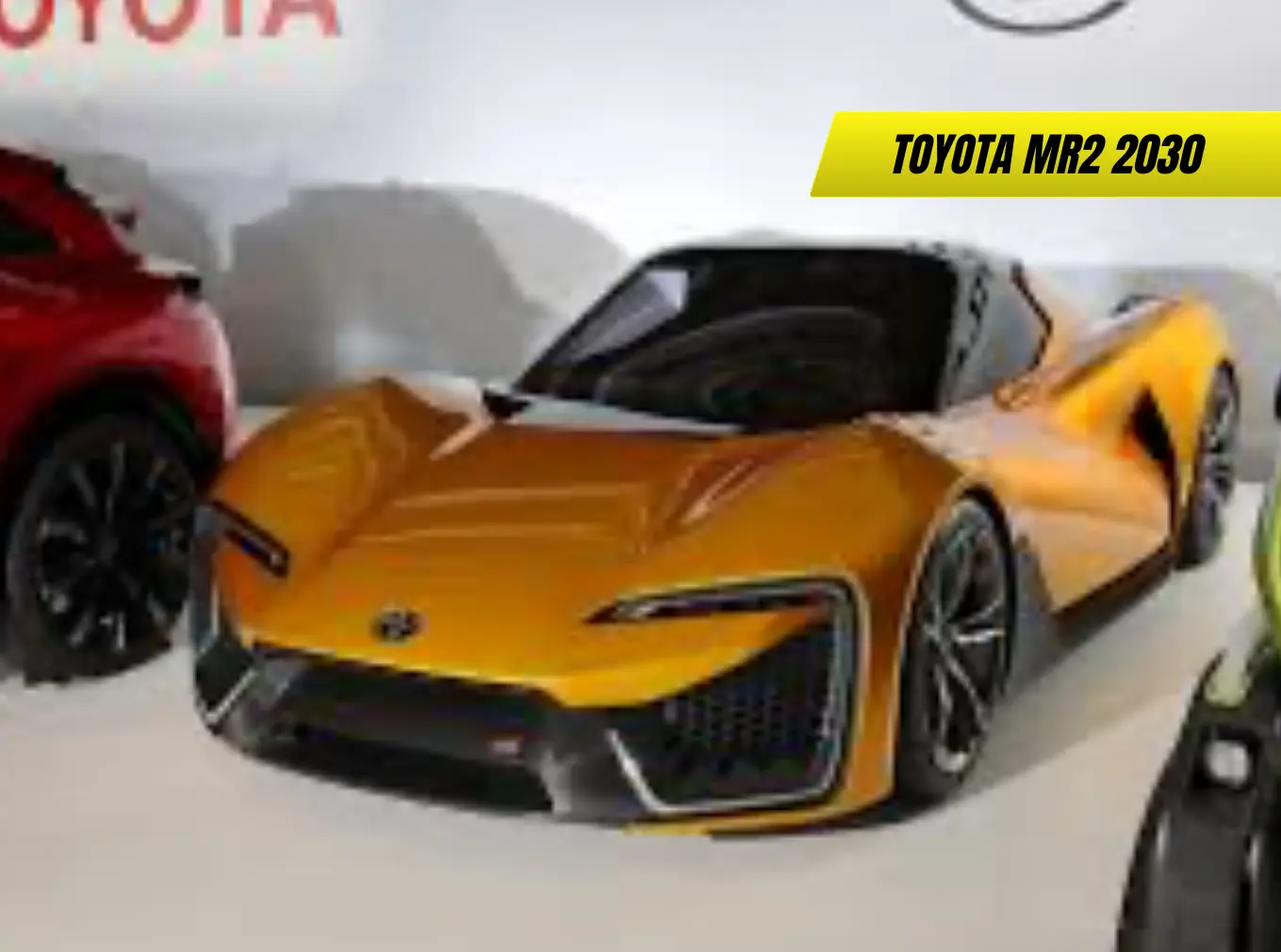
Toyota MR2 2030 revival: G20E 2.0L turbo with 400hp+, mid-engine layout, 4-5 year development. UK launch 2030-2031 from £45,000 estimated as Gazoo Racing flagship.
Toyota Gazoo Racing president Tomoya Takahashi officially confirms new mid-engine sports car entering first of four engineering development stages requiring 4-5 years before production, projecting 2030 or 2031 market arrivalreviving legendary MR2 nameplate absent since 2007. Featuring all-new G20E turbocharged 2.0-litre four-cylinderproducing over 400hp street specification (600hp+ racing variants) mounted behind driver delivering optimal weight distribution, the compact roadster/coupe demonstrates Toyota’s commitment maintaining internal combustion performance lineup alongside electrification strategy through Euro 7-compliant engineering achieving 30% efficiency improvement and 10% size reduction versus current 2.4L turbo while offering modular hybrid capability addressing emissions regulations. Expected UK pricing £45,000-55,000 positions between Mazda MX-5 (£32k) and Porsche 718 Cayman (£58k) targeting enthusiasts seeking affordable mid-engine thrills before segment inevitably transitions toward electric platforms by mid-2030s.
Official Confirmation: Gazoo Racing President Validates Development
Tomoya Takahashi’s January 2026 interview with Automotive News provides crucial confirmation ending months of speculation:
Key Takahashi Statements
“We have developed the G20E to fit into a small car like the GR Yaris. If we can do it with that car, which required greater engineering effort, we can easily mount it in larger vehicles.”
“The mid-engine sports car is in the first of four engineering stages prior to mass production, a process that usually takes around four to five years.”
The four-stage development process typical for Toyota performance models:
- Concept validation (current stage): Prototype testing, packaging studies, powertrain integration
- Engineering development: Chassis tuning, aerodynamics optimization, crash testing
- Pre-production: Manufacturing tooling, supplier partnerships, regulatory certification
- Mass production: Global launch, dealer training, customer deliveries
Based on January 2026 confirmation, projected timeline suggests 2030 earliest launch (optimistic 4-year cycle) or 2031 realistic target (conservative 5-year development).
GR Yaris M Concept: Mid-Engine Proof of Concept
Tokyo Auto Salon 2025 (January 2025) showcased GR Yaris M Concept demonstrating G20E mid-engine packaging feasibility:
M Concept Technical Configuration
- Engine placement: G20E mounted behind driver (replacing rear seats)
- Drivetrain: Rear-wheel drive (vs standard GR Yaris AWD)
- Competition testing: Super Taikyu Series endurance racing validation
- Development purpose: Stress-testing powertrain under extreme conditions
The M Concept served dual purposes: proving mid-engine packaging within compact dimensions (GR Yaris: 3,995mm length) and validating G20E durability through motorsport torture testing identifying weaknesses before production engineering commences.
From my point of view, Toyota’s methodical racing validation approach distinguishes Japanese development philosophy versus European rivals’ simulation-heavy processes—real-world competition exposure provides authentic stress testing revealing failures computer modeling cannot predict, ensuring production reliability meeting brand’s legendary durability reputation.
G20E Engine: 400hp+ Four-Cylinder Turbo Specifications
The heart of Toyota’s new mid-engine sports car represents comprehensive next-generation powertrain development:
G20E Technical Specifications Projected
| Component | Specification | Development Status |
|---|---|---|
| Displacement | 2.0 litres (1,998cc) | Confirmed |
| Configuration | Inline four-cylinder turbocharged | Confirmed |
| Power (street) | 400-450hp @ 6,500rpm (estimated) | Development range |
| Power (racing) | 600hp+ competition specification | Track potential |
| Torque | 550-600Nm (estimated) | TBC |
| Turbocharger | IHI single-scroll unit | Confirmed |
| Size reduction | 10% smaller volume vs current 2.4L turbo | Engineering target |
| Height reduction | 10% lower profile enabling mid-mount | Packaging advantage |
| Efficiency gain | 30% improvement vs previous generation | Euro 7 compliance |
| Hybrid capability | Modular architecture supporting electrification | Optional configuration |
Power Output Context and Competition
- Current GR Yaris: 280hp from 1.6L three-cylinder (175hp/litre specific output)
- Current 2.4L turbo (Lexus NX/RX): 275hp being replaced by G20E
- G20E street: 400hp+ from 2.0L = 200hp/litre (aggressive but achievable)
- G20E racing: 600hp+ = 300hp/litre (extreme motorsport specification)
The 400hp street figure positions competitively against:
- Porsche 718 Cayman S: 394hp from 2.5L flat-four
- Alpine A110 S: 296hp from 1.8L turbo-four
- Lotus Emira: 400hp from AMG-sourced 2.0L turbo-four
Mid-Engine Layout: MR2 Heritage Revival
Toyota last produced mid-engine sports car 2007 when third-generation MR2 (W30 Spyder) ended production:
MR2 Historical Context
| Generation | Years | Engine | Power | Configuration | UK Price (era) |
|---|---|---|---|---|---|
| W10 (AW11) | 1984-1989 | 1.6L I4 | 124-145hp | Mid-engine, RWD | £11,500-13,500 |
| W20 (SW20) | 1989-1999 | 2.0L I4 turbo | 156-245hp | Mid-engine, RWD | £19,500-28,000 |
| W30 (ZZW30) | 1999-2007 | 1.8L I4 | 138-189hp | Mid-engine, RWD | £22,000-27,000 |
| W40 (2030+) | 2030-2037? | 2.0L I4 turbo | 400hp+ | Mid-engine, RWD | £45-55k (est) |
Mid-Engine Advantages
- Optimal weight distribution: 45:55 F/R ratio maximizing traction and balance
- Lower polar moment: Central mass enables rapid direction changes
- Chassis efficiency: Shorter drivetrain reducing parasitic losses
- Packaging flexibility: Frunk and rear trunk storage (dual cargo areas)
- Handling purity: Driver positioned near vehicle’s center of rotation
Drivetrain Configuration Speculation
While M Concept features rear-wheel drive, production MR2 could offer:
- RWD standard: Purist configuration maximizing engagement (likely)
- AWD option: GR-FOUR system adapted from GR Yaris (possible premium variant)
- Hybrid RWD: Electric rear motor augmenting combustion engine (emissions compliance)
UK Pricing Strategy and Competitive Positioning
Projected UK Pricing Structure
- MR2 Base (RWD, 400hp): £45,000-48,000
- MR2 Track Edition: £52,000-55,000 (lightweight, stripped interior)
- MR2 Hybrid (potential): £55,000-60,000 (electric motor augmentation)
Mid-Engine Sports Car UK Competitive Landscape 2030
| Model | UK Price | Power | 0-62mph | Engine | Drive | UK Appeal |
|---|---|---|---|---|---|---|
| Toyota MR2 (2030) | £45-55k (est) | 400hp+ | ~4.0s (est) | 2.0L I4 turbo | RWD | Japanese heritage |
| Porsche 718 Cayman | £58-85k | 300-420hp | 4.5-3.9s | 2.0/2.5L flat-4 | RWD | German precision |
| Alpine A110 | £52-65k | 252-296hp | 4.5-4.2s | 1.8L I4 turbo | RWD | French lightweight |
| Lotus Emira | £76-87k | 360-400hp | 4.3-4.2s | 2.0/3.5L I4/V6 | RWD | British handling |
| Chevrolet Corvette C8 | £85-100k | 495-670hp | 2.9-2.6s | 6.2L V8 | Mid-RWD | American muscle |
Pricing Justification £45-55k Range
Toyota targets positioning £13k below Porsche 718 Cayman (£58k) while offering:
- Superior power: 400hp vs Cayman base 300hp
- Japanese reliability: Lower maintenance costs versus German rivals
- Accessible performance: Daily usability versus fragile exotics
- Heritage appeal: MR2 nameplate nostalgia attracting 40-60 demographics
The £45-55k pricing enables conquest sales from:
- Mazda MX-5 owners: Upgrading from £32k roadster seeking more power
- Hot hatch buyers: GR Yaris/Civic Type R enthusiasts (£39-47k) desiring mid-engine experience
- BMW M2 alternatives: £65k rear-drive coupe buyers seeking unique configuration
- Porsche alternatives: 718 aspirants constrained by £58k+ pricing
Hybrid Technology Integration Potential
Takahashi emphasized G20E’s hybrid capability: “If we are going to mount this engine on many different vehicles, it’s almost mandatory to be able to combine it with hybrid technology.”
Projected Hybrid Configuration Options
Mild Hybrid (48-Volt)
- Integrated starter-generator: 15-20hp temporary boost
- Energy recovery during deceleration
- Stop-start smoothness and launch assist
- Minimal weight penalty (~25kg)
- UK pricing: £48-52k (£3-5k premium over pure ICE)
Full Hybrid (Toyota Hybrid System)
- Electric motor: 80-120hp rear axle mounted
- Combined output: 480-550hp
- Electric-only range: 15-20 miles urban driving
- Company car tax: 14-18% BIK (vs 37% pure petrol)
- Weight penalty: ~100kg additional
- UK pricing: £55-60k (£10-15k premium)
Strategic Hybrid Benefits UK Context
- Emissions compliance: Euro 7 and future regulations management
- Company car tax: 14-18% BIK hybrid vs 37% petrol saves £4-6k annually (40% taxpayer)
- Performance enhancement: Electric torque-fill eliminating turbo lag
- Marketing differentiation: “Sports car you can daily” positioning
- Future-proofing: Platform preparation for eventual full-electric successor
Competition Context: Mid-Engine Segment 2030
The mid-engine affordable sports car segment faces transformation by 2030:
Porsche 718 Electric Transition
Porsche confirmed 718 Boxster/Cayman transitioning to dedicated EV platform 2025-2026, though combustion versions continuing “well into 2030s”. This creates opportunity window for Toyota capturing buyers resistant to electrification seeking final-generation ICE mid-engine experience.
Alpine A110 Uncertain Future
Renault’s Alpine brand faces strategic review with A110’s future beyond current generation (ending ~2027-2028) uncertain amid parent company’s financial pressures and EV pivot.
Lotus Emira Production Capacity
Limited Emira production (~4,000 annual global) and £76-87k UK pricing positions it luxury segment versus Toyota’s mainstream £45-55k target, minimizing direct competition.
Market Gap Opportunity
Toyota’s MR2 could dominate £45-58k mid-engine segment if timing aligns:
- 2030 launch captures buyers before Porsche 718 ICE phase-out (2032-2033 estimated)
- No direct volume competitors at £45k price point
- Japanese reliability reputation versus fragile European exotics
- Gazoo Racing performance credentials through WRC/Le Mans success
Production Timeline and UK Launch Strategy
Projected Development and Launch Timeline
- 2026 (current): Stage 1 engineering, M Concept racing validation
- 2027: Stage 2 chassis development, crash testing, aero optimization
- 2028: Stage 3 pre-production tooling, supplier partnerships
- 2029: Stage 4 pilot production, regulatory certification, dealer preparation
- 2030: Production commencement, global reveal (Tokyo/Geneva/Goodwood)
- 2031: UK deliveries begin (Q1-Q2 targeting summer driving season)
UK Allocation Strategy
Early production priorities:
- Japan domestic: 40% initial allocation (heritage market)
- North America: 30% (Supra sales success demonstrates demand)
- Europe: 25% (UK, Germany, France, Benelux)
- UK specific: 500-800 first-year allocation (est)
Toyota UK dealers (180+ franchises) likely establish Gazoo Racing Performance Centres (20-30 specialist outlets) handling MR2 sales, analogous to BMW M Performance or Mercedes-AMG stores providing enhanced customer experience.
FAQ
When does Toyota MR2 launch UK?
2030 earliest (optimistic 4-year development) or 2031 realistic target (5-year cycle) following Gazoo Racing president’s January 2026 confirmation of first-stage engineering.
How much will new MR2 cost UK?
Estimated £45,000-55,000 positioning below Porsche 718 Cayman (£58k) while offering superior 400hp+ power and Japanese reliability at accessible pricing.
What engine and how much power?
All-new G20E turbocharged 2.0-litre four-cylinder producing over 400hp street specification, potentially 600hp+ racing variants. 30% more efficient than current engines.
Will it have hybrid option?
Likely – Takahashi confirmed G20E designed for hybrid integration. Potential mild-hybrid (48V) or full-hybrid configurations addressing emissions and company car tax.
Mid-engine layout confirmed?
Yes – GR Yaris M Concept demonstrated G20E mid-engine packaging feasibility through Tokyo Auto Salon 2025 showcase and Super Taikyu racing validation.
Better than Porsche 718 Cayman UK?
Different priorities: MR2 offers £13k savings (£45k vs £58k), more power (400hp+ vs 300hp base), Japanese reliability. Porsche provides brand prestige, established dealer network.
Will it be called MR2?
Unconfirmed – Toyota hasn’t specified nameplate though “MR2” widely expected given mid-engine layout and heritage significance. Alternative “GR GT” or “GR Celica” possible.
Manual transmission available?
Unconfirmed but likely given Gazoo Racing’s enthusiast focus. GR Yaris/GR86/Supra offer manual options suggesting MR2 continuation maintaining purist appeal versus automatic-only rivals.
Conclusion
Toyota Gazoo Racing’s official confirmation of mid-engine sports car development validates MR2 revival projecting 2030-2031 UK arrival through all-new G20E turbocharged 2.0-litre four-cylinder producing over 400hp street specification demonstrating Japanese manufacturer’s commitment maintaining internal combustion performance lineup before inevitable electrification transition. The estimated £45-55k UK pricing positions competitively undercutting Porsche 718 Cayman by £13k while offering superior power output and legendary Toyota reliability, targeting enthusiasts seeking affordable mid-engine thrills within accessible pricing bracket versus £76-87k Lotus Emira or six-figure exotic alternatives. Gazoo Racing’s methodical four-stage development process requiring 4-5 years ensures production readiness through GR Yaris M Concept racing validation stress-testing powertrain under Super Taikyu endurance competition conditions, identifying weaknesses before customer deliveries commence. Whether MR2 nameplate officially returns or alternative “GR GT” branding emerges, Toyota’s mid-engine sports car fills critical market gap as Porsche 718 transitions toward electrification and Alpine A110’s future remains uncertain, potentially dominating £45-58k segment through 2030s as final-generation pure combustion affordable mid-engine offering before regulatory pressures and consumer preferences inevitably mandate electric successors defining next decade’s sports car landscape.





