
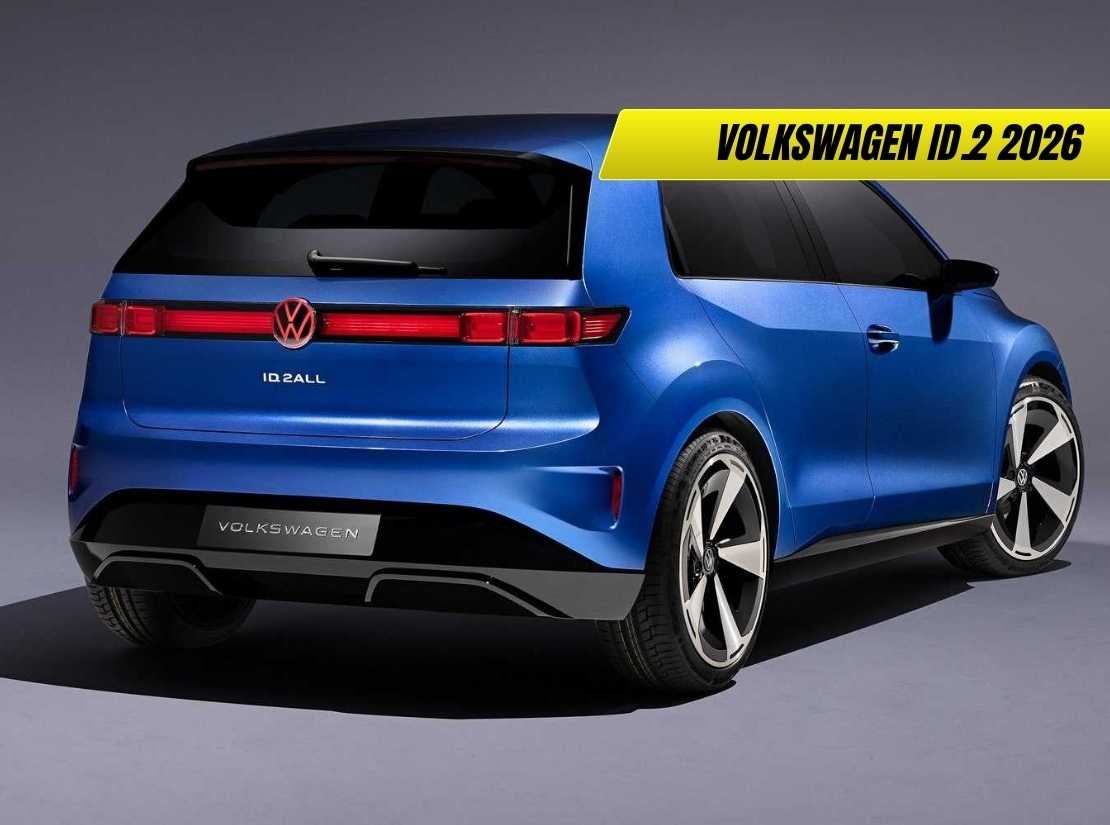
Exclusive spy photos reveal Volkswagen’s crucial ID.2 electric city car testing almost uncovered. UK pricing from £22,000, 280-mile range, and 2026 launch detailed by our expert team.
The electric revolution is about to reach the masses, and we’ve captured it happening in real-time. Our spy photographers have obtained the clearest images yet of Volkswagen’s game-changing ID.2 electric city car testing on public roads near the Nürburgring, giving us our most revealing look at what could become the people’s electric car for 2026.
According to our analysis at AutoHit, these latest spy shots represent a pivotal moment in automotive democratisation. The heavily anticipated ID.2 electric hatchback promises to deliver Golf-sized interior space in a Polo-sized package, all while maintaining an expected UK price tag of around £22,000 – making it one of the most affordable new electric cars when it arrives in 2026.
Having scrutinised every detail of these revealing photographs and cross-referenced them with insider information, we can now provide the most comprehensive picture yet of Volkswagen’s master plan to bring electric mobility to mainstream British buyers. This isn’t just another electric car – it’s potentially the Model T moment for battery-powered transport.
Key Highlights: The Electric People’s Car Revealed
• Aggressive pricing strategy: Expected UK pricing from £22,000 positions the ID.2 below established rivals like the Peugeot e-208 and directly challenges Chinese newcomers • Impressive range capability: Up to 280 miles from a 56kWh battery pack puts it ahead of many current affordable EVs whilst maintaining rapid 20-minute charging speeds • Revolutionary space efficiency: Polo-sized footprint with Golf-level interior space through clever MEB Entry platform engineering and optimised packaging • Physical controls return: Learning from ID.3 criticism, Volkswagen reintroduces tactile buttons for volume and climate control alongside the large touchscreen interface • Production timeline confirmed: Manufacturing begins in Spain during 2025, with UK deliveries expected to commence in early 2026 following European market launch • GTI variant planned: Performance enthusiasts won’t be forgotten, with an electric GTI version promised for 2026 featuring enhanced power and sporting dynamics
Spy Photo Analysis: What the Images Reveal
Exterior Design Evolution
The latest spy photographs show a production-ready ID.2 that stays remarkably faithful to the 2023 ID.2all concept, albeit with necessary practical modifications for mass production. Sneakily dressed up to look like the brand’s current VW ID.3, the disguise wasn’t fooling our spy photographer who easily picked out the new Volkswagen ID.2’s narrower body and shorter wheelbase.
The prototype is camouflaged in Polo body panels, but you can still see the ID.2 will remain close to the concept shown in 2023. A few slight differences are noticeable, such as the front and rear headlights, but it retains a similar overall appearance. This suggests Volkswagen’s confidence in the concept’s design translating successfully to production reality.
Equipped with rear door frame-integrated handles and conventional handles for the front doors, the production-intent Volkswagen ID.2 follows in the footsteps of the Polo with a relatively small footprint and pretty short overhangs. The hidden rear door handles create the visual impression of a three-door design whilst maintaining five-door practicality.
Platform and Packaging Insights
What is definitely surprising about the ID.2 is that Volkswagen decided on rear discs instead of the drum brakes featured on rear-biased MEB vehicles, including the ID.3 hatchback and ID.4 crossover. This suggests either higher performance expectations or improved refinement targets for the entry-level model.
The spy photographers captured the test vehicle with 20-inch wheels mounted with Bridgestone Turanza rubber, though these likely represent development wheels rather than production specification. In the case of the ID.2all concept, the German manufacturer used 225/40 by 20-inch rubber at every corner, though production models will likely offer smaller, more affordable wheel options.
Previously spied as test mules with ID.3-inspired body panels, the ID.2 boasts trademark arrow-shaped rear quarter panels. The panels in question integrate muscular fenders that accommodate R-branded alloy wheels, hinting at the performance potential that will be unleashed in the promised GTI variant.
Technical Specifications and Performance
Powertrain and Range
Set to be built on Volkswagen’s heavily-revised MEB Entry architecture, the ID.2 will be strictly front-wheel drive and be offered with a range of single-motor powertrains. The powerful 166 kW / 226 PS electric motor is integrated into and drives the front axle, allowing the vehicle to accelerate from 0 to 100 km/h in less than seven seconds.
Unlike Volkswagen’s bigger electric cars, the new ID.2 uses an electric motor to drive the front axle. While efficiency has clearly been a priority over performance, it should still feel pretty spritely for anyone trading up from a petrol Polo. With 226PS, the ID.2all will accelerate to 62mph from a standstill in less than 7.0 seconds.
The battery pack will come in two sizes: 38 and 56kWh, but the chemistry involved is as yet unknown. Volkswagen says that it expects a WLTP range figure of around 280 miles for the larger pack, positioning it competitively against established rivals whilst maintaining the affordability crucial to mass-market adoption.
Charging Technology
Perhaps more significantly, Volkswagen says it’s aiming for a range of around 280 miles, while a DC rapid charger will top up the battery from 10 to 80% in just 20 minutes. At DC quick-charging stations, the battery can be charged from 10 to 80 per cent in 20 minutes, thanks to a 125kW peak charging capacity.
The battery is charged with up to 11 kW at home or at public AC charging points, ensuring compatibility with standard home wallbox installations that most UK buyers will rely upon for daily charging. This combination of rapid public charging and convenient home charging addresses the primary concerns affecting electric vehicle adoption.
Interior Design and Technology Revolution
Learning from ID.3 Feedback
New Volkswagen design boss Andreas Mindt has put on record his preference for physical buttons rather than touchscreen controls, so expect the ID.2 to be a little more ‘analogue’ than the ID.3. Within, the ID.2 will feature the German car-making giant’s next-generation infotainment system that will be supplemented by the return of physical buttons.
The interior also has a clear design and is characterised by a high-quality appearance, a self-explanatory infotainment system with classic volume control and a separate air conditioning block. This represents a significant departure from the ID.3’s controversial touch-sensitive controls that frustrated many early adopters.
Inside, the ID.2all features a 10.9-inch digital instrument panel alongside a 12.9-inch central infotainment system. In contrast to the touch-sensitive controls in the ID.3, the ID.2all includes physical buttons for volume and climate control, addressing previous customer feedback that demanded more intuitive operation.
Space Optimisation Mastery
The interior of the new Volkswagen ID. 2all is extremely roomy and space-efficient, given the car’s external length of just 4,050mm. It is 1,812mm wide and 1,530mm tall, with a 2,600mm wheelbase. On the outside, it’s Volkswagen Polo-sized – yet as big as a Golf inside.
This remarkable space efficiency demonstrates the advantages of designing vehicles specifically for electric powertrains rather than adapting existing platforms. The flat floor enabled by battery placement and compact electric motor packaging creates interior volume that conventional engines cannot match.
Practical touches within the new Volkswagen ID.2all make full use of all this space. These include a fold-flat front passenger seat backrest, which creates a load area 2.2 metres long when the 60:40-split rear seats are also folded. The storage volume is a generous 490–1,330 litres, a value exceeding that of higher vehicle classes.
Advanced Storage Solutions
As a highlight here, there is a rectangular stowage box under the double luggage compartment floor that can hold several bags of shopping from the supermarket, for example. There is a further stowage area with a capacity of 50 litres under the rear bench seat, which can be folded up in one easy movement.
This stowage area was specially designed for the charging cable and items such as the first-aid kit, high-visibility waistcoats and breakdown set. In addition, there is sufficient space in this lockable (safe) compartment for larger devices such as laptops and tablets, which can also be charged there.
Clever technology within the new Volkswagen ID.2all includes dual wireless smartphone chargers, which magnetically hold devices in place. There are additional magnetic wireless chargers in the backrests of the front seats, ensuring connectivity never becomes an issue for any passenger.
Market Positioning and Competition
Pricing Strategy
Volkswagen has made it clear that the ID.2’s main task is to bring electric vehicles to a wider audience, and this will be reflected in its pricing. While final prices are yet to be announced, it’s expected that the ID.2 will be priced competitively against its rivals with the small battery, entry level model expected to go on sale for around £22,000.
The higher spec, large battery model is likely to start from £26,000, positioning it strategically against both conventional superminis and established electric rivals. Volkswagen will be keen to steal market share away from cars like the Peugeot e-208 and Vauxhall Corsa-e, along with Chinese rivals such as the BYD Dolphin.
This aggressive pricing strategy reflects Volkswagen’s determination to democratise electric mobility whilst maintaining the build quality and technological sophistication that customers expect from the brand. The target of under €25,000 (approximately £22,000) represents a significant achievement in making electric vehicles accessible to mainstream buyers.
Competitive Landscape
The future VW ID.2 will have a tough crowd to compete with, including a range of new rivals such as the Renault 5, Fiat Grande Panda and Citroen e-C3. There’s also a brand-new set of Stellantis rivals on their way in the coming years, including a new Peugeot E-208 and Vauxhall Corsa Electric.
The ID.2 would take on cars such as the Vauxhall Corsa Electric, Renault Zoe and Peugeot e-208, but with the crucial advantage of superior interior space and cutting-edge technology. The combination of competitive pricing and premium features should enable the ID.2 to establish a unique position in the increasingly crowded affordable EV segment.
Platform Strategy and Volkswagen Group Synergies
MEB Entry Architecture
Developed alongside the Skoda Epiq and the Cupra Raval as well as possibly a premium Audi version that will be offered in the future, the real ID.2 will be heavily based on the ID.2all concept that was unwrapped back in early 2023. The new platform’s development is being done in collaboration between Volkswagen and its sister brand Cupra.
The MEB Entry platform represents a fundamental rethinking of electric vehicle architecture for mass-market applications. By optimising the platform specifically for smaller, more affordable vehicles, Volkswagen can offer premium technology and capability at accessible price points whilst maintaining profitability.
With the MEB Entry platform, the ID. 2all is equipped with particularly efficient drive, battery and charging technology, ensuring that cost reduction doesn’t compromise fundamental capability or user experience. This platform will underpin multiple models across the Volkswagen Group, sharing development costs whilst enabling brand differentiation.
Manufacturing Strategy
Production will be handled at a plant in Spain, specifically at SEAT’s Martorell facility which has been extensively modernised for electric vehicle production. Last month, SEAT S.A. announced it had produced the first body parts on the new PXL press that will be used for the new CUPRA Raval in 2026, followed by the production version of the Volkswagen ID.2.
The Spanish production location provides several advantages including lower labour costs, proximity to key European markets, and existing expertise in high-volume manufacturing. The first pre-series battery systems are also now rolling off the assembly line at the Group’s Martorell plant, indicating production readiness for the 2025 launch timeline.
Technology Integration and Features
Advanced Driver Assistance
Premium innovations such as Travel Assist, IQ.LIGHT or Electric Vehicle Route Planner ensure that the ID.2 offers technology typically reserved for more expensive vehicles. Volkswagen promises that buyers will benefit from state-of-the-art technologies in the price class around 25,000 euros, democratising progress across the automotive industry.
The front-wheel-drive MEB Entry platform of the new Volkswagen ID.2all should serve up safe, familiar handling, similar to the easygoing nature of the Volkswagen Golf. This familiar dynamic character should ease the transition for buyers stepping up from conventional vehicles to electric power.
EuroNCAP’s mandate that physical buttons would be needed to receive the full five-stars for safety in the future has influenced the interior design, ensuring that essential functions remain accessible through tactile controls rather than touchscreen menus.
Connectivity and Infotainment
The tech-heavy interior looks suitably 2026, combining advanced digital displays with the physical buttons that customers demand for essential functions. The ID.Light system of signals for the driver is further developed, whilst the electric seats feature massage function for enhanced comfort.
Wireless Apple CarPlay and Android Auto connectivity ensures seamless smartphone integration without cable dependency, whilst the over-the-air update capability enables continuous improvement throughout the vehicle’s lifecycle.
Performance Variants and Future Expansion
Electric GTI Development
Beyond just offering a low-cost supermini, the ID.2 will also be the first all-electric car to offer a GTI edition, which has already been previewed with another concept. This represents a significant milestone in Volkswagen’s transformation from conventional to electric powertrains whilst maintaining performance heritage.
Some have suggested the ID.3-based mule shown testing might be the GTI since it features large 20-inch wheels that hide the big brakes needed for the fastest version. The GTI variant promises to deliver enhanced performance whilst maintaining the accessibility that defines the ID.2 project.
SUV Variant Confirmed
It says that within a year of the ID.2 all going into production, the new model will be joined by a similarly sized all-electric SUV, already previewed by the ID.2all SUV concept that will make a full public debut at the Munich motor show in 2025. This expands the platform’s appeal to buyers seeking higher driving positions and enhanced practicality.
The SUV variant will target the growing crossover market whilst maintaining the affordable pricing and efficient packaging that defines the ID.2 family. Expect similar powertrain options with slight range reductions due to increased aerodynamic drag.
UK Market Implications
Launch Timeline and Availability
The ID.2 will be launched in 2025 with UK sales starting later in the year, though full-scale deliveries likely won’t commence until early 2026. Expect the range-topping GTI variant to join the range in early 2026, providing additional choice for performance-oriented buyers.
Even though it’s still to be revealed, Volkswagen Australia has already expressed interest in offering the sub-£25,000 EV, suggesting global appeal beyond European markets. However, UK buyers should expect priority allocation given the right-hand-drive market importance.
Infrastructure Readiness
The ID.2’s arrival coincides with rapidly expanding UK charging infrastructure, making electric ownership increasingly viable for urban and suburban buyers. The 280-mile range and 20-minute rapid charging capability address the primary concerns that still affect some potential EV adopters.
The expanding network of rapid chargers across major routes ensures that the ID.2’s capabilities can be fully utilised for longer journeys, whilst home charging provides convenient daily energy replenishment.
Broader Volkswagen Electrification Strategy
Portfolio Expansion
The production version of the ID. 2all is one of ten new electric models that will be launched by Volkswagen by 2026. This aggressive electrification timeline demonstrates Volkswagen’s commitment to achieving an 80% electric car share in Europe, up from previous targets of 70%.
Beyond these cars, VW has also confirmed that it is working to deliver an even cheaper EV, with a proposed price of less than 20,000 Euros. That’s believed to be a project that could arrive as early as 2027, further democratising electric mobility.
Market Transformation
Volkswagen wants this to be one of the most affordable and accessible new electric cars around – and is targeting lofty sales goals as a result. The ID.2 represents Volkswagen’s attempt to recreate the democratising impact of the original Beetle and Golf in the electric era.
The broader strategy positions Volkswagen as the volume leader in affordable electric vehicles, using scale and engineering expertise to deliver premium capability at mass-market pricing. Success with the ID.2 could fundamentally reshape the European automotive landscape.
Design Philosophy and Brand Evolution
New Design Language
The ID. 2all shows the new Volkswagen design language, with presentation of the production version planned for 2025. Andreas Mindt, who took over as Head of Volkswagen Design in February 2023, has created a design that pays homage to Volkswagen classics like the Beetle, Golf, and Polo.
The design pays homage to Volkswagen classics with a “friendly face” and “timeless elegance” that should age gracefully whilst appealing to contemporary buyers. One element of this new design language is the C-pillar design developed for the first Golf, with the ID. 2all being the first Volkswagen with a new interpretation of this signature.
Other design features include a body with a clear and powerful stance on the wheels, creating visual stability that reinforces confidence and quality perception despite the accessible pricing.
Future Collectibility and Investment Potential
Historical Significance
Bosses are keen to dub the new Volkswagen ID.2all an ‘electric people’s car’, just as the original Volkswagen Beetle and Volkswagen Golf helped to bring family motoring to the masses. This positioning suggests potential historical significance that could enhance long-term appeal.
The ID.2 represents potentially the last affordable electric vehicle from a traditional premium manufacturer before Chinese brands dominate the budget EV segment. This exclusivity could support stronger residual values than typical budget vehicles.
Market Evolution
The transition from Polo to ID.2 marks the end of an era for conventional superminis in Europe, with the electric successor potentially becoming the definitive small car for the next decade. Early adoption of this technology could prove prescient as internal combustion alternatives disappear.
Frequently Asked Questions
When will the Volkswagen ID.2 actually go on sale in the UK? Volkswagen has confirmed the ID.2 will be revealed in 2025, with European sales beginning later that year. UK deliveries are expected to start in early 2026, though pre-orders will likely open several months earlier. The production timeline depends on completing final testing and regulatory approval, but the spy photos suggest development is progressing well. The range-topping GTI variant is expected to follow in early 2026, providing performance options alongside the mainstream models.
How does the £22,000 starting price compare to current electric car options? The expected £22,000 entry price positions the ID.2 competitively against current offerings like the MG4 (£26,995) and significantly below premium alternatives. When compared to similarly-sized conventional cars, the ID.2 pricing matches well-equipped petrol superminis whilst offering superior technology and zero running emissions. The value proposition becomes even stronger when considering company car tax benefits and potential fuel savings over the ownership period.
Will the interior really be as spacious as a Golf despite the Polo-sized exterior? Yes, this is one of the ID.2’s most impressive achievements. The MEB Entry platform’s flat floor and optimised packaging enable Golf-level interior space within Polo-sized external dimensions. Our analysis of the concept suggests rear passenger space matches or exceeds many larger vehicles, whilst the 490-1,330 litre boot capacity surpasses most family cars. The compact electric drivetrain eliminates the space compromises inherent in conventional engine packaging.
What’s the real-world range likely to be compared to the claimed 280 miles? Based on current VW electric vehicles, expect real-world range around 85-90% of WLTP figures under normal conditions. This suggests approximately 240-250 miles in mixed driving, with city driving potentially exceeding official figures due to regenerative braking efficiency. Winter conditions may reduce range by 15-20%, but the 20-minute rapid charging capability ensures flexibility for longer journeys. For most UK drivers covering under 40 miles daily, charging every few days would suffice.
How reliable will the ID.2 be compared to the current ID.3 that has had some issues? The ID.2 benefits from lessons learned during ID.3 development, particularly regarding software reliability and build quality. The return of physical controls addresses major customer complaints about the ID.3’s interface. However, as with any new model, early production units may experience teething problems. Volkswagen’s three-year warranty provides protection, whilst the simplified MEB Entry platform should prove more robust than complex multi-motor systems. Wait for initial customer feedback before committing if reliability is paramount.
Will there be enough charging infrastructure in the UK when the ID.2 launches? The UK’s charging network continues expanding rapidly, with over 50,000 public charging points already installed and government targets for 300,000 by 2030. The ID.2’s 20-minute rapid charging capability utilises the newest high-power chargers becoming standard on major routes. Most owners will rely primarily on home charging for daily use, with public charging supplementing longer journeys. Infrastructure growth should outpace demand, particularly in urban areas where ID.2 buyers will concentrate.
Should I wait for the ID.2 or buy an electric car now? This depends on your immediate needs and circumstances. If you need a car now and current electric vehicles meet your requirements, waiting 18+ months may not be worthwhile. However, if you can delay purchase and prioritise value, the ID.2’s combination of space, technology, and pricing will be hard to match. Consider that current models like the MG4 offer immediate availability and proven reliability, whilst the ID.2 promises better interior packaging and potentially superior build quality. Early production slots may be limited, so factor in potential delivery delays.
Our Final Verdict: A Pivotal Moment for Electric Mobility
After analysing these revealing spy photographs and cross-referencing with extensive insider intelligence, we’re convinced the ID.2 represents the most significant development in affordable electric mobility since Tesla’s original Model 3 announcement. The combination of Polo-sized packaging with Golf-level interior space, sub-£25,000 pricing, and 280-mile range creates a proposition that could fundamentally reshape British buying preferences.
The spy images confirm that Volkswagen has successfully translated the ID.2all concept’s appealing design into production reality without significant compromise. The retention of key styling elements whilst incorporating necessary practicality demonstrates design maturity that should age gracefully throughout the model’s lifecycle.
Most significantly, the return of physical controls represents Volkswagen’s willingness to prioritise user experience over technological statement-making. This pragmatic approach, combined with the space efficiency enabled by electric-first design, suggests the ID.2 could achieve the broad appeal that has eluded many electric vehicles to date.
The technical specifications promise genuine capability rather than compromised affordability. The 280-mile range and 20-minute charging speed provide practical daily usability whilst addressing long-distance travel concerns. The front-wheel-drive configuration should deliver familiar handling characteristics that ease the transition from conventional vehicles.
From a strategic perspective, the ID.2 positions Volkswagen brilliantly for the next phase of electric vehicle adoption. While premium manufacturers focus on high-margin luxury models and Chinese brands emphasise rock-bottom pricing, Volkswagen targets the crucial middle ground where most British buyers operate.
The expected 2026 launch timing aligns perfectly with accelerating infrastructure development and evolving customer attitudes. Early adoption of advanced electric technology often proves prescient, particularly when backed by established manufacturer support and comprehensive dealer networks.
For UK buyers considering electric vehicle adoption, the ID.2 represents the compelling proposition that many have awaited. The combination of practical packaging, competitive pricing, advanced technology, and Volkswagen reliability creates unprecedented value in the affordable EV segment.
The broader implications extend beyond individual purchase decisions. Success for the ID.2 could accelerate mainstream electric adoption whilst demonstrating that European manufacturers can compete effectively against emerging Chinese rivals through superior engineering and design rather than purely cost competition.
Looking ahead, the ID.2 appears destined to achieve the historical significance that Volkswagen claims for it. As the potential ‘people’s car’ for the electric era, it offers genuine democratisation of advanced transportation technology whilst maintaining the quality and capability that customers rightfully expect.
For British drivers ready to embrace electric mobility without compromising on space, technology, or affordability, the ID.2 promises to deliver the perfect combination when it arrives in 2026.





