
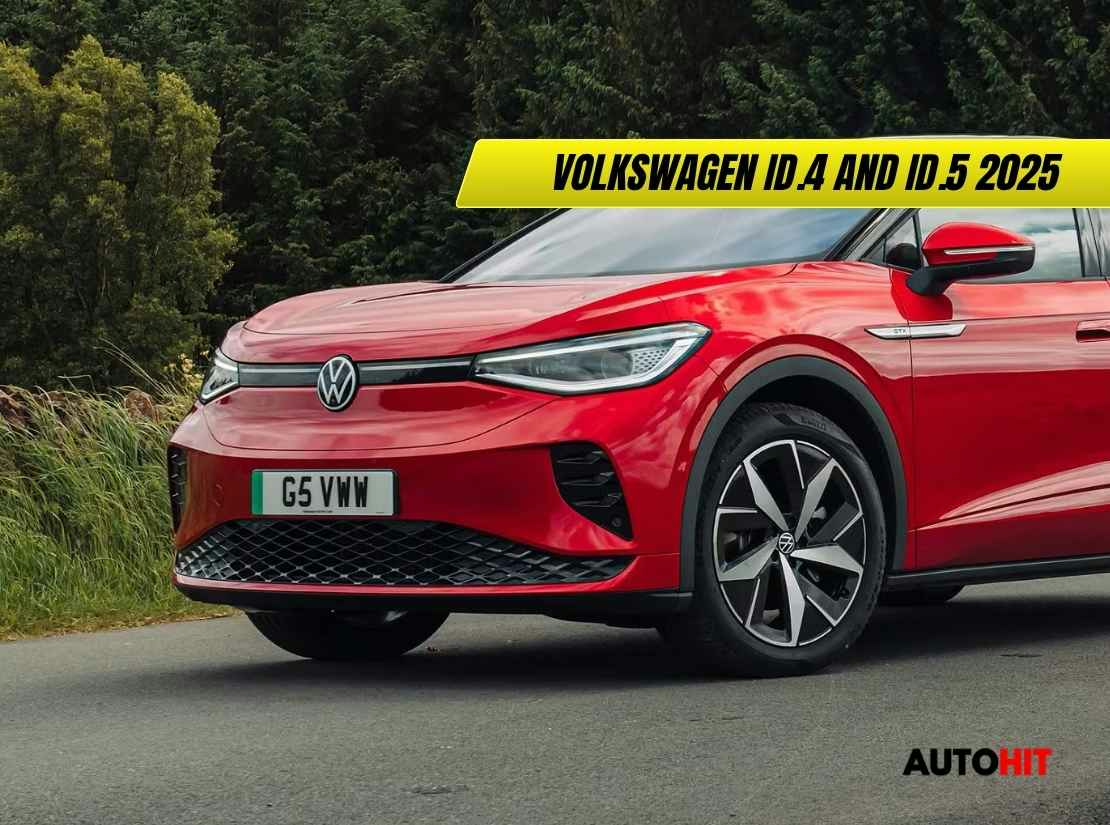
Sleeker styling, smarter trims and a price realignment – VW’s ID.4 and ID.5 get a meaningful 2025 refresh tailored for UK buyers.
Volkswagen’s electric SUV duo – the ID.4 and its more coupe-inspired sibling, the ID.5 – have quietly evolved into mainstays of the European EV market. And now, for 2025, they’re getting a strategic update that’s less about revolution and more about refinement. With minor design tweaks, smarter equipment packaging, and a notable pricing reorganisation, VW is aiming to make these EVs more appealing in a crowded market of electric crossovers.
We at AutoHit have kept a close eye on VW’s electrification efforts, and the 2025 update feels like a nudge in the right direction. Especially as the market heats up with fresh competition from the likes of the Polestar 2 and the Tesla Model Y. So what exactly has changed? And what does it mean for potential UK buyers looking for a family EV with German polish and sensible range?
Let’s dig into the details.
Key Highlights
- New trim structure: ID.4 and ID.5 now available in Pure, Pro and GTX trims only – previous ‘Life’ and ‘Max’ trims are gone.
- Simplified pricing: The 2025 ID.4 now starts at £42,000 (estimated) for the Pure version, while the GTX climbs above £53,000.
- Enhanced tech: All models benefit from VW’s new 12.9-inch infotainment screen and improved software responsiveness.
- Better efficiency: The Pro trims offer revised powertrains and expected real-world range of over 320 miles for the ID.5.
- Design tweaks: New bumper styling and wheel designs freshen up the look without a full redesign.
- UK relevance: Both models remain ULEZ compliant and compatible with rapid CCS chargers – good news for city drivers.
A Trim Strategy That Finally Makes Sense
If you’ve ever tried to spec a VW EV in the last two years, you’ll know just how baffling the trim levels could be. VW offered names like ‘Life’, ‘Business’, ‘Tech’, ‘Style’, and ‘Max’, with a maze of optional packs and overlapping features.
For 2025, VW has thankfully hit reset.
Now, buyers can choose from three clear trims: Pure, Pro, and GTX – mirroring what we’ve already seen in models like the Volkswagen Golf 2025.
- Pure: Entry-level, 52kWh battery, around 210 miles WLTP range, ideal for short-range commuters.
- Pro: 77kWh battery, more powerful motor (~286bhp), significantly improved range (~340 miles WLTP).
- GTX: Dual-motor AWD, 340bhp, quicker 0-62mph (under 6 seconds), sporty styling cues and performance focus.
This new structure not only streamlines the buying process but also ensures that every pound you spend corresponds to a tangible upgrade – something UK buyers increasingly expect as EV prices rise.
Styling Changes: Subtle but Necessary
Volkswagen hasn’t gone overboard with the 2025 update. Instead, the front and rear bumpers receive gentle sculpting for a sharper look, while new 18- to 21-inch wheels give both models a bit more visual muscle.
The ID.5, already the sportier of the two, benefits most from the updates, especially in GTX guise where black trim inserts and a mild rear spoiler add visual drama. But don’t expect the kind of aggressive styling you’d find on, say, the MG Cyberster X SUV.
Colours have been revised too – with new grey, blue and green hues replacing some of the more anonymous silvers of past years.
Cabin and Tech: Much-Needed Modernisation
Volkswagen faced early criticism for the sluggish, unintuitive infotainment systems on its EVs. The new 12.9-inch screen (standard on all versions) aims to fix that. It brings faster response times, clearer menus, and better integration with Apple CarPlay and Android Auto.
Also welcome is a new rotary controller for the HVAC, plus redesigned steering wheel buttons – finally physical again – after a storm of complaints about the old capacitive controls.
Front and rear USB-C ports, standard ambient lighting, and a new augmented reality HUD (on Pro and GTX) round out the interior changes. It’s not a revolution, but it’s finally where it should’ve been at launch.
Powertrains and Range: Real-World Gains
Both the ID.4 and ID.5 get mild powertrain upgrades:
- The Pro versions now use the same APP550 rear-mounted motor that debuted in the ID.7 saloon. It delivers more torque and smoother acceleration.
- Range climbs to an estimated 340 miles WLTP for the ID.5 Pro, which should translate to around 310–320 miles real-world in mixed UK driving.
- Charging speeds remain at 135kW DC max – not class-leading, but acceptable for most motorway stops.
GTX models benefit from improved torque vectoring and retuned chassis settings for more dynamic handling – though we’ll reserve full judgment until we’ve driven one on UK B-roads.
Pricing Breakdown: A More Logical Ladder
Here’s how the expected UK pricing (converted from EU figures) looks:
| Model | Trim | Powertrain | Est. UK Price | Our Take |
|---|---|---|---|---|
| ID.4 | Pure | 52kWh, RWD, ~210mi | £42,000 | Good value for urban drivers, but limited range. |
| ID.4 | Pro | 77kWh, RWD, ~340mi | £46,500 | The sweet spot for most UK families. |
| ID.4 | GTX | 77kWh, AWD, 340bhp | £53,000+ | AWD grip and speed, but costly. |
| ID.5 | Pro | 77kWh, RWD, ~340mi | £49,000 | Style and substance, with better aero range. |
| ID.5 | GTX | 77kWh, AWD | £56,000+ | Premium coupe-SUV looks – rivals Kia EV6 GT. |
With models like the Audi Q3 still using ICE platforms, the ID.4 and ID.5 begin to feel more futuristic – and better justified in terms of pricing.
How Do They Stack Up Against Rivals?
Volkswagen has wisely realigned its electric SUVs to compete more directly with:
- Tesla Model Y: Faster charging, more range, but less refined ride.
- Hyundai Ioniq 5: Better design flair, more tech, similar pricing.
- Skoda Enyaq: Same platform, often cheaper, but less premium.
Our full comparison of the Tesla Model Y vs Hyundai Ioniq 5 offers a deep dive for buyers cross-shopping these.
The ID.4 and ID.5 remain middle-of-the-road in terms of performance and price, but offer solid practicality, VW familiarity, and improved tech – which is exactly what many UK drivers want.
Practicality for the UK Driver
Let’s not forget the mundane but important bits:
- Boot space: 543L in ID.4, 549L in ID.5 – enough for a full Tesco shop or a family weekend in the Lake District.
- Insurance groupings: Mid-range (Group 28–33), depending on trim.
- Running costs: Benefit-in-Kind tax still low (2%) for company car drivers.
- Warranty: Standard 3 years / 60,000 miles, 8 years on battery.
ULEZ compliance? Of course. And these models slot nicely into the growing market of EVs priced under £60,000 that balance usability with sustainability.
FAQs
How much will the 2025 VW ID.4 actually cost to run day-to-day?
Expect electricity costs of around 4–5p per mile when home charging. Servicing is minimal – think brake fluid, tyre wear, and cabin filters.
Is the ID.5 GTX really worth the premium?
If you prioritise performance and looks, yes. But for most drivers, the ID.5 Pro offers better value.
How does it compare to the Ioniq 5 in terms of space?
Similar legroom, slightly smaller boot. But the VW feels better put together inside.
Can I tow with an ID.4 or ID.5?
Yes – up to 1,200kg braked on GTX models. You’ll need the factory-fit towing pack.
Is this a good time to buy a VW EV?
With the 2030 ICE ban looming and BiK incentives still strong, it’s actually a solid time to buy – especially with this simpler pricing.
How long does it take to charge?
0–80% in around 30–35 minutes on a 135kW charger. Home charging (7kW) takes about 11 hours overnight.
Is it comfortable for long motorway journeys?
Yes – especially the Pro and GTX trims. Seats are supportive, wind noise is minimal, and adaptive cruise helps.
Conclusion: Smart Tweaks That Make a Big Difference
The 2025 updates to the Volkswagen ID.4 and ID.5 won’t blow anyone away with headline-grabbing innovations. But sometimes, a thoughtful rethink of pricing, tech, and trims is exactly what a product line needs. And that’s what VW has delivered.
For British families, commuters and company car drivers alike, the ID.4 and ID.5 now offer a clearer, better-packaged choice. The Pro trims stand out as the most balanced, while GTX continues to appeal to performance-minded EV fans.
They’re not the flashiest options out there – and don’t expect Polestar levels of drama – but for many buyers, these Volkswagens will quietly tick all the right boxes. Just how VW likes it.





