
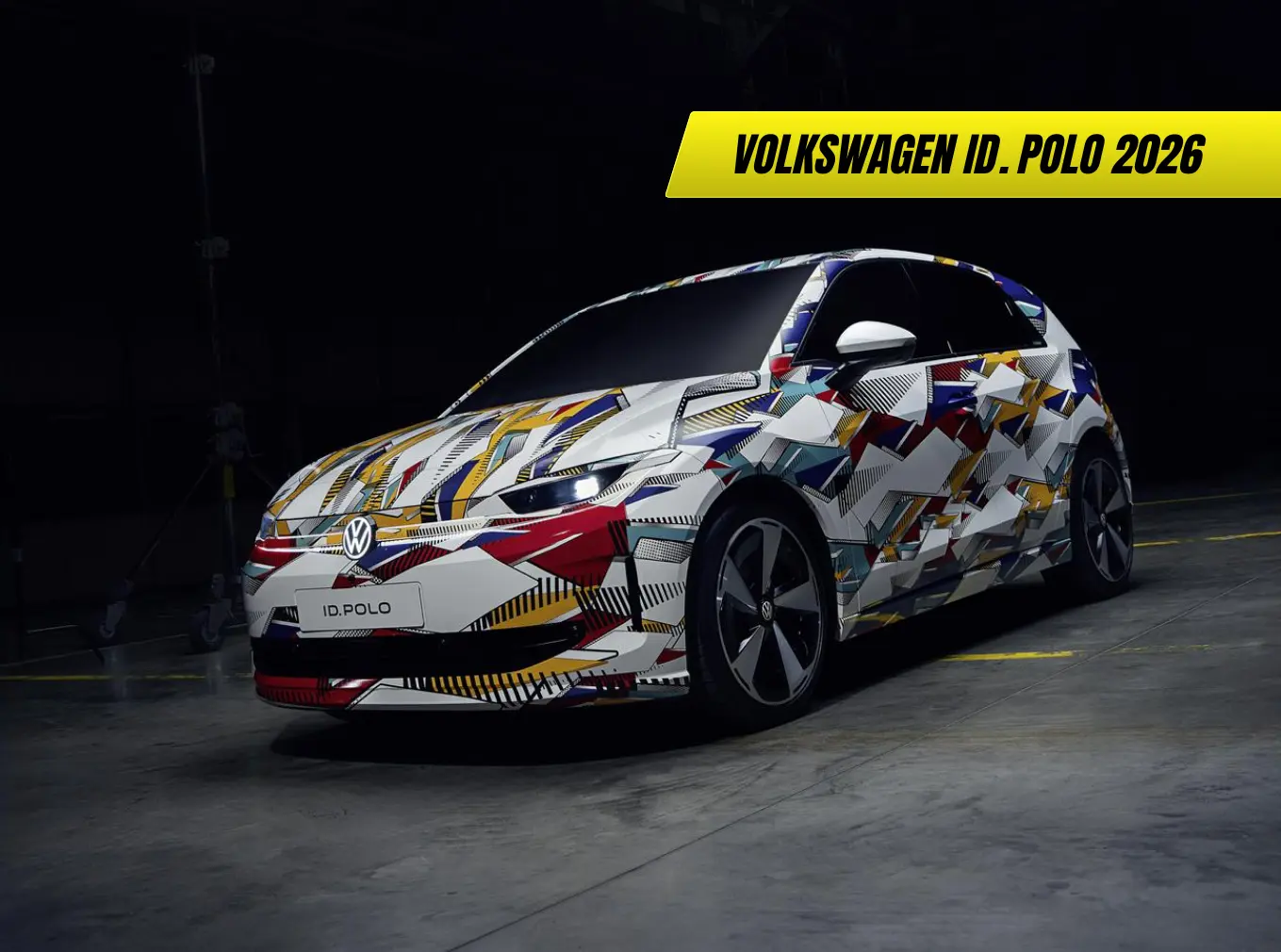
The Volkswagen ID. Polo is the most anticipated affordable electric car of 2026 — a genuine small EV starting from around £22,000, with a high-performance GTI variant set to follow later in the year.
Volkswagen is reinventing one of the most iconic names in motoring history for the electric age. The ID. Polo — originally developed under the ID.2 codename — will be the brand’s most affordable EV when it arrives in UK showrooms later in 2026. With up to 280 miles of real-world range, fast charging and a proper GTI hot hatch variant, this is one of the most important small cars of the decade. If you are currently weighing up affordable electrified options, our best PHEVs for UK drivers guide covers alternatives at a similar price point.
Volkswagen ID. Polo 2026: Key Highlights
- UK prices expected to start from approximately £22,000 — the most affordable VW EV to date
- Three power outputs: 116 hp, 135 hp and 211 hp, all with front-wheel drive
- Two battery sizes: 37 kWh LFP for entry models and 52 kWh NMC for long-range and GTI variants
- Claimed range of up to 280 miles (approximately 450 km WLTP) on the larger battery
- ID. Polo GTI with 226 hp, electronically controlled front differential and aggressive styling
- On-sale date expected autumn/winter 2026, with pre-orders opening from late April 2026
Release Date: When Is the ID. Polo Coming to the UK?
The Volkswagen ID. Polo is confirmed for market launch in autumn 2026, with pre-orders expected to open from the end of April 2026. The standard models will arrive first, followed by the higher-performance ID. Polo GTI later in the year. Volkswagen’s official production is scheduled to begin in 2026, with deliveries to European customers — including the UK — commencing in the second half of the year.
The ID. Polo will be sold alongside the existing petrol Polo, not as a replacement, ensuring continuity for buyers who are not yet ready to make the switch to electric. Keep an eye on the Volkswagen UK official website for confirmed order dates.
Price: How Much Will the VW ID. Polo Cost in the UK?
Volkswagen has confirmed a starting price target of approximately €25,000 in Europe, which translates to around £22,000 for UK buyers at the base specification. The mid-range models with the larger 52 kWh battery are expected to sit around £26,000–£28,000, while the ID. Polo GTI is anticipated to exceed £30,000.
| Variant | Battery | Power | Expected UK Price |
|---|---|---|---|
| ID. Polo Entry | 37 kWh LFP | 116 hp | ~£22,000 |
| ID. Polo Mid | 37 kWh LFP | 135 hp | ~£24,000 |
| ID. Polo Long Range | 52 kWh NMC | 211 hp | ~£27,000 |
| ID. Polo GTI | 52 kWh NMC | 226 hp | ~£30,000+ |
In my experience, Volkswagen tends to price its UK models slightly above the European equivalent once VAT and local market adjustments are factored in. From my point of view, the entry-level model at £22,000 would make the ID. Polo one of the most genuinely competitive affordable EVs on the market — potentially challenging the Renault 5 and upcoming Clio E-Tech Electric directly.
Powertrain and Range: Built on MEB+
The ID. Polo rides on the new MEB+ platform, an evolution of the architecture used under the ID.3 and ID.4, specifically engineered for smaller, more affordable electric vehicles. The platform supports front-wheel drive only across the standard range, which keeps costs down and packaging simple.
The entry and mid-power variants use a 37 kWh lithium iron phosphate (LFP) battery, capable of DC rapid charging at up to 90 kW. This allows a 10–80% charge in approximately 25 minutes. The larger 52 kWh NMC battery used in the Long Range and GTI models supports 130 kW DC fast charging, cutting the same charging window to around 20 minutes— genuinely practical for UK motorway driving between rapid chargers.
Real-world range figures are estimated at:
- 37 kWh battery: approximately 185–200 miles in mixed UK driving
- 52 kWh battery: approximately 240–260 miles in mixed UK driving
Design: Modern, Purposeful and Family Familiar
The ID. Polo shares its general proportions with the current petrol Polo but adopts a distinctly modern EV design language. The front end features a closed-off grille panel with an illuminated VW logo, flanked by slim LED daytime running lights. The profile is clean and aerodynamically optimised, with a modest rear spoiler and flush door handles on higher trims.
The ID. Polo GTI takes a more aggressive approach with deeper front and rear bumpers, larger wheels, red trim accents and an illuminated red VW logo on the bootlid — a nod to the heritage of the GTI badge while firmly positioning it in the electric era.
Interior: Physical Buttons Are Back
One of the most significant design decisions Volkswagen has made with the ID. Polo is the return of physical buttons and controls, responding directly to criticism of the touch-sensitive surfaces in early ID. models. The interior follows the new “Pure Positive” design philosophy, featuring:
- 13-inch central touchscreen with revised software and improved responsiveness
- 10.25-inch digital instrument cluster
- Physical climate controls and volume buttons
- 435-litre boot — larger than the equivalent petrol Polo
- Harman Kardon sound system available as an option
- ID.Light ambient strip across the dashboard
- Travel Assist with traffic light and stop sign recognition
From my point of view, this interior represents a meaningful step forward from the original ID.3 launch and addresses the most common complaints from real-world EV owners. The 435-litre boot is particularly impressive for a car of this size and should make it a practical choice for young families and urban drivers alike. For more on what makes a good small city car, our review of the Toyota Aygo X 2026 Hybrid offers a useful petrol comparison.
ID. Polo GTI: The Electric Hot Hatch
The ID. Polo GTI is the model that has generated the most excitement among UK enthusiasts. With 226 hp (166 kW) and an electronically controlled locking differential on the front axle, it promises the kind of engaging, driver-focused experience that defined the original GTI formula — now delivered silently and instantly through electric torque.
Acceleration from 0–62 mph is expected in the region of 6.5 seconds, with a top speed electronically limited to 112 mph. The GTI will also feature a bespoke driving sound — an artificially generated acoustic signature designed to reinforce the sporting character — along with lowered suspension, sport seats and the traditional red GTI detailing throughout the cabin.
FAQ
When is the Volkswagen ID. Polo available in the UK?
The ID. Polo is expected to go on sale in the UK in autumn 2026, with pre-orders opening from late April 2026.
How much will the VW ID. Polo cost in the UK?
Prices are expected to start from approximately £22,000 for the base model. The GTI variant is anticipated to start above £30,000.
What is the range of the Volkswagen ID. Polo?
The larger 52 kWh battery version offers a WLTP range of up to 280 miles (approximately 450 km), while the 37 kWh entry model is estimated at around 190–200 miles in real-world UK driving.
Does the VW ID. Polo qualify for any UK government grants?
At the time of writing, the UK government’s plug-in car grant has been discontinued for private buyers. However, the ID. Polo’s price point may qualify it for future incentive schemes. Check the latest position on the UK government website.
What is the charging time for the VW ID. Polo?
The 52 kWh battery charges from 10–80% in approximately 20 minutes on a 130 kW rapid charger. The 37 kWh LFP battery achieves the same on a 90 kW charger in around 25 minutes.
How does the ID. Polo GTI compare to a petrol hot hatch?
With 226 hp, an e-diff and instant electric torque, the GTI should offer comparable performance to the current petrol Polo GTI — but with lower running costs and zero tailpipe emissions.
Will the VW ID. Polo be affected by ULEZ charges?
No. As a fully electric vehicle, the ID. Polo is exempt from ULEZ charges and London Congestion Charge — a significant saving for urban UK drivers.
Conclusion
The Volkswagen ID. Polo 2026 is shaping up to be one of the most important car launches of the year. At approximately £22,000, it brings genuine electric motoring within reach of a far wider audience than previous VW EVs. The return of physical controls, the practical 435-litre boot and the promise of a 226 hp GTI variant make this a car that I would confidently recommend to almost any UK buyer considering their first electric vehicle. The autumn 2026 launch cannot come soon enough.





