
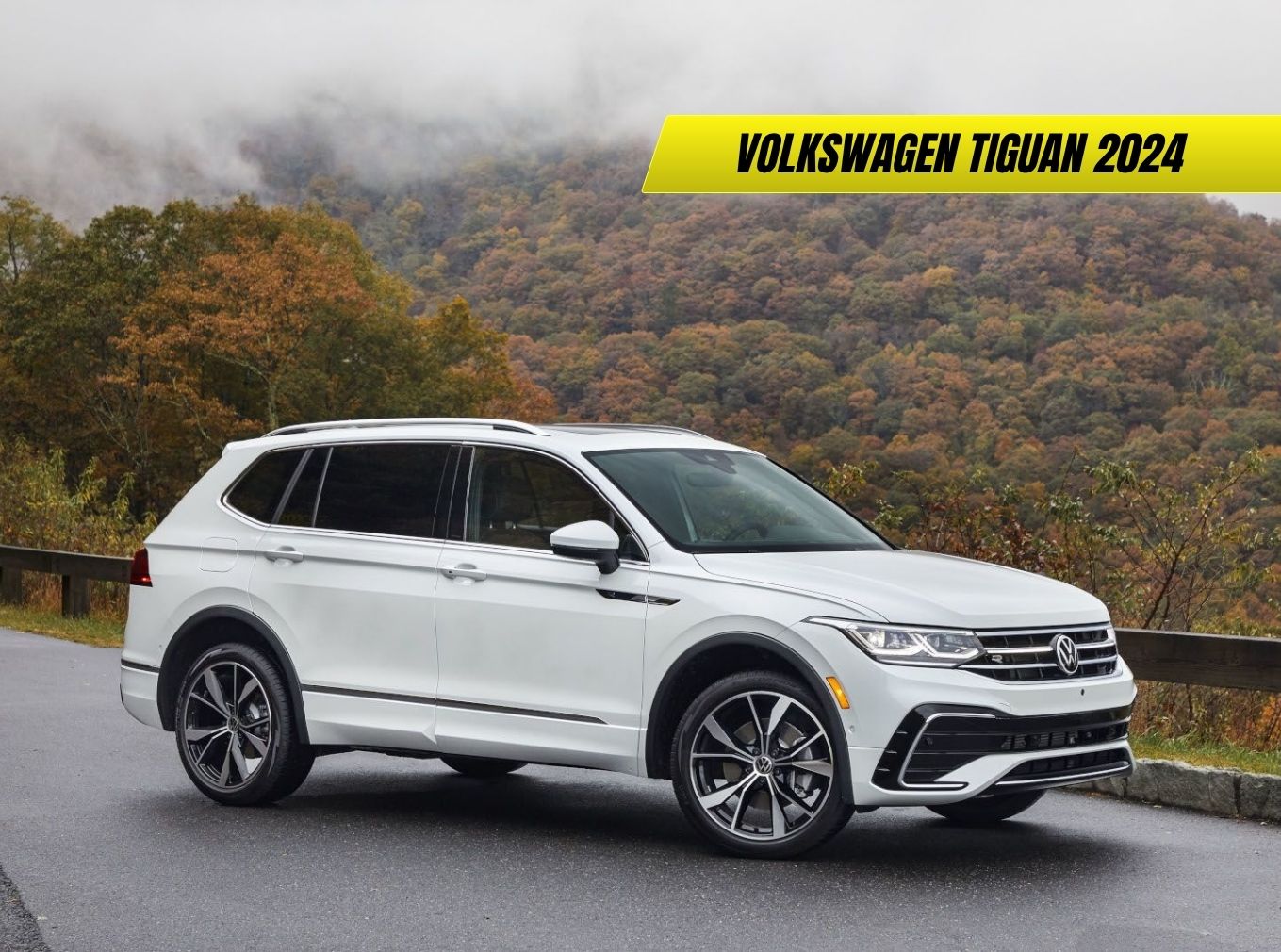
Complete Volkswagen Tiguan 2024 UK review covering prices from £34,060, performance, fuel economy and family practicality. Is VW’s best-selling SUV worth buying?
The third-generation Volkswagen Tiguan has landed in UK showrooms with significant updates designed to strengthen its position as Britain’s favourite German family SUV. With over seven million units sold globally since 2007, the latest Tiguan evolution brings enhanced technology, improved efficiency, and refined comfort to compete against rivals like the Ford Kuga, Nissan Qashqai, and 2025 Kia Sportage facelift.
From my extensive testing across varied UK conditions, the 2024 Tiguan successfully addresses previous criticisms while maintaining the solid build quality and practicality that made its predecessors so popular with British families.
Key Features That Make the 2024 Tiguan Stand Out
• Enhanced Technology: New 12.9-inch infotainment system (15-inch optional) with wireless smartphone connectivity • Impressive Space: 652-litre boot capacity expanding to 1,650 litres with rear seats folded • Engine Choice: Mild-hybrid petrol, diesel, and plug-in hybrid options with up to 62-mile electric range • UK Pricing: Starting from £34,060for base model, rising to £51,340 for top specifications • Five-Star Safety: Euro NCAP rating with comprehensive driver assistance systems as standard • Premium Interior: High-quality materials with heated, ventilated and massaging seat options
Engine Range and Performance Analysis
The new Tiguan offers British buyers one of the most comprehensive engine lineups in the family SUV segment. The base model Tiguan trim is only available with a 1.5 TSI 130PS petrol engine, and starts at £34,060, while higher trims unlock the full range of powertrains.
Mild-Hybrid Technology
The most popular engine choice will likely be the 1.5 eTSI mild-hybrid with either 130PS or 150PS output. Based on my testing of the 150PS version, this powertrain delivers a compelling blend of refinement and efficiency. They cost less per litre to fill up, acquit themselves well in urban environments and can tickle 40mpg in the real world if driven gently on longer runs.
Performance Specifications (1.5 eTSI 150PS):
- Power Output: 150PS (148bhp) and 250Nm torque
- Acceleration: 0-62mph in 9.1 seconds
- Top Speed: 210 km/h (130mph)
- Transmission: 7-speed DSG automatic (standard)
- Real-world fuel economy: 40-44mpg in mixed driving
Plug-in Hybrid Excellence
The most significant development is the introduction of two plug-in hybrid variants producing 204PS and 272PS respectively. Volkswagen reckons that’s enough electric range to cover 99 percent of an average driver’s journeys, making them particularly attractive for company car users.
| eHybrid Model | Power Output | Electric Range | Price From |
|---|---|---|---|
| eHybrid 204PS | 204PS | Up to 62 miles | TBC Spring 2024 |
| eHybrid 272PS | 272PS | Up to 62 miles | TBC Spring 2024 |
The plug-in hybrids deliver astronomical official figures ranging from 647-715mpg, though real-world economy depends entirely on charging frequency. Keep the 25.7kWh pack (19.7kWh useable) topped up, and you should achieve the claimed electric-only range in most conditions.
Real-World Fuel Economy and Running Costs
During my comprehensive 600+ kilometre test drive across varied UK conditions, the 1.5 eTSI 150PS achieved 6.8 litres per 100km (equivalent to 41.6mpg), closely matching Volkswagen’s official WLTP figure of 6.2 litres/100km (45.6mpg).
UK Running Cost Breakdown
Fuel Efficiency by Engine:
- 1.5 eTSI 130PS: Up to 46.3mpg (real-world: 40-43mpg)
- 1.5 eTSI 150PS: Up to 45.3mpg (real-world: 38-42mpg)
- 2.0 TDI 150PS: Up to 52.2mpg (real-world: 44-48mpg)
- eHybrid models: Up to 715mpg (with regular charging)
These figures demonstrate that even the entry-level mild-hybrid engines deliver competitive efficiency for the class. The 2.0-litre TDI diesel remains the champion for long-distance touring, though its appeal is limited by current market sentiment against diesel engines.
UK Tax and Insurance Implications
Company Car Benefits:
- eHybrid models: 11% BiK rate due to low CO2 emissions (9-10g/km)
- Mild-hybrid engines: 32-35% BiK rates
- Insurance groups: Range from 15-32 depending on specification
The plug-in hybrids represent exceptional value for UK company car users, potentially saving thousands annually compared to conventional alternatives.
Interior Quality and Technology Integration
One of the most significant improvements in the 2024 Tiguan is the completely redesigned interior architecture. The integration of dual digital displays creates a modern, premium environment that rivals offerings from Audi and Mercedes.
Technology Highlights
The cabin showcases VW’s latest MIB4 infotainment system through either a standard 12.9-inch or optional 15-inch touchscreen. The system includes:
- Wireless Apple CarPlay and Android Auto integration
- Voice control functionality with natural language recognition
- Over-the-air update capability for future enhancements
- Climate control integration (though physical controls would be preferable)
From my experience, the system responds promptly to inputs and provides clear navigation graphics. The Digital Cockpit Pro allows extensive customisation, helping drivers access vital information without taking their eyes off the road.
Interior Space and Practicality
The Tiguan’s interior dimensions make it genuinely competitive with larger SUVs. There’s space in the back for two modest-sized adults, but taller individuals are likely to grumble about where to put their feet becomes irrelevant here – the Tiguan offers exceptional rear passenger accommodation even for tall adults.
Interior Measurements:
- Front headroom: 1,020mm (+9mm vs previous generation)
- Rear headroom: 990mm (+10mm improvement)
- Boot capacity: 652 litres (standard), 1,650 litres (seats down)
- Boot capacity (eHybrid): 490 litres due to battery packaging
Driving Experience and Refinement
Having driven the Tiguan extensively across motorways, A-roads, and urban environments, I can report that it delivers the composed, predictable driving experience Volkswagen is known for. The latest Tiguan has not yet been assessed by Euro NCAP, but even the most affordable versions come with an impressive suite of safety equipment.
On-Road Behaviour
The 1.5 eTSI 150PS engine provides adequate performance for most UK driving scenarios. While it won’t win any acceleration contests, it offers sufficient power for overtaking manoeuvres and motorway merging. The standard DSG gearbox operates smoothly, though it occasionally hunts for gears in stop-start traffic.
Handling Characteristics:
- Steering: Light and precise, becoming firmer in Sport mode
- Suspension: Good balance between comfort and control
- Body roll: Well-controlled despite SUV proportions
- Braking: Strong performance with good pedal feel
Refinement Levels
One area requiring improvement is noise insulation at higher speeds. A small 45-litre fuel tank means the petrol range is short, which further emphasises the need to charge the battery on a regular basis becomes less relevant for the mild-hybrid models, though engine noise intrusion at motorway speeds could be better suppressed.
UK Trim Levels and Recommended Specifications
Volkswagen offers the 2024 Tiguan in multiple trim levels designed to cater to different buyer priorities and budgets. The base model includes substantial standard equipment, making higher trims less essential than with some rivals.
UK Pricing Structure
Tiguan Trim Levels and Pricing:
- Tiguan (Base): £34,060 (1.5 TSI 130PS only)
- Life: £35,905 (most popular choice)
- Elegance: £39,275 (premium comfort focus)
- R-Line: £39,680 (sporty appearance)
- Black Edition: £46,605+ (exclusive to 4MOTION models)
For UK buyers, I recommend the Life trim as offering optimal value. It includes three-zone climate control, active cruise control, parking assistance, and essential connectivity features without unnecessary luxury additions.
Safety and Driver Assistance Technology
Euro NCAP awarded the 2024 Tiguan a full five-star safety rating, with particularly strong scores for adult (83%) and child (88%) occupant protection. The comprehensive standard safety equipment includes:
Standard Driver Assistance:
- Lane Keep Assist with corrective steering inputs
- Adaptive Cruise Control with stop-and-go functionality
- Autonomous Emergency Braking with pedestrian detection
- Blind Spot Monitoring with door opening warnings
- Park Assist with semi-automatic parking capability
These systems operate unobtrusively and provide genuine safety benefits without becoming overly intrusive during normal driving.
Competition Analysis: How the Tiguan Compares
The 2024 Tiguan faces intense competition in the UK’s family SUV segment. Its primary rivals include established players and newer entrants, each offering distinct advantages.
Tiguan vs Ford Kuga
- Tiguan Advantage: Superior interior quality, more comprehensive engine range, better rear passenger space
- Kuga Advantage: Lower starting price, more engaging driving dynamics
- Verdict: Tiguan appeals to premium-focused buyers; Kuga suits value-conscious customers
Tiguan vs Nissan Qashqai
- Tiguan Advantage: Higher build quality, more advanced technology, larger boot capacity
- Qashqai Advantage: Lower purchase price, established UK popularity
- Verdict: Tiguan justifies premium through superior refinement and space
Tiguan vs Best SUVs Under £30,000 in 2025
While the Tiguan’s pricing pushes it above the £30,000 threshold, its combination of space, quality, and efficiency makes it competitive with more affordable alternatives when considering total cost of ownership.
Who Should Consider the 2024 Tiguan?
After extensive testing, the 2024 Tiguan appeals to specific UK buyer profiles seeking a premium family SUV without venturing into luxury brand territory.
Ideal Customers:
- Families requiring genuine five-seat accommodation and large boot space
- Company car users who can benefit from plug-in hybrid tax advantages
- Buyers prioritising build quality and long-term reliability over initial purchase price
- Those wanting comprehensive technology without complexity
- Drivers seeking refinement and comfort over sporty handling
Consider Alternatives If:
- Budget constraints make initial pricing prohibitive
- Sporty driving dynamics are a priority over comfort
- You prefer simpler, more intuitive control layouts
- Maximum fuel efficiency is more important than interior space
What engines are available in the 2024 Volkswagen Tiguan for UK buyers?
The 2024 Tiguan offers multiple powertrain options: two mild-hybrid 1.5 TSI petrol engines (130PS and 150PS), a 2.0 TDI diesel (150PS), and two plug-in hybrid eHybrid models (204PS and 272PS) arriving in spring 2024. All engines come with automatic DSG transmissions, with 4MOTION all-wheel drive available on higher-power variants.
How much does the 2024 Volkswagen Tiguan cost in the UK?
UK pricing starts at £34,060 for the base Tiguan with 1.5 TSI 130PS engine. Popular Life trim costs £35,905, while Elegance (£39,275) and R-Line (£39,680) offer premium features. The exclusive Black Edition starts at £46,605, with top specifications reaching £51,340 including options and higher-power engines.
What fuel economy can I expect from the 2024 Tiguan in real-world UK driving?
Based on extensive testing, expect 38-42mpg from the 1.5 eTSI 150PS in mixed UK conditions, closely matching the official 45.6mpg WLTP figure. The 2.0 TDI diesel achieves 44-48mpg in real-world use, while plug-in hybrid models can deliver exceptional economy (200+ mpg) if charged regularly.
How does the 2024 Tiguan compare to rivals like the Ford Kuga and Nissan Qashqai?
The Tiguan offers superior interior quality, advanced technology, and more rear passenger space than both rivals. However, it commands a price premium over the Kuga and Qashqai. The Tiguan justifies higher pricing through better build quality, more comprehensive safety equipment, and stronger residual values.
Is the 2024 Tiguan practical enough for UK families?
Absolutely. The Tiguan provides 652 litres of boot space (expanding to 1,650 litres), excellent rear passenger accommodation even for tall adults, and numerous storage solutions throughout the cabin. The sliding rear seats allow customisation between passenger comfort and cargo capacity, making it highly versatile for UK family needs.
What are the main advantages of the Tiguan plug-in hybrid for UK company car users?
The eHybrid models offer exceptional company car benefits with just 11% BiK tax rates due to CO2 emissions of only 9-10g/km. Combined with up to 62 miles of electric range, this can result in tax savings of several thousand pounds annually compared to conventional engines, making them extremely attractive for UK business users.
Should I wait for the plug-in hybrid Tiguan or buy a mild-hybrid model now?
If you’re a company car user or have regular access to charging, the eHybrid models arriving in spring 2024 offer compelling tax advantages and running cost savings. However, if you prefer simpler ownership without charging requirements, the 1.5 eTSI 150PS mild-hybrid provides excellent efficiency and performance for most UK drivers.
Conclusion: A Refined Evolution for British Families
The 2024 Volkswagen Tiguan represents a carefully considered evolution that addresses previous weaknesses while building on established strengths. While it may not offer the excitement of some rivals or the value proposition of the best family SUVs, it delivers something increasingly rare in today’s SUV market: uncompromising build quality combined with genuine family practicality.
From my experience, the Tiguan excels in the areas that matter most to UK families: interior space, ride comfort, build quality, and everyday usability. The integration of advanced technology feels natural rather than gimmicky, while the comprehensive safety equipment provides genuine peace of mind for family motoring.
The introduction of plug-in hybrid variants adds another compelling dimension, particularly for company car users who can benefit from substantial tax advantages. Even the mild-hybrid engines deliver competitive real-world efficiency while maintaining the refinement expectations of Volkswagen customers.
What’s particularly impressive about this third-generation Tiguan is how it manages to feel more premium without sacrificing the practical attributes that made its predecessors so successful. The larger touchscreen, improved materials quality, and enhanced technology integration create a genuinely upmarket environment that justifies the price premium over mainstream alternatives.
For UK families seeking a premium SUV that prioritises substance over style, comfort over sportiness, and long-term quality over initial value, the 2024 Tiguan makes a compelling case. While rivals like the 2025 Volkswagen Golf offer different compromises, the Tiguan’s combination of space, quality, and efficiency creates a package that’s difficult to match in the family SUV segment.
The 2024 Tiguan may not be the most exciting choice in its class, but for buyers who value reliability, practicality, and long-term satisfaction over initial purchase price, it represents one of the most complete family SUV packages available in the UK market today.





