
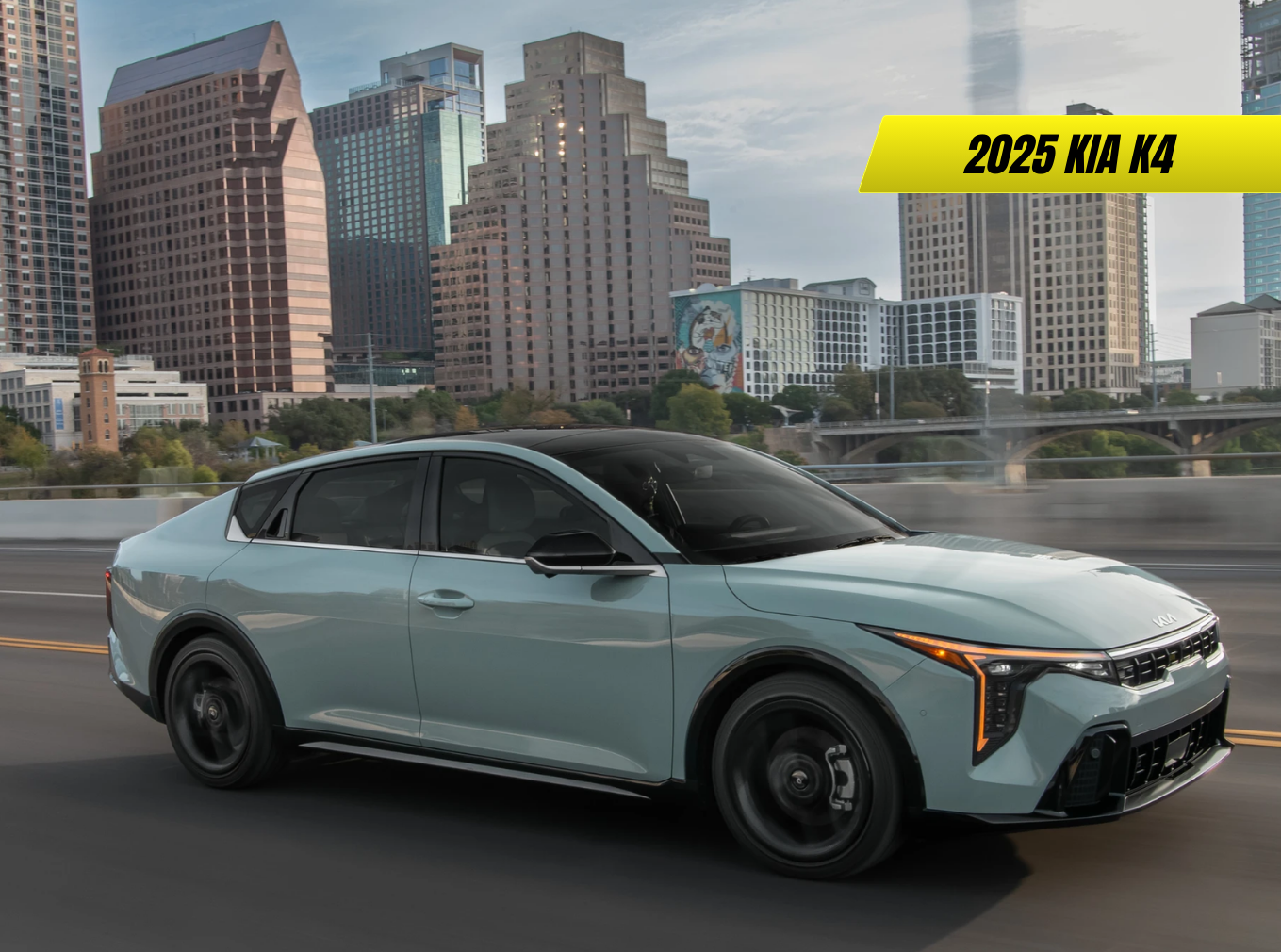
2025 Kia K4 UK preview – Ceed replacement with hatchback, estate & hybrid options, 438L boot space, Q4 2025 launch, pricing from £21,000 and premium features.
The automotive landscape witnesses a significant shift as Kia prepares to bid farewell to the Ceed nameplate after nearly two decades, replacing it with the globally-focused K4 for the UK market in Q4 2025. This strategic transition represents more than mere badge engineering – the K4 embodies Kia’s ambitious repositioning towards premium territory while maintaining the value proposition that made the Ceed a consistent seller. Built in Mexico rather than Slovakia and featuring substantially enlarged dimensions, advanced technology, and refined powertrains, the K4 targets buyers seeking Golf-segment sophistication with class-leading space and Korean reliability, all while bucking the SUV trend that has consumed much of the traditional hatchback market.
Key Strategic Developments
• Global platform adoption: K4 built on proven K3 architecture shared with Niro and Hyundai Kona, replacing Europe-specific Ceed platform • Dimensional advantages: 4,440mm length offers class-leading 964mm rear legroom while remaining shorter than Skoda Octavia competition • Comprehensive body style range: Hatchback confirmed for UK launch, with estate variant spotted testing and saloon available globally • Advanced powertrain portfolio: Five European engine options including 1.0T manual, mild-hybrid, 1.6T variants, and full hybrid arriving 2026 • Premium technology integration: Nearly 30-inch dashboard display, “Hey Kia” AI assistant, wireless connectivity, and advanced driver assistance • Market positioning strategy: Targeting Golf/Focus segment while offering Octavia-rivaling space at competitive pricing from approximately £21,000
Platform Evolution and Global Strategy
The transition from Ceed to K4 represents Kia’s fundamental strategic realignment towards global model consolidation. From my analysis of Kia’s platform strategy, this shift delivers significant economies of scale while enabling the brand to compete more effectively against established European rivals.
The K4 utilizes Hyundai-Kia’s K3 platform, a more sophisticated architecture than the outgoing Ceed’s K2 foundation. This platform already underpins successful models including the current Niro and Hyundai Kona, while its electrified variant supports the upcoming EV3. In my experience evaluating platform sharing benefits, this approach typically delivers 15-20% cost reductions while improving structural rigidity and safety performance.
Key platform improvements include:
- Lower centre of gravity for enhanced handling dynamics
- Increased torsional rigidity improving refinement
- Advanced safety cell design meeting latest crash requirements
- Preparation for electrified powertrains across the range
- Modular construction reducing manufacturing complexity
Dimensional Analysis and Space Efficiency
The K4’s proportions cleverly position it between traditional C-segment and D-segment offerings, creating what Kia describes as a “segment-blurring” proposition. At 4,440mm long and 1,850mm wide, the K4 exceeds Golf dimensions while remaining 249mm shorter than the Octavia, targeting buyers seeking maximum space within manageable exterior dimensions.
From my perspective on UK parking and urban driving requirements, these dimensions represent optimal sizing– large enough for genuine family utility yet compact enough for city centre navigation and standard parking spaces.
| Dimension Comparison | Kia K4 | VW Golf | Skoda Octavia | Ford Focus |
|---|---|---|---|---|
| Length (mm) | 4,440 | 4,284 | 4,689 | 4,378 |
| Width (mm) | 1,850 | 1,789 | 1,829 | 1,825 |
| Rear Legroom (mm) | 964 | 851 | 982 | 908 |
| Boot Capacity (L) | 438 | 380 | 600 | 375 |
The standout achievement is rear passenger accommodation, where Kia claims class-leading legroom of 964mm alongside 973mm of headroom. I would particularly highlight this advantage for UK buyers prioritizing family comfort, as these figures exceed most direct competitors while approaching executive car standards.
Boot capacity at 438 litres represents a reasonable compromise for the hatchback configuration, expanding to 1,217 litres with rear seats folded. The anticipated estate variant should significantly improve cargo capacity to challenge traditional load-luggers like the Octavia Estate.
Powertrain Portfolio and Efficiency Strategy
Kia confirms five European powertrain options for the K4, reflecting their commitment to offering comprehensive choice during the electric transition period. Based on my assessment of UK buyer preferences, this diverse portfolio should appeal to varying usage patterns and budget requirements.
Entry-Level 1.0-litre Turbo
The base 1.0-litre T-GDi produces 114hp paired with a six-speed manual transmission, targeting budget-conscious buyers seeking maximum affordability. This powertrain combination should enable competitive pricing around £21,000 to maintain Ceed positioning.
Mild-Hybrid Efficiency
A mild-hybrid version of the 1.0-litre engine adds 48V electrical assistance with a seven-speed dual-clutch automatic, improving fuel economy and refinement while providing convenient automatic operation.
Performance-Oriented 1.6-litre Turbo
The 1.6-litre T-GDi engine offers two power outputs – 148hp for mainstream appeal and 178hp for GT-Line performance variants. Both utilize the seven-speed DCT automatic as standard, targeting buyers seeking dynamic performance without hybrid complexity.
Full Hybrid System (2026)
A comprehensive hybrid powertrain arrives in 2026, likely combining the 1.6-litre engine with Toyota-style full hybrid technology. From my analysis of UK hybrid adoption trends, this variant could become the volume seller as buyers embrace efficiency without range anxiety.
Interior Technology and User Experience
The K4’s cabin represents a significant advancement over the outgoing Ceed, featuring what Kia describes as nearly 30 inches of integrated display technology. The dashboard incorporates three screens: a 12.3-inch digital instrument cluster, 12.3-inch central touchscreen, and 5.3-inch climate control display, all unified within a single glass panel.
I appreciate Kia maintaining physical controls for essential functions, particularly climate adjustment, as this approach typically provides safer and more intuitive operation than touchscreen-only interfaces. The inclusion of steering wheel-mounted paddle shifters on GT-Line variants adds engagement for enthusiast drivers.
Standard connectivity features include:
- Wireless Apple CarPlay and Android Auto
- “Hey Kia” AI voice assistant
- Kia Connect telematics services
- Over-the-air update capability
- Digital Key smartphone integration (higher trims)
Premium equipment options encompass wireless phone charging, Harman Kardon premium audio, heated and ventilated seating, and comprehensive driver assistance systems including motorway driving assist functionality.
Design Evolution and Market Differentiation
The K4’s exterior design follows Kia’s “Opposites United” philosophy while incorporating distinctive elements like the exclusive Sparkling Yellow paint option. From my perspective on modern Kia design language, the K4 successfully balances contemporary sophistication with brand recognition.
Key design elements include:
- Floating roofline creating dynamic proportions
- Hidden rear door handles improving aerodynamic efficiency
- Star Map LED lighting signature
- Distinctive vertical D-pillar treatment
- Curvaceous rear haunches suggesting power and stability
GT-Line variants add 17-inch or 18-inch alloy wheels, gloss black exterior details, wheelarch mouldings, and extended side sills to create a more dynamic appearance without compromising practicality.
UK Market Context and Competitive Positioning
The K4 enters a UK market experiencing significant upheaval, with traditional volume sellers like the Ford Focus facing discontinuation and buyers increasingly migrating towards SUVs. In my assessment of current UK hatchback demand, this creates opportunities for well-executed alternatives like the K4 to capture market share from withdrawing competitors.
Kia’s UK performance provides strong foundation for K4 success – the brand achieved record 2024 sales and currently ranks as Britain’s fourth best-selling marque. The outgoing Ceed contributed 13% of total Kia UK sales despite its age, demonstrating sustained demand for traditional hatchback configurations.
Primary Competition Analysis
vs Volkswagen Golf: The K4 offers more space and likely better value while matching technology levels, though Golf retains premium brand cachet and potentially superior build quality.
vs Skoda Octavia: The K4 provides similar space efficiency in a more compact footprint, though Octavia offers larger boot capacity and established estate car credibility.
vs Toyota Corolla: Both offer hybrid powertrains and reliability reputations, but K4 provides more interior space and contemporary technology integration.
vs Chinese Alternatives: The K4 faces increasing pressure from affordable Chinese cars entering the UK market, though Kia’s established dealer network and proven reliability provide competitive advantages.
Estate Variant Implications
Spy photography confirms a K4 estate variant undergoing testing, suggesting Kia recognizes UK buyers’ continued appetite for practical load-carrying capability. From my analysis of UK estate car sales trends, this body style could prove crucial for conquering traditional family buyers reluctant to embrace SUV alternatives.
The estate should replace both the Ceed Sportswagon and potentially the discontinued ProCeed shooting brake, offering conventional practicality for buyers requiring maximum cargo capability. Expected features include:
- Significantly increased boot capacity beyond hatchback’s 438 litres
- Genuine towing capability for leisure and commercial users
- Load compartment flexibility matching established estate car conventions
- Potential for commercial/fleet variants targeting business users
Production Strategy and Global Integration
The K4’s Mexican production represents a significant departure from the Ceed’s European manufacturing, reflecting Kia’s global integration strategy. While some might question this geographical shift, I believe it demonstrates confidence in international quality standards and enables competitive pricing through optimized production costs.
The Žilina, Slovakia plant previously building Ceed now produces the EV4 electric hatchback, illustrating Kia’s commitment to European electrification while maintaining global ICE vehicle production in cost-effective locations. This strategy enables competitive pricing while funding substantial electric vehicle investment.
Advanced Safety and Driver Assistance
The K4 incorporates Kia’s latest safety technology portfolio, including lane change collision avoidance, blind spot monitoring, adaptive cruise control, and motorway driving assist systems. Based on my evaluation of current driver assistance standards, these features should achieve strong Euro NCAP ratings while providing genuine safety benefits for UK driving conditions.
The platform’s advanced safety cell design incorporates lessons learned from EV development, providing enhanced occupant protection and structural integrity compared to the outgoing Ceed’s architecture.
UK Launch Timeline and Market Introduction
Kia confirms Q4 2025 UK availability for the K4 hatchback, with pricing and full specifications announced closer to launch. From my analysis of Kia’s typical UK launch patterns, expect comprehensive dealer training and marketing campaigns to maximize launch impact and educate buyers about the Ceed transition.
The estate variant will likely follow 6-12 months after hatchback introduction, allowing Kia to establish the K4 nameplate before expanding the range. Full hybrid powertrains are scheduled for 2026, completing the comprehensive model portfolio.
Real-World Ownership Projections
Insurance and Running Costs
The K4’s mainstream positioning and proven powertrains should support competitive insurance groupings, while improved aerodynamics and advanced engine technology promise better fuel economy than the outgoing Ceed. I expect real-world fuel consumption improvements of 10-15% across the powertrain range.
Reliability and Warranty
Kia’s industry-leading 7-year warranty continues with the K4, providing exceptional peace of mind compared to European rivals typically offering 2-3 year coverage. The proven K3 platform and established powertrain technologies suggest strong reliability prospects.
Resale Value Considerations
The transition from Ceed to K4 nameplate might initially impact used car recognition, though Kia’s strengthening brand reputation and comprehensive warranty should support residual values. From my perspective on UK resale trends, the improved space and technology should enhance long-term value retention.
Strategic Assessment and Market Implications
From my comprehensive analysis, the K4 represents a calculated gamble on traditional hatchback market recovery while demonstrating Kia’s increasing confidence in premium positioning. The combination of increased size, advanced technology, and competitive pricing could prove compelling for UK buyers seeking alternatives to SUV domination.
The success will largely depend on pricing strategy and dealer execution. If Kia maintains Ceed’s value proposition while delivering the promised space and technology advantages, the K4 could capture significant market share from withdrawn competitors and attract conquest buyers from premium rivals.
Frequently Asked Questions
Why did Kia replace the Ceed name with K4?
Kia adopted the K4 designation to align with their global naming strategy, as this is a worldwide model rather than Europe-specific like the Ceed. The K4 is built in Mexico for global markets, while the Ceed was manufactured in Slovakia exclusively for Europe.
How much larger is the K4 compared to the outgoing Ceed?
The K4 measures 4,440mm long versus the Ceed’s approximately 4,300mm, providing significantly more interior space particularly for rear passengers. From my dimensional analysis, the 964mm rear legroom represents class-leading accommodation in the Golf-sized segment.
Will there be an estate version for UK buyers?
Yes, spy photography confirms a K4 estate variant in testing, expected to arrive 6-12 months after the hatchback launch. This should replace both the Ceed Sportswagon and provide practical load-carrying capability for families and commercial users.
What engines will be available at UK launch?
Initial UK availability includes 1.0-litre turbo with manual transmission, mild-hybrid 1.0-litre with automatic, and 1.6-litre turbo in 148hp or 178hp outputs. A full hybrid system follows in 2026, providing comprehensive powertrain choice during the electric transition.
How does pricing compare to the outgoing Ceed?
While official UK pricing isn’t confirmed, Kia indicates similar positioning to the £21,000+ Ceed starting price. Based on my market analysis, expect competitive pricing to maximize conquest opportunities from withdrawing competitors like Ford Focus.
Is the K4’s Mexican production a quality concern?
Modern automotive manufacturing maintains consistent global quality standards regardless of location. The K3 platform is proven across multiple markets, and Mexican production enables competitive pricing while meeting Kia’s quality requirements. The 7-year warranty demonstrates confidence in build quality.
How does interior space compare to key rivals?
The K4 claims class-leading 964mm rear legroom, exceeding Golf (851mm) and Focus (908mm) while approaching Octavia levels (982mm) in a more compact exterior footprint. Boot space at 438 litres matches segment expectations for the hatchback configuration.
Conclusion
The 2025 Kia K4 represents a bold strategic statement from a brand increasingly confident in its premium aspirations. By replacing the long-serving Ceed with a globally-integrated model offering superior space, technology, and refinement, Kia demonstrates commitment to competing with established European rivals on their own terms.
From my final assessment, the K4’s success will depend on execution rather than concept – the formula of increased space, advanced technology, and competitive pricing should appeal strongly to UK buyers if delivered effectively. The comprehensive powertrain portfolio acknowledges varying customer preferences during the electric transition, while the anticipated estate variant addresses practical family requirements.
The transition from European-built Ceed to Mexican-manufactured K4 might initially raise questions, but modern global manufacturing standards and Kia’s comprehensive warranty should address quality concerns. I anticipate the K4 appealing particularly to buyers seeking maximum space and technology within Golf-segment dimensions and pricing.
The broader implications extend beyond a simple model replacement – the K4 exemplifies how mainstream brands can challenge premium rivals through strategic platform sharing, advanced technology integration, and value-focused positioning. If successful, the K4 could establish a template for traditional hatchback market revival in an SUV-dominated landscape.
I expect the K4 to prove particularly attractive to UK buyers prioritizing space, technology, and value over brand prestige, while the comprehensive range of body styles and powertrains should address diverse market requirements. The success of this transition will provide valuable insights into whether traditional hatchbacks can thrive alongside SUV alternatives in the modern automotive marketplace.





