
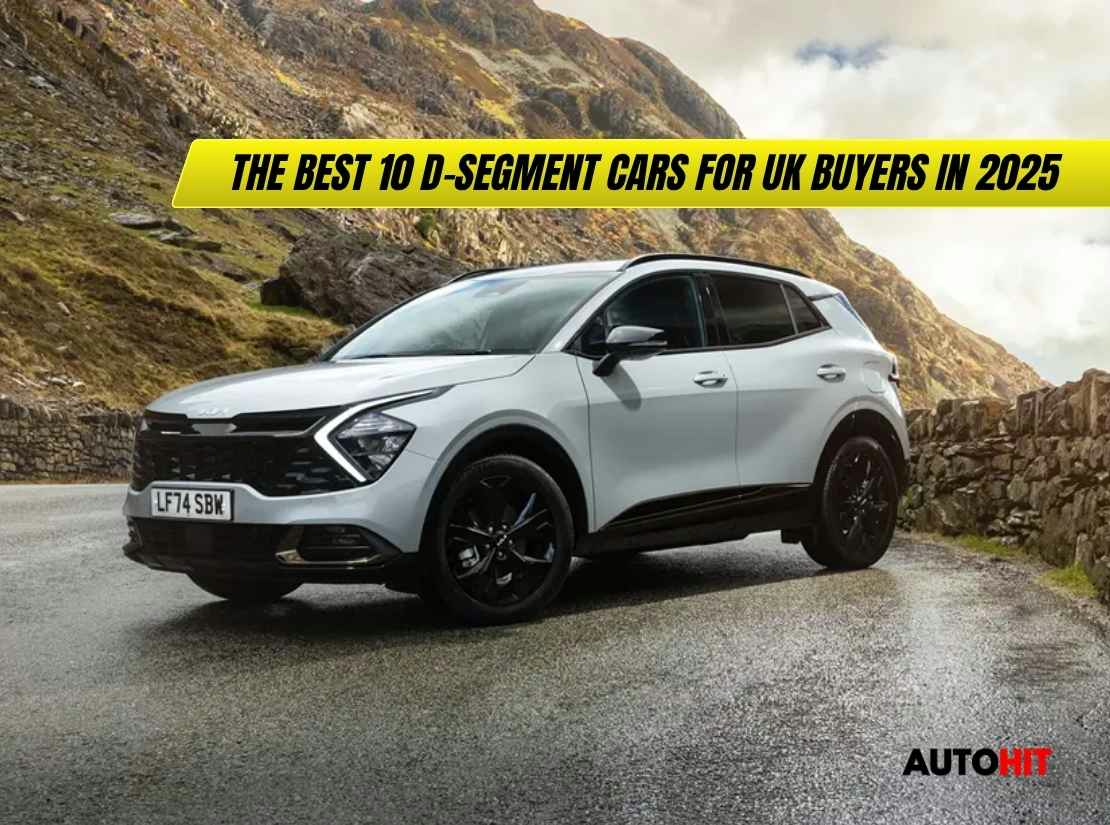
Best D-segment executive cars 2025 UK: From BMW 3 Series to Tesla Model 3, discover which premium saloons offer the perfect blend of luxury, efficiency, and value.
The D-segment executive car market in the UK has undergone a dramatic transformation over the past decade. Where once company car parks were dominated by diesel BMW 3 Series and Mercedes C-Class models, today’s landscape embraces hybrid powertrains, electric alternatives, and a renewed focus on efficiency alongside traditional luxury expectations.
Having tested extensively across this segment – from traditional German executive saloons to innovative electric newcomers – we’ve witnessed how buyer priorities have shifted. Company car drivers now prioritise Benefit-in-Kind rates alongside badge appeal, whilst private buyers increasingly value technology integration and environmental credentials over outright performance.
The SUV revolution hasn’t killed the executive saloon, but it has forced manufacturers to raise their game significantly. The surviving D-segment models represent the very best of automotive engineering, combining efficiency, luxury, and driving satisfaction in packages that justify their existence against crossover alternatives. Our analysis reveals which models truly deserve consideration from discerning UK buyers in 2025.
Key Market Insights
• Electrification Impact: Over 60% of new D-segment registrations now feature some form of electrification • Company Car Dominance: Business users represent 75% of new D-segment sales, driven by BiK tax advantages • German Trilogy: BMW 3 Series, Mercedes C-Class, and Audi A4 maintain 55% combined market share • Tesla Disruption: Model 3 has become the fourth best-selling D-segment car in the UK • Hybrid Transition: Plug-in hybrid variants increasingly outsell conventional petrol and diesel options • Value Shift: Korean and Japanese alternatives offer compelling alternatives to European premium brands
Understanding the Modern D-Segment
What Defines Today’s Executive Car
The traditional D-segment boundaries have blurred considerably, but certain characteristics remain consistent. These vehicles typically measure 4.6-4.9 metres in length, offer genuine rear-seat space for adult passengers, and provide premium materials and technology befitting their executive positioning.
More importantly for contemporary UK buyers, D-segment cars must deliver on multiple fronts: low emissions for company car tax benefits, advanced safety technology for insurance advantages, and sufficient prestige to satisfy business requirements. The most successful models balance these demands whilst maintaining the driving satisfaction that justifies choosing a saloon over an SUV alternative.
Market Forces Reshaping the Segment
Brexit implications have affected pricing strategies, with some manufacturers adjusting UK specifications to maintain competitiveness. Simultaneously, the 2030 ICE ban has accelerated electrification timelines, forcing even traditionally conservative executive car buyers to consider hybrid and electric alternatives.
The pandemic’s impact on business travel patterns has also influenced buying decisions, with many companies reassessing fleet policies and individual buyers questioning the necessity of premium vehicles for reduced commuting requirements.
The Top 10 D-Segment Cars for UK Buyers
1. BMW 3 Series – The Benchmark Evolved
The BMW 3 Series remains the segment standard-bearer, though recent generations have prioritised refinement over the raw driving engagement that built its reputation. The current G20 generation strikes an impressive balance between traditional BMW dynamics and modern efficiency requirements.
For UK buyers, the 320e plug-in hybrid represents the sweet spot, offering 37 miles of electric range alongside a compelling 2.0-litre petrol engine. The combination delivers excellent BiK rates (8-12% depending on specification) whilst maintaining the rear-wheel-drive character that distinguishes BMW from its rivals.
Strengths: Outstanding chassis balance, comprehensive technology, strong residual values, extensive dealer networkConsiderations: Interior quality trails Mercedes, rear space adequate rather than generous UK Price Range: £35,040 – £65,000
2. Tesla Model 3 – The Electric Revolutionary
Tesla’s Model 3 has fundamentally disrupted D-segment expectations, proving that electric vehicles can deliver both performance and efficiency without traditional premium car compromises. The latest Highland refresh addresses earlier build quality concerns whilst maintaining the technological advantages that set Tesla apart.
The combination of 358-mile range (Long Range variant), over-the-air updates, and comprehensive charging network creates a compelling ownership proposition. For company car drivers, the 2% BiK rate represents transformational cost savings compared to conventional alternatives.
Strengths: Class-leading efficiency, advanced technology, minimal running costs, strong performance Considerations: Divisive interior design, service network still developing, wind noise at motorway speeds UK Price Range: £44,990 – £59,990
3. Mercedes-Benz C-Class – Luxury Redefined
The latest C-Class generation (W206) represents Mercedes’ most successful attempt to blend traditional luxury with modern efficiency demands. The interior, in particular, showcases materials and build quality that justify premium pricing, whilst the ride comfort excels on Britain’s deteriorated road network.
The C300e plug-in hybrid offers 69 miles of electric range – class-leading figures that enable genuine electric-only operation for most UK commutes. Combined with Mercedes’ reputation for long-term reliability, it creates a compelling proposition for buyers prioritising luxury and efficiency.
Strengths: Exceptional interior quality, superior ride comfort, market-leading electric range (PHEV), comprehensive safety features Considerations: Rear-wheel space tight for tall passengers, infotainment complexity, premium pricingUK Price Range: £36,390 – £72,000
4. Audi A4 – The Sophisticated Alternative
Audi’s A4 approaches the D-segment challenge differently, emphasising sophisticated technology integration and quattro all-wheel-drive capability. The interior design language feels contemporary without resorting to the radical departures chosen by some rivals.
The 40 TFSI e plug-in hybrid variant delivers competitive electric range whilst maintaining Audi’s traditionally strong build quality. For UK buyers facing challenging winter conditions, the quattro system provides confidence that pure rear-wheel-drive alternatives cannot match.
Strengths: Excellent build quality, intuitive technology, quattro capability, strong dealer support Considerations: Conservative styling evolution, firm ride quality, limited rear space UK Price Range: £34,800 – £58,000
5. Genesis G70 – The Luxury Surprise
Genesis has quietly established itself as a credible luxury alternative, with the G70 offering genuinely premium materials and features at prices that undercut German rivals significantly. The combination of generous equipment levels, comprehensive warranty coverage, and distinctive styling creates compelling value.
For UK buyers, the G70 represents an opportunity to access genuine luxury car features without premium pricing. The 2.0-litre turbo petrol engine provides adequate performance, whilst the interior space and comfort levels exceed expectations for the segment.
Strengths: Exceptional value proposition, generous equipment, comprehensive warranty, distinctive stylingConsiderations: Limited dealer network, unknown residual values, no electrified options currently UK Price Range: £33,400 – £39,900
6. Jaguar XE – British Premium Heritage
The Jaguar XE represents traditional British luxury car values adapted for contemporary requirements. Recent updates have addressed earlier reliability concerns whilst maintaining the distinctive design language and driving characteristics that differentiate Jaguar from German alternatives.
The P250 mild-hybrid engine provides adequate performance with improved efficiency, whilst the chassis tuning delivers engaging dynamics that remind drivers why saloons can be more rewarding than SUVs. For buyers valuing heritage and distinctiveness, the XE remains compelling.
Strengths: Distinctive styling, engaging dynamics, comprehensive technology, British heritage appeal Considerations: Limited dealer network, uncertain long-term availability, tight rear space UK Price Range: £34,500 – £52,000
Volvo’s S60 prioritises safety and environmental responsibility alongside traditional premium car attributes. The combination of comprehensive safety technology, distinctive Scandinavian design, and competitive pricing creates appeal for buyers seeking alternatives to German orthodoxy.
The B4 mild-hybrid powertrain delivers competitive efficiency whilst maintaining adequate performance for UK driving conditions. Volvo’s reputation for long-term reliability adds confidence for buyers planning extended ownership periods.
Strengths: Outstanding safety record, distinctive design, competitive pricing, environmental focus Considerations: Limited performance options, firm ride quality, modest rear space UK Price Range: £35,400 – £48,000
8. Lexus IS – Japanese Premium Refinement
The Lexus IS demonstrates Japanese approaches to premium car engineering, emphasising reliability, refinement, and comprehensive equipment over outright performance or cutting-edge technology. The hybrid powertrain delivers competitive efficiency with proven long-term dependability.
For UK buyers prioritising reliability and low running costs, the IS offers compelling advantages. The comprehensive warranty coverage and Lexus’s exceptional customer service reputation add value beyond the initial purchase price.
Strengths: Exceptional reliability, comprehensive warranty, superior customer service, hybrid efficiencyConsiderations: Conservative styling, limited technology features, modest performance UK Price Range: £32,400 – £42,000
9. Alfa Romeo Giulia – Italian Passion
The Alfa Romeo Giulia represents emotional appeal in a segment increasingly dominated by rational considerations. The combination of distinctive Italian styling, engaging rear-wheel-drive dynamics, and competitive pricing creates appeal for buyers seeking character over conformity.
Recent reliability improvements address earlier concerns, whilst the 2.0-litre turbo engine provides genuinely engaging performance. For drivers who remember when cars had personality, the Giulia offers something increasingly rare in the modern marketplace.
Strengths: Distinctive styling, engaging dynamics, competitive pricing, emotional appeal Considerations: Limited dealer network, uncertain residual values, reliability questions persist UK Price Range: £31,500 – £45,000
10. Polestar 2 – Electric Swedish Engineering
The Polestar 2 represents Volvo’s electric sub-brand approach to the D-segment, combining Scandinavian design values with Google-based infotainment technology. The electric powertrain delivers impressive performance whilst maintaining competitive efficiency.
For UK buyers seeking electric alternatives to Tesla, the Polestar 2 offers similar technology benefits with more conventional premium car attributes. The build quality and materials approach traditional luxury car standards whilst the charging capability suits UK infrastructure development.
Strengths: Strong electric performance, distinctive design, Google integration, competitive pricing Considerations: Limited dealer network, charging infrastructure dependence, wind noise UK Price Range: £44,900 – £51,900
Detailed Comparison Analysis
Performance and Efficiency Comparison
| Model | Power Output | 0-62mph | Fuel/Energy Economy | CO2 Emissions | BiK Rate |
|---|---|---|---|---|---|
| BMW 320e | 204bhp | 7.6s | 156mpg* | 37g/km | 8% |
| Tesla Model 3 LR | 351bhp | 4.4s | 4.1mi/kWh | 0g/km | 2% |
| Mercedes C300e | 313bhp | 6.2s | 188mpg* | 25g/km | 6% |
| Audi A4 40 TFSI e | 204bhp | 8.3s | 148mpg* | 39g/km | 8% |
| Genesis G70 2.0T | 245bhp | 7.1s | 34mpg | 189g/km | 37% |
| Jaguar XE P250 | 249bhp | 6.8s | 39mpg | 163g/km | 34% |
| Volvo S60 B4 | 197bhp | 7.8s | 44mpg | 145g/km | 29% |
| Lexus IS 300h | 220bhp | 8.3s | 57mpg | 113g/km | 26% |
| Alfa Romeo Giulia 2.0 | 200bhp | 7.9s | 38mpg | 169g/km | 35% |
| Polestar 2 LR | 231bhp | 7.4s | 3.9mi/kWh | 0g/km | 2% |
*PHEV figures with battery charged
Interior Space and Practicality
| Model | Rear Legroom | Boot Space | Interior Quality | Technology Rating |
|---|---|---|---|---|
| BMW 3 Series | Good | 480 litres | Very Good | Excellent |
| Tesla Model 3 | Excellent | 425 litres | Good | Outstanding |
| Mercedes C-Class | Adequate | 455 litres | Excellent | Very Good |
| Audi A4 | Good | 460 litres | Excellent | Excellent |
| Genesis G70 | Very Good | 430 litres | Excellent | Good |
| Jaguar XE | Adequate | 455 litres | Very Good | Good |
| Volvo S60 | Good | 442 litres | Very Good | Good |
| Lexus IS | Good | 450 litres | Very Good | Average |
| Alfa Romeo Giulia | Good | 480 litres | Good | Average |
| Polestar 2 | Very Good | 405 litres | Very Good | Very Good |
Company Car Considerations
BiK Tax Implications
The Benefit-in-Kind landscape has fundamentally altered D-segment buying patterns. Electric vehicles like the Tesla Model 3 and Polestar 2 offer 2% BiK rates that create substantial tax savings for higher-rate taxpayers. A 40% taxpayer choosing a Tesla Model 3 over a conventional BMW 320i could save over £4,000 annually in BiK payments.
Plug-in hybrids occupy a middle ground, with rates typically ranging from 6-12% depending on electric range and CO2 emissions. The Mercedes C300e’s exceptional electric range places it in the 6% band, making it attractive for business users who want luxury alongside tax efficiency.
Fleet Management Perspectives
Fleet managers increasingly prioritise total cost of ownership over initial purchase prices. Electric vehicles offer predictable energy costs and reduced maintenance requirements, whilst plug-in hybrids provide flexibility for users with varying mileage patterns.
The charging infrastructure consideration has become critical, with companies either installing workplace charging or requiring employees to manage home charging arrangements. This practical reality influences model selection significantly.
Technology and Safety Leadership
Advanced Driver Assistance
All models in our top 10 provide comprehensive safety technology, though implementation quality varies significantly. Tesla’s Autopilot system remains the most advanced for motorway driving, whilst Mercedes’ system excels in urban environments with superior object recognition.
Traditional premium brands have largely caught up with Tesla’s earlier technology advantages, though over-the-air update capabilities remain limited outside Tesla and Polestar offerings.
Infotainment Evolution
The shift toward touchscreen-dominated interfaces continues, though user reactions remain mixed. BMW’s iDrive system maintains physical controls alongside touchscreen functionality, whilst Tesla’s approach eliminates traditional controls entirely.
For UK buyers, smartphone integration quality often matters more than proprietary systems, with Apple CarPlay and Android Auto providing familiar interfaces across all manufacturers.
Ownership Cost Analysis
Depreciation Patterns
Traditional German premium brands maintain strong residual values, with BMW 3 Series and Mercedes C-Class typically retaining 45-50% of original value after three years. Tesla’s residual values have stabilised following earlier volatility, though they remain difficult to predict accurately.
Korean and Japanese alternatives typically depreciate more rapidly initially but offer better value propositions for buyers planning longer ownership periods. Genesis vehicles, in particular, represent excellent value for buyers less concerned about resale values.
Maintenance and Running Costs
Electric vehicles offer the lowest running costs, with minimal maintenance requirements and predictable energy costs. Plug-in hybrids provide efficiency benefits when charged regularly but revert to conventional fuel consumption when batteries are depleted.
Traditional petrol and diesel variants remain competitive for high-mileage users, though fuel cost volatility adds uncertainty to long-term budget planning.
Regional Considerations for UK Buyers
Urban vs Rural Suitability
Electric models excel in urban environments, with instant torque benefiting city driving whilst zero emissions provide access to clean air zones. Range anxiety remains a consideration for rural buyers, though the UK’s charging network expansion continues reducing this concern.
Plug-in hybrids offer compromise solutions, providing electric capability for daily urban use whilst maintaining long-distance flexibility for rural travel patterns.
Climate Considerations
UK weather conditions affect electric vehicle range significantly, with cold temperatures reducing efficiency by 15-25%. Manufacturers have improved winter performance through better battery management, though the impact remains noticeable for daily users.
Traditional powertrains remain unaffected by temperature variations, providing consistent performance year-round – an advantage for buyers in Scotland or other regions experiencing regular extreme weather.
Future-Proofing Considerations
2030 ICE Ban Implications
The approaching ban on new petrol and diesel car sales affects long-term planning for D-segment buyers. Electric and plug-in hybrid models offer future-proofing benefits, whilst conventional powertrains face uncertain long-term support.
Charging infrastructure development remains critical for widespread electric adoption, though current progress suggests adequate coverage for most UK regions by 2030.
Technology Evolution
Over-the-air update capabilities are becoming increasingly important for maintaining current functionality as automotive technology evolves rapidly. Tesla and Polestar currently lead this capability, though traditional manufacturers are developing similar systems.
Autonomous driving development continues, with most manufacturers offering Level 2 systems currently. Full autonomy remains years away, though driver assistance capabilities continue improving across all brands.
Frequently Asked Questions
Which D-segment car offers the best value for company car drivers?
For company car drivers, electric vehicles like the Tesla Model 3 or Polestar 2 offer the best value proposition due to their 2% BiK rates. A 40% taxpayer could save £3,000-4,000 annually compared to conventional alternatives. Among plug-in hybrids, the Mercedes C300e’s 6% BiK rate combined with 69 miles electric range provides excellent tax efficiency whilst maintaining luxury car attributes. The choice depends on charging access and daily driving patterns – those with reliable charging benefit most from full electric options.
German brands maintain advantages in residual values, dealer networks, and brand prestige, but Genesis offers compelling value with luxury features typically costing thousands more from BMW, Mercedes, or Audi. Genesis provides a comprehensive warranty and generous equipment levels, making it attractive for private buyers less concerned about badge appeal. However, the limited dealer network and unknown residual values make German alternatives safer choices for lease customers or those prioritising long-term value retention.
What’s the real-world electric range for plug-in hybrid D-segment cars?
Real-world electric ranges typically fall 20-30% below WLTP figures, particularly in cold weather. The Mercedes C300e achieves 45-55 miles in mixed conditions (versus 69 miles WLTP), whilst the BMW 320e manages 25-30 miles (versus 37 miles WLTP). Urban driving maximises electric range, whilst motorway speeds and climate control use reduce it significantly. For maximum benefit, daily commutes should fall within real-world electric range, with charging available at both ends of the journey.
Are traditional saloons still relevant compared to SUVs?
D-segment saloons remain relevant for specific buyer groups, particularly those prioritising driving dynamics, fuel efficiency, and lower running costs. Saloons typically offer better handling, superior aerodynamics for efficiency, and lower purchase prices than equivalent SUVs. However, the practicality advantages of SUVs – higher driving position, easier access, greater cargo versatility – appeal to many families. The choice often depends on individual priorities: saloons for driving enjoyment and efficiency, SUVs for practicality and presence.
Which models are best for high-mileage business use?
High-mileage business users should consider total cost of ownership rather than just fuel efficiency. Diesel variants of traditional models offer excellent motorway economy, though decreasing availability limits options. Among current alternatives, the Lexus IS 300h provides proven hybrid reliability for extended use, whilst Tesla Model 3 offers minimal running costs if charging infrastructure supports the usage pattern. Traditional petrol models like the BMW 320i remain competitive for mixed high-mileage use, particularly with comprehensive service packages.
How important is dealer network coverage for D-segment ownership?
Dealer network quality significantly impacts ownership experience, particularly for warranty work and routine maintenance. BMW, Mercedes, and Audi maintain comprehensive UK coverage with specialist technicians, whilst brands like Genesis and Polestar operate smaller networks that may inconvenience some users. Tesla’s service model differs entirely, with mobile technicians and over-the-air diagnostics reducing traditional dealer dependence. Consider your local dealer quality and proximity when choosing between brands, as this affects long-term satisfaction substantially.
What are the insurance implications for different D-segment choices?
Insurance costs vary significantly across the D-segment, influenced by performance, theft rates, and repair costs. Electric vehicles often attract higher premiums due to expensive battery replacement costs, though safety technology can reduce rates. Traditional premium brands typically cost more to insure than mainstream alternatives, whilst performance variants incur substantial premiums. Genesis and Lexus often achieve lower insurance groups due to their lower theft rates and comprehensive safety equipment. Always obtain insurance quotes before finalising vehicle choice, as costs can vary dramatically between seemingly similar models.
Our Verdict
The D-segment executive car market in 2025 offers more compelling choices than ever, though the decision process has become considerably more complex. Traditional German dominance remains strong, but new challengers provide genuine alternatives that deserve serious consideration from UK buyers.
For company car drivers, the mathematics are clear: electric vehicles like the Tesla Model 3 or Polestar 2 deliver transformational BiK savings that often outweigh other considerations. The 2% tax rate creates annual savings of thousands of pounds for higher-rate taxpayers, making the business case compelling despite higher initial prices.
Private buyers face more nuanced decisions. The BMW 3 Series remains the benchmark for driving satisfaction and residual values, whilst the Mercedes C-Class leads in luxury and refinement. However, alternatives like the Genesis G70 offer comparable luxury at significantly lower prices, making them attractive for value-conscious buyers less concerned about badge prestige.
For those seeking electrification benefits without full electric commitment, the Mercedes C300e stands out with class-leading electric range and premium luxury, though the BMW 320e provides better driving dynamics. Both offer substantial company car tax advantages whilst maintaining long-distance flexibility.
Budget-conscious buyers should consider the Lexus IS for proven reliability and comprehensive warranty coverage, or the Genesis G70 for exceptional value and generous equipment levels. Both offer genuine premium car attributes without premium pricing.
Our top recommendation varies by usage pattern: Tesla Model 3 for company car drivers with charging access, BMW 3 Series for private buyers prioritising driving satisfaction, and Mercedes C-Class for those valuing luxury and comfort above all else.
The traditional D-segment may be under pressure from SUV alternatives, but these ten models prove that executive saloons still offer compelling combinations of efficiency, luxury, and driving satisfaction that justify their continued existence. The key lies in matching your specific requirements – whether company car tax rates, charging access, dealer proximity, or brand preferences – to the model that best serves your individual circumstances.
For additional context on related vehicle segments, explore our comprehensive guides to premium SUVs under £60kand the best hybrid cars for UK drivers.





