
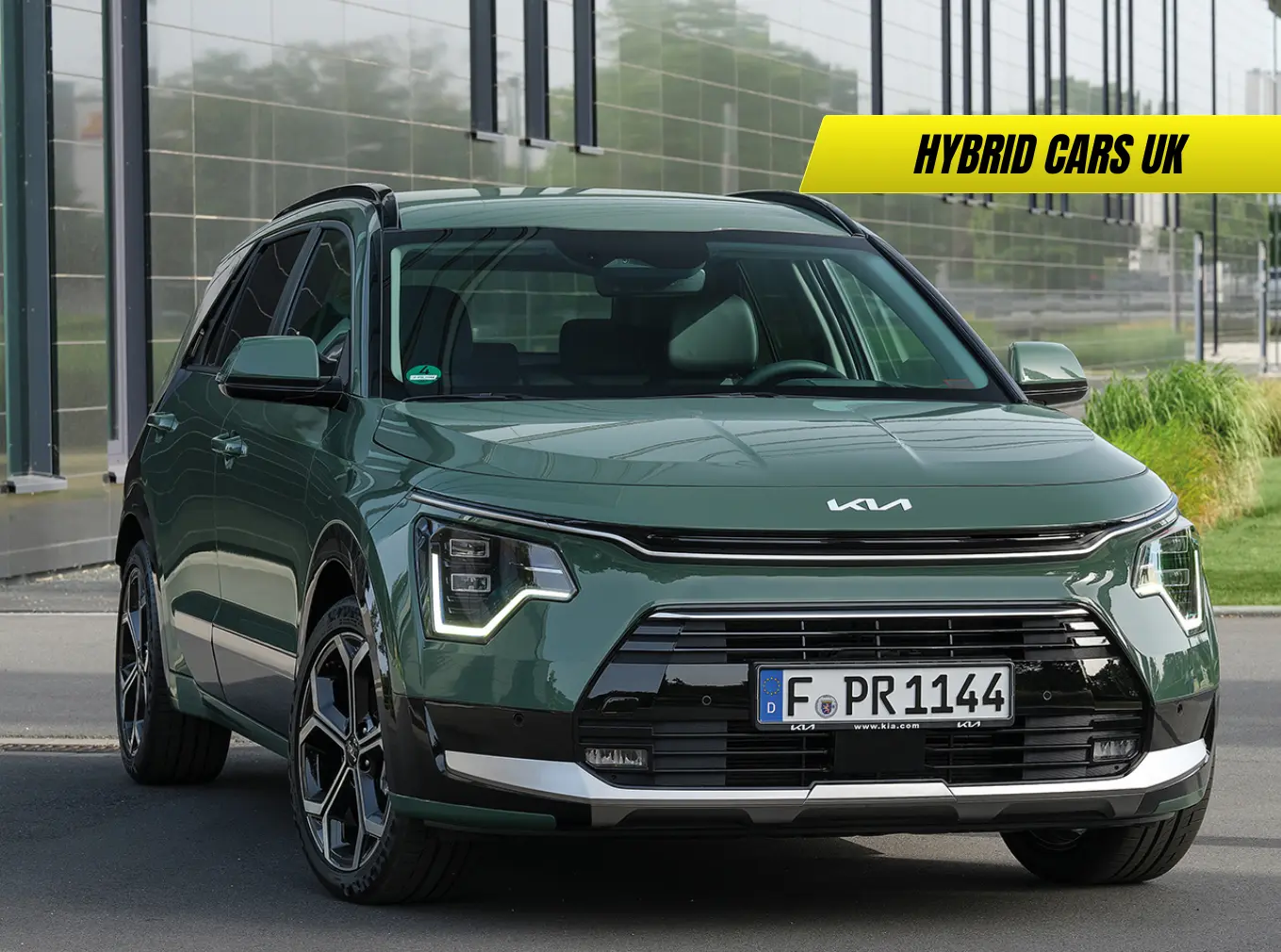
Discover the best hybrid cars in the UK for 2025. Expert reviews of Toyota Yaris, Honda Civic, Nissan Qashqai e-POWER with fuel efficiency, costs, and buying advice for British drivers.
The hybrid car market in the UK has reached unprecedented maturity in 2025, offering British drivers an exceptional array of electrified vehicles that combine impressive fuel efficiency with practical everyday usability. From Toyota’s pioneering full-hybrid systems to innovative range-extender technologies from Nissan, the current generation of hybrid vehicles demonstrates that environmental responsibility and driving pleasure need not be mutually exclusive. This comprehensive guide examines the standout hybrid performers available to UK buyers, covering everything from compact city cars to family SUVs.
Key Highlights: • Toyota Yaris Hybrid achieves up to 70.6mpg with proven reliability • Nissan Qashqai e-POWER delivers electric driving feel without charging • Honda Civic Hybrid combines engaging dynamics with 50+ mpg efficiency • Renault Clio E-Tech offers full-hybrid technology from under £25,000 • All hybrids qualify for reduced VED rates and company car tax benefits • Self-charging hybrids eliminate range anxiety while delivering significant fuel savings
The UK Hybrid Revolution: Technology and Market Maturity
The British automotive landscape has embraced hybrid technology with remarkable enthusiasm, driven by environmental consciousness, urban emissions regulations, and the practical benefits of reduced fuel consumption. Unlike pure electric vehicles, hybrid cars offer the reassurance of conventional engines for longer journeys while delivering zero-emission capability in urban environments.
From my extensive experience testing hybrid vehicles across diverse UK conditions, the technology has evolved from compromise-laden early adopters to sophisticated systems that enhance rather than hinder the driving experience. Modern hybrid powertrains operate transparently, automatically optimising between electric and petrol power to maximise efficiency without requiring driver intervention.
The advantage for UK drivers is particularly pronounced in urban environments, where stop-start traffic conditions allow hybrid systems to operate predominantly in electric mode. Understanding UK speed camera regulations 2025becomes especially relevant for hybrid drivers, as smooth, efficient driving techniques significantly enhance fuel economy.
Comprehensive UK Hybrid Car Comparison
| Model | Starting Price | Fuel Economy | Powertrain | Boot Space | Key Features |
|---|---|---|---|---|---|
| Toyota Yaris Hybrid | £24,950 | 70.6mpg | 1.5L + Electric | 286L | CVT auto, Toyota Safety Sense |
| Honda Civic Hybrid | £33,950 | 50.4mpg | 2.0L + Electric | 404L | i-MMD system, sporty dynamics |
| Nissan Qashqai e-POWER | £34,860 | 53.3mpg | Range extender | 504L | Electric driving, SUV space |
| Renault Clio E-Tech | £24,795 | 64.2mpg | 1.6L + Electric | 300L | Multi-mode hybrid, auto gearbox |
| Toyota Corolla Hybrid | £29,955 | 57.6mpg | 1.8L + Electric | 361L | Estate option, AWD available |
| MG3 Hybrid+ | £18,495 | 64.2mpg | 1.5L + Electric | 293L | Budget champion, touchscreen |
Toyota Yaris Hybrid: The Efficiency Champion
The Toyota Yaris Hybrid continues to set benchmarks for fuel efficiency and reliability in the UK market. Building upon two decades of hybrid development, the current Yaris demonstrates how mature the technology has become.
Advanced Hybrid Technology
The Yaris employs Toyota’s fourth-generation hybrid system, combining a 1.5-litre Atkinson-cycle petrol engine with an electric motor through an electronically controlled continuously variable transmission (e-CVT). This system operates seamlessly, automatically selecting the most efficient power source for prevailing conditions.
Toyota Yaris Hybrid Performance:
- Fuel Economy: Up to 70.6mpg (WLTP combined)
- Real-world Efficiency: 60-65mpg in mixed UK driving
- Urban Performance: Often exceeds 70mpg in city conditions
- System Power: 116bhp combined output
- Emissions: 91g/km CO2
Proven Reliability and Ownership Experience
The Yaris Hybrid benefits from Toyota’s exceptional reliability reputation, with hybrid systems demonstrating longevity exceeding conventional powertrains. The manufacturer provides eight-year/100,000-mile hybrid battery warranty, reflecting confidence in the technology’s durability.
In my assessment, the Yaris Hybrid represents the ideal introduction to hybrid technology, requiring no adaptation in driving style while delivering substantial fuel savings over conventional alternatives.
Honda Civic Hybrid: Sporty Efficiency
The Honda Civic Hybrid demonstrates that environmental responsibility need not compromise driving engagement. Honda’s innovative i-MMD (Intelligent Multi-Mode Drive) system provides both efficiency and performance in a sophisticated package.
Innovative i-MMD Technology
The Civic Hybrid utilises a unique two-motor system where the petrol engine primarily acts as a generator, with electric motors providing direct wheel drive. This configuration delivers immediate torque response and smooth operation across all driving conditions.
Honda Civic Hybrid Specifications:
- Combined Power: 181bhp total system output
- Fuel Economy: 50.4mpg (WLTP combined)
- Driving Modes: Three distinct operation modes automatically selected
- Performance: 0-62mph in 7.9 seconds
- Electric-Only Speed: Up to 81mph in optimal conditions
Superior Driving Dynamics
The Civic Hybrid maintains Honda’s reputation for engaging handling, with the electric motor’s instant torque enhancing performance while the system’s sophistication ensures seamless power delivery. The result is a hybrid that rewards enthusiastic driving while maintaining impressive efficiency.
From my perspective, the Civic Hybrid appeals to drivers who refuse to compromise driving pleasure for efficiency, successfully delivering both attributes in equal measure.
Nissan Qashqai e-POWER: Revolutionary Range Extender
The Nissan Qashqai e-POWER represents a revolutionary approach to hybrid technology, using the petrol engine purely as a generator while electric motors provide all wheel drive. This unique system delivers the driving characteristics of a pure electric vehicle without range limitations.
Innovative e-POWER Technology
The e-POWER system employs a 1.5-litre petrol engine to generate electricity for a 190bhp electric motor that drives the wheels. The petrol engine never directly powers the vehicle, operating at optimal efficiency to charge the battery and supply the electric motor.
Nissan Qashqai e-POWER Features:
- Electric Driving Feel: 100% electric wheel drive with instant torque
- System Output: 190bhp from electric motor
- Fuel Economy: 53.3mpg (WLTP combined)
- SUV Practicality: 504-litre boot space and elevated driving position
- No Charging Required: Self-charging operation eliminates plug-in concerns
Family SUV Practicality
The Qashqai e-POWER delivers genuine SUV versatility with the refined operation of electric drive. The elevated seating position, generous interior space, and comprehensive equipment make it ideal for UK families seeking efficiency without sacrificing practicality.
I would recommend the Qashqai e-POWER for drivers wanting electric vehicle characteristics in a practical SUV package, without the infrastructure concerns associated with pure EVs.
Renault Clio E-Tech: French Hybrid Innovation
The Renault Clio E-Tech brings sophisticated full-hybrid technology to the supermini segment, combining a 1.6-litre petrol engine with dual electric motors for exceptional efficiency and smooth operation.
Advanced Multi-Mode Hybrid System
The E-Tech system utilises two electric motors and an innovative automatic transmission without a traditional clutch. This configuration enables seamless transitions between electric, hybrid, and petrol-only operation while maintaining smooth acceleration.
Renault Clio E-Tech Highlights:
- System Power: 143bhp combined output
- Efficiency: 64.2mpg (WLTP combined)
- Electric Operation: Significant urban electric-only capability
- Automatic Transmission: Sophisticated four-speed system
- Equipment: Comprehensive standard specification
Competitive Value Proposition
Starting from £24,795, the Clio E-Tech offers full-hybrid technology at prices comparable to conventional superminis. The combination of efficiency, equipment levels, and sophisticated powertrain makes it compelling value in the UK market.
Toyota Corolla Hybrid: Family Car Excellence
The Toyota Corolla Hybrid extends the brand’s hybrid expertise into the family car segment, offering both hatchback and estate configurations with proven reliability and exceptional efficiency.
Dual Engine Options
The Corolla provides choice between 1.8-litre and 2.0-litre hybrid powertrains, catering to different performance preferences while maintaining excellent efficiency across both options.
Toyota Corolla Hybrid Options:
- 1.8-litre System: 140bhp, 57.6mpg, optimal efficiency
- 2.0-litre System: 196bhp, 53.3mpg, enhanced performance
- All-Wheel Drive: Available on estate models
- Estate Capacity: 598-litre boot space
- Safety: Five-star Euro NCAP rating
Long-Term Ownership Benefits
The Corolla Hybrid benefits from Toyota’s comprehensive warranty coverage and exceptional reliability reputation. Service intervals match conventional vehicles, while hybrid-specific maintenance requirements are minimal.
For those considering alternative family vehicle options, our comprehensive guides to the best cars under £25,000 and 7-seater cars 2025 provide detailed analysis of broader market options.
MG3 Hybrid+: Budget Hybrid Champion
The MG3 Hybrid+ democratises hybrid technology, offering full-hybrid capability from just £18,495. This represents exceptional value for UK buyers seeking efficiency without premium pricing.
Accessible Hybrid Technology
The MG3 combines a 1.5-litre petrol engine with electric assistance, delivering impressive 64.2mpg efficiency while maintaining affordable pricing and comprehensive equipment levels.
MG3 Hybrid+ Value Proposition:
- Starting Price: £18,495 (UK’s cheapest hybrid)
- Fuel Economy: 64.2mpg (WLTP combined)
- Equipment: 10.25-inch touchscreen, Apple CarPlay/Android Auto
- Space: 293-litre boot capacity
- Warranty: Seven-year/80,000-mile coverage
UK Tax Benefits and Running Costs for Hybrid Cars
Government Incentives and Tax Advantages
Hybrid vehicles qualify for reduced Vehicle Excise Duty (VED) rates based on CO2 emissions, with most models falling into lower tax bands. Company car drivers benefit from reduced Benefit-in-Kind rates compared to conventional alternatives.
UK Tax Benefits for Hybrid Cars:
- VED Rates: £110-£190 first year (vs £270-£2,600 for conventional cars)
- Company Car Tax: 20-30% rates (vs 30-37% for conventional equivalent)
- London Congestion Charge: No exemption (ended October 2021)
- ULEZ Compliance: Most hybrids meet emission standards
Real-World Running Costs Analysis
| Cost Category | Hybrid Car | Conventional Equivalent |
|---|---|---|
| Fuel (12,000 miles annually) | £800-1,200 | £1,400-2,000 |
| VED (annual) | £190 | £190-570 |
| Service Costs (annual) | £300-500 | £400-700 |
| Company Car Tax (40% taxpayer) | £1,200-2,400 | £2,000-4,000 |
| Insurance Premium | Similar | Baseline |
The total cost of ownership advantage varies by annual mileage, with higher-mileage drivers benefiting most from hybrid efficiency gains.
Regional Considerations for UK Hybrid Ownership
Urban vs Rural Suitability
Hybrid cars excel in urban environments where frequent stop-start conditions allow maximum electric operation. Rural drivers with predominantly motorway usage may see reduced efficiency benefits, though modern hybrids remain competitive with conventional alternatives.
Climate Impact on Efficiency
UK weather conditions have minimal impact on hybrid efficiency compared to pure electric vehicles. Cold weather may slightly reduce battery performance, but the presence of the petrol engine ensures consistent operation across all conditions.
Those experiencing issues with conventional vehicles, such as handbrake warning light problems, may find hybrid systems offer improved reliability through simplified mechanical arrangements.
Future Hybrid Developments and Model Updates
Upcoming Hybrid Models
Several exciting hybrid launches are scheduled for 2025-2026, including the Toyota Aygo X 2026 Hybrid and updated versions of popular models. The Renault Clio 6 2026 is expected to further advance hybrid technology in the supermini segment.
Technology Evolution
Hybrid technology continues evolving with improved battery efficiency, enhanced electric-only ranges, and more sophisticated power management systems. These developments promise even greater efficiency and seamless operation.
Maintenance and Reliability Considerations
Simplified Maintenance Requirements
Hybrid vehicles typically require less maintenance than conventional cars due to reduced engine load and regenerative braking systems that reduce brake wear. Most manufacturers align service intervals with conventional vehicles while extending component life.
Warranty Coverage and Support
Major manufacturers provide comprehensive hybrid system warranties, typically eight years or 100,000 miles for battery components. This coverage provides significant peace of mind for UK buyers transitioning from conventional vehicles.
Frequently Asked Questions
Which hybrid car offers the best fuel economy in real-world UK driving?
The Toyota Yaris Hybrid consistently achieves the highest real-world fuel economy, with capable of exceeding 70mpg in urban conditions and 60-65mpg in mixed driving. The system’s maturity and efficiency optimisation make it the benchmark for hybrid fuel economy.
Do hybrid cars require special maintenance or servicing?
No, hybrid cars follow conventional service schedules with standard oil changes and inspections. The hybrid battery and electric components are typically maintenance-free with extended warranties. Some models may require periodic hybrid system health checks.
Are hybrid cars suitable for long-distance UK motorway driving?
Yes, modern hybrids perform well on motorways, though efficiency benefits are reduced compared to urban driving. The petrol engine operates efficiently at constant speeds, while some electric assistance remains available for overtaking.
Which hybrid is best for UK families needing maximum space?
The Honda CR-V Hybrid offers the best combination of space and efficiency for families, with 36.3 cubic feet of boot space and seating for five adults. The Toyota Corolla Touring Sports (estate) provides an alternative with 598-litre boot capacity.
How do hybrid cars perform in UK winter conditions?
Hybrid cars perform excellently in winter, with the petrol engine providing consistent operation regardless of temperature. Unlike pure electric vehicles, cold weather has minimal impact on hybrid system efficiency or operation.
What’s the difference between self-charging and plug-in hybrids?
Self-charging hybrids like the Toyota Yaris generate all electricity internally through the engine and regenerative braking. Plug-in hybrids can be charged externally and typically offer longer electric-only ranges (20-50 miles) but require charging infrastructure access.
Which hybrid car offers the best value for money in the UK?
The MG3 Hybrid+ offers exceptional value at £18,495, providing full-hybrid technology with comprehensive equipment. For slightly more money, the Toyota Yaris Hybrid adds proven reliability and superior efficiency, making it excellent long-term value.
The hybrid car market in the UK has reached exceptional maturity in 2025, offering British drivers sophisticated alternatives to conventional petrol vehicles without the infrastructure requirements of pure electric cars. From the efficiency champion Toyota Yaris to the innovative Nissan Qashqai e-POWER, the current generation successfully combines environmental responsibility with practical everyday usability.
In my assessment, hybrid technology has eliminated the compromises that characterised early systems, delivering transparent operation that enhances rather than hinders the driving experience. The combination of reduced fuel costs, lower emissions, and proven reliability makes hybrid cars compelling choices for diverse UK driving patterns. Whether prioritising maximum efficiency, driving engagement, or family practicality, the 2025 hybrid lineup offers sophisticated solutions that make electrified motoring both accessible and desirable for British drivers ready to embrace the future of sustainable transportation.





