
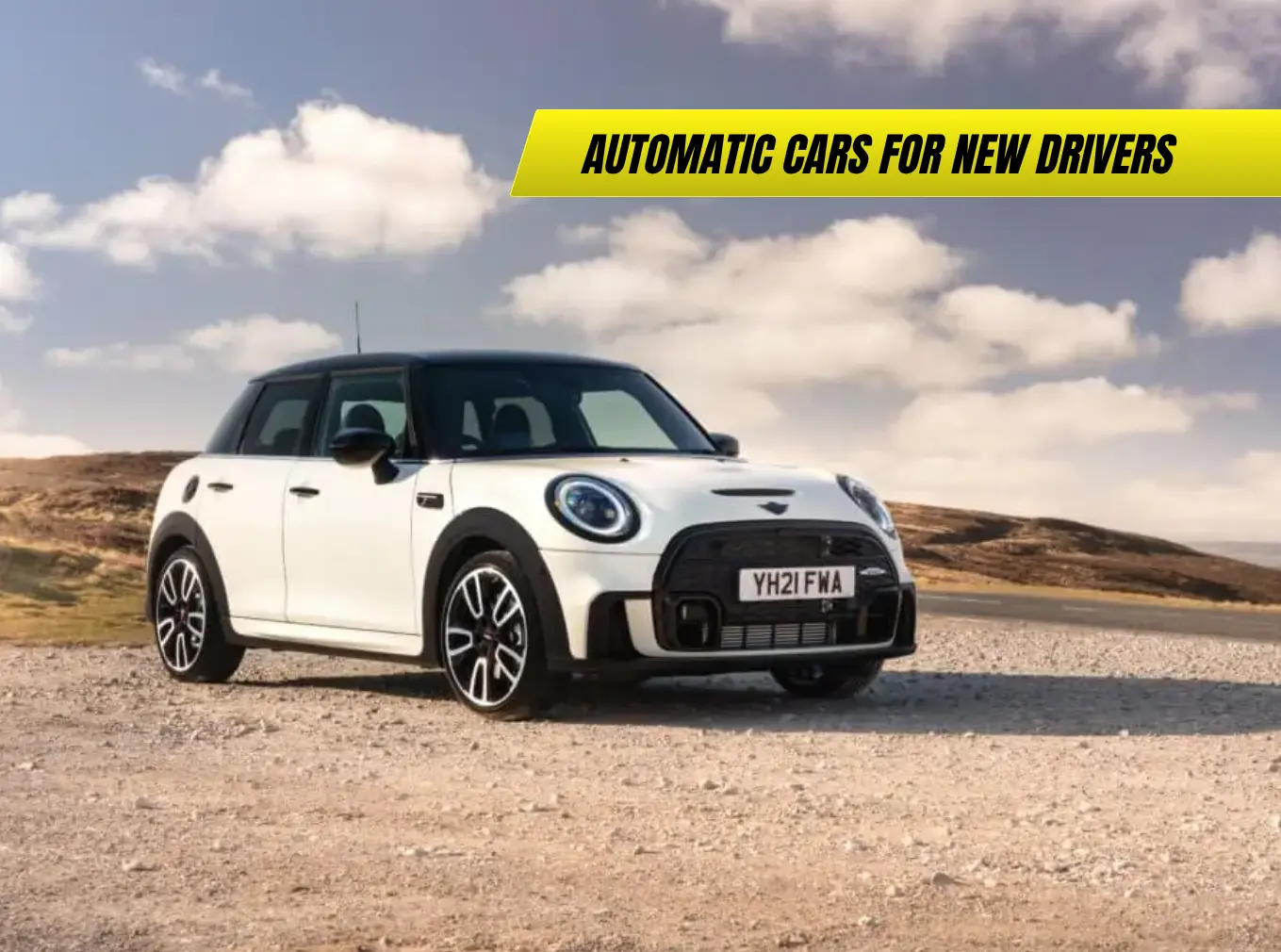
Learning to drive has changed dramatically. With more than 60% of new licence holders choosing automatic vehicles, the UK is now embracing the technology once seen as a luxury. From hybrid city cars to compact electric crossovers, 2025 brings an unprecedented choice of automatic cars ideal for learners and new drivers who value simplicity, safety, and efficiency.
Key Points
- Automatics now make up over half of all new UK car sales.
- Perfect for new drivers thanks to no clutch, no stalling, and smoother control.
- Electric and hybrid cars are all automatic by design.
- Insurance for new automatic drivers averages £1,400/year (vs £1,700 manual).
- Best 2025 models: Toyota Yaris Hybrid, Hyundai i10 Auto, MG4 EV, Kia Picanto Auto, Fiat 500e.
Why Choose an Automatic in 2025
Driving schools increasingly use automatics because:
- No clutch or gear shifting – reduces learner stress.
- Less fatigue in traffic – ideal for UK city driving.
- Better acceleration smoothness – particularly in EVs and hybrids.
- Lower running costs – fewer mechanical parts to maintain.
- Future-proofing – the UK’s transition to electric cars makes manual obsolete.
From my point of view, starting directly in an automatic today is more logical than learning to drive a manual that will soon vanish from showrooms.
The Law: Automatic vs Manual Licence
If you pass your driving test in an automatic, you can only drive automatics.
However, since 2024, the DVSA allows easier upgrade tests: you can later take a short conversion test to gain full manual rights.
This rule supports the reality that most new cars—especially EVs—no longer have manual transmissions.
Best Automatic Cars for New Drivers 2025
| Model | Type | Transmission | Insurance Group | Starting Price |
| Toyota Yaris Hybrid | Full hybrid | e-CVT | 9 | £23,500 |
| Hyundai i10 Auto | Petrol | 5-speed AMT | 6 | £17,000 |
| Kia Picanto Auto | Petrol | 5-speed AMT | 7 | £16,500 |
| Fiat 500e | Electric | Single-speed auto | 10 | £22,500 |
| MG4 EV | Electric | Single-speed auto | 14 | £25,000 |
These five combine affordable insurance, high efficiency, and straightforward handling—ideal for passing tests and early years of motoring.
Electric Cars: Automatically the Easiest
All electric vehicles are automatic by default—no clutch, no gears, just smooth torque.
For example:
- MG4 EV – strong acceleration, easy regenerative braking.
- Fiat 500e – compact, ideal for learners in cities.
- Kia Niro EV – higher price, but top reliability and safety ratings.
EVs also qualify for zero road tax until April 2026 and ULEZ exemption—saving new drivers hundreds per year in London and other clean-air zones.
More info: Toyota Aygo X Hybrid 2026 – Compact Urban Efficiency.
Fuel Economy and Efficiency
Automatic technology has advanced; the old “fuel-hungry” stereotype is gone.
| Transmission | Average Fuel Economy (mpg) | Maintenance Interval | Notes |
| Manual | 48 | Clutch every 60k miles | Higher effort |
| Automatic (modern CVT/DCT) | 52 | 100k+ miles | Smooth and durable |
| Hybrid automatic | 65+ | Low wear | Energy recaptured via braking |
| Electric (single speed) | – | Minimal | No gears, no oil changes |
Safety and Assistance
Modern automatics are packed with ADAS (Advanced Driver Assistance Systems), mandatory under EU and UK 2024 General Safety Regulation.
Standard features include:
- Automatic emergency braking (AEB)
- Lane keeping assist (LKA)
- Traffic sign recognition
- Hill start assist
Cars like the Toyota Yaris Hybrid and Hyundai Kona Electric hold 5-star Euro NCAP ratings—excellent reassurance for first-time drivers.
Insurance and Costs
Average annual insurance for new automatic drivers:
| Vehicle | Age | Premium Estimate |
| Small petrol auto (Picanto, i10) | 18–21 | £1,300–£1,500 |
| Hybrid auto (Yaris) | 18–21 | £1,400–£1,600 |
| Electric auto (MG4, 500e) | 18–21 | £1,500–£1,700 |
Insurers reward automatics for lower accident rates and smoother acceleration profiles captured in telematics policies.
Learning and Test Tips
- Choose a dual-control automatic for early lessons.
- Practise hill starts and parking manoeuvres—easier with creep control.
- Understand regenerative braking if learning in a hybrid or EV.
- Use the “B” or “L” mode for braking energy recovery.
Learners report 25% faster confidence gains in automatics, according to DVSA data from 2024–2025.
The Future: Manuals Becoming Extinct
By 2030, nearly all new vehicles sold in Britain will be automatic due to electrification.
Manual transmissions survive mainly in classic or niche sports cars.
From my point of view, for anyone getting their licence today, the manual-only path is an anachronism.
My Point of View
From my point of view, automatic cars represent the new normal for British learners.
They’re easier, safer, and more aligned with the all-electric future the UK is heading toward.
For those starting now, skipping the manual era entirely saves time, money, and frustration.
FAQs
Can I pass my test in an automatic and drive manuals later?
Yes, but you’ll need to take a short conversion test.
Are automatics more expensive to insure?
Not anymore—rates are nearly identical or even lower for small cars.
Do electric cars count as automatic?
Yes. All EVs use single-speed transmissions.
Is it easier to learn in an automatic?
Yes—no gears or clutch to manage.
Will manual cars disappear?
Gradually. After 2030, most new vehicles in the UK will be automatic or electric.
In 2025, automatic cars define the new era of British driving.
In my experience, they turn learning from a technical challenge into an accessible, enjoyable process—setting up new drivers for the fully electric decade ahead.





