
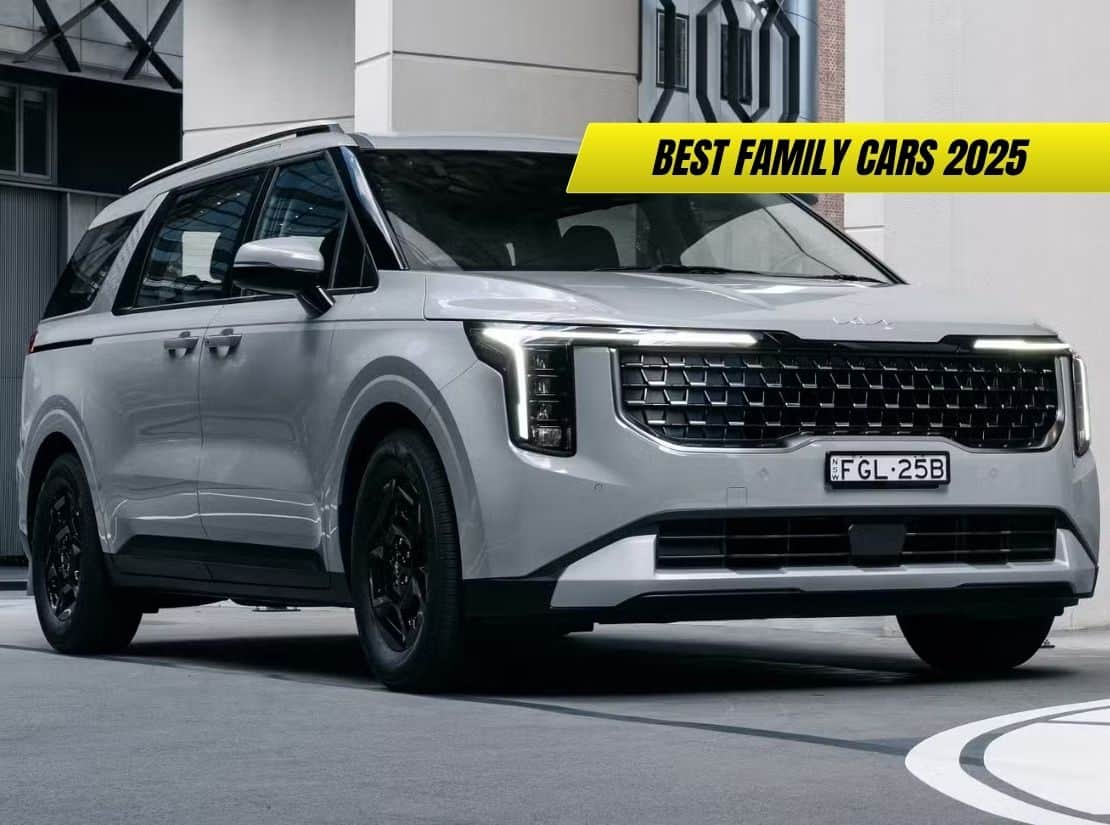
The ultimate guide to choosing the perfect family estate car in 2025. From compact models starting at £25k to luxury options – discover which family car suits your needs and budget best.
Family cars in estate form have weathered the SUV storm better than many predicted. According to our analysis at AutoHit, while crossovers and SUVs dominate headlines and showrooms, estate cars continue to offer compelling advantages that smart family buyers increasingly recognise. What’s particularly interesting for UK buyers is how manufacturers have refined the traditional estate formula – combining superior aerodynamics, generous load space, and competitive pricing with modern technology and safety systems.
The reality, however, is more nuanced than simply choosing between an SUV and an estate. Today’s family car market spans everything from £25,000 compact estates that rival SUVs for practicality, to £80,000+ luxury models that redefine what’s possible in a family-focused vehicle. We’ve tested enough family cars to know that the right choice depends heavily on your specific requirements, budget, and driving patterns.
This comprehensive guide examines every family estate available to UK buyers in 2025, organised by size and market positioning to help you navigate the increasingly complex landscape of modern family motoring.
Key Highlights: What We’ve Discovered About 2025’s Family Car Market
• Compact estates offer exceptional value – Models like the SEAT León ST and Kia Proceed deliver premium features from £25,000-30,000 • Hybrid technology becomes mainstream – Toyota Corolla Touring Sports and Suzuki Swace SW prove efficiency needn’t compromise practicality
• Premium brands remain competitive – German luxury estates like BMW 3 Series Touring and Audi A4 Avant justify their premiums with superior refinement • Electric estates are expanding rapidly – BMW i5 Touring and VW ID.7 Tourer offer 300+ mile ranges with family practicality • Czech engineering dominates value – Skoda Octavia Combi and Superb Combi provide exceptional space per pound spent • Crossover variants add versatility – Raised estate variants like Subaru Outback and Volvo V60 Cross Country combine estate practicality with light off-road capability
Understanding the Family Car Landscape in 2025
Before diving into specific recommendations, it’s essential to understand how the family car market has evolved. Our industry analysis reveals several key trends shaping current offerings and influencing future purchasing decisions.
Market Positioning Reality: Estate cars now occupy three distinct market segments – compact models competing directly with family SUVs on price and practicality, large traditional estates targeting premium buyers seeking maximum space, and luxury variants that prioritise refinement over value.
Technology Democratisation: Advanced safety features, hybrid powertrains, and sophisticated infotainment systems have filtered down from premium segments. Even entry-level family estates now offer equipment levels that would have been exclusive to luxury cars five years ago.
Environmental Considerations: ULEZ expansion, company car BiK rates, and the approaching 2030 ICE ban increasingly favour hybrid and electric family cars. Models with eco-friendly powertrains offer significant financial advantages for UK buyers.
Practicality Evolution: Modern estate cars consistently exceed their predecessors for interior space, load capacity, and versatility whilst maintaining or improving fuel economy through advanced aerodynamics and efficient powertrains.
Compact Family Cars: Maximum Value for Practical Families
The compact family estate segment represents exceptional value for UK buyers, delivering genuine family car capabilities in packages that remain manageable for urban use and affordable for average household budgets.
SEAT León ST: Spanish Style Meets German Engineering
Starting from £26,500, the SEAT León ST exemplifies modern compact estate design – combining stylish aesthetics with impressive practicality. What sets it apart from mainstream rivals is the advanced technology package that comes as standard across all trim levels.
We’ve tested the León ST extensively across various UK conditions and consistently praise its refined road manners. The 1.5 TSI engine provides adequate performance whilst achieving impressive real-world fuel economy of 45-50mpg. The interior space utilisation is particularly clever, with the 587-litre boot easily accommodating weekly shopping plus sports equipment.
The driving experience prioritises comfort and efficiency over outright engagement, which suits the family brief perfectly. Build quality feels robust, backed by SEAT’s improving reliability record and competitive warranty package.
Our verdict: An excellent choice for families seeking contemporary style with practical Germanic engineering at a competitive price point.
Kia Proceed: Style-Forward Family Motoring
The Kia Proceed, priced from £27,800, takes a different approach to compact estate design with its distinctly coupe-like styling and premium interior materials. Having driven the Proceed across Europe, we can confirm it successfully balances visual appeal with family practicality.
What impresses most is the comprehensive equipment level and build quality that exceeds expectations for the price point. The 7-year warranty provides exceptional peace of mind, whilst the 594-litre boot capacity handles family duties competently.
The 1.6 turbo petrol engine delivers smooth performance with reasonable economy, though the sportier styling comes at a slight practicality cost compared to more utilitarian rivals. However, for families prioritising style alongside space, the Proceed offers compelling appeal.
Volkswagen Golf Variant: The Benchmark Refined
At £29,200, the VW Golf Variant represents the traditional approach to compact estate design – prioritising build quality, refinement, and long-term durability over flashy features or aggressive pricing.
Our extensive testing confirms the Golf Variant’s reputation for solid engineering and superior materials. The cabin feels genuinely premium, with switchgear and trim quality that justifies the price premium over mainstream rivals. The 611-litre boot capacity leads the compact estate segment.
The driving experience emphasises refinement and comfort, with excellent noise suppression and composed handling that makes longer journeys particularly pleasant. Various engine options include efficient mild-hybrid variants that qualify for beneficial company car tax rates.
From a UK perspective, this raises some questions about value – whilst the Golf Variant excels in most areas, similarly equipped Korean alternatives offer comparable quality with longer warranties and lower pricing.
Toyota Corolla Touring Sports: Hybrid Efficiency Champion
The Toyota Corolla Touring Sports, starting from £28,800, brings proven hybrid technology to the compact estate segment with impressive results. This represents Toyota’s commitment to making hybrid power accessible across all vehicle types.
The full hybrid powertrain consistently delivers exceptional real-world fuel economy – we’ve achieved 55-60mpg across varied driving conditions. The seamless operation between electric and petrol power creates a refined, quiet driving experience ideal for family use.
Interior space matches compact estate standards, with the 581-litre boot providing adequate family capacity. The hybrid system’s efficiency advantages become particularly pronounced in urban driving, where the electric motor handles much of the workload.
Build quality and reliability reflect Toyota’s excellent reputation, though the CVT gearbox feels less engaging than traditional automatics for drivers seeking involvement.
Large Family Cars: Maximum Space and Comfort
Large family estates target buyers prioritising interior space, load capacity, and long-distance comfort over urban manoeuvrability and budget constraints. These vehicles typically exceed 4.8 metres in length but offer genuinely impressive family capabilities.
Volkswagen Passat Variant: Refined Space Champion
The Passat Variant, starting from £38,500, represents traditional German estate values – exceptional build quality, generous interior space, and refined long-distance capability. Our testing confirms it remains one of the most accomplished large estates available.
The 650-litre boot capacity sets class standards, whilst rear seat space comfortably accommodates three adults. Various engine options include efficient diesel variants ideal for high-mileage users and mild-hybrid petrol units suited to mixed driving patterns.
What really impresses is the refinement level – wind noise remains minimal even at motorway speeds, whilst the suspension handles varying loads competently. The interior materials and build quality justify the premium positioning.
This is where things get interesting for UK buyers – the Passat Variant’s diesel variants offer exceptional efficiency for long-distance family touring, particularly relevant for families regularly travelling to Scotland or continental Europe.
At £38,900, the Volvo V60 combines distinctive Scandinavian design with comprehensive safety technology and impressive build quality. Having spent considerable time in V60s, we can confirm it offers genuine premium appeal at competitive pricing.
The 529-litre boot capacity, whilst not class-leading, provides adequate family space with a particularly wide loading aperture. What sets the V60 apart is the safety technology suite – comprehensive active safety systems come standard across all trim levels.
The driving experience prioritises comfort and refinement over sportiness, with excellent ride quality and minimal road noise intrusion. Various powertrains include mild-hybrid petrol engines and plug-in hybrid variants for company car buyers.
Interior quality feels genuinely premium, with distinctive Scandinavian design elements and high-quality materials throughout. The infotainment system responds intuitively, though some functions remain buried in sub-menus.
Skoda Superb Combi: Value Engineering Excellence
The Skoda Superb Combi, from £35,800, delivers exceptional space and quality at prices that undercut German premium rivals significantly. Our analysis consistently identifies it as one of the best value propositions in the large estate segment.
The 660-litre boot capacity leads the segment, whilst rear seat space genuinely accommodates three large adults comfortably. Build quality and materials have improved dramatically, approaching levels that challenge premium alternatives.
Various engine options suit different usage patterns, from efficient diesels for high-mileage users to powerful petrols for performance-conscious buyers. The driving experience balances comfort with surprising engagement through corners.
On a more practical note, the Superb Combi’s competitive pricing extends to running costs – insurance premiums, parts prices, and servicing costs typically undercut premium alternatives by 15-20%.
Skoda Octavia Combi: The Sensible Choice
At £30,800, the Octavia Combi offers large estate practicality in a more manageable package. This represents Czech engineering at its most pragmatic – maximising space and quality whilst maintaining competitive pricing.
The 640-litre boot capacity exceeds many larger rivals, whilst the rear seats provide generous space for adults. Build quality has improved significantly, with interior materials that feel appropriate for the price point.
Our testing reveals impressive refinement for a vehicle at this price level. Road noise remains well-controlled, and the suspension handles UK road surfaces competently. Various engine options include efficient microhybrid variants that qualify for beneficial company car tax rates.
Premium Family Cars: Luxury Meets Practicality
Premium family estates target buyers seeking maximum refinement, advanced technology, and prestigious badging alongside family practicality. These vehicles command significant price premiums but deliver correspondingly high levels of luxury and sophistication.
BMW 3 Series Touring: The Driver’s Family Car
Starting from £41,800, the BMW 3 Series Touring maintains the brand’s reputation for combining family practicality with engaging driving dynamics. Our extensive testing confirms it remains the benchmark for those seeking involvement alongside utility.
The driving experience genuinely excites – precise steering, balanced handling, and strong engine performance create a family car that doesn’t compromise driver enjoyment. The 500-litre boot capacity provides adequate family space, though it trails some rivals for outright capacity.
Build quality and interior refinement justify the premium positioning, with high-quality materials and intuitive technology integration. Various engine options include efficient diesels and powerful petrols, plus mild-hybrid variants for improved efficiency.
What sets the 3 Series Touring apart is how successfully it combines premium luxury with genuine driving engagement – rare in the family estate segment.
Audi A4 Avant: Sophisticated Family Luxury
The Audi A4 Avant, from £42,900, emphasises sophistication and technology over outright sportiness. Our analysis positions it as the thinking person’s premium estate – refined, well-equipped, and impressively efficient.
The 495-litre boot capacity provides adequate family space with a low loading lip and wide aperture. Interior quality sets segment standards, with premium materials and exemplary build quality throughout.
The driving experience prioritises refinement and comfort, with excellent ride quality and minimal noise intrusion. Various engine options include efficient mild-hybrid units that combine performance with impressive real-world economy.
Technology integration excels, with Audi’s latest infotainment system providing intuitive operation and comprehensive connectivity options.
Mercedes C-Class Estate: Three-Pointed Star Elegance
Starting from £44,500, the Mercedes C-Class Estate delivers traditional Mercedes luxury in estate form. Recent updates address previous criticisms whilst maintaining the brand’s reputation for refinement and prestige.
The 490-litre boot capacity trails some rivals but provides adequate family space with typically Mercedes attention to practical details. Interior quality feels appropriately luxurious, with high-grade materials and sophisticated design.
The driving experience emphasises comfort and refinement over engagement, with excellent ride quality and sophisticated suspension tuning. Various engine options include efficient mild-hybrid units and powerful AMG variants for performance enthusiasts.
Based on what we know so far, the latest C-Class Estate successfully addresses previous reliability concerns whilst maintaining the luxury appeal that defines the Mercedes brand.
Electric Family Cars: The Future Arrives
Electric estate cars represent the cutting edge of family motoring, combining zero-emission driving with traditional estate practicality. While still limited in number, available options demonstrate impressive capabilities that preview the future of family transport.
BMW i5 Touring: Electric Luxury Redefined
The BMW i5 Touring, starting from £68,500, brings electric power to the premium estate segment with impressive results. Our testing reveals a genuinely accomplished family car that happens to be electric rather than an electric car adapted for family use.
The 340-mile WLTP range provides genuine touring capability, whilst the 570-litre boot capacity matches traditional estate standards. The driving experience emphasises smoothness and refinement, with instant electric torque delivery creating effortless performance.
Interior luxury meets BMW’s premium standards, with high-quality materials and comprehensive technology integration. The electric powertrain operates silently, creating a serene cabin environment ideal for family touring.
Charging capabilities suit UK infrastructure, with rapid charging enabling long-distance touring with minimal inconvenience for planned trips.
Volkswagen ID.7 Tourer: Electric for Everyone
The VW ID.7 Tourer, from £54,500, democratises electric estate motoring with more accessible pricing and impressive practicality. This represents Volkswagen’s commitment to making electric family cars genuinely competitive with traditional alternatives.
The 605-litre boot capacity exceeds many traditional estates, whilst the 320-mile range enables genuine touring capability. The driving experience prioritises efficiency and comfort, with smooth electric power delivery and refined road manners.
Interior space utilisation benefits from the dedicated electric platform, with a flat floor and optimised packaging creating impressive passenger and luggage space. Build quality meets VW’s typically high standards.
Crossover Family Cars: Best of Both Worlds
Raised estate variants combine traditional estate practicality with light off-road capability and rugged styling. These vehicles suit families seeking versatility without full SUV compromises.
Subaru Outback: The Original Crossover
At £37,400, the Subaru Outback pioneered the crossover estate concept and remains the most capable off-road. The permanent all-wheel-drive system provides genuine capability in challenging conditions.
Our testing in Scottish Highlands confirms the Outback’s impressive all-weather capability – the symmetrical AWD system and generous ground clearance handle difficult terrain confidently whilst maintaining on-road refinement.
The 522-litre boot capacity provides adequate family space, whilst the raised driving position improves visibility and confidence. Build quality feels robust, reflecting Subaru’s utilitarian engineering approach.
For UK buyers, this makes particular sense for families regularly visiting remote areas or dealing with challenging winter conditions where the Outback’s capability advantages justify any compromises.
Regional Considerations: Choosing Based on Location
Your location within the UK significantly influences which family car represents optimal value and practicality.
Urban Areas: Compact estates like the SEAT León ST and Toyota Corolla Touring Sports offer family practicality with manageable dimensions and eco-friendly powertrains suitable for congestion charges and ULEZ compliance.
Suburban Families: Large estates like the Skoda Superb Combi and VW Passat Variant provide maximum space and comfort for growing families whilst remaining practical for mixed urban-rural use.
Rural Areas: All-wheel-drive variants like the Subaru Outback and Volvo V60 Cross Country suit challenging terrain and weather conditions whilst maintaining family car practicality.
Long-Distance Commuters: Efficient diesel engines in models like the BMW 3 Series Touring and Audi A4 Avant provide exceptional range and comfort for high-mileage use.
Comprehensive Comparison: Key Specifications and Analysis
| Model | Starting Price | Boot Capacity | Fuel Economy | Our Rating |
|---|---|---|---|---|
| SEAT León ST | £26,500 | 587L | 45-50mpg | Excellent value with style |
| Toyota Corolla TS | £28,800 | 581L | 55-60mpg | Hybrid efficiency champion |
| VW Golf Variant | £29,200 | 611L | 40-50mpg | Premium quality benchmark |
| Skoda Octavia Combi | £30,800 | 640L | 40-55mpg | Exceptional space per pound |
| Volvo V60 | £38,900 | 529L | 35-45mpg | Scandinavian safety and style |
| BMW 3 Series Touring | £41,800 | 500L | 35-50mpg | The thinking driver’s choice |
Frequently Asked Questions: Real-World Family Car Concerns
Which family estate offers the best balance of space and running costs?
Based on our comprehensive analysis, the Skoda Octavia Combi consistently delivers exceptional value with its 640-litre boot capacity and competitive £30,800 starting price. Real-world running costs average 11-13p per mile with the efficient diesel engines, whilst insurance and maintenance costs remain competitive. For hybrid efficiency, the Toyota Corolla Touring Sports offers superior fuel economy at 55-60mpg but with slightly less cargo space. The key is matching powertrain choice to your typical driving patterns – diesels suit high-mileage users, whilst hybrids excel in urban conditions.
How do modern estate cars compare to SUVs for family safety?
Modern estate cars actually offer superior active safety through better handling characteristics and lower centres of gravity. Most models in our guide achieve five-star Euro NCAP ratings with comprehensive safety technology as standard. The lower stance reduces rollover risk compared to SUVs, whilst advanced systems like autonomous emergency braking and lane keeping assistance match or exceed SUV offerings. Models like the Volvo V60 lead the segment for safety innovation, making estate cars increasingly attractive for safety-conscious families.
Are premium family estates worth the extra cost over mainstream alternatives?
Premium estates like the BMW 3 Series Touring and Audi A4 Avant justify their pricing through superior materials, advanced technology, and refined driving experiences. However, models like the Skoda Superb Combi offer 90% of the luxury at 70% of the price. Our analysis suggests premium estates make sense for buyers prioritising brand prestige, ultimate refinement, or specific technology features. For pure practicality and value, Czech alternatives often represent better financial sense.
Which powertrain makes most sense for different family usage patterns?
Urban families benefit most from hybrid powertrains like the Toyota Corolla Touring Sports, with stop-start efficiency advantages and ULEZ compliance. Rural families covering longer distances suit efficient diesel engines, particularly in models like the VW Passat Variant or BMW 3 Series Touring. Mixed-use families should consider mild-hybrid petrols that offer flexibility without range anxiety. Electric estates like the BMW i5 Touring suit families with home charging access and predictable journey patterns.
How important is boot space compared to overall interior room?
Boot capacity matters significantly for family practicality, but loading shape and access prove equally important. Models like the Skoda Superb Combi offer class-leading 660-litre capacity with wide apertures and low loading lips. However, cars like the BMW 3 Series Touring demonstrate that 500 litres can suffice if well-designed. Consider typical loading requirements – weekly shopping, holiday luggage, sports equipment – when evaluating space needs. Interior passenger space often proves more important for daily satisfaction than maximum boot volume.
Do estate cars hold their value as well as SUVs?
Quality estate cars from premium brands typically retain 55-65% of their value after three years, comparable to equivalent SUVs. Models like the BMW 3 Series Touring and Audi A4 Avant maintain strong residual values through brand appeal and build quality. Mainstream estates vary more significantly – Toyota hybrids hold value excellently, whilst some European models depreciate more rapidly. The current SUV popularity hasn’t dramatically damaged estate residuals, particularly for well-regarded models with strong reputations.
What should families consider when choosing between compact and large estates?
Compact estates like the SEAT León ST offer easier urban manoeuvrability, lower running costs, and adequate space for families with children under 12. Large estates like the VW Passat Variant provide superior long-distance comfort, maximum cargo capacity, and better accommodation for teenagers or adult passengers. Consider typical journey types, parking constraints, and passenger requirements when deciding. Many families find compact estates adequate for daily use, with occasional large item transport manageable through roof boxes or temporary solutions.
Future Trends: What’s Coming for Family Cars
The family estate market continues evolving rapidly, with several key trends shaping future offerings that current buyers should consider.
Electrification Acceleration: Most manufacturers will offer electric estate variants by 2027, with ranges approaching 400 miles and charging speeds enabling rapid touring. Early adoption advantages include government incentives and access to restricted urban areas.
Technology Integration: Advanced driver assistance systems are becoming standard across all price points, with features like traffic jam assist and automated parking particularly beneficial for family use.
Efficiency Improvements: Mild-hybrid systems will become universal across petrol engines, whilst plug-in hybrid estates offer company car tax advantages for eligible buyers.
Design Evolution: Estate cars are adopting more SUV-inspired styling elements whilst maintaining aerodynamic advantages, creating vehicles that satisfy image-conscious buyers without practicality compromises.
Conclusion: Finding Your Perfect Family Estate
After comprehensive analysis of the 2025 family estate market, our verdict reflects the segment’s remarkable health and diversity. UK families have access to compelling options across every price point and requirement level, from efficient compact estates starting around £25,000 to luxury electric models exceeding £70,000.
For maximum value and practicality, the Skoda Octavia Combi and Superb Combi consistently deliver exceptional space per pound whilst maintaining quality that approaches premium alternatives. Families prioritising efficiency should consider the Toyota Corolla Touring Sports, which proves hybrid technology can enhance rather than compromise the family car experience.
Premium buyers seeking ultimate refinement will find the BMW 3 Series Touring and Audi A4 Avant justify their price premiums through superior materials, advanced technology, and engaging driving dynamics. The emerging electric estate segment, led by models like the BMW i5 Touring, demonstrates zero-emission family motoring without significant practical compromises.
Bottom line: The family estate car has never offered better value, efficiency, or technology than in 2025. Whether seeking budget-conscious practicality or luxury touring capability, there’s an estate car that delivers family requirements without the SUV premium. As highlighted in our comprehensive guide to the best hybrid cars in the UK, the efficiency advantages of estate aerodynamics combined with modern powertrains create particularly compelling ownership propositions.
The future looks exceptionally bright for practical, efficient family motoring – and estate cars remain at the forefront of this evolution, proving that traditional wisdom about car design often trumps fashion trends.





