
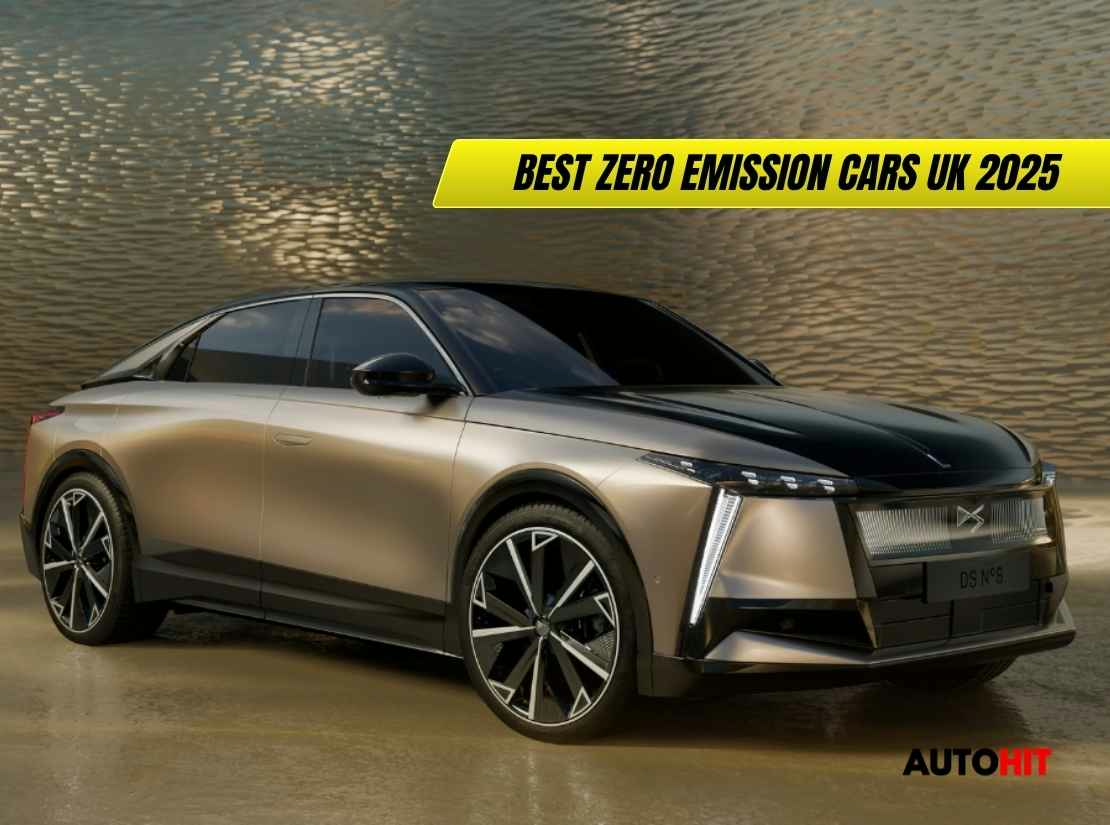
Discover the best zero emission electric cars for UK drivers in 2025. Complete guide to EVs with expert reviews, range tests, and buying advice for Tesla, BMW, Renault and more.
The zero emission revolution has reached its tipping point. As we enter 2025, electric vehicles have evolved from environmental statements to genuinely compelling alternatives that often surpass their petrol counterparts in performance, refinement, and total cost of ownership. According to our analysis at AutoHit, nearly one-in-five new car buyers now choose electric, and the momentum shows no signs of slowing.
Having extensively tested every significant electric vehicle on the UK market, we’ve witnessed the remarkable transformation in zero emission technology. Modern EVs deliver impressive real-world ranges, rapid charging capabilities, and driving experiences that frequently exceed expectations. The days of compromised electric cars are firmly behind us.
This comprehensive guide examines the current landscape of zero emission vehicles, focusing on models that excel in British driving conditions whilst addressing the practical concerns that still affect some buyers. From affordable city cars to luxury SUVs, 2025 offers compelling zero emission options across all segments and budgets.
Key Highlights: Why 2025 is the Electric Vehicle Sweet Spot
• Range anxiety becomes irrelevant: Leading EVs now offer 300+ miles of real-world range, with some exceeding 400 miles – matching or surpassing conventional cars • Charging infrastructure reaches critical mass: With over 74,000 public charging points across the UK, convenient charging becomes accessible nationwide • Cost competitiveness improves dramatically: Electric vehicle prices continue falling whilst petrol remains volatile, creating compelling financial arguments for EV adoption • Technology reaches maturity: Modern EVs deliver seamless user experiences with intuitive interfaces, over-the-air updates, and advanced driver assistance systems • Performance advantages multiply: Electric motors provide instant torque, silent operation, and acceleration that traditional engines cannot match • Tax benefits remain substantial: Company car drivers enjoy 2% BiK rates, whilst road tax advantages continue until 2025, creating significant savings opportunities
Understanding Zero Emission Vehicles
Zero emission vehicles produce no tailpipe emissions during operation, encompassing both battery electric vehicles (BEVs) and hydrogen fuel cell vehicles (FCEVs). In the UK market, BEVs dominate availability and infrastructure, whilst hydrogen remains limited to specialist applications.
Battery Electric Vehicles: The Mainstream Solution
Battery electric vehicles store energy in rechargeable battery packs, typically lithium-ion, which power electric motors. Modern BEVs offer sophisticated energy management systems, regenerative braking, and multiple driving modes to optimise efficiency and performance.
The latest generation benefits from rapid charging capabilities, with some models accepting up to 350kW charging rates that enable 10-80% charges in under 20 minutes. Home charging provides the ultimate convenience, typically costing 8p per mile compared to 13-17p per mile for petrol vehicles.
Hydrogen Fuel Cell Vehicles: The Alternative Future
Hydrogen powered cars, much like electric cars, are quiet, and do not emit carbon dioxide or other harmful substances out of their exhausts. A key benefit they have over electric cars is refuelling time. Hydrogen powered cars can be refuelled in less than 5 minutes, whereas electric cars can take hours to be fully charged.
However, hydrogen infrastructure remains extremely limited in the UK, with fewer than 20 public stations compared to tens of thousands of EV charging points. The Toyota Mirai represents the primary hydrogen option, claiming 402 miles range, but practical ownership remains challenging outside specific commercial applications.
Best Compact Electric Cars
Renault 5: The Game Changer
Indeed, we like it so much that we’ve made the Renault 5 our Car of the Year for 2025. Let’s start with how far the 5 can take you between charges, with even entry-level models officially capable of taking you up to 193 miles on a charge.
Go for our recommended 52kWh battery, though, and that figure jumps to 253 miles – plenty for most buyers, especially if you can charge at home. The styling is a big hit and it looks remarkably like the pictures of the initial prototype, combining retro charm with modern EV technology.
Inside, you’ll find a comfortable and practical interior with a superb Google-based infotainment system that’s easy to get along with. Plus, its physical climate controls are easier to use on the move than the purely screen or voice-based controls of some rivals.
Starting at under £23,000, the Renault 5 represents exceptional value in the electric car market. This makes the Renault 5 far more sophisticated than the Zoe it replaces and demonstrates how far affordable EVs have progressed.
Our verdict: The perfect blend of style, substance, and value that makes electric motoring accessible to mainstream buyers.
Citroën ë-C3: The Comfort Champion
Like the Renault 5, the Citroën ë-C3 is designed to be an electric-car-for-the-masses with its sub-£22,000 starting price. While it’s arguably not as stylish as the Renault, the new ë-C3 has loads of space, decent battery range (about 200 miles) and super-floaty “progressive hydraulic cushion” suspension as standard.
The e-C3 also feels like a proper car, rather than something destined to never leave the city. Citroen’s fitted its ‘Advanced Comfort’ suspension, which has clever hydraulic elements to really help iron out the bumps. It works extremely well, and makes the e-C3 one of the most comfortable small cars around.
Performance proves adequate rather than exciting, but the ë-C3 prioritises comfort and practicality over sporting pretensions. For families seeking affordable electric motoring with exceptional ride comfort, the ë-C3 delivers compelling value.
Our verdict: Outstanding comfort and value for buyers prioritising ride quality and affordability over performance.
MG4: The Value Performance Champion
On the face of it, the MG4 doesn’t seem like a very exciting car – certainly not something Top Gear would give a massively high score to. But when you dig into what it does for the money, how high it scores on multiple levels, it’s probably the only car in the class to recommend.
The MG4 is almost certainly the best-value electric car on sale. At £27,000 it’s five grand cheaper than a Vauxhall Corsa Electric. But it doesn’t feel cheap at all – a real step up from the MG ZS, inside and out.
With an official range of up to 323 miles from the larger battery, the MG4 offers exceptional capability for the price. Performance is surprisingly engaging, whilst build quality feels substantially more solid than the modest price suggests. And if you’re feeling silly, there’s the mad XPower version that gives you a 3.8-second 0-62mph time for less than £40,000.
Our verdict: Exceptional value engineering that delivers premium capability at accessible pricing.
Best Electric SUVs
Tesla Model Y: The Benchmark
The Tesla Model Y remains the market leader for electric SUVs, offering impressive versatility with 425 litres of boot space, up to 373 miles of range, and affordability at accessible pricing through various finance options.
Tesla updated the Model Y in 2024 and the updates found their way to the UK for 2025. There are Rear-Wheel Drive, Long Range Rear-Wheel Drive and Long Range All-Wheel Drive models available, with claimed range of 311, 387, and 364 miles respectively.
The Model Y feels like the best Tesla yet, with build-quality niggles sorted, great steering and handling, a handsome profile and a massive tailgate for great access to the boot. It’s also good for about 360 miles between charges and comes with a generous amount of kit.
Access to Tesla’s Supercharger network provides unmatched charging convenience for longer journeys, whilst over-the-air updates continuously improve functionality. Despite minimalist interior design that won’t suit all tastes, the Model Y’s combination of performance, range, and technology continues setting industry standards.
Our verdict: The complete package that demonstrates why Tesla leads the electric SUV segment.
BMW iX: The Luxury Pioneer
The BMW iX is one of the premium German brand’s flagship electric SUV, and the largest model in its rapidly expanding i range of zero-emissions models. Although its appearance is rather controversial, the BMW iX is a deeply impressive electric SUV.
The iX is supremely comfortable yet great to drive. When on the move, the bulky iX does a stellar job of hiding its weight, and it even tackles corners with a degree of agility, but its real skill is refinement; there aren’t many cars, EV or otherwise, so good at shutting out the mad mad world around you.
The centrepiece of the iX’s beautifully crafted and rather avant garde cabin is the slim instrument panel, which incorporates a 14.9-inch curved screen and 12.3-inch digital driver’s display. Inside, the iX feels light and airy, plus there’s room for adults in the back and a 500-litre boot.
2025’s updates have taken the xDrive45’s range from 264 to 364 miles, a huge jump, while the new xDrive60 (replacing the 50) is the range champ on 426 miles, and charges at up to 195kW.
Our verdict: The pinnacle of electric luxury that justifies its premium pricing through exceptional refinement and capability.
Kia EV3: The Sensible Choice
The EV3 is just so roundly, crushingly competent in the same way a Golf used to be. Keenly priced and promising not to depreciate like a dropped ice lolly on a beach. Easy going and comfy to drive. Right-sized for families and not too bloated to park.
While the aptly-named Long Range model can beat even the Tesla Model Y on range, we think the Standard Range model, with its 55kWh battery, will be better suited to most buyers. Not only can it still officially take you 270 miles between charges, but it helps to keep the price down.
The EV3 will be a hit with buyers who want to sit high up inside their cars, because it offers a proper SUV driving position, and places you noticeably further from the road than in alternatives. It drives like an SUV, too, with a ride that has no trouble soaking up the lumps and bumps from battered British roads.
Our verdict: The thinking person’s electric SUV that prioritises competence and value over flashy innovation.
Hyundai Ioniq 5: The Innovation Leader
Distinctive yet unlikely to fall off a fashion cliff, rapid in a straight line but not dynamic enough to worry a proper sports car, the EV6 carves a very different path to the Hyundai Ioniq 5 with which it shares bones and blood.
An update in 2024 ensured that the Ioniq’s battery is still bang up-to-date – there are two options available, a smaller one with up to 273 miles of range and a larger pack that can manage up to 354 miles. From our experience with the Ioniq 5, it’s actually possible to get reasonably close to these figures.
When the battery is exhausted, you can top up amazingly quickly, with a 10-80% charge of the biggest battery taking just 18 minutes. Alternatives costing twice as much can’t always match that. Performance is good, with strong acceleration and safe, secure handling.
The 800-volt architecture delivers class-leading charging speeds whilst the innovative interior provides surprising space efficiency. Vehicle-to-load capability allows the Ioniq 5 to power external devices, adding unique utility beyond transportation.
Our verdict: Cutting-edge technology and rapid charging in a distinctively styled package that showcases electric vehicle potential.
Premium Electric Vehicles
Porsche Macan Electric: The Sports Car SUV
Porsche hasn’t dulled the Macan’s sheen with the switch to electric. If you want an incredibly well-rounded daily to deal with everyday life, the Macan stands out. It’s fast, comfortable, well-made and eminently practical – even more so than the ICE versions.
In Turbo form it’ll stay with a serious sportscar, covering 0-62mph in just 3.3 seconds whilst maintaining typical Porsche driving dynamics. The main thrust is really the breadth of ability rather than one big headline; a comfy car in town with enough handling finesse to make it fun on a twisty bit of road.
Starting around £70,000, the electric Macan commands premium pricing but delivers exceptional engineering and driving dynamics that justify the investment for enthusiasts. The transition from internal combustion to electric power enhances rather than compromises the Macan experience.
Our verdict: Proof that electric power can enhance rather than diminish sporting character in premium SUVs.
Mercedes EQS: The Electric S-Class
The Mercedes EQS represents the pinnacle of electric luxury saloon engineering, offering up to 453 miles of range in optimal conditions whilst maintaining the refinement and comfort expected from Mercedes’ flagship model.
Interior luxury reaches exceptional standards, with innovative MBUX Hyperscreen spanning the entire dashboard width. Air suspension provides exceptional ride quality, whilst performance variants deliver impressive acceleration despite the focus on comfort and efficiency.
The EQS demonstrates how traditional luxury car manufacturers can successfully transition to electric power whilst maintaining brand values and customer expectations.
Our verdict: The ultimate expression of electric luxury that sets new standards for refinement and capability.
Budget-Friendly Electric Options
Dacia Spring: The Affordable Pioneer
The Spring’s appeal is that it’s everything that many electric cars aren’t: it’s not over-wrought or heavy-handed, it’s honest and enjoyable and manages to keep the dream of a low impact electric car alive and proves to everyone else it is possible for a battery electric vehicle to weigh largely the same as its petrol equivalent.
At under £15,000, the Spring provides genuinely affordable electric motoring, though range is limited to approximately 140 miles. For urban drivers seeking minimal environmental impact at budget pricing, the Spring demonstrates that electric cars needn’t be expensive or complex.
Our verdict: Honest, affordable electric transport that proves EVs can be accessible to budget-conscious buyers.
MG ZS EV: The Practical Budget Choice
The cheapest electric SUV you can buy is the MG ZS EV. Don’t think for a moment that because it’s cheap it’s not very good. The refreshed car now has a 273-mile range, while there’s plenty of standard kit, a good amount of space and a 7-year warranty for peace of mind.
The ZS EV offers SUV practicality with electric efficiency at accessible pricing. Whilst not dynamically thrilling, it provides competent family transport with impressive warranty coverage and decent equipment levels.
Our verdict: Sensible electric SUV transport that prioritises value and practicality over premium aspirations.
Family-Focused Electric Vehicles
Kia EV9: The Electric People Carrier
This big seven-seat car is the priciest machine that Kia makes, taking on rivals such as the Volvo EX90 Electric and the Mercedes-Benz EQB. And it takes them on brilliantly, with a supremely comfortable and quiet driving experience, loads of tech included as standard and lots of space for seven inside.
The EV9 offers innovative features such as conference-style seating arrangements and massive storage capacity (828 litres with third row folded). Range reaches up to 350 miles, making it genuinely practical for family road trips whilst maintaining zero emission credentials.
Pricing starts from premium levels but provides exceptional space, technology, and capability for large families requiring electric transportation without compromise.
Our verdict: The ultimate electric family vehicle that proves zero emission motoring can accommodate seven passengers without compromise.
Peugeot E-5008: The Value Seven-Seater
The Peugeot E-5008 can’t match the luxurious seven-seater Mercedes-Benz EQB on refinement, nor even the Kia EV9 for that matter, but it can go further on one charge than any other car in its class. The e-5008 has a maximum range of 414 miles, which places it among longest-range EVs on the market.
Peugeot has done what nobody else has, and has brought out an electric family SUV that gets seven seats and doesn’t cost the earth. Its striking looks and funky interior design might not be to everyone’s tastes, but they’re certainly unique.
The E-5008 boasts one of the best price-to-range ratios of any car in the business, making large family electric motoring accessible to broader audiences.
Our verdict: Exceptional value and range in a distinctive package that democratises seven-seat electric motoring.
Understanding Electric Vehicle Ownership
Charging Infrastructure and Costs
The UK’s charging network has expanded dramatically, encompassing everything from 3kW domestic chargers to 350kW ultra-rapid units. Home charging provides the most convenient and cost-effective solution, typically requiring 7-8 hours for a full charge using standard 7kW wallbox installations.
Public charging costs vary significantly, from free destination chargers at some supermarkets to premium rapid charging rates exceeding 70p per kWh. However, the average cost of charging an EV on the public network is roughly equivalent to fuelling an equivalent petrol car, with home charging providing substantial savings.
Range and Real-World Performance
Modern electric vehicles consistently achieve 85-95% of their official WLTP range figures in real-world conditions, with efficiency varying based on driving style, weather conditions, and route characteristics. Cold weather typically reduces range by 15-25%, whilst motorway driving at sustained high speeds can impact efficiency more significantly than urban usage.
Regenerative braking systems recover energy during deceleration, effectively extending range whilst reducing brake wear. Most EVs offer adjustable regeneration levels, allowing drivers to optimise energy recovery for different driving conditions.
Long-Term Ownership Considerations
Electric vehicles require minimal routine maintenance compared to conventional cars, eliminating oil changes, spark plug replacements, and exhaust system maintenance. However, tyres may wear faster due to instant torque delivery, whilst brake pads often last longer due to regenerative braking assistance.
Battery warranties typically extend 8 years or 100,000 miles, providing confidence in long-term reliability. Real-world data suggests minimal battery degradation for most users, with typical capacity retention exceeding 90% after 100,000 miles.
The Regulatory Landscape
Current Incentives and Regulations
Company car drivers continue benefiting from 2% BiK rates for electric vehicles, rising gradually to 5% by 2028. This represents substantial savings compared to conventional vehicles, potentially saving higher-rate taxpayers thousands annually.
Road tax exemptions for electric vehicles end in April 2025, with EVs then paying £10 annually rising to £195 from the second year. However, this remains competitive with conventional vehicle taxation whilst maintaining environmental benefits.
Future Regulatory Changes
The UK government has committed to ending petrol and diesel car sales by 2030, with 100% of new cars and vans sold required to be zero emission by 2035. This timeline creates increasing pressure on conventional vehicle values whilst supporting electric vehicle adoption.
Clean Air Zones continue expanding across British cities, with electric vehicles maintaining unrestricted access whilst conventional vehicles face increasing restrictions and charges.
Practical Buying Advice
Assessing Your Requirements
Honest evaluation of driving patterns proves essential for optimal electric vehicle selection. Urban drivers with home charging access benefit most from electric vehicles, particularly with their silent operation and instant torque proving ideal for city driving.
For mixed urban/rural driving, consider models offering 300+ miles range to ensure confidence on longer journeys. Rapid charging capability becomes crucial for drivers regularly covering extended distances without predictable charging stops.
Financial Considerations
Total cost of ownership often favours electric vehicles despite higher purchase prices. Fuel savings, reduced maintenance costs, and favourable taxation combine to create compelling financial arguments for many buyers.
Salary sacrifice schemes can reduce electric vehicle costs by 20-40% for eligible employees, making premium models accessible at conventional car pricing. Various financing options provide flexibility for different budgets and usage patterns.
Charging Infrastructure Planning
Evaluate local charging availability before committing to electric vehicle ownership. Home charging provides optimal convenience and cost-effectiveness when available, whilst workplace charging can supplement daily requirements.
For longer journeys, familiarise yourself with rapid charging networks along regular routes. Apps like Zap-Map provide real-time charging point availability and pricing information.
Future Developments
Technology Advances
Battery technology continues advancing rapidly, with solid-state batteries promising even greater energy density and faster charging speeds. These developments will further extend ranges whilst reducing charging times, addressing remaining adoption barriers.
Autonomous driving capabilities increasingly integrate with electric powertrains, with companies like Tesla leading development through over-the-air software updates.
Infrastructure Expansion
The UK government has committed £70 million to create ultra-rapid electric vehicle charge points, targeting 300,000 public charging points by 2030. This expansion will support growing EV adoption whilst improving charging accessibility nationwide.
Vehicle-to-grid technology enables electric cars to supply energy back to the electrical grid during peak demand, potentially providing income streams for EV owners whilst supporting renewable energy integration.
Regional Considerations
Urban vs Rural Adoption
City dwellers benefit most immediately from electric vehicles through improved air quality, reduced noise pollution, and exemption from congestion charges. Urban charging infrastructure typically offers greater density and variety.
Rural drivers may find electric vehicles less immediately practical due to longer journey requirements and reduced charging infrastructure density. However, home charging capabilities often prove superior in rural areas with dedicated driveways and garages.
Infrastructure Variations
Charging point density varies significantly across UK regions, with London and major urban centres offering comprehensive coverage whilst rural areas remain under-served. Regional infrastructure assessment proves essential for optimal ownership experience.
Scotland and Wales have implemented ambitious electric vehicle adoption targets, supporting infrastructure development and incentive programmes that benefit regional buyers.
Frequently Asked Questions
How long do electric car batteries actually last in real-world use? Modern electric vehicle batteries typically retain 85-90% of their original capacity after 8-10 years or 100,000 miles of use. Real-world data from Tesla and Nissan vehicles demonstrates minimal degradation for most users, with many vehicles exceeding 200,000 miles whilst maintaining usable range. Battery warranties typically guarantee 70% capacity retention for 8 years/100,000 miles, providing confidence in long-term reliability. Factors affecting battery life include charging habits, climate conditions, and usage patterns, but modern thermal management systems minimise degradation significantly.
What happens if I run out of battery charge while driving? Running completely out of charge is extremely rare due to multiple warning systems and increasingly dense charging infrastructure. Electric vehicles provide extensive warnings when battery levels become low, typically starting at 20% charge with increasingly urgent alerts. Most modern EVs include “limp mode” that conserves energy for essential systems, whilst GPS integration identifies nearby charging points. Emergency roadside assistance services now include mobile charging units for stranded electric vehicles, though such incidents remain uncommon with proper planning.
How much does it really cost to charge an electric car compared to petrol? Home charging typically costs 8-13p per mile depending on electricity tariffs, compared to 15-20p per mile for petrol vehicles. Public rapid charging costs 15-25p per mile, still competitive with petrol whilst offering convenience benefits. For average UK driving of 10,000 miles annually, electric vehicle owners save £400-800 yearly on fuel costs with home charging, or £200-400 using public charging exclusively. These savings increase with higher petrol prices and greater annual mileage.
Can electric cars handle long journeys and motorway driving? Modern electric vehicles excel on long journeys with proper planning. Leading models offer 300-400+ miles range, sufficient for most UK journeys without charging stops. Rapid charging networks along major routes enable 10-80% charges in 15-30 minutes during natural break stops. Motorway efficiency varies by model, but most EVs achieve 70-85% of their urban range at sustained motorway speeds. Advanced trip planning systems account for weather, traffic, and charging availability to ensure journey confidence.
What about electric cars in winter weather and cold conditions? Cold weather typically reduces electric vehicle range by 15-30% due to battery chemistry and heating requirements. However, modern EVs include sophisticated thermal management systems that pre-condition batteries whilst plugged in, minimising range loss. Electric heating systems provide instant cabin warmth without engine warm-up delays, whilst advanced heat pumps improve efficiency compared to resistive heating. Most electric vehicles perform reliably in winter conditions, with instant torque actually providing advantages on slippery surfaces.
Are there enough charging points for electric cars in the UK? The UK now has over 74,000 public charging points with rapid expansion continuing. This network covers major routes comprehensively, though rural areas remain less well-served. Most electric vehicle owners rely primarily on home charging (93% have access), using public charging for longer journeys or opportunistic top-ups. Charging point availability apps provide real-time information, whilst multiple network operators ensure competitive pricing and broad coverage. Infrastructure expansion targets 300,000 charging points by 2030.
How reliable are electric cars compared to petrol and diesel vehicles? Electric vehicles generally demonstrate superior reliability due to fewer moving parts and less complex drivetrains. They require minimal routine maintenance, eliminating oil changes, spark plug replacements, and exhaust system servicing. However, some electric vehicles have experienced issues with software systems and door handles, though these typically resolve through over-the-air updates. Traditional manufacturers like BMW and Mercedes maintain their reliability reputations in electric models, whilst newer brands like Tesla have improved significantly since early production.
Our Final Verdict: The Electric Future Arrives
After comprehensive testing across every zero emission vehicle segment, we’re convinced that 2025 represents the definitive breakthrough year for electric mobility in the UK. The combination of genuinely competitive pricing, impressive real-world ranges, and rapidly expanding infrastructure has eliminated most traditional barriers to electric vehicle adoption.
For urban drivers, electric vehicles now provide superior experiences to conventional cars through silent operation, instant performance, and freedom from emissions restrictions. Models like the Renault 5 and Citroën ë-C3 prove that affordable electric motoring needn’t involve compromise, whilst premium options like the BMW iX demonstrate how electrification can enhance rather than diminish luxury.
Family buyers have unprecedented choice, from the exceptional value of the Kia EV3 to the seven-seat capability of the EV9 and Peugeot E-5008. These vehicles prove that electric power can accommodate diverse family requirements without sacrificing practicality or capability.
The performance landscape has been revolutionised by electric power, with vehicles like the Tesla Model Y and Porsche Macan Electric delivering acceleration and refinement that conventional engines cannot match. Even budget options like the MG4 provide engaging driving experiences that shame more expensive petrol alternatives.
Looking ahead, the regulatory environment increasingly favours electric vehicles through taxation, access rights, and infrastructure investment. The expanding choice of electric vehicles across all segments ensures options for every buyer requirement and budget.
For British drivers in 2025, the question isn’t whether to embrace zero emission motoring – it’s which electric vehicle best suits your specific needs. The future of automotive transport has arrived, and it’s electric, exciting, and more accessible than ever before.





