
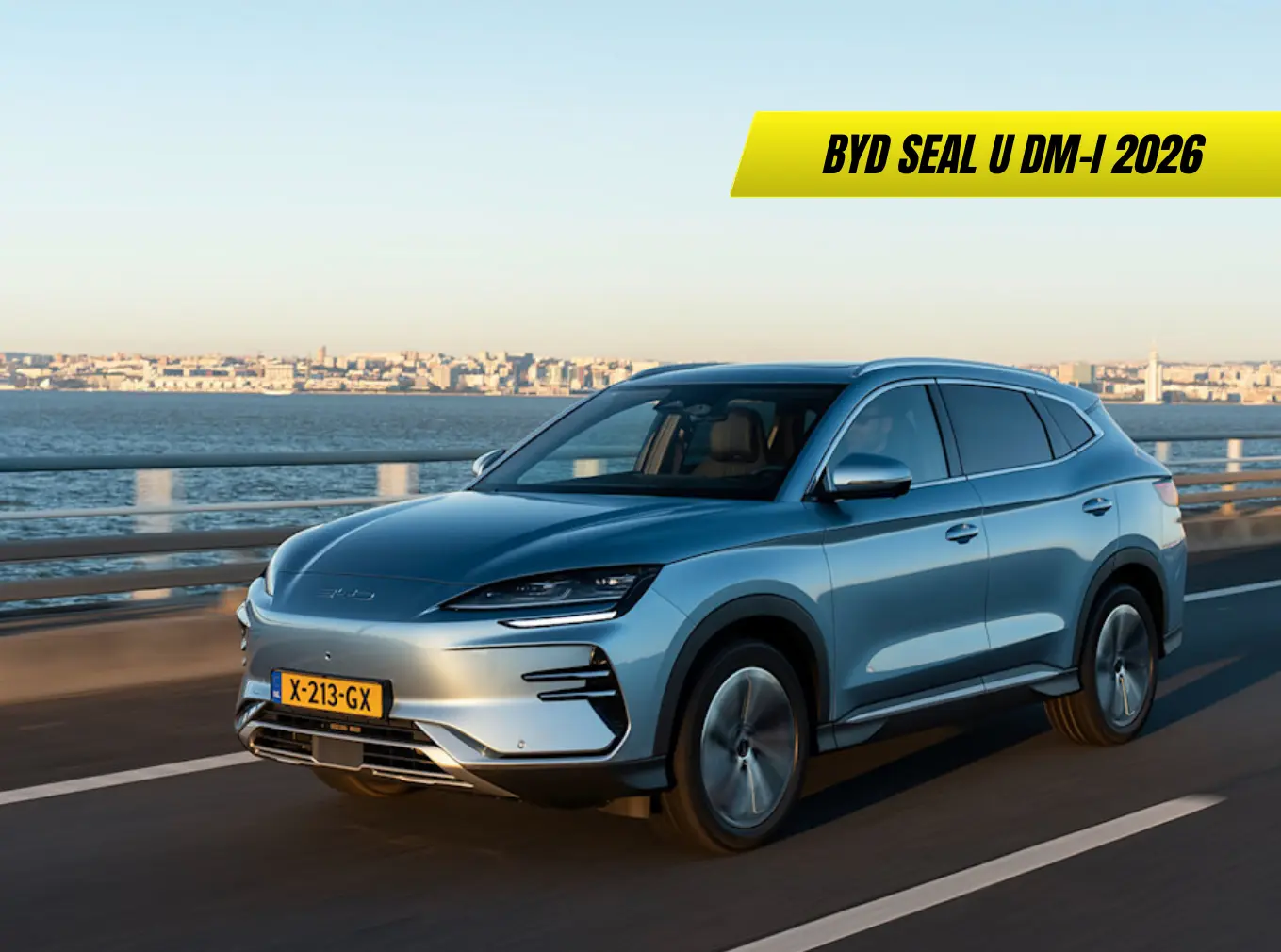
BYD launches Seal U DM-i plug-in hybrid SUV European markets 2024-2026 introducing record-breaking 1,080-1,125km combined range through 18.3-26.6kWh Blade Battery technology paired with 1.5-liter turbo engine, delivering 218-324hp across three variants (Boost FWD, Comfort FWD, Design AWD) starting €34,990-47,800 positioning as most affordable long-range PHEV undercutting established competitors through Chinese manufacturing cost advantages.
Chinese electric vehicle manufacturer BYD (Build Your Dreams) expands European presence through Seal U DM-irepresenting brand’s first plug-in hybrid SUV commercialized continent-wide following pure-electric Atto 3, Seal sedan, and Dolphin hatchback establishing BYD as fastest-growing automotive brand Europe capturing market share from established manufacturers through aggressive pricing, advanced battery technology, and comprehensive seven-year warranty coverage addressing traditional Chinese vehicle quality perception concerns. The DM-i (Dual Mode intelligent) hybrid system combines 1.5-liter turbocharged four-cylinder gasoline engine producing 96-128hp (depending on variant and tuning) with one or two electric motors delivering 194-367hp combined output enabling pure electric operation daily commuting distances (70-125km EV-only range) while 60-liter fuel tank ensures unlimited touring capability achieving claimed 1,080-1,125km total range (670-700 miles) eliminating range anxiety plaguing pure EVs and justifying “super hybrid” marketing positioning differentiating from conventional plug-in hybrids offering merely 50-60km electric range insufficient enabling gasoline-free daily operation for average European commuters. The Blade Battery technology utilizing lithium iron phosphate (LFP) chemistry prioritizes safety (thermal runaway resistance), longevity (3,000+ charge cycles versus 1,000-1,500 traditional lithium-ion), and cost-effectiveness (cheaper raw materials than nickel-cobalt chemistries) accepting modest energy density compromise offset through larger physical battery packages feasible within spacious 4.78-meter SUV platform derived from BYD’s e-platform 3.0 architecture enabling flexible powertrain configurations across pure electric and plug-in hybrid variants sharing fundamental chassis, suspension, and interior components achieving economies of scale impossible traditional manufacturers developing separate dedicated ICE and EV platforms. Starting €34,990 (Boost variant, Italy) through €47,800 (Design AWD flagship), the Seal U DM-i undercuts European establishment including Volkswagen Tiguan eHybrid (€50,000+), BMW X3 xDrive30e (€60,000+), and Volvo XC60 Recharge (€65,000+) by substantial €12,000-30,000 margins creating compelling value proposition for budget-conscious buyers prioritizing practicality over premium brand badges though sacrificing established dealer networks, proven long-term reliability data, and Western build quality perceptions characterizing German, Japanese, and American alternatives commanding premium pricing through century-long heritage Chinese newcomers require decades establishing.
DM-i Hybrid System: Technical Deep Dive
Understanding BYD’s plug-in hybrid technology requires examining sophisticated dual-motor configuration enabling electric-priority operation fundamentally different from traditional parallel hybrids prioritizing combustion engine efficiency.
Powertrain Architecture
Boost Variant (€34,990-39,800)
Gasoline Engine
- Displacement: 1.5-liter turbocharged inline-4
- Combustion cycle: Miller cycle optimizing efficiency over peak power
- Power output: 96 kW (128 hp)
- Torque: Not specified individually
- Function: Primarily generator driving electric motor, occasional direct propulsion highway speeds
Electric Motor
- Type: Permanent magnet synchronous motor
- Power output: 145 kW (194 hp)
- Combined system output: 160 kW (218 hp)
- Combined torque: 300 Nm
- Drive: Front-wheel drive
Battery Specifications
- Type: Blade Battery (lithium iron phosphate LFP chemistry)
- Capacity: 18.3 kWh
- EV-only range: 70-80 km WLTP
- Real-world electric range: 55-65 km typical conditions
- Charging time: 3.5 hours @ 7kW AC charger, ~6-7 hours domestic outlet
Comfort Variant (TBD, Post-Summer 2024 Launch)
Enhanced Battery Configuration
- Battery capacity: 26.6 kWh (+45% versus Boost)
- EV-only range: 120-125 km WLTP
- Real-world electric range: 95-105 km typical
- Powertrain: Otherwise identical to Boost (218 hp FWD)
- Charging time: 4.5-5 hours @ 7kW charger
Design AWD Variant (€47,800)
Dual-Motor Configuration
- Front motor: 152 kW (204 hp)
- Rear motor: 120 kW (163 hp)
- Combined system output: 238 kW (324 hp)
- Combined torque: 550 Nm
- Drive: Electric all-wheel drive (each motor independently controlled)
Gasoline Engine
- Displacement: 1.5-liter turbocharged inline-4
- Cycle: Atkinson (different tuning versus Boost/Comfort Miller cycle)
- Power: 96 kW (128 hp)
- Function: Generator and occasional direct propulsion
Battery and Range
- Battery: 18.3 kWh Blade Battery
- EV range: 70 km WLTP (reduced versus Boost due to heavier AWD system)
- Combined range: ~1,080 km total
Operating Modes and Efficiency
EV Mode (Pure Electric Operation)
- Electric motors exclusively propel vehicle
- Gasoline engine remains off until battery depletes to minimum threshold (~15-20% state of charge)
- Ideal for daily commuting, urban driving, zero local emissions
- Available across entire speed range up to maximum ~140-150 km/h electric-only
Hybrid Mode (Intelligent Blending)
- System automatically optimizes gasoline/electric power delivery
- Engine primarily operates as generator charging battery
- Electric motors provide propulsion (series hybrid configuration)
- Direct engine drive engages highway cruising speeds (parallel hybrid mode) maximizing efficiency
Sport Mode (Maximum Performance)
- Full system output available (218 hp Boost/Comfort, 324 hp Design)
- Electric motors deliver instant torque
- Gasoline engine supplements power during hard acceleration
- AWD variant enables torque vectoring through independent rear motor control
Save Mode (Battery Preservation)
- Maintains current battery charge level for later electric-only operation
- Useful preserving EV range for urban driving after highway cruising
- Engine operates as generator replenishing battery while driving
Fuel Consumption and Emissions
| Driving Scenario | Boost/Comfort (FWD) | Design (AWD) | Notes |
|---|---|---|---|
| EV-only (charged battery) | 0 l/100km, 0 g/km CO₂ | 0 l/100km, 0 g/km CO₂ | Pure electric operation |
| WLTP combined (charged) | 0.6 l/100km, 21 g/km | 0.8 l/100km, 26 g/km | Includes EV credits |
| Depleted battery highway | 5.6-6.4 l/100km | 6.0-6.8 l/100km | Gasoline-only operation |
| Real-world mixed | 4.0-5.5 l/100km | 4.5-6.0 l/100km | Depends on charging frequency |
The extraordinary 1,080-1,125 km combined range derives from:
- 70-125 km pure electric range (battery capacity dependent)
- 1,000+ km gasoline range from 60-liter fuel tank @ 5.6-6.4 l/100km consumption
Comparison: Traditional PHEV Competitors
| Model | Electric Range | Combined Range | Price |
|---|---|---|---|
| BYD Seal U DM-i Boost | 80 km | 1,125 km | €34,990 |
| BYD Seal U DM-i Comfort | 125 km | 1,125 km+ | €40,500 est |
| Volkswagen Tiguan eHybrid | 50 km | ~800 km | €50,000+ |
| BMW X3 xDrive30e | 54 km | ~600 km | €60,000+ |
| Volvo XC60 Recharge | 81 km | ~730 km | €65,000+ |
| Mercedes GLC 300e | 100 km | ~800 km | €62,000+ |
The Seal U DM-i delivers 25-45% longer electric range and 35-85% greater combined range versus European premium competitors while undercutting pricing by €12,000-30,000 creating unprecedented value proposition.
Design and Dimensions
The Seal U DM-i showcases modern Chinese design philosophy combining European styling cues with distinctive Asian character elements.
Exterior Styling
Design Leadership
- Former Alfa Romeo, Lamborghini, and Audi design chief Wolfgang Egger contributed styling direction
- Smooth, organic surfacing avoiding aggressive character lines
- Coupe-like roofline creating dynamic silhouette
- Prominent shoulder line and sculpted flanks
Front Fascia
- Wide horizontal grille with distinctive lighting signature
- Dragon Face design language (BYD corporate identity)
- Full LED headlights standard across range
- Integrated fog lights and air intakes
Dimensions and Proportions
- Length: 4,775 mm (compact D-segment SUV)
- Wheelbase: 2,765 mm (generous for interior space)
- Width: 1,890 mm
- Height: 1,670 mm
- Ground clearance: 175 mm (adequate light off-road capability)
- Curb weight: 1,950-2,100 kg (depending on variant, heavy due to battery)
Wheels and Tires
- 17-inch alloys (base Boost)
- 18-inch alloys (mid-spec)
- 19-inch alloys (Design flagship)
Interior Space and Practicality
Seating Capacity
- Five passengers maximum
- Spacious rear legroom (265mm knee clearance)
- Generous headroom front and rear
- 60/40 split-folding rear seats
Cargo Capacity
- Seats up: 425 liters (moderate for segment due to battery packaging)
- Seats folded: 1,440 liters
- Frunk: Not available (front compartment occupied by motors/electronics)
Interior Quality
- Vegan leather upholstery (premium trims)
- Soft-touch dashboard materials
- 12.3-inch digital instrument cluster
- 15.6-inch rotating central touchscreen (portrait/landscape orientation)
- Panoramic glass sunroof (optional or standard depending on trim)
Technology Features
- BYD DiLink 4.0 infotainment system
- Wireless Apple CarPlay and Android Auto
- Voice control with natural language processing
- OTA (over-the-air) software updates
- Adaptive cruise control
- Lane keeping assist and blind spot monitoring
- 360-degree camera system
- 12-speaker Dynaudio premium audio (Design trim)
Performance and Driving Dynamics
Acceleration and Top Speed
Boost / Comfort FWD (218 hp)
- 0-100 km/h: 7.9-8.2 seconds (adequate for segment)
- Top speed: 175 km/h limited
- Character: Smooth electric acceleration, minimal gasoline engine intrusion
Design AWD (324 hp)
- 0-100 km/h: 5.9 seconds (genuinely quick for family SUV)
- Top speed: 180 km/h limited
- Character: Instant torque from dual motors, impressive mid-range punch
Chassis and Suspension
Platform Basis
- BYD e-platform 3.0 architecture
- MacPherson strut front suspension
- Multi-link rear suspension
- Electric power steering
Driving Feel (Based on European Reviews)
- Comfortable damping prioritizing ride quality over sport handling
- Minimal body roll given relatively high center of gravity (battery weight low-mounted)
- Light steering suitable urban maneuverability, less feedback enthusiast driving
- Quiet cabin with excellent sound insulation (advantage electric-primary operation)
Pricing and Trim Levels
Italy Market (Official Pricing)
Boost (€34,990-39,800)
- 218 hp FWD, 18.3 kWh battery, 80 km EV range
- 17-inch alloy wheels
- LED headlights and taillights
- 12.3-inch digital cluster + 15.6-inch touchscreen
- Automatic climate control
- Rear parking sensors and camera
- Fabric upholstery
- Eligible for Italian government incentives (21 g/km CO₂)
Comfort (€40,500 estimated, post-summer 2024 launch)
- 218 hp FWD, 26.6 kWh battery, 125 km EV range
- Enhanced equipment over Boost
- Vegan leather upholstery
- Panoramic sunroof
- Wireless smartphone charging
- 360-degree camera
- Premium audio upgrade
Design AWD (€47,800)
- 324 hp AWD, 18.3 kWh battery, 70 km EV range
- 19-inch sporty alloy wheels
- Sport seats with Design badging
- 12-speaker Dynaudio audio system
- Full LED ambient lighting
- Head-up display
- All advanced safety systems standard
- Government incentive eligible (26 g/km CO₂)
UK Market (Official Pricing)
Boost (£33,340-36,000)
- 218 hp FWD, 18.3 kWh battery
- Similar equipment to Italian specification
- Three-year/60,000-mile manufacturer warranty
- Seven-year battery warranty
Design AWD (£40,040 estimated)
- 324 hp AWD flagship
- Comprehensive equipment package
UK Market Advantage: Company car drivers benefit from low BIK (Benefit-in-Kind) taxation: 8-12% rate versus 20-37% conventional gasoline/diesel creating substantial annual tax savings (£2,000-4,000 depending on list price and income tax bracket).
European Market Availability
Confirmed Markets
- Italy (launched June 2024)
- Germany (available 2024-2025)
- UK (launched 2024-2025)
- France (available 2025)
- Spain, Portugal, Belgium, Netherlands (expanding 2025-2026)
Excluded Markets (Currently)
- Eastern Europe (limited BYD dealer network)
- Scandinavia (selective availability Norway, Sweden only)
- Ireland (unconfirmed right-hand-drive availability)
Warranty and After-Sales Support
Comprehensive Coverage
- Vehicle warranty: 6 years / 150,000 km
- Battery warranty: 8 years / 200,000 km (industry-leading coverage)
- Roadside assistance: 6 years included
- Free maintenance: First service included some markets
Dealer Network Expansion
BYD rapidly expanding European presence:
- 2023: ~100 European dealers
- 2024: ~230 dealers across 18 countries
- 2026 target: 400+ dealers providing sales and service
Service Intervals
- 12 months / 15,000 km (whichever comes first)
- Relatively simple maintenance given electric-primary operation
- Gasoline engine service requirements minimal versus pure ICE vehicles
Frequently Asked Questions
How far can the BYD Seal U DM-i drive on electricity alone?
Boost variant: 70-80 km WLTP (55-65 km real-world). Comfort variant: 120-125 km WLTP (95-105 km real-world). Design AWD: 70 km WLTP (reduced due to heavier AWD system). Real-world electric range depends on temperature, driving style, and terrain.
What’s the total range with full tank and battery?
1,080-1,125 km combined range (670-700 miles) from 60-liter fuel tank plus battery. Actual range varies based on driving conditions but comfortably exceeds 1,000 km enabling long-distance touring without refueling or recharging stops.
How long does charging take?
7kW home charger: 3.5 hours (Boost 18.3 kWh), 4.5-5 hours (Comfort 26.6 kWh). Domestic outlet (2.3kW): 6-8 hours (Boost), 10-12 hours (Comfort). DC fast charging: Not supported – AC charging only (common PHEV limitation given smaller battery versus pure EVs).
Is BYD reliable?
BYD manufactures world’s largest EV battery production volumes with extensive Chinese market validation (millions of vehicles sold). European market presence limited to 2-3 years preventing long-term reliability data. Blade Battery technology prioritizes safety and longevity versus traditional lithium-ion. Comprehensive 6-year/150,000 km warranty and 8-year battery coverage provide reassurance.
How does Seal U DM-i compare to Volkswagen Tiguan eHybrid?
BYD advantages: Longer electric range (80 vs 50 km), greater combined range (1,125 vs 800 km), significantly cheaper (€34,990 vs €50,000+), superior warranty (6 vs 2-3 years). VW advantages: Established brand reputation, extensive dealer network, proven reliability, potentially higher resale value, German build quality perception. Choose BYD for value and efficiency, VW for brand confidence and dealer accessibility.
Can I tow with the Seal U DM-i?
Towing capacity: 1,500 kg braked trailer maximum. Adequate for small caravans, boat trailers, or twin-axle trailers though lower than conventional diesel SUVs offering 2,000-2,500 kg. Electric towing significantly reduces range requiring frequent charging or gasoline engine operation.
Does it qualify for government incentives?
Yes in most European markets. Italy: eligible for eco-incentives (21-26 g/km CO₂). Germany: BAFA subsidy applicable PHEV meeting 50 km+ electric range threshold. UK: company car BIK benefits (8-12% rate). France: ecological bonus potentially available. Consult local regulations as incentive programs change frequently.
Should I buy Seal U DM-i or wait for established brands?
Buy now if: prioritizing value and efficiency, comfortable early-adopter role, have BYD dealer accessibility, long daily commute benefiting from extensive electric range. Wait for alternatives if: prefer established brand reputation, concerned resale value, require extensive dealer network, prioritize driving dynamics over efficiency. Mercedes, BMW, Audi launching competitive PHEVs 2026-2027 though pricing likely €50,000-70,000 versus BYD’s €35,000-48,000.
Conclusion
The BYD Seal U DM-i represents Chinese automotive industry’s maturation from budget copycat manufacturer toward credible mainstream competitor delivering genuine technological innovation (Blade Battery safety, extraordinary 1,125km range, sophisticated dual-motor hybrid architecture) at pricing undercutting established European alternatives by substantial €12,000-30,000 margins creating compelling value proposition for budget-conscious buyers prioritizing practicality over premium badges. The record-breaking combined range addresses fundamental PHEV criticism where typical 50-60 km electric capability proves insufficient enabling gasoline-free daily operation for average European commuters frequently exceeding electric-only limits requiring combustion engine activation negating environmental benefits justifying plug-in hybrid complexity and expense, while BYD’s generous 70-125 km electric range (depending on variant) genuinely enables zero-emission weekday commuting reserving gasoline engine exclusively weekend touring maintaining unlimited range flexibility pure EVs cannot match despite improving charging infrastructure and battery technology incrementally reducing range anxiety through 400-600 km capabilities approaching combustion parity.
For European buyers, the Seal U DM-i delivers rational transportation solution combining best attributes electric (zero local emissions, instant torque, low operating costs) and combustion (unlimited range, rapid refueling, infrastructure independence) powertrains within practical family SUV packaging offering 425-1,440 liter cargo capacity, comfortable five-passenger seating, and comprehensive technology features (15.6-inch touchscreen, 360-degree camera, premium audio) matching or exceeding premium European alternatives costing €60,000-70,000 despite BYD’s €35,000-48,000 accessible pricing enabled through vertical integration (in-house battery production), manufacturing scale (world’s largest EV battery producer), and strategic European market penetration accepting modest initial margins capturing market share from complacent established manufacturers slow recognizing Chinese competitive threat until sales data reveals substantial conquest transactions impossible reversing through minor refreshes or aggressive incentive programs insufficient offsetting fundamental €15,000-25,000 price disadvantages versus technologically-equivalent BYD alternatives demonstrating Western premium primarily reflects brand heritage rather than objective engineering superiority increasingly difficult justifying informed consumers prioritizing value over badges.





