Residents’ parking permits can look like a nationwide right, but they are run locally. The important point for anyone moving home, changing car or hosting a visitor is that the council’s scheme decides the eligible address, zone, operating hours, vehicle rules and permit types.
GOV.UK’s parking-permit guidance directs motorists to their council for information about schemes in their area. Its permit finder covers England and Wales; drivers elsewhere in the UK should use the relevant local authority’s guidance rather than assuming the same rules apply.
Start with the scheme covering your address
Being inside a permit area does not automatically mean that every address qualifies, or that every property receives the same number of permits. Councils may ask for proof of residence and limit the allocation available to a property. The guidance from Hampshire County Council and Bath & North East Somerset Council illustrates why checking the exact local eligibility rules matters.
Before applying, check:
- whether your full address is included in the scheme;
- which zone or streets the permit covers;
- what proof of residence the council accepts;
- how many permits the property may receive; and
- the current charge, duration and application requirements.
Do not copy the rules or price from a neighbouring borough. A nearby street can fall under a different authority or zone with different conditions.
Check where and when the permit applies
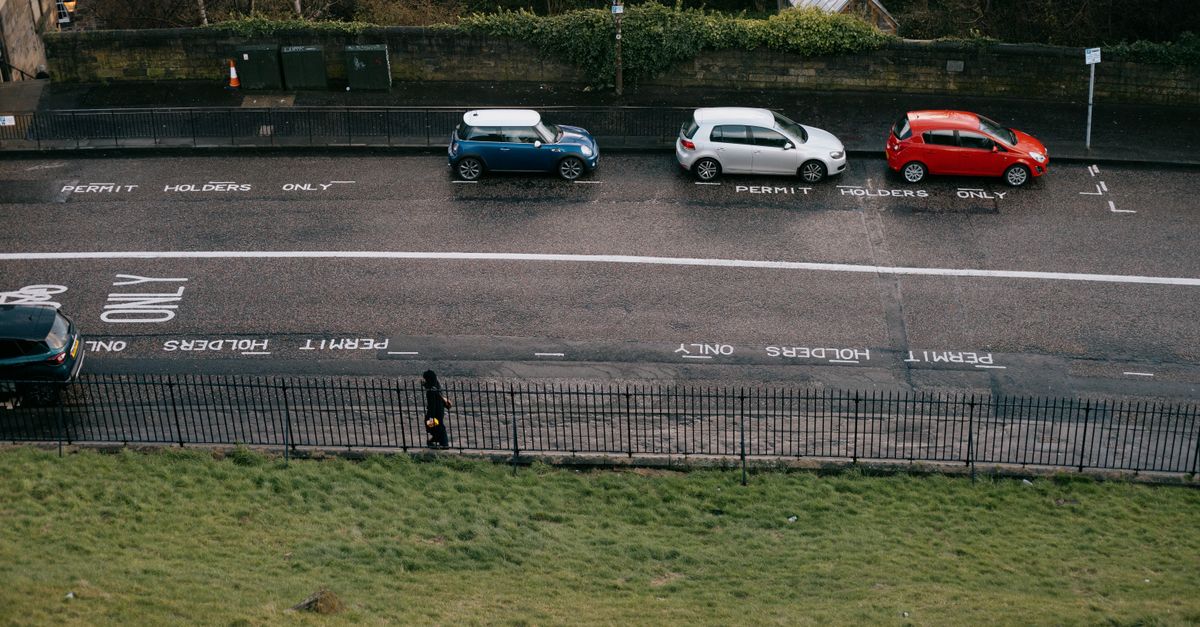
A permit scheme may operate only during specified hours and within a defined area. Before leaving the car, read the sign at the parking location, check the road markings and compare them with the permit’s terms. Official guidance for resident permits in London and Bath’s residents’ permits both demonstrate the importance of checking the local restrictions rather than relying on the word resident alone.
Treat a permit as zone-specific unless the council expressly says otherwise. Having permission in one controlled area does not automatically make it valid in another area, even if the streets are close together. A permit also does not remove the need to follow the signs and markings at the place where the vehicle is parked.
Know whether the permit is digital or displayed in the car
Some councils use digital permits linked to a vehicle’s registration number. In those schemes, there may be nothing to display in the windscreen. Information from Leeds City Council, Bath & North East Somerset and Canterbury City Council shows why motorists should check how their own council records and verifies a permit.
If you change car or registration number, use the council’s stated process to update the permit. Do not assume that a permit attached to an old registration will transfer automatically to a replacement vehicle. If the council issues a physical permit, follow its instructions on where and how it must be displayed.
Visitor and other permits are not interchangeable
Resident, visitor, carer, business and temporary permits can have different conditions. Those conditions may restrict the area, operating times, number of uses or the way the permit can be used. Leeds’ parking guidance, Nottingham City Council’s permit FAQs and Bradford Council’s charges FAQs provide examples of why separate permit categories need to be checked individually.
A visitor arrangement should therefore not be treated as a resident permit with a different name. Check whether it is valid for the intended vehicle, street, time and length of stay, and whether the council applies any usage limit.
Before you park: a five-point check
- Confirm the authority and zone. Make sure the address and parking location belong to the same scheme.
- Check the time and date. Read when the restriction operates and confirm that the permit is valid at that moment.
- Read the sign and road markings. Do not rely only on a map or an earlier visit.
- Match the permit to the vehicle. For a digital permit, check the recorded registration; for a physical permit, follow the display instructions.
- Use the correct permit category. Resident, visitor, carer, business and temporary permits may not have the same rights or limits.
The safest way to avoid a mistake
There is no single UK-wide answer for permit prices, allocations, visitor entitlements or operating hours. Start with the GOV.UK council finder, then read the current parking page for the specific address and zone. If the permit details, vehicle registration or street signs are unclear, contact the council before parking rather than relying on another area’s rules.
The key principle is simple: a residents’ permit is permission under a particular local scheme, not a blanket exemption from the restrictions shown on the road.
Source 1 · Source 2 · Source 3 · Source 4 · Source 5 · Source 6 · Source 7 · Source 8 · Source 9