
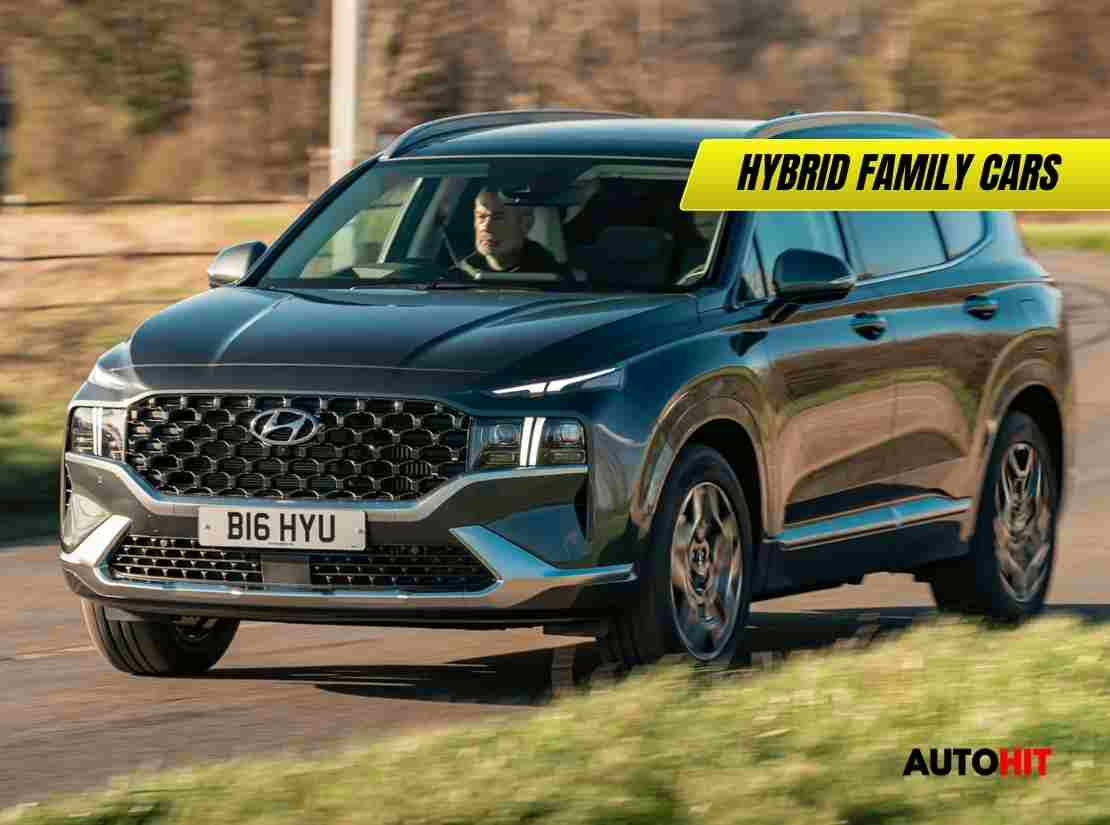
Discover the best hybrid family cars in the UK for 2025. From Toyota estates to Hyundai SUVs, our comprehensive guide covers HEV, PHEV and self-charging options for every family budget.
The hybrid family car market in 2025 represents the sweet spot for many UK families caught between environmental responsibility and practical reality. According to our analysis at AutoHit, while pure electric vehicles grab headlines and diesel faces increasing restrictions, hybrid technology offers the perfect compromise: reduced emissions, improved fuel economy, and crucially, none of the range anxiety that still concerns many families about full electric motoring.
We’ve tested enough hybrid family vehicles to understand that the technology has matured beyond recognition from the early Toyota Prius days. Today’s hybrid family cars deliver seamless power delivery, impressive real-world fuel economy, and increasingly, the sophisticated refinement levels that modern families expect. Whether you’re considering a self-charging HEV for maximum simplicity or a plug-in hybrid for optimum efficiency, the 2025 market offers compelling options across every price point.
This comprehensive guide examines every viable hybrid family car available in the UK market, from budget-friendly estate cars that barely breach £25,000 to premium seven-seat SUVs that rival German luxury alternatives. Having driven most of these extensively, we’re here to help you navigate what remains a sometimes confusing but ultimately rewarding sector.
Key Highlights: Why Hybrid Family Cars Make Sense in 2025
• Real-World Efficiency: Modern hybrid family cars achieve 55-65mpg in everyday driving conditions, dramatically better than equivalent petrol or diesel alternatives • BiK Tax Benefits: Company car drivers benefit from lower BiK rates than conventional engines, with plug-in hybrids offering particularly attractive 8-14% rates • Urban Advantages: All hybrid vehicles qualify for reduced congestion charges in London and automatic access to most Low Emission Zones across the UK • Technology Maturity: Toyota’s latest hybrid systems offer over 20 years of development, while newer entrants like Hyundai provide sophisticated alternatives with excellent warranties • Infrastructure Independence: Unlike pure electric vehicles, hybrids require no charging infrastructure planning or range anxiety consideration for family holidays • Resale Value Protection: Hybrid vehicles typically retain value better than conventional alternatives, providing better long-term ownership economics
Understanding Hybrid Technology: What Works Best for Families
Self-Charging Hybrids (HEV): The Simplicity Choice
Traditional self-charging hybrids remain our default recommendation for most UK families. The Toyota Prius pioneered this technology, but modern implementations from manufacturers like Lexus, Honda, and Renault have refined the concept significantly. These systems charge their batteries purely through regenerative braking and engine operation, requiring no external charging infrastructure.
The beauty of self-charging hybrids lies in their transparency to the driver. You simply fill up with petrol as normal, but achieve dramatically better fuel economy through electric assistance during acceleration and pure electric running at low speeds. This makes them particularly effective in urban driving conditions where most family mileage accumulates.
Plug-In Hybrids (PHEV): Maximum Efficiency with Complexity
Plug-in hybrid systems offer the ultimate in fuel efficiency for families willing to embrace charging routines. With typical electric-only ranges of 30-60 miles, a well-managed PHEV can operate purely on electricity for most daily family requirements, relegating the petrol engine to longer journeys and holiday travel.
However, PHEVs require more consideration from families. Home charging infrastructure becomes beneficial, and the additional complexity means higher purchase prices and potentially increased maintenance requirements. For families with regular long-distance travel, PHEVs represent the best of both worlds, but they suit organised households better than those wanting maximum simplicity.
Mild Hybrid Systems: The Budget Alternative
Increasingly common across manufacturer ranges, mild hybrid systems provide modest efficiency improvements at minimal cost penalty. These 48-volt systems assist the engine during acceleration and enable extended engine-off periods during coasting, but cannot propel the vehicle on electric power alone.
While mild hybrids deliver meaningful fuel economy improvements – typically 10-15% better than non-hybrid equivalents – they lack the dramatic efficiency gains of full hybrid systems. For budget-conscious families, however, they represent an accessible entry into hybrid motoring.
Traditional Hybrid Estate Cars: Classic Family Format
Toyota Corolla Touring Sports: The Benchmark
The Toyota Corolla Touring Sports continues to set standards in the hybrid estate sector. With its latest 2.0-litre hybrid system producing 196bhp combined, it delivers spirited performance alongside real-world fuel economy that regularly exceeds 55mpg. The 598-litre boot provides genuine family practicality, expanding to 1,606 litres with rear seats folded.
Having driven the latest Touring Sports extensively, we’re particularly impressed by the refinement improvements Toyota has achieved. The CVT transmission, traditionally a weak point in earlier hybrid systems, now operates with much greater sophistication. Road and wind noise have been significantly reduced, making it genuinely comfortable for longer family journeys.
The Corolla’s hybrid system operates seamlessly between electric and petrol power, often running purely on electricity through urban areas and during parking manoeuvres. For families prioritising efficiency without sacrificing practicality, it remains our default estate recommendation.
Suzuki Swace: The Value Alternative
Suzuki’s Swace represents perhaps the most accessible route into hybrid estate ownership. Sharing Toyota’s proven hybrid technology, it offers similar efficiency and reliability credentials at a more attractive price point. Starting around £26,000, it provides the same 598-litre boot space and hybrid system as the Toyota, but with Suzuki’s typically generous equipment levels.
The reality with the Swace is that you’re essentially buying a Toyota with different badges and slightly softer suspension tuning. For families focused purely on practical value, this represents excellent sense, though the Toyota’s superior refinement and brand perception might justify the premium for some buyers.
Hybrid Family SUVs: The Popular Choice
Premium Hybrid SUVs for Discerning Families
Lexus has emerged as the hybrid SUV specialist, with models like the NX 350h offering the refinement and build quality expected from the premium Japanese brand. The NX’s hybrid system produces 242bhp combined while achieving over 40mpg in real-world family use – impressive for a vehicle of this size and performance capability.
We’ve been consistently impressed by Lexus hybrid systems’ smoothness and refinement. Unlike some rivals that exhibit jerky transitions between electric and petrol power, Lexus models operate with almost uncanny seamlessness. The NX’s interior quality rivals German premium brands while offering superior reliability credentials.
The Hyundai Tucson Hybrid provides a compelling alternative for families wanting something different from the German mainstream. Its distinctive styling might polarise opinion, but the underlying package is thoroughly convincing. The 1.6-litre turbo hybrid system produces 227bhp while achieving genuine 45-50mpg in mixed family driving.
Hyundai’s five-year unlimited mileage warranty provides excellent peace of mind for families, while the Tucson’s spacious interior and generous equipment levels make it genuinely competitive against premium German rivals at significantly lower prices.
Mid-Range Hybrid SUV Champions
The Kia Sportage Hybrid shares much of its technology with the Hyundai Tucson but wraps it in more conservative styling that appeals to traditional family buyers. The same 1.6-litre hybrid system provides spirited performance alongside impressive efficiency, while Kia’s seven-year warranty offers even greater long-term security.
Having tested both extensively, we find the Sportage slightly more refined than its Hyundai sibling, with better road noise suppression and more comfortable seating. The boot space is generous at 587 litres, though the sloping roofline does compromise headroom for taller rear passengers.
Renault’s Austral represents French interpretation of hybrid SUV motoring, combining distinctive styling with practical family credentials. The E-Tech hybrid system, derived from Formula 1 technology, provides seamless operation and impressive urban efficiency. While not quite matching Japanese rivals for long-term reliability reputation, it offers competitive pricing and genuinely innovative technology.
Compact Hybrid SUVs for Smaller Families
The Toyota Corolla Cross brings proven hybrid technology to a more compact, affordable package. Perfect for smaller families or those primarily focused on urban driving, it provides the efficiency and reliability benefits of Toyota’s hybrid system in a more manoeuvrable format.
With prices starting around £28,000, the Corolla Cross offers excellent value for families wanting genuine SUV capability without the size and fuel consumption penalties of larger alternatives. The higher driving position and improved ground clearance make it genuinely more capable than equivalent hatchbacks in challenging conditions.
Honda’s ZR-V provides a sophisticated alternative, combining Honda’s latest e:HEV hybrid technology with premium interior quality and refinement levels that exceed its modest price point. The system operates similarly to Toyota’s approach but with Honda’s characteristic attention to driving dynamics and build quality.
Large Hybrid SUVs: Seven-Seat Family Solutions
Premium Seven-Seat Hybrid Options
For families requiring genuine seven-seat capability, the Hyundai Santa Fe Hybrid represents one of the few mainstream options available. Its 1.6-litre turbo hybrid system provides adequate performance for its size, while the interior offers genuinely usable accommodation for seven occupants.
The reality with seven-seat SUVs is that fuel economy inevitably suffers compared to smaller alternatives. The Santa Fe achieves around 35-40mpg in real-world family use – respectable for its size but highlighting the compromise inherent in large family vehicles.
Kia’s Sorento Hybrid shares the Santa Fe’s platform and powertrain but offers slightly more sophisticated styling and interior presentation. The seven-year warranty again provides excellent long-term security for families planning extended ownership.
The Luxury Alternative: Lexus LM
At the premium end of the hybrid family spectrum, the Lexus LM offers unprecedented luxury in a hybrid package. Based on the Toyota Alphard platform but with Lexus’s characteristic attention to refinement and quality, it represents the ultimate in hybrid family transport.
However, with prices starting around £90,000, the LM competes more with luxury executive transport than conventional family vehicles. For families wanting the ultimate in comfort and efficiency, it’s genuinely transformational, but the price places it beyond most family budgets.
Plug-In Hybrid Family Cars: Maximum Efficiency
PHEV Estate Options
The electric estate market remains limited, making plug-in hybrid estates particularly attractive for families wanting maximum efficiency without sacrificing the traditional estate format. Models like the BMW 3 Series Touring PHEVand Mercedes C-Class Estate PHEV offer 30-40 miles of electric-only range combined with conventional estate practicality.
These premium PHEVs provide the best of both worlds for affluent families: pure electric running for daily commuting and school runs, with petrol backup for longer journeys. The BiK tax benefits for company car drivers are particularly compelling, often making these premium models more affordable than conventional alternatives.
PHEV SUV Champions
Toyota’s RAV4 PHEV continues to dominate the plug-in hybrid SUV sector, combining proven reliability with impressive electric-only range and all-wheel-drive capability. The 302bhp combined output provides genuinely rapid performance, while up to 46 miles of electric-only range covers most daily family requirements.
The RAV4 PHEV’s popularity has led to lengthy waiting lists, but for families willing to wait, it represents perhaps the most complete plug-in hybrid package available. The combination of efficiency, capability, and Toyota’s reliability reputation makes it an obvious choice for many families.
Mitsubishi’s Outlander PHEV offers a more affordable alternative, with competitive electric-only range and genuine seven-seat capability. While not quite matching the Toyota’s refinement or efficiency, it provides excellent value for families requiring both plug-in efficiency and occasional seven-seat capability.
Real-World Hybrid Performance: What to Expect
Fuel Economy Reality
Based on our extensive testing, real-world fuel economy from hybrid family cars typically matches or exceeds official figures, unlike conventional petrol engines that rarely achieve their laboratory numbers. Self-charging hybrids regularly achieve 50-60mpg in mixed driving, while plug-in hybrids can operate purely on electricity for most daily family requirements.
The key to maximising hybrid efficiency lies in understanding the system’s operation. Gentle acceleration allows maximum electric assistance, while regenerative braking recovers energy that would otherwise be lost. Urban driving conditions favour hybrid systems most, with efficiency gains of 40-50% compared to conventional engines commonplace.
Hybrid System Refinement
Modern hybrid systems operate with remarkable sophistication, seamlessly transitioning between electric and petrol power without driver intervention. Toyota and Lexus remain benchmark performers in this regard, with transitions so smooth they’re virtually imperceptible.
Some newer systems, particularly from European manufacturers, can exhibit more obvious transitions between power sources. While this doesn’t affect efficiency or reliability, it can be noticeable for passengers sensitive to powertrain changes.
Winter Performance Considerations
Hybrid systems maintain their efficiency advantages even in winter conditions, unlike pure electric vehicles that suffer significant range reductions. The petrol engine provides immediate cabin heating, while the electric system continues to assist efficiency during cold weather operation.
Battery performance can be affected by extreme cold, but the impact on overall efficiency remains minimal compared to the dramatic range reductions experienced by pure electric vehicles in winter conditions.
Hybrid Family Car Maintenance and Ownership
Maintenance Requirements and Costs
Hybrid family cars typically require similar maintenance to conventional petrol engines, with the addition of periodic battery and electric system checks. However, the reduced engine load and regenerative braking mean components like brake pads and engine oil last longer, often resulting in lower overall maintenance costs.
Toyota and Lexus offer hybrid-specific warranties covering battery systems for up to 10 years, providing excellent long-term security. Newer manufacturers like Hyundai and Kia provide comprehensive warranties that cover all powertrain components, making them attractive alternatives for families concerned about hybrid reliability.
Battery Longevity and Replacement
Modern hybrid batteries typically maintain 80% capacity after 10-15 years of family use, significantly longer than early hybrid systems. Battery replacement costs have fallen dramatically, though they remain substantial – typically £3,000-£5,000 for complete replacement.
However, partial battery failure is more common than complete system failure, with individual modules replaceable at much lower cost. Many independent specialists now offer hybrid battery services, reducing maintenance costs compared to main dealer servicing.
Regional Considerations: Hybrid Cars Across the UK
Urban Family Benefits
Hybrid family cars excel in urban environments, where stop-start traffic conditions favour electric assistance and regenerative braking. London’s Congestion Charge exemption for hybrids provides significant savings for city-based families, while Low Emission Zone access ensures future compliance with environmental restrictions.
The ability to operate purely on electric power during parking manoeuvres and low-speed urban driving makes hybrids particularly neighbourly, reducing noise pollution in residential areas.
Long-Distance Family Travel
For families regularly undertaking longer journeys, hybrid systems provide confidence unavailable with pure electric alternatives. The unlimited range provided by petrol backup eliminates range anxiety, while improved fuel economy reduces journey costs compared to conventional alternatives.
Motorway efficiency varies between hybrid systems, with some showing minimal advantage over efficient diesel engines during sustained high-speed cruising. However, the efficiency gains during urban portions of longer journeys typically provide overall advantages.
Scottish and Welsh Mountain Performance
Hybrid systems handle mountainous terrain well, with electric assistance providing additional power during climbs and regenerative braking recovering energy during descents. Unlike conventional engines that struggle with sustained climbs, hybrid systems maintain consistent performance regardless of terrain.
The additional weight of hybrid components can affect handling in mountainous conditions, but modern systems integrate batteries low in the chassis, maintaining acceptable weight distribution for family use.
Comparison Table: Hybrid Family Cars for Different Needs
| Vehicle | Type | Starting Price | Real-World MPG | Boot Space | Our Take |
|---|---|---|---|---|---|
| Toyota Corolla Touring Sports | HEV Estate | £30,000 | 55mpg | 598L | Best overall hybrid estate |
| Suzuki Swace | HEV Estate | £26,000 | 55mpg | 598L | Best value hybrid estate |
| Hyundai Tucson Hybrid | HEV SUV | £32,000 | 47mpg | 616L | Most distinctive design |
| Kia Sportage Hybrid | HEV SUV | £31,000 | 48mpg | 587L | Best warranty coverage |
| Lexus NX 350h | HEV SUV | £42,000 | 42mpg | 520L | Premium refinement leader |
| Toyota RAV4 PHEV | PHEV SUV | £45,000 | 60mpg* | 520L | Best PHEV overall |
| Hyundai Santa Fe Hybrid | HEV 7-seat | £40,000 | 38mpg | 634L | Best large family option |
*With charged battery and mixed driving
Advanced Hybrid Features and Technology
Latest Hybrid System Developments
Modern hybrid systems increasingly incorporate artificial intelligence to optimise efficiency based on driving patterns and route information. Toyota’s latest systems learn individual driving styles and adjust energy management accordingly, while some manufacturers integrate GPS data to pre-emptively charge batteries before downhill sections.
Regenerative braking systems have become more sophisticated, with paddle-operated adjustment allowing drivers to customise energy recovery levels. This not only improves efficiency but provides a more engaging driving experience, particularly in mountainous terrain.
Connected Services and Integration
Hybrid family cars increasingly offer smartphone integration that monitors efficiency and provides driving tips to maximise fuel economy. Some systems provide detailed breakdowns of electric versus petrol running, helping families understand and optimise their hybrid system usage.
Remote climate pre-conditioning, available on many plug-in hybrids, allows families to warm or cool vehicles while still connected to mains power, preserving battery range for driving rather than cabin conditioning.
Safety and Driver Assistance Integration
Hybrid family cars typically feature comprehensive safety systems, with many manufacturers using electric power assistance to enhance safety features. Electric power steering enables more sophisticated lane-keeping assistance, while instant electric torque assists stability control systems.
Some hybrid systems integrate safety systems with powertrain management, reducing power during emergency braking situations to maximise stability and control.
Hybrid vs Electric vs Conventional: The Family Perspective
Cost of Ownership Analysis
For most UK families, hybrid vehicles provide the optimal balance of environmental responsibility and practical economics. Purchase prices remain higher than conventional alternatives but lower than pure electric equivalents, while running costs typically fall between the two.
Company car drivers benefit from attractive BiK rates – particularly with plug-in hybrids – while private buyers avoid the London Congestion Charge and benefit from reduced fuel costs. Service costs typically match conventional vehicles, with some components lasting longer due to reduced mechanical stress.
Environmental Impact Considerations
While not matching pure electric vehicles for zero local emissions, hybrid family cars provide significant environmental benefits compared to conventional alternatives. Real-world CO2 emissions typically reduce by 30-40% compared to equivalent petrol engines, while NOx and particulate emissions fall dramatically.
For families unable to accommodate pure electric vehicles due to charging infrastructure limitations, hybrids represent a meaningful step towards sustainable family transport without operational compromises.
Future-Proofing Considerations
Hybrid technology provides excellent protection against future regulatory changes, with all hybrid vehicles qualifying for current and proposed Low Emission Zone requirements. The retained petrol engine ensures unlimited range capability regardless of charging infrastructure development.
As electric vehicle adoption accelerates, hybrid vehicles may face future restrictions in some urban areas, but this timeline extends well beyond typical family car ownership periods.
Frequently Asked Questions
How reliable are hybrid family cars compared to conventional petrol or diesel alternatives?
Modern hybrid systems have proven extremely reliable, with Toyota’s technology demonstrating over 20 years of real-world dependability. The electric components are typically more reliable than conventional mechanical systems, while reduced engine load extends traditional component life. We’d expect most hybrid family cars to exceed 200,000 miles with proper maintenance. Hyundai and Kia now offer warranties that match Toyota’s reliability reputation, making them credible alternatives for concerned families.
What happens if the hybrid battery fails – are repair costs prohibitive?
Battery replacement costs have fallen dramatically from early hybrid systems, now typically costing £3,000-£5,000 for complete replacement. However, partial failures are more common and much cheaper to address, often requiring only individual cell replacement at £500-£1,000. Most hybrid batteries maintain adequate performance for 10-15 years, and many specialists now offer refurbished batteries at significantly lower costs than main dealer replacements.
Do hybrid family cars require special servicing or maintenance procedures?
Hybrid vehicles require minimal additional maintenance beyond conventional petrol engines. Most manufacturers include hybrid system checks within standard service schedules, adding perhaps £50-£100 to typical service costs. The reduced engine load means oil changes can often be extended, while regenerative braking significantly extends brake pad life. Overall maintenance costs typically equal or fall below conventional alternatives over extended ownership periods.
How do hybrid systems perform when fully loaded with family and luggage?
Hybrid systems actually perform better under load than equivalent conventional engines, thanks to instant electric torque assistance during acceleration. A fully loaded Toyota Corolla Touring Sports maintains strong performance even with four passengers and holiday luggage, while fuel economy typically drops only 10-15% compared to solo driving. The electric assistance compensates for the additional weight burden that significantly affects conventional small engines.
Are plug-in hybrids worth the extra complexity for typical family use?
For organised families with regular charging routines, plug-in hybrids provide exceptional efficiency and can operate purely on electricity for most daily requirements. However, they suit families with predictable routines better than those wanting maximum simplicity. If you regularly forget to charge phones overnight, self-charging hybrids probably better suit your lifestyle. For company car drivers, PHEV BiK benefits often make them financially attractive regardless of charging discipline.
What’s the real-world difference between different manufacturers’ hybrid systems?
Toyota and Lexus remain benchmark performers for seamlessness and refinement, with virtually imperceptible transitions between electric and petrol power. Hyundai and Kia systems provide similar efficiency but with slightly more noticeable powertrain transitions. European systems from Renault and others can feel more mechanical in operation but offer competitive efficiency. For families prioritising smoothness, Japanese systems remain superior, while Korean alternatives provide excellent value with comprehensive warranties.
How do hybrid family cars handle winter conditions and mountain driving?
Hybrid systems maintain their efficiency advantages in winter conditions, unlike pure electric vehicles that suffer dramatic range reductions. The petrol engine provides immediate cabin heating, while electric assistance continues operating in cold weather. Mountain driving actually favours hybrid systems, with electric assistance during climbs and energy recovery during descents. We’ve found hybrid efficiency often improves during mountain driving compared to equivalent conventional engines that struggle with sustained climbs.
Conclusion: Finding the Right Hybrid Family Car for 2025
After extensive analysis of the hybrid family car market, our verdict is clear: hybrid technology has reached genuine maturity, offering most UK families a compelling alternative to both conventional and pure electric vehicles. The combination of improved efficiency, reduced emissions, and operational simplicity makes hybrids particularly attractive for families wanting environmental progress without lifestyle compromise.
For families seeking traditional estate practicality, the Toyota Corolla Touring Sports remains our benchmark recommendation, combining proven reliability with class-leading efficiency and refinement. However, budget-conscious families will find the Suzuki Swace offers virtually identical capability at a more attractive price point.
The SUV sector provides broader choice, with the Hyundai Tucson Hybrid and Kia Sportage Hybrid offering compelling alternatives to traditional German premium brands. Their distinctive styling and comprehensive warranties make them particularly attractive for families wanting something different from the mainstream. For those prioritising ultimate refinement, Lexus NX 350h justifies its premium pricing through superior build quality and hybrid system sophistication.
Large families requiring seven-seat capability will find limited but credible options in the Hyundai Santa Fe Hybridand Kia Sorento Hybrid, though the efficiency compromises inherent in large vehicles become apparent compared to smaller alternatives.
The plug-in hybrid sector continues to evolve rapidly, with models like the Toyota RAV4 PHEV offering the ultimate in flexibility for families able to embrace charging routines. The BiK tax advantages for company car drivers make PHEVs particularly attractive, often providing premium vehicles at lower total costs than conventional alternatives.
Looking forward, we expect hybrid technology to continue refining, with improved efficiency and reduced complexity making it increasingly accessible to mainstream family buyers. The technology provides excellent protection against future regulatory changes while maintaining the operational simplicity that busy families require.
Our advice for families considering hybrid technology in 2025 remains consistent: test drive extensively to understand the powertrain characteristics, consider your real-world driving patterns to choose between self-charging and plug-in systems, and prioritise manufacturers with proven hybrid reliability records. The technology is mature, the choice is excellent, and for most UK families, hybrid vehicles represent the optimal balance of environmental responsibility and practical family transport.
Whether you choose the proven reliability of Toyota, the innovative value of Hyundai and Kia, or the premium refinement of Lexus, hybrid family cars in 2025 offer genuine advantages over conventional alternatives without the operational compromises of pure electric vehicles. The question isn’t whether hybrid technology is ready for family use – it’s simply which variant best suits your specific family requirements and budget.





