
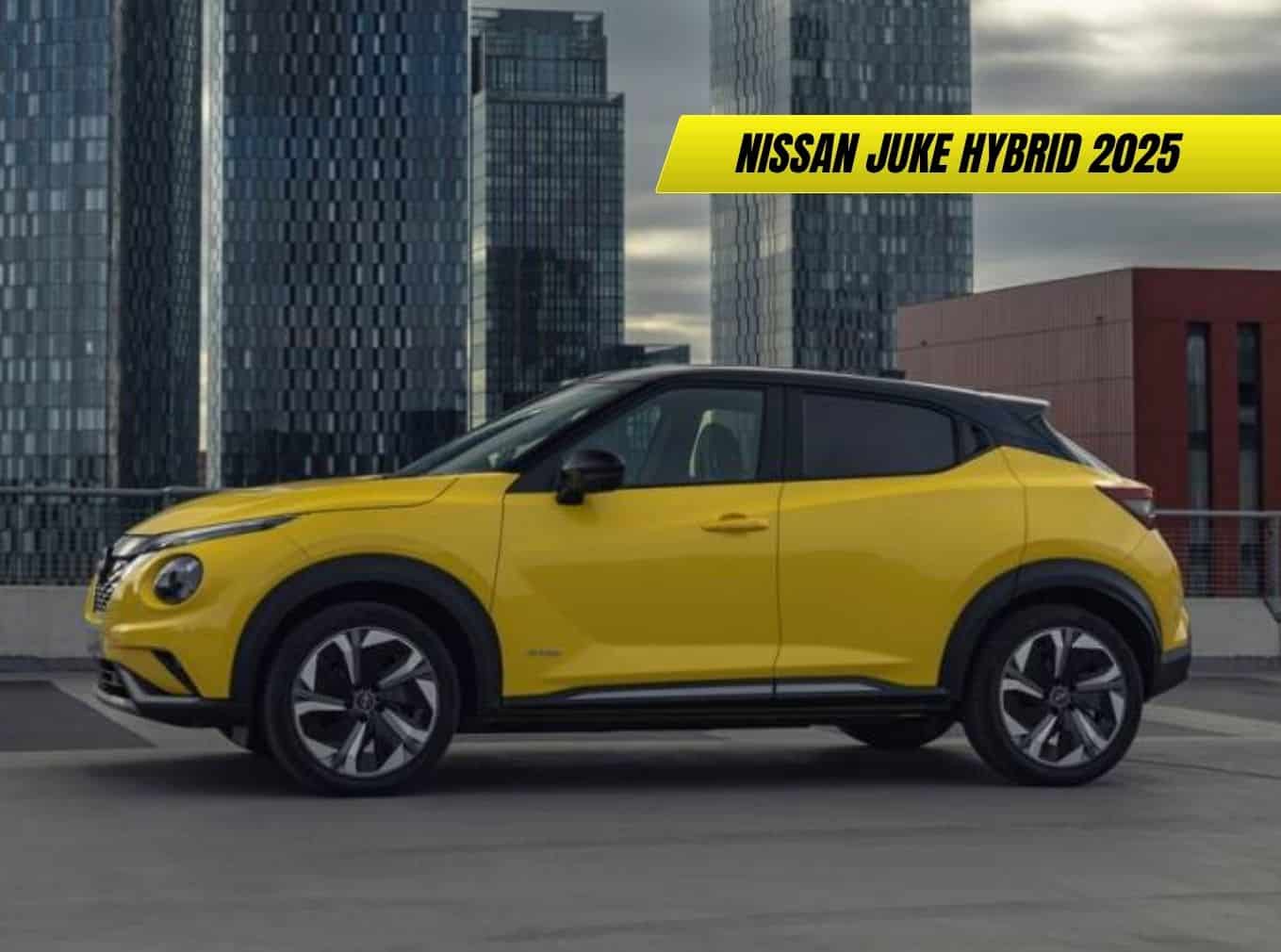
Complete UK review of the Nissan Juke Hybrid 2025. Expert analysis covering hybrid efficiency, design updates, technology features, and real-world performance for British roads and urban driving.
The Nissan Juke returns for 2025 with significant updates that reinforce its position as the original crossover pioneer, now enhanced with full hybrid technology that transforms its urban capabilities. Since creating the compact crossover segment in 2010, the Juke has captured hearts with its distinctive design and practical versatility, achieving remarkable success across Europe with over 120,000 units sold in Italy alone. This latest iteration builds upon that legacy with comprehensive technological upgrades, a sophisticated hybrid powertrain, and refined interior appointments that elevate the ownership experience while maintaining the quirky character that made the original so compelling. For UK drivers seeking efficient urban mobility with distinctive style, the 2025 Juke Hybrid represents an intriguing proposition that combines environmental responsibility with the practical benefits of crossover versatility. Those considering broader hybrid options should explore our comprehensive analysis of why diesel hybrid cars are still relevant in 2025 for alternative approaches to efficient motoring.
Design Evolution: Familiar Yet Fresh
The 2025 Juke maintains its distinctive visual identity while incorporating subtle refinements that enhance both aesthetics and functionality. Measuring 4,210mm in length, 1,800mm in width, and 1,590mm in height with a 2,640mm wheelbase, the proportions remain ideally suited to UK urban environments while providing adequate space for five occupants.
From my experience examining the updated design, the most noticeable changes focus on wheel design improvements with new 19-inch Akari alloys featured on the N-Design variant, creating a more sophisticated appearance. The signature design elements remain intact: the distinctive coupe-like roofline, prominent circular headlights with propeller-inspired graphics, and the bold V-motion grille that defines Nissan’s contemporary design language.
The rear door handles continue to be cleverly integrated into the rear quarter windows, maintaining the unique aesthetic appeal while presenting minor practical challenges for some users. The hybrid badging on the rear subtly identifies the new powertrain while maintaining overall design coherence.
Aerodynamic efficiency has been optimised for the hybrid powertrain, though specific details of airflow management remain focused on reducing fuel consumption rather than dramatic visual changes. The LED lighting technology throughout provides excellent illumination while contributing to the vehicle’s modern appearance.
Exterior Dimensions and Practicality
| Measurement | Specification | UK Relevance |
|---|---|---|
| Overall Length | 4,210mm | Ideal for city parking |
| Width | 1,800mm | Manageable for UK roads |
| Height | 1,590mm | Good ground clearance |
| Wheelbase | 2,640mm | Maximises interior space |
The compact external footprint proves particularly advantageous for UK urban driving, enabling confident navigation through narrow city streets while providing the elevated driving position that appeals to many crossover buyers. Parking manoeuvres benefit from the vehicle’s manageable dimensions, though rear visibility remains somewhat limited due to the stylistic rear pillar design.
Interior Technology Revolution
The 2025 Juke’s interior represents a significant technological advancement over its predecessor, centred around dual 12.3-inch digital displays that transform both the instrument cluster and infotainment experience. This represents one of the most substantial updates to the Juke formula since its original introduction.
The central touchscreen angles slightly toward the driver for improved ergonomics while featuring modern graphics and comprehensive connectivity including wireless Apple CarPlay and Android Auto integration. From my experience using the system, response times prove quick and intuitive, with customisable display options that enable personalisation based on individual preferences.
Wireless smartphone charging integrates seamlessly beneath the central display, complemented by both standard USB and USB-C charging ports that accommodate various device types. The navigation system provides clear route guidance with real-time traffic updates particularly valuable for UK urban driving.
The digital instrument cluster offers multiple display configurations with customisable information layouts that adapt to different driving situations. Graphics quality proves excellent with clear visibility under various lighting conditions, essential for UK weather variability.
Interior materials show marked improvement with soft-touch surfaces and new fabric options that enhance perceived quality. The storage solutions have been expanded with a larger glovebox and redesigned centre armrest providing improved access to the central storage compartment, now featuring a clip-secured lid.
The electronic parking brake replaces the traditional handbrake lever, freeing space between the front seats for two cup holders and improved access to storage areas. This change particularly benefits UK drivers accustomed to cramped urban parking situations.
For those interested in comparing interior technology across different segments, our detailed analysis of the best family SUVs explores how various manufacturers approach cabin design and technology integration.
Passenger Space and Practicality
Despite its compact external dimensions, the Juke provides surprisingly adequate accommodation for five occupants, though the rear centre position remains best suited to occasional use or smaller passengers.
Front seat comfort proves excellent with good adjustment range and supportive bolstering appropriate for both urban commuting and longer journeys. The elevated driving position provides good forward visibility while maintaining the engaging feeling that distinguishes crossovers from conventional hatchbacks.
Rear passenger space impresses given the coupe-like roofline, offering adequate legroom and headroom for adults up to average height. The outboard positions provide reasonable comfort for medium-distance journeys, while USB charging ports (though not air vents) cater to rear passenger device needs.
Boot capacity ranges from 354 to 1,237 litres in the hybrid variant, representing a slight reduction compared to conventional variants due to hybrid battery placement. The loading aperture proves adequately sized with a small step that doesn’t significantly impact loading convenience. Practical features include cargo hooks, though a 12V socket is notably absent.
The 60/40 split rear seats fold to create extended cargo space when required, enabling reasonable versatility for UK lifestyle requirements including weekend trips or larger shopping expeditions.
Full Hybrid Powertrain: Technology and Efficiency
The headline attraction of the 2025 Juke lies in its sophisticated full hybrid system combining a 1.6-litre naturally aspirated petrol engine producing 94hp and 148Nm with a 49hp/205Nm electric motor. A secondary 15kW starter/generator, liquid-cooled 1.2kWh battery pack, and innovative multi-mode transmission complete the powertrain package, delivering combined output of 143hp.
From my experience driving the hybrid system, the urban performance proves particularly impressive with the electric motor providing immediate torque for city driving scenarios. The seamless transitions between electric and petrol power remain largely imperceptible during normal driving, contributing to a refined and sophisticated driving experience.
The e-Pedal function enables single-pedal driving up to 5km/h, though complete stops still require brake pedal application. This feature proves particularly useful in stop-start urban traffic conditions common across UK cities, reducing driver fatigue while maximising energy recovery.
Regenerative braking integration feels natural with good pedal modulation enabling precise energy recovery management. The system automatically optimises recovery based on traffic conditions and driver inputs, maximising efficiency without compromising driving enjoyment.
Hybrid System Specifications
| Component | Specification | Benefit |
|---|---|---|
| Petrol Engine | 1.6L, 94hp, 148Nm | Proven reliability |
| Electric Motor | 49hp, 205Nm | Instant urban torque |
| Battery | 1.2kWh, liquid-cooled | Optimal temperature management |
| Combined Output | 143hp | Adequate performance |
Real-world fuel economy during our 500km test route averaging city, A-road, and motorway driving achieved 5.6L/100km (50.4mpg), closely matching Nissan’s official 5.0-5.1L/100km claims. Urban consumption improved to 5.0L/100km (56.5mpg), demonstrating the hybrid system’s particular strength in stop-start conditions.
For those considering alternative efficient powertrains, our comprehensive guide to the best affordable Chinese cars explores innovative approaches to efficiency from emerging manufacturers.
Dynamic Performance and Handling
The Juke Hybrid’s driving character prioritises comfort and efficiency over outright performance, delivering a refined experience particularly suited to UK urban and suburban driving conditions.
Low-speed refinement proves excellent with the electric motor providing silent operation and immediate torque delivery ideal for urban environments. Acceleration from rest feels responsive thanks to electric motor characteristics, though overall performance remains modest with 0-62mph achieved in 10.6 seconds.
Steering precision proves adequate without being particularly engaging, offering sufficient feedback for confident handling while maintaining light low-speed operation beneficial for parking manoeuvres. The suspension setup balances comfort with reasonable body control, though enthusiastic driving reveals limitations in ultimate handling capabilities.
Motorway cruising remains composed with acceptable wind and road noise levels that don’t significantly intrude on conversation or media consumption. High-speed stability proves reassuring for UK motorway conditions, though the hybrid system works harder to maintain efficiency at sustained speeds.
Braking performance benefits from hybrid system integration with good pedal feel and consistent stopping power. The regenerative system operates smoothly without the grabby characteristics that affect some hybrid vehicles.
The 19-inch wheels and tyres on our test vehicle provide good grip levels while maintaining reasonable ride comfort over typical UK road surfaces including speed bumps and poorly maintained urban streets.
For drivers experiencing technical issues with their vehicles, our comprehensive spanner warning light guide provides essential troubleshooting information for UK conditions.
Advanced Driver Assistance Systems
The 2025 Juke includes comprehensive Level 2 ADAS technology as standard across the range, providing valuable assistance for UK driving conditions. The system includes adaptive cruise control, lane keeping assistance, traffic sign recognition, and automatic emergency braking with pedestrian and cyclist detection.
Parking assistance proves particularly valuable given the limited rear visibility inherent in the coupe-like design. Rear parking sensors and reversing camera compensate effectively for the styling-related visibility limitations, enabling confident manoeuvring in tight UK parking situations.
The intelligent cruise control proves effective for motorway driving, maintaining appropriate following distances while adapting to traffic flow variations common on UK roads. Lane keeping assistance provides gentle corrections without feeling intrusive, though it requires attentive driving rather than enabling hands-free operation.
Emergency braking with pedestrian and cyclist detection proves particularly relevant for UK urban environments where vulnerable road users frequently interact with vehicle traffic. According to official Nissan UK information, the latest safety systems exceed Euro NCAP requirements for this vehicle class.
UK Market Positioning and Value
The Nissan Juke Hybrid occupies a competitive position in the UK compact crossover market with pricing starting from £29,300 for the entry-level hybrid variant, rising to £32,900 for the N-Design specification tested. This pricing positions it competitively against rivals including the Toyota C-HR Hybrid and Honda HR-V e:HEV.
Equipment levels prove generous across the range with even basic specifications including the comprehensive safety technology and advanced infotainment systems. The N-Design variant adds distinctive styling elements, premium interior appointments, and the attractive 19-inch wheels that enhance both appearance and handling.
Running costs benefit significantly from the hybrid system with official CO2 emissions of 113-115g/km enabling favourable company car taxation for business users. Vehicle Excise Duty rates remain reasonable while fuel costs represent genuine savings compared to conventional alternatives.
Insurance groupings reflect the vehicle’s urban focus and comprehensive safety equipment, typically falling into reasonable categories for the segment. Residual values for Nissan hybrid vehicles have strengthened as the technology proves its reliability and efficiency benefits.
The conventional 1.0-litre three-cylinder DIG-T petrol engine remains available with manual or automatic transmissions for buyers prioritising lower purchase costs over hybrid efficiency, starting from £25,000.
For those considering alternatives across different price ranges, our analysis of the best cars under £25,000 provides broader market perspective including value alternatives to hybrid technology.
Competitors and Market Context
The Juke Hybrid faces established competition in the rapidly growing compact hybrid crossover segment, competing directly with the Toyota C-HR Hybrid, Honda HR-V e:HEV, and various plug-in hybrid alternatives from premium manufacturers.
Against Toyota C-HR, the Juke offers more conventional styling and superior rear visibility, though the Toyota typically achieves better fuel economy figures and benefits from Toyota’s hybrid reputation.
Versus Honda HR-V e:HEV, the Nissan provides more distinctive design character and arguably superior infotainment technology, while the Honda offers more practical rear door access and larger boot space.
Compared to premium alternatives, the Juke delivers comparable technology and efficiency at significantly lower pricing, making it attractive for buyers seeking hybrid benefits without premium brand premiums.
The electrification landscape continues evolving rapidly, with our detailed coverage of electric car leasing deals in the UK exploring zero-emission alternatives for environmentally conscious buyers.
Real-World UK Ownership Experience
Living with the Juke Hybrid in typical UK conditions reveals both strengths and considerations that potential owners should evaluate. The compact dimensions prove ideal for urban environments including narrow residential streets and crowded city centre parking.
Daily commuting showcases the hybrid system’s strengths with silent electric operation for early morning departures and impressive fuel economy during stop-start traffic conditions. The comprehensive connectivity ensures seamless smartphone integration for navigation and communication.
Weekend versatility proves adequate for typical UK lifestyle requirements including shopping trips and short-distance touring, though the limited boot space may challenge families requiring maximum cargo capacity.
Maintenance requirements follow Nissan’s established service intervals with hybrid-specific checks ensuring optimal system performance. The dealer network across the UK provides comprehensive support including hybrid system expertise.
Winter performance benefits from the immediate torque delivery of electric motors while the intelligent all-wheel-drive system (where fitted) provides additional confidence in challenging conditions.
For maintenance guidance, our AdBlue warning light guide provides relevant information, though this primarily applies to diesel vehicles rather than the petrol-hybrid Juke.
Future Developments and Electrification
Nissan’s electrification strategy positions the Juke Hybrid as a stepping stone toward full electric vehicles, with the technology providing valuable experience for buyers considering eventual EV adoption. The advanced hybrid system demonstrates Nissan’s engineering capabilities while delivering immediate efficiency benefits.
Over-the-air updates capability ensures the infotainment and vehicle systems remain current throughout ownership, adding functionality and refinements without requiring dealer visits. This technology foundation supports Nissan’s connected services expansion.
The e-Power technology used in larger Nissan models may eventually reach the Juke platform, providing electric motor drive with petrol generator charging for enhanced efficiency and refined operation.
Autonomous driving capabilities will likely expand through software updates, building upon the current Level 2 systems to provide enhanced motorway assistance and urban automation features.
h4 Frequently Asked Questions
h4 How does the Juke Hybrid’s fuel economy compare in real-world UK driving? Our testing achieved 50.4mpg average across mixed driving conditions, with urban consumption reaching 56.5mpg. This closely matches official figures and represents significant improvement over conventional petrol engines, particularly beneficial for UK urban driving patterns.
h4 Is the Juke Hybrid suitable for longer UK motorway journeys? While the Juke Hybrid proves capable of motorway cruising, its efficiency advantages diminish at sustained high speeds. The 166mph top speed provides adequate performance, though the 143hp output feels modest during overtaking manoeuvres compared to more powerful alternatives.
h4 What warranty coverage does Nissan provide for the hybrid system? Nissan offers comprehensive warranty coverage including extended protection for hybrid system components. The battery warranty typically extends beyond the standard vehicle warranty, providing peace of mind for UK buyers concerned about hybrid technology longevity.
h4 How does the Juke’s boot space compare to conventional variants? The hybrid system reduces boot capacity from 422 litres to 354 litres due to battery placement, though the space remains adequate for typical urban lifestyle requirements. The regular shape and low loading height maintain practical usability despite reduced capacity.
h4 Are there more affordable ways to access Juke Hybrid ownership in the UK? PCP finance and leasing options significantly reduce monthly costs compared to outright purchase. Additionally, the comprehensive standard equipment means lower trim levels provide excellent value without requiring expensive option packages.
h4 How does the Juke Hybrid perform in UK winter conditions? The hybrid system provides excellent cold-weather performance with immediate electric motor torque and reduced warm-up requirements. However, heating system demands can impact electric range and overall efficiency during extended cold periods.
h4 What are the main advantages over plug-in hybrid alternatives? The self-charging hybrid system eliminates charging infrastructure requirements while providing efficiency benefits. This approach suits UK drivers lacking home charging facilities or those preferring the convenience of conventional refuelling without range anxiety.
Conclusion: Evolved Pioneer for Modern UK Driving
The Nissan Juke Hybrid 2025 successfully evolves the original crossover concept for contemporary requirements, combining the distinctive character that made the original compelling with sophisticated hybrid technology and comprehensive modern features. In my experience, the vehicle delivers genuine improvements in efficiency, refinement, and technology while maintaining the quirky appeal that distinguishes it from increasingly homogeneous competitors.
The full hybrid system provides meaningful efficiency benefits particularly suited to UK urban driving patterns, while the technological upgrades bring the cabin experience up to current standards. Build quality and interior materials show marked improvement over previous generations, addressing historical weaknesses.
Practicality remains adequate for typical UK requirements despite some compromises in boot space and rear visibility. The comprehensive safety equipment and driver assistance systems provide valuable support for varied UK driving conditions from urban traffic to motorway cruising.
I would recommend the Juke Hybrid to buyers seeking distinctive style combined with hybrid efficiency in a compact crossover package. While the £29,300 starting price positions it competitively within the segment, the genuine efficiency benefits and improved technology justify the premium over conventional alternatives.
Current market conditions favour hybrid vehicles through favourable taxation and fuel cost savings, making this an opportune time to embrace the technology. For buyers seeking proven hybrid reliability with distinctive character, the Juke Hybrid represents an compelling proposition in an increasingly crowded but rapidly evolving market segment.





