
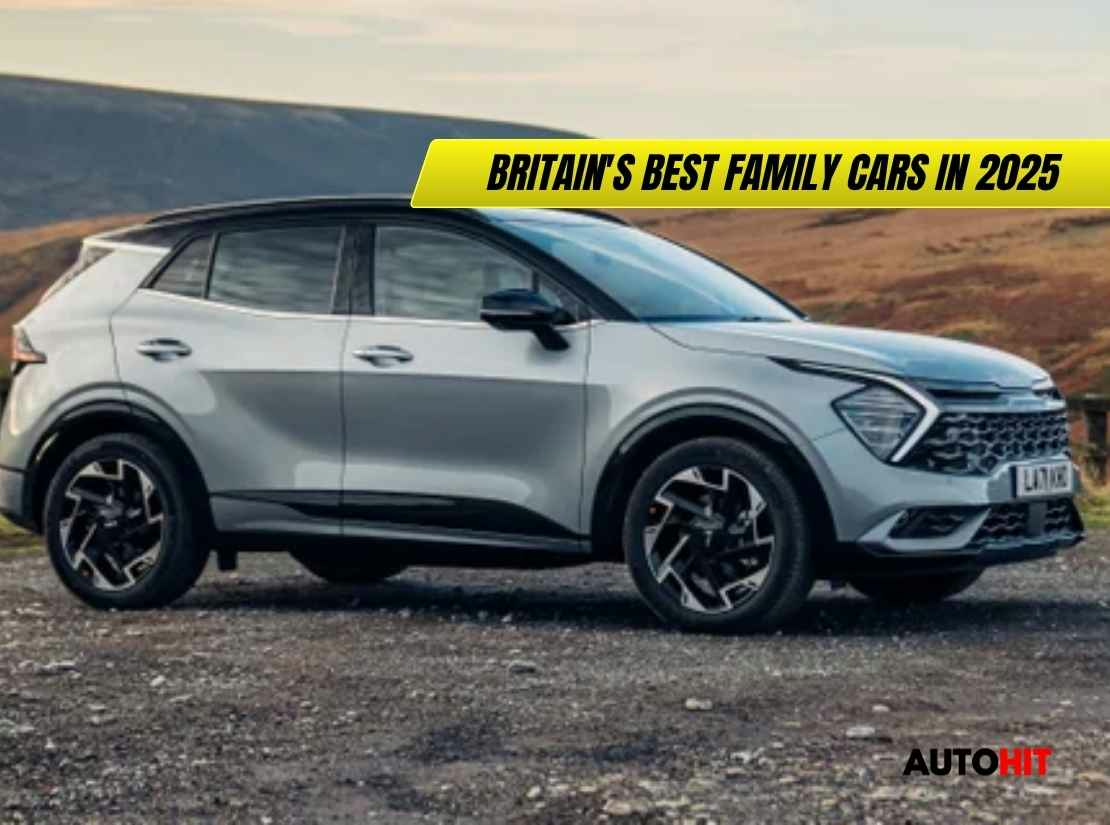
Discover the best family cars for 2025 in the UK. From budget hatchbacks to premium electric SUVs, our comprehensive guide reveals which models offer the perfect blend of space, safety, and value for British families.
The family car landscape in Britain has transformed dramatically over the past decade. Where once families might have chosen between a Ford Mondeo or Vauxhall Vectra, today’s market offers an almost bewildering array of options spanning traditional hatchbacks, spacious SUVs, efficient hybrids, and cutting-edge electric vehicles. According to our analysis at AutoHit, this diversity represents both an opportunity and a challenge for families seeking their next vehicle.
Recent developments in the UK automotive market have been particularly telling. Tesla Model Y was the world’s best-selling EV in the world in 2024, with more than 1 million units delivered, whilst traditional manufacturers continue to refine their family-focused offerings. With the government’s 2030 deadline for new petrol and diesel car sales approaching, the question isn’t just which family car to buy, but which powertrain makes most sense for your household’s future needs.
This comprehensive guide examines the very best family cars available in Britain today, from affordable city runabouts to premium seven-seaters, helping you navigate the choices that will define family motoring for years to come.
Key Highlights
- Market Evolution: Family car preferences have shifted dramatically from traditional saloons to SUVs, with SUVs being the preference of most of Britain’s new car buyers
- Electric Transition: The government expects increasing numbers of EVs with higher ranges, making electric family cars increasingly viable for longer journeys
- Cost Considerations: It is predicted that someone buying a new EV next year will recoup the additional upfront cost within 5 years due to lower running costs
- Safety Standards: Euro NCAP regularly crash tests new cars and currently rates the GWM Ora 3 as the safest family car, with a five-star safety rating
- Infrastructure Growth: There are 37,011 charging locations in the UK at the start of 2025, making electric vehicle ownership more practical than ever
- Market Diversity: Modern families can choose from compact hatchbacks starting under £20,000 to luxury seven-seat SUVs exceeding £100,000
Understanding Today’s Family Car Categories
Traditional Hatchbacks: The Sensible Choice
The humble hatchback remains the backbone of British family motoring, and for good reason. The best-known family cars in the UK are the Ford Focus, the VW Golf and the Vauxhall Astra, models that have earned their popularity through decades of dependable service. These cars excel in urban environments where their compact dimensions make parking easier, whilst still offering adequate space for most family needs.
We’ve tested enough hatchbacks to know that the best examples strike a careful balance between interior space and external dimensions. The reality, however, is more nuanced than simply choosing the biggest boot. Hatchbacks are some of the more compact offerings on the family car market, so they’re among the easiest to drive and park, making them particularly appealing to families navigating Britain’s increasingly congested city centres.
SUVs: The New Family Default
The rise of the family SUV has been one of the most significant automotive trends of the past two decades. Not only are they ideal for ferrying the kids to school, but family SUVs are also useful for transporting cargo, long-distance commutes and holidays. Their elevated driving position provides better visibility for both driver and passengers, whilst the typically generous boot space accommodates everything from weekly shopping trips to holiday luggage.
From a UK perspective, this raises some questions about practicality versus efficiency. The tall stance of most SUVs means there’s a commanding view ahead, which isn’t just beneficial for the driver; kids are less likely to get car sick. That said, the trade-off often comes in fuel economy and urban manoeuvrability, particularly important considerations given Britain’s narrow country lanes and city centre parking restrictions.
Estate Cars: Maximum Space Without the SUV Penalty
Estate cars represent something of a compromise between the practicality of an SUV and the efficiency of a hatchback. Estate cars offer a huge amount of boot space but without the van-like appearance of a traditional MPV. For families who prioritise cargo capacity but don’t require seven seats, estates often provide the most space for the money.
The beauty of a well-designed estate lies in its versatility. Whether you’re ferrying teenagers to football practice or loading up for a family camping trip to the Lake District, estates typically offer the space to cope without the fuel economy penalty of a larger SUV. However, the segment has contracted considerably in recent years as buyers migrate towards SUVs.
Best Traditional Family Hatchbacks for 2025
Volkswagen Golf: The Benchmark Continues
The Volkswagen Golf has long been a staple in the family car market. Celebrated for its build quality, reliability, and comfortable ride, the Golf continues to impress in 2024. Having driven the outgoing model extensively, we can confirm that the latest iteration maintains the qualities that have made the Golf a default choice for so many British families.
The eighth-generation Golf benefits from Volkswagen’s latest infotainment technology, though the touch-sensitive controls can take some getting used to. Better steering, better refinement, better safety, more modern lighting. All of them steps ahead from a car that already pretty much led the class. For families seeking a dependable, well-built hatchback that will retain its value, the Golf remains hard to beat.
Real-world fuel economy sits around 45-50mpg in mixed driving, making it economical for daily commutes and weekend adventures. The boot capacity of 381 litres is adequate for most family needs, though larger families might find themselves wanting more space for longer trips.
Toyota Corolla: Hybrid Efficiency Meets Family Practicality
Millions of people can’t be wrong, and millions of car buyers around the world have put a Toyota Corolla on their driveway. The current Corolla stands out in the family hatchback segment primarily for its hybrid powertrain, which delivers genuine real-world efficiency that few competitors can match.
Our verdict after examining the specifications is that the Corolla represents exceptional value for families prioritising running costs. Almost entirely devoid of contrived personality, the Corolla is a blank sheet just waiting to be part of your family story. This might sound like faint praise, but there’s something refreshing about a car that simply gets on with the job without fuss.
The hybrid system typically returns 55-60mpg in real-world conditions, significantly better than conventional petrol alternatives. For families covering high annual mileages, these savings can be substantial over a typical ownership period.
Ford Focus: British Engineering Excellence
Another perennial favourite among UK families is the Ford Focus. Offering a blend of affordability, practicality, and driving enjoyment, the Focus has carved out a niche for itself in the competitive family car market. Ford’s commitment to making cars that suit British roads is evident in the Focus’s handling characteristics, which remain among the best in class.
The latest generation benefits from Ford’s improved interior quality and updated technology, addressing previous criticisms about cabin materials. Its agile handling and comfortable interior make it a great choice for daily commuting and family outings, particularly on the challenging mixture of urban streets and country A-roads that characterise much of British driving.
Boot space matches the Golf at 375 litres, whilst the rear seat accommodation is generous for the class. For families who enjoy the driving experience alongside practical requirements, the Focus delivers a compelling package.
Premium Family SUVs: Space Meets Sophistication
Skoda Kodiaq: The Complete Package
A former Top Gear award winner, the Skoda Kodiaq is among the most complete family cars you can buy for sensible money. Having spent considerable time with various Kodiaq variants, we’re consistently impressed by the way Skoda has managed to combine genuine seven-seat practicality with reasonable running costs and impressive build quality.
The Kodiaq’s strength lies in its thoughtful approach to family life. Prices start below £40,000 with petrol and diesel models offering seven comfy seats or five plus a cavernous 910-litre load space. This flexibility proves invaluable for families whose needs change depending on the journey – whether it’s daily school runs or extended family holidays.
Skoda’s ‘Simply Clever’ features throughout the cabin demonstrate genuine understanding of family requirements. There are a selection of petrol and diesel engines on offer, or if you go for the estate an impressively long-ranged plug-in hybrid. The PHEV variant offers around 35 miles of electric-only running, sufficient for most urban journeys whilst retaining long-distance capability.
Hyundai Tucson: Korean Excellence Redefined
The latest Hyundai Tucson has won our Mid-size SUV of the Year award four times on the trot, recognition that reflects the significant strides Hyundai has made in recent years. With its striking styling, superb interior and excellent driving manners, the Tucson SUV is the embodiment of just how far Hyundai has come over the decades.
The current Tucson stands out visually with its bold parametric design language, but substance backs up the style. Its 1.6-litre petrol engine isn’t anything to write home about but, thanks to an astute hybrid system, the Tucson at no point feels sluggish. The hybrid system works seamlessly in urban conditions, delivering impressive fuel economy whilst maintaining refinement.
Interior space impresses particularly in the rear, where adult passengers will find adequate headroom and legroom. The 620-litre boot capacity matches or exceeds most competitors, whilst Hyundai’s excellent warranty provides additional peace of mind for family buyers.
BMW X3: Premium Performance Meets Family Needs
The BMW X3 was given an extensive overhaul at the end of 2024, bringing with it a new design and some powertrain updates. For families who refuse to compromise on driving dynamics, the X3 remains one of the more engaging family SUVs available.
Thankfully, it’s still one of the better SUVs in terms of driving dynamics, with a direct attitude and bags of grip. The trade-off comes in ride comfort, where the X3’s sporting character occasionally intrudes on family-friendly refinement. This is where things get interesting for UK buyers – the X3 appeals to families who prioritise weekend driving enjoyment alongside weekday practicality.
The interior quality meets BMW’s premium standards, whilst the infotainment system remains among the most intuitive in the class. Boot space at 550 litres provides adequate family capacity, though the loading lip sits higher than some competitors.
Electric Family Cars: The Future Arrives
Volkswagen ID.Buzz: Retro Styling, Modern Technology
The German brand has clearly thrown everything at the car, and this has resulted in something that combines the practicality of an MPV with the comfort and refinement of a premium SUV and the low running costs of an electric car. The ID.Buzz represents Volkswagen’s bold attempt to reinvent the family transport concept for the electric age.
Our experience with the ID.Buzz reveals a vehicle that genuinely delivers on its promises. The ID Buzz is good to drive – it can sprint up to motorway speeds faster than many conventional family SUVs, proving that electric family cars needn’t compromise on performance. The instant torque delivery makes overtaking effortless, particularly useful when carrying a full load of passengers and luggage.
Space utilisation impresses throughout. It’s endlessly spacious, meaning more space for passengers and luggage than you’d find in a Jaguar I-Pace or Tesla Model Y. The van-derived architecture allows for a more efficient use of interior space than traditional car-based designs.
Range sits around 260 miles in real-world conditions, sufficient for most family requirements. Charging at home overnight using an off-peak tariff costs approximately £12 for a full charge, representing significant savings compared to petrol or diesel alternatives.
Renault Scenic E-Tech: Electric Evolution
The Renault Scenic E-Tech sits as not only our family SUV of choice, but also earned our 2025 Car of The Year award. This recognition reflects how successfully Renault has translated the Scenic’s family-friendly credentials into the electric era.
In times gone by, the Renault Scenic was a fairly frumpy family MPV which, although spacious, didn’t have much else going for it. The electric transformation has given the Scenic a new lease of life, combining attractive styling with genuine electric vehicle capability.
The Scenic E-Tech offers up to 379 miles of claimed range, though real-world figures typically sit around 300 miles in mixed conditions. This places it among the longer-range family EVs available, addressing one of the primary concerns about electric vehicle adoption.
Interior space remains a Scenic strength, with flexible seating arrangements and abundant storage solutions throughout the cabin. The dashboard design successfully integrates digital displays whilst retaining physical controls for key functions – a sensible approach that many manufacturers have abandoned.
Tesla Model Y: Silicon Valley Meets Family Life
Tesla Model Y was the world’s best-selling EV in the world in 2024, success that reflects its combination of impressive range, rapid charging capability, and spacious interior. The Tesla Model Y is an excellent family car choice for 2025. Its spacious interior and large boot provide ample room for passengers and luggage.
The Model Y’s minimalist interior divides opinion, though most family users adapt quickly to the touchscreen-centric interface. The Tesla Model Y has an autopilot – perfect for motorway driving, though UK regulations limit the system’s capabilities compared to some overseas markets.
Charging infrastructure represents a significant advantage for Tesla ownership. The Supercharger network provides rapid charging across the UK, with typical charging speeds allowing 10-80% top-ups in around 30 minutes. This makes longer family journeys more feasible than with many alternative electric vehicles.
Real-world range typically exceeds 300 miles in favourable conditions, though winter weather and motorway speeds can reduce this significantly. The optional seven-seat configuration adds versatility for larger families, though the third row is best suited to children rather than adults.
Understanding Electric Vehicle Costs for Families
Home Charging: The Economic Foundation
Charging an electric car at home costs about £13 for a full charge and is the most convenient and cost-effective way to keep your car fully charged. For families with off-street parking, home charging represents the foundation of electric vehicle economics.
Home charging overnight remains the most cost-effective way to refuel as an EV-specific electricity tariff can deliver very cheap electricity at these off-peak times. These can usually around 8p per kWh whereas the average domestic electricity price is around 27p per kWh. This dramatic difference in overnight rates can reduce charging costs to as little as £5 for a full charge on some tariffs.
For a typical family covering 10,000 miles annually, the savings compared to petrol can exceed £1,000 per year. This calculation assumes home charging for 80% of journeys, with the remainder using public charging infrastructure.
Public Charging: Planning for Longer Journeys
The UK is the sixth most expensive country in Europe for public charging, making home charging even more attractive for regular use. However, public charging remains essential for longer family journeys and those without home charging capability.
Most network rapid chargers cost 74p/kwh which is about £19 for 30 minutes of charging. For a typical family EV, this might add 150-200 miles of range, making it comparable to refuelling a petrol car for longer journeys.
Since May 2023, the number of rapid and ultra-rapid public charging devices has increased almost 45%, addressing previous concerns about charging infrastructure availability. Greater London leads the way with over 22,000 charging points, though rural coverage continues to improve.
Total Cost of Ownership
It is predicted that someone buying a new EV next year will recoup the additional upfront cost within 5 years due to lower running costs. This calculation includes reduced maintenance costs, as electric vehicles require less regular servicing than conventional cars.
For company car users, the benefits are even more substantial. Company car tax is favourable for EVs at only 3%, representing significant savings compared to conventional vehicles. The government has confirmed gradual increases to 5% by 2028, but this remains considerably lower than petrol and diesel alternatives.
Family Car Comparison: Key Specifications
| Model | Type | Seats | Boot (Litres) | Fuel Economy/Range | Starting Price | Our Take |
|---|---|---|---|---|---|---|
| Volkswagen Golf | Hatchback | 5 | 381 | 45-50mpg | £25,000 | Still the benchmark for build quality and refinement |
| Toyota Corolla | Hatchback | 5 | 361 | 55-60mpg | £27,000 | Outstanding hybrid efficiency with Toyota reliability |
| Skoda Kodiaq | 7-seat SUV | 7 | 910* | 40-45mpg | £38,000 | Exceptional space and value combination |
| Hyundai Tucson | SUV | 5 | 620 | 45-50mpg | £32,000 | Stylish design meets impressive practicality |
| BMW X3 | Premium SUV | 5 | 550 | 35-40mpg | £45,000 | Best driving dynamics in class |
| VW ID.Buzz | Electric MPV | 7 | 1,121* | 260 miles | £52,000 | Revolutionary space utilisation |
| Renault Scenic E-Tech | Electric SUV | 5 | 545 | 300+ miles | £35,000 | Excellent range and family focus |
| Tesla Model Y | Electric SUV | 5/7 | 854 | 330+ miles | £45,000 | Cutting-edge technology and charging network |
*With rear seats folded
Regional Considerations: Choosing for British Conditions
Urban vs Rural Requirements
British families face unique challenges depending on their location. For those navigating London’s expanding ULEZ zones, electric vehicles offer clear advantages beyond environmental benefits. EVs also have a significant benefit on local air quality, due to zero tailpipe emissions, making them increasingly attractive for urban families.
Rural families face different considerations, particularly regarding charging infrastructure and journey patterns. As 99% of car journeys in England are under 100 miles, most could be made by an EV without needing to recharge, though the peace of mind offered by longer-range vehicles or hybrid powertrains remains appealing for countryside locations.
Weather and Seasonal Considerations
British weather conditions significantly impact electric vehicle performance, with range typically reducing by 20-30% during winter months. For families planning longer journeys during school holidays, this requires additional consideration when choosing between electric and conventional powertrains.
Traditional petrol and diesel vehicles offer more predictable performance regardless of weather conditions, whilst hybrids provide a sensible compromise for families uncertain about full electric vehicle adoption.
Safety: Protecting What Matters Most
Euro NCAP regularly crash tests new cars, as well as testing their safety systems, providing independent assessment of each vehicle’s protective capability. For family buyers, five-star safety ratings have become virtually mandatory, with most mainstream manufacturers achieving this standard across their ranges.
Modern family cars benefit from advanced safety systems including autonomous emergency braking, lane-keeping assistance, and blind-spot monitoring. These technologies particularly benefit families with new drivers or those covering high annual mileages.
The weight distribution of electric vehicles can actually improve crash protection in some scenarios, though the higher purchase weights require additional consideration for parking and loading limits in some urban environments.
Financing and Ownership Considerations
PCP vs Leasing for Families
Most British families finance their vehicles rather than purchasing outright, making monthly costs often more relevant than list prices. PCP (Personal Contract Purchase) arrangements typically offer lower monthly payments but require careful consideration of mileage allowances and condition requirements.
For electric vehicles, leasing can prove particularly attractive as it removes concerns about battery degradation and obsolescence. Many manufacturers include maintenance packages within lease arrangements, simplifying budgeting for busy families.
Depreciation and Residual Values
Traditional family favourites like the Golf and Focus typically retain their value well, making them sensible choices for buyers planning to keep vehicles long-term. Electric vehicles currently experience more variable depreciation, though this pattern is stabilising as the technology matures.
The number of used EV purchases have grown by over 50% when comparing the first quarter of 2022 to 2023, indicating growing confidence in electric vehicle technology and improving availability of used options.
Looking Ahead: Family Cars Beyond 2025
The family car landscape will continue evolving rapidly as we approach the 2030 deadline for new petrol and diesel car sales. With battery costs reducing and continued innovation, some external forecasts predict that some EVs could be around the same price to purchase as a petrol or diesel car by the end of the 2020s.
Autonomous driving technology will increasingly influence family car design, though full autonomy remains some years away for UK roads. More immediately, we expect continued improvements in electric vehicle range and charging speeds, making electric family cars increasingly attractive.
The traditional boundaries between car categories will continue blurring, with electric platforms enabling more flexible interior packaging and innovative storage solutions.
Frequently Asked Questions
How much will it actually cost to run an electric family car day-to-day?
For a typical electric car with a 60kWh battery and ~200 mile range: Charging at home: Costs about £13 for a full charge. For comparison, that’s competitive with filling a similar-sized petrol car to travel the same distance, but the key advantage comes from home charging overnight. EV-specific electricity tariff can deliver very cheap electricity at these off-peak times. These can usually around 8p per kWh, which could reduce that £13 to under £5 for the same journey. Factor in lower maintenance costs and road tax exemptions, and many families save £1,000+ annually compared to petrol alternatives.
Which family car offers the best value for money in 2025?
Based on our analysis, the Skoda Kodiaq delivers exceptional value by combining seven-seat capacity, generous equipment levels, and strong residual values for under £40,000. Prices start below £40,000 with petrol and diesel models offering seven comfy seats or five plus a cavernous 910-litre load space. For electric options, the Renault Scenic E-Tech provides impressive range and family practicality from £35,000, making it considerably more affordable than premium alternatives whilst offering genuine 300+ mile capability.
Are electric family cars reliable enough for daily school runs and long journeys?
Modern electric family cars prove highly reliable for daily use. Recent data from the Automobile Association (AA) indicated only 2.3% of the EV callouts the AA received in the year to the end of October 2023 were due to batteries having limited or no charge, which actually compares favourably to petrol cars running out of fuel. Industry research shows that the vast majority of EV drivers are happy with their experience (85%) and would recommend an EV to family or friends (83%). For longer journeys, the UK’s charging infrastructure now includes over 37,000 charging locations, making cross-country family trips increasingly practical.
What’s the safest family car I can buy in 2025?
Euro NCAP currently rates the GWM Ora 3 as the safest family car, with a five-star safety rating achieved in 2022. However, most mainstream family cars now achieve five-star safety ratings, including the Golf, Tucson, and Tesla Model Y. The key differentiator lies in advanced safety systems – look for autonomous emergency braking, lane-keeping assistance, and blind-spot monitoring as standard. For families with teenage drivers, these systems provide invaluable additional protection during the learning phase.
Should I wait for better electric cars or buy now?
The decision depends on your current vehicle’s condition and family needs. With battery costs reducing and continued innovation, some external forecasts predict that some EVs could be around the same price to purchase as a petrol or diesel car by the end of the 2020s. However, current electric family cars like the Scenic E-Tech and Tesla Model Y already offer genuine 300+ mile ranges and rapid charging capabilities. If your current car needs replacing and you have home charging capability, today’s electric options provide excellent family transport. Waiting might save money but won’t significantly improve capability.
How do I choose between a traditional SUV and an electric alternative?
Consider your annual mileage, charging access, and journey patterns. Families covering over 15,000 miles annually with home charging access typically save money with electric alternatives. It is predicted that someone buying a new EV next year will recoup the additional upfront cost within 5 years due to lower running costs. However, if you regularly undertake spontaneous longer journeys or lack reliable charging access, hybrid SUVs like the Tucson offer a sensible compromise. Test drive both options focusing on your typical family journeys rather than exceptional circumstances.
What storage space do I actually need for a family of four?
Boot space requirements depend heavily on family activities and ages of children. A typical family of four needs around 450-500 litres for weekly shopping and everyday items. However, families with teenagers involved in sports or regular camping trips benefit from 600+ litres or seven-seat flexibility. The gigantic Skoda Octavia… boot should make sure that you have lots of room represents the estate car solution, whilst seven-seat SUVs like the Kodiaq offer ultimate flexibility with over 900 litres when seats are folded.
The Bottom Line: Choosing Your Family’s Perfect Match
The family car market in 2025 offers more choice and capability than ever before, whether you’re drawn to the refined efficiency of a Toyota Corolla hybrid, the spacious versatility of a Skoda Kodiaq, or the cutting-edge technology of a Tesla Model Y. Our analysis suggests that the best family car depends primarily on your specific circumstances: urban vs rural driving, charging access, budget constraints, and family size.
For most British families, we’d recommend seriously considering electric alternatives if home charging is available. The combination of lower running costs, impressive refinement, and growing infrastructure makes electric family cars increasingly compelling. However, traditional petrol and hybrid options continue to serve families well, particularly those with unpredictable journey patterns or limited charging access.
The key lies in honest assessment of your family’s actual needs rather than exceptional circumstances. Test drive multiple options, consider total cost of ownership over your typical ownership period, and remember that today’s family car market offers genuinely excellent choices across all categories and budgets. Whether you choose a traditional hatchback, spacious SUV, or innovative electric vehicle, modern family cars deliver safety, efficiency, and capability that would have seemed impossible just a decade ago.





