
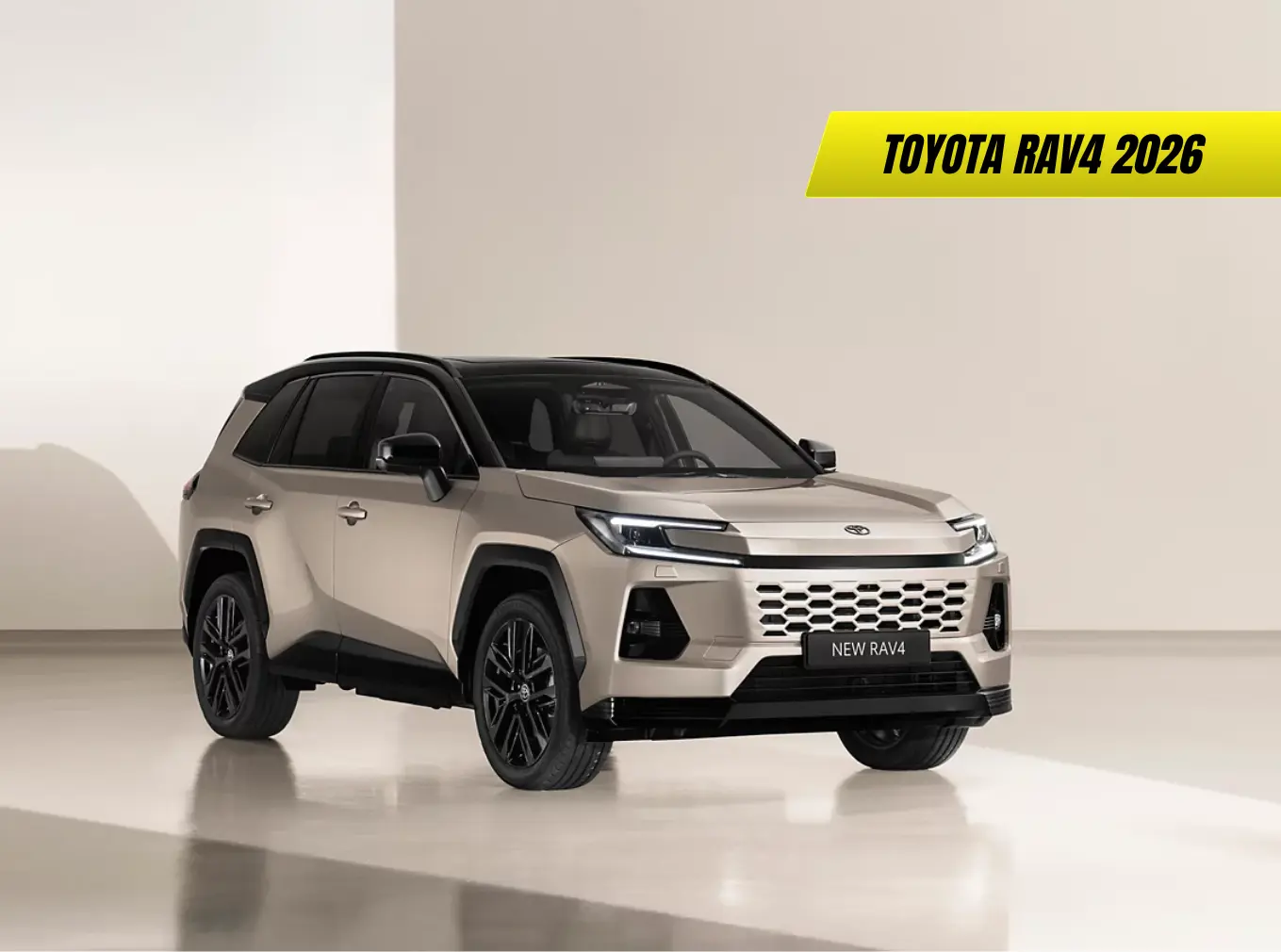
Toyota launches fifth-generation RAV4 in late 2025 as America’s first hybrid-only mainstream SUV, eliminating gasoline-only engines entirely with standard 226-236hp hybrid powertrain starting around $34,000 and enhanced 320hp plug-in hybrid featuring DC fast charging capability, 50-mile electric range, and GR Sport performance variant priced up to $51,000.
Japanese automotive giant Toyota Motor Corporation unveils completely redesigned 2026 RAV4 representing fifth generation of world’s best-selling compact SUV through radical hybrid-only strategy eliminating traditional gasoline engines for first time in model’s 30+ year history, making RAV4 first mainstream American-market vehicle mandating electrified powertrains across entire lineup rather than offering hybrids as premium options alongside conventional engines. The standard hybrid system combines 2.5-liter 4-cylinder gasoline engine with dual electric motors (front-mounted standard, rear-mounted on AWD variants) producing 226hp front-wheel-drive or 236hp all-wheel-drivedelivering estimated 40+ mpg combined fuel economy representing 35-40% improvement versus discontinued gasoline-only 203hp RAV4s while maintaining adequate performance for daily driving and highway merging. The headline plug-in hybrid variant (replacing previous RAV4 Prime branding) receives significant enhancements including 320hp system output (up from 302hp, +18hp gain), 50-mile EPA electric range (improved from 42 miles through larger 22.7kWh lithium-ion battery, +19% capacity increase), and groundbreaking DC fast charging capability enabling 10-80% recharge in approximately 30 minutes at CCS1-compatible public charging stations – unprecedented feature among mainstream plug-in hybrids traditionally limited to slow 3-12 hour Level 2 AC charging requiring overnight home charging or extended public charging sessions. Design language adopts bolder, more aggressive proportions featuring prominent hexagonal grille, slim LED headlights, sculpted bodywork creating muscular stance, and available GR Sport trim developed with TOYOTA GAZOO Racing incorporating sport-tuned suspension, revised steering calibration, performance tires, and distinctive styling cues appealing enthusiast buyers, while Woodland off-road variant offers increased ground clearance and all-terrain tires maintaining RAV4’s adventure capability despite urban-focused hybrid efficiency emphasis.
Strategic Context: Hybrid-Only Gamble
Toyota’s decision eliminating gasoline-only RAV4 engines represents boldest mainstream electrification commitment by traditional automaker, surpassing even EV-focused brands still offering ICE variants within model ranges.
Why Hybrid-Only Now?
| Factor | Strategic Rationale | Market Context |
|---|---|---|
| Regulatory pressure | California ZEV mandates, EPA CAFE standards tightening | 2026 corporate average requirements demand substantial electrification |
| Competitive positioning | Honda CR-V hybrid standard 2025, Mazda CX-50 hybrid focus | Mainstream competitors increasingly hybrid-default strategies |
| Technology maturity | 25+ years hybrid development since Prius 1997 | Toyota possesses unmatched hybrid reliability, cost efficiency |
| Customer acceptance | RAV4 Hybrid represents 50%+ RAV4 sales recent years | Buyers already choosing hybrids voluntarily without mandate |
| Production simplification | Single powertrain architecture reduces complexity | Manufacturing efficiency eliminating parallel ICE/hybrid lines |
| Brand differentiation | Toyota leads hybrid technology, reinforces expertise | Distinguishes from EV-only competitors facing range anxiety concerns |
Risks of Eliminating Gasoline Engines
Potential Customer Alienation
- Price sensitivity: Hybrid systems add $2,000-3,000 versus discontinued gasoline models potentially deterring budget-constrained buyers
- Complexity concerns: Conservative buyers preferring simpler mechanical systems without batteries and electronics
- Repair costs: Perceived or real higher maintenance expenses for hybrid components versus conventional powertrains
- Towing capability: Hybrid AWD limited 3,500 lbs versus previous V6’s higher capacity disappointing trailer users
Competitive Vulnerability
- Lower-priced alternatives: Mazda CX-50, Subaru Forester, Nissan Rogue offer non-hybrid options $3,000-5,000 cheaper
- Performance gap: 236hp hybrid AWD trails turbocharged competitors (Honda CR-V 190hp turbo, Mazda CX-50 256hp turbo)
- Conservative markets: Rural/suburban buyers in Midwest, South may resist forced electrification
However, Toyota’s calculation suggests upside outweighs risks:
- RAV4 Hybrid’s existing 50%+ sales mix demonstrates market acceptance
- Fuel savings offset higher purchase prices within 3-5 years typical ownership
- Simplified inventory management eliminates dealer confusion regarding ICE vs hybrid stocking
- Brand leadership position reinforcing Toyota’s “Hybrid for everyone” messaging versus premium-only positioning competitors
- Future-proofing against regulations potentially banning ICE sales 2030-2035 in progressive states/countries
This bold strategy mirrors historical industry gambles like Ford Mustang Mach-E (electric-only sports car DNA), Honda Clarity (hydrogen-only availability), and Mazda’s rotary commitment – occasionally successful but often requiring course corrections when market realities diverge from corporate convictions, similar to considerations in Honda CR-V 2026.
Standard Hybrid System: Sixth-Generation Efficiency
The 2026 RAV4’s base powertrain represents Toyota’s latest hybrid evolution delivering improved efficiency, performance, and refinement versus previous generation while maintaining legendary reliability.
Powertrain Specifications
2.5-Liter 4-Cylinder Gasoline Engine (A25A-FXS)
- Displacement: 2,487 cc
- Configuration: Inline-4, naturally-aspirated
- Thermal efficiency: ~41% (among highest production gasoline engines)
- Engine output: ~176 hp / 163 lb-ft (estimated, engine alone)
- Cycle: Atkinson cycle optimizing efficiency over peak power
Electric Motor Configuration
Front-Wheel-Drive Hybrid (FWD HEV)
- Front motor: Integrated within transmission, ~118 hp
- Battery: Lithium-ion, ~1.6 kWh capacity
- Combined system output: 226 hp
- Fuel economy: 41 mpg city / 38 mpg highway / 40 mpg combined (estimated)
- 0-60 mph: ~8.5 seconds (estimated)
All-Wheel-Drive Hybrid (AWD HEV)
- Front motor: Integrated within transmission, ~118 hp
- Rear motor: Independent electric axle, ~54 hp
- Battery: Lithium-ion, ~1.6 kWh capacity
- Combined system output: 236 hp
- Fuel economy: 39 mpg city / 36 mpg highway / 38 mpg combined (estimated)
- 0-60 mph: ~8.0 seconds (estimated)
- Towing capacity: 3,500 lbs when properly equipped
Sixth-Generation Hybrid Improvements
Enhanced Efficiency
- Lighter transaxle reducing parasitic losses
- Improved battery thermal management extending lifespan
- Optimized power control unit reducing conversion losses
- Regenerative braking capturing more energy during deceleration
Better Performance
- Quicker electric motor response improving acceleration feel
- Smoother engine-motor transitions reducing driver awareness of power source switching
- Enhanced AWD rear motor torque vectoring improving handling and stability
Refined Operation
- Quieter engine mounts and improved sound deadening
- Smoother CVT-like operation through e-CVT transmission optimization
- Reduced vibration through advanced active engine mounts
Driving Modes
- EV Mode: Electric-only operation at low speeds (limited to ~1-2 miles range given small battery)
- Eco Mode: Optimizes throttle response and climate control for maximum fuel economy
- Normal Mode: Balanced performance and efficiency for daily driving
- Sport Mode: Sharper throttle response, holds gears longer, prioritizes performance
- Trail Mode (AWD only): Modulates braking and power for low-speed off-road traction
Plug-In Hybrid: 320hp Performance and DC Fast Charging
The 2026 RAV4 plug-in hybrid variant receives most significant upgrades positioning as genuine performance SUV while maintaining efficiency credentials through expanded electric capability.
Enhanced PHEV Specifications
Power and Performance
| Specification | 2026 RAV4 PHEV | Previous RAV4 Prime | Improvement |
|---|---|---|---|
| System output | 320 hp | 302 hp | +18 hp (+6%) |
| Torque | ~406 lb-ft estimated | ~391 lb-ft | +15 lb-ft |
| 0-60 mph | 5.5 seconds (est) | 5.7 seconds | -0.2 seconds |
| Drive configuration | AWD standard (dual motors) | AWD standard | Unchanged |
| Towing capacity | 3,500 lbs | 2,500 lbs | +1,000 lbs |
The 320hp output positions RAV4 PHEV among quickest mainstream compact SUVs, exceeding:
- Honda CR-V (190 hp turbo)
- Mazda CX-50 (256 hp turbo)
- Subaru Forester (182 hp)
- Nissan Rogue (201 hp)
- Ford Escape PHEV (221 hp)
Only premium alternatives like BMW X3 M40i (382 hp, $60,000+) or Porsche Macan (348 hp, $65,000+) significantly exceed RAV4 PHEV’s performance at substantially higher pricing.
Battery and Electric Range
22.7kWh Lithium-Ion Battery Pack
- Usable capacity: ~18.1 kWh (20% buffer for longevity)
- Chemistry: Lithium-ion with improved thermal management
- EPA electric range: 50 miles (up from 42 miles, +19%)
- Real-world electric range: 40-45 miles typical conditions
- Battery warranty: 10 years / 150,000 miles (federal mandate)
Charging Capabilities (Revolutionary for PHEVs)
DC Fast Charging (XSE and Woodland trims only)
- Connector: CCS1 (Combined Charging System) combo inlet
- Maximum power: ~50 kW (125 amps at 400V)
- 10-80% charging time: ~30 minutes
- Practical benefit: ~35 miles electric range added in 30-minute charging session
This represents unprecedented capability for plug-in hybrid enabling road-trip rapid charging previously exclusive to full battery-electric vehicles, solving PHEV’s traditional weakness requiring overnight Level 2 AC charging at home or extended multi-hour public charging sessions.
AC Charging (All PHEV trims)
- Onboard charger: 11 kW (upgraded from 6.6 kW, +67% faster)
- Connector: SAE J1772 standard
- Charging time: ~2.5 hours empty to full (versus 4+ hours previously)
- Home wallbox: Compatible with Level 2 EVSE charging stations
Fuel Economy and Operating Costs
Electric-Only Operation
- MPGe: 90+ MPGe estimated (EPA electric equivalent rating)
- Cost per mile: ~4-5 cents (at $0.15/kWh residential electricity)
- Daily driving: Most commuters cover entire daily distance on electric power alone
Hybrid Operation (Battery Depleted)
- Combined MPG: 36-38 mpg estimated (better than standard hybrid due to larger battery enabling more frequent electric assist)
- Cost per mile: ~9-10 cents (at $3.50/gallon gasoline)
- Unlimited range: Gasoline engine enables cross-country travel without charging infrastructure dependency
Blended Annual Costs (Assuming 12,000 miles/year, 70% electric driving)
- Electric portion: 8,400 miles @ $0.05/mile = $420
- Gasoline portion: 3,600 miles @ $0.10/mile = $360
- Total annual fuel cost: ~$780 versus ~$1,800 for 30 mpg conventional SUV
The 50-mile electric range covers approximately 80-90% typical American daily driving patterns (averaging 30-40 miles/day) enabling majority of drivers operating RAV4 PHEV as de facto electric vehicle while maintaining unlimited range for occasional longer trips eliminating range anxiety plaguing full EVs.
Trim Levels and Pricing Strategy
The 2026 RAV4’s comprehensive trim lineup spans budget-conscious efficiency buyers through performance enthusiasts and off-road adventurers creating 10+ distinct configurations.
Standard Hybrid Trims
LE Hybrid FWD (~$34,000 estimated)
- Base trim with essential equipment
- 226 hp front-wheel-drive
- 17-inch steel wheels with covers
- 10.5-inch touchscreen with wireless CarPlay/Android Auto
- Toyota Safety Sense 3.0 (adaptive cruise, lane keeping, emergency braking)
- Cloth upholstery, manual climate control
XLE Hybrid AWD (~$37,000-39,000 estimated)
- Most popular mainstream trim
- 236 hp all-wheel-drive
- 18-inch alloy wheels
- Power moonroof, roof rails
- Dual-zone automatic climate control
- Heated front seats, power driver seat
- Blind spot monitoring
XLE Premium Hybrid AWD (~$40,000-42,000 estimated)
- Upgraded interior materials
- Synthetic leather upholstery
- 8-way power passenger seat
- Heated steering wheel
- Wireless phone charging
- Upgraded audio system
Limited Hybrid AWD (~$43,000-45,000 estimated)
- Near-premium positioning
- 19-inch alloy wheels
- 12.3-inch digital instrument cluster
- 12.9-inch touchscreen infotainment
- Head-up display
- Ventilated front seats
- Power liftgate with hands-free operation
- Panoramic moonroof
Plug-In Hybrid Trims
SE PHEV AWD (~$45,000-47,000 estimated)
- Entry plug-in hybrid
- 320 hp all-wheel-drive
- 50-mile electric range
- 19-inch alloy wheels
- J1772 charging inlet (AC only, no DC fast charging)
- Sport-styled interior with unique trim
- Dual-zone climate control
XSE PHEV AWD (~$48,000-50,000 estimated)
- Sporty plug-in variant
- 320 hp all-wheel-drive
- CCS1 charging inlet (AC + DC fast charging capability)
- 19-inch sport alloy wheels
- SofTex synthetic leather with red stitching
- Sport-tuned suspension
- Paddle shifters for regenerative braking control
GR Sport PHEV AWD (~$50,000-52,000 estimated)
- TOYOTA GAZOO Racing performance variant (first-ever RAV4 GR)
- 320 hp with sport calibration
- Sport-tuned suspension and revised steering
- Performance tires
- Unique GR styling (grille, badging, interior accents)
- Black roof, sport seats
- J1772 charging only (no DC fast charging)
Woodland PHEV AWD (~$49,000-51,000 estimated)
- Off-road focused plug-in hybrid
- 320 hp all-wheel-drive
- CCS1 charging inlet (AC + DC fast charging capability)
- Increased ground clearance (+0.6 inches versus standard)
- All-terrain tires on 18-inch wheels
- Underbody protection, tow hooks
- Unique Woodland bronze trim accents
- Off-road tuned suspension
The pricing strategy positions RAV4 competitively:
- Base hybrid ($34,000) undercuts Honda CR-V Hybrid Sport ($38,000)
- PHEV entry ($45,000-47,000) significantly below premium PHEVs (BMW X3 xDrive30e $52,000+)
- Top trims ($50,000-52,000) approach premium territory but with Toyota reliability reputation
Design Evolution: Bolder, More Aggressive Aesthetic
The fifth-generation RAV4 adopts more dramatic, adventurous styling versus previous generation’s conservative approach, reinforcing brand’s “rugged utility” positioning.
Exterior Design Changes
Front Fascia
- Larger hexagonal grille: More prominent front opening creating bold face
- Slim LED headlights: Horizontal units with distinctive LED signatures
- Prominent lower bumper: Larger air intakes suggesting performance capability
- GR Sport: Unique mesh grille, gloss black accents, performance-focused detailing
- Woodland: Bronze trim accents, ruggedized bumper, integrated tow hooks
Side Profile
- Muscular fender flares: Squared wheel arches emphasizing SUV capability
- Character lines: Sculpted bodywork creating visual tension and athletic stance
- Roof rails: Functional or styling depending on trim
- Flush door handles: Pop-out handles improving aerodynamics on premium trims
- 18-19 inch wheels: Larger rolling stock across range versus previous 17-18 inch standard
Rear Design
- Wide horizontal taillights: Full LED units creating modern signature
- Integrated spoiler: Roof extension improving aerodynamics and visual stance
- Power liftgate: Standard on most trims with hands-free operation available
- Dual exhaust tips: Chrome or black depending on trim (purely cosmetic on hybrids)
Dimensional Changes
| Dimension | 2026 RAV4 | Previous RAV4 | Change |
|---|---|---|---|
| Length | ~183 inches | 181.5 inches | +1.5 inches |
| Wheelbase | ~105.9 inches | 105.9 inches | Unchanged |
| Width | ~73 inches | 73 inches | Essentially unchanged |
| Height | ~67-68 inches | 67-69 inches | Similar (varies by trim) |
| Ground clearance | 8.6 inches (standard) / 9.2 inches (Woodland) | 8.4-8.6 inches | Woodland increased |
| Cargo capacity | ~37 cu ft (seats up) / ~69 cu ft (folded) | 37.5 / 69.8 cu ft | Slightly reduced |
The modest dimensional changes suggest platform carryover with significant suspension, powertrain, and cosmetic updates rather than completely new architecture – cost-effective approach enabling aggressive pricing while delivering meaningful improvements.
Interior: Modern Technology Meets Practical Utility
The 2026 RAV4 cabin balances Toyota’s traditional emphasis on durability and intuitive controls with contemporary digital interfaces and premium materials on upper trims.
Dashboard and Technology
Infotainment Systems
- 10.5-inch touchscreen: Standard on LE through XLE Premium trims
- 12.9-inch touchscreen: Limited and PHEV trims with larger display
- Wireless connectivity: Apple CarPlay and Android Auto standard across range
- Dual Bluetooth: Connect two phones simultaneously
- Cloud navigation: Standard on upper trims with real-time traffic and cloud POI updates
- Audio: 6-speaker standard, 9-speaker JBL premium system available
Digital Instrumentation
- 7-inch TFT display: Standard on LE/XLE showing essential driving information
- 12.3-inch digital cluster: Limited and PHEV trims with customizable displays
- Head-up display: Available on Limited and PHEV trims projecting key information onto windscreen
Driver Assistance Technology
Toyota Safety Sense 3.0 (Standard All Trims)
- Pre-collision system with pedestrian/cyclist detection
- Full-speed dynamic radar cruise control
- Lane departure alert with steering assist
- Lane tracing assist (automatic lane centering)
- Road sign assist reading speed limits and traffic signs
- Automatic high beams
Additional Safety Features (Trim-Dependent)
- Blind spot monitoring with rear cross-traffic alert
- 360-degree camera system
- Parking assist with automatic braking
- Adaptive headlights following steering input
Materials and Comfort
Front Seats
- Cloth upholstery base trims with manual adjustment
- SofTex synthetic leather mid/upper trims
- Heating standard on XLE and above
- Ventilation on Limited trim
- 8-way power driver seat standard on XLE+, passenger on Premium+
Rear Seats
- Generous legroom from long wheelbase
- Adequate headroom despite sloping roofline
- 60/40 split-folding on base, 40/20/40 on upper trims
- Reclining seatbacks on premium models
- Rear climate vents improving passenger comfort
Cargo and Practicality
Storage Capacity
- ~37 cubic feet behind rear seats
- ~69 cubic feet maximum with seats folded
- Underfloor storage compartment
- Power liftgate with adjustable height settings
- Grocery hooks and tie-down points
Clever Storage Solutions
- Large center console with armrest
- Door pockets accommodating water bottles
- Overhead sunglass storage
- Wireless charging pad (on equipped trims)
UK and Global Market Considerations
While specifications detailed reflect North American market, Toyota’s global RAV4 strategy involves regional variations addressing local preferences and regulations.
North American Market (Primary Focus)
- Hybrid-only lineup as described
- Pricing $34,000-52,000 reflecting US market positioning
- DC fast charging PHEV targeting road-trip flexibility
- Emphasis on adventure capability and towing
- Available late 2025 / early 2026
European Market (Variations Expected)
- Similar hybrid-only strategy likely
- Smaller engine options possible (2.0L variants)
- Different trim nomenclature (Icon, Design, Excel replacing US names)
- Pricing €40,000-60,000 reflecting higher European costs
- Emphasis on efficiency over performance
- Launch potentially delayed versus US (mid-2026)
UK-Specific Considerations
Right-Hand-Drive Development
- Requires engineering investment for steering, controls, dashboard
- Typically delays UK launches 6-12 months versus US/European LHD markets
- 2026 UK availability uncertain, possibly early 2027
Competitive Positioning
- Honda CR-V Hybrid: £40,000-45,000 (primary competitor)
- Mazda CX-60 PHEV: £48,000-56,000 (premium positioning)
- Ford Kuga PHEV: £42,000-48,000 (mainstream alternative)
- Kia Sportage PHEV: £44,000-50,000 (value proposition)
Estimated UK Pricing
- Standard Hybrid: £38,000-50,000 across trim range
- Plug-In Hybrid: £48,000-60,000 depending on specification
- GR Sport PHEV: £58,000-62,000 (top specification)
Market Challenges
- Company car tax benefits favor PHEVs (BIK rates)
- Urban congestion charges favor electric capability
- Motorway network charging infrastructure supports DC fast charging advantage
- Conservative buyers may resist hybrid-only mandate
Asian Markets (Japan, Australia, etc.)
- Different powertrain mixes possible including retained gasoline options
- Right-hand-drive available supporting UK/Australia/Japan markets
- Pricing varies significantly by market and import duties
- Launch timing depends on regional priorities
Frequently Asked Questions
When does the 2026 Toyota RAV4 go on sale?
US deliveries begin late 2025 / early 2026 with dealer inventory building through Q1 2026. UK and other right-hand-drive markets likely delayed until mid-2026 or early 2027 pending RHD engineering completion and regional homologation certifications. Specific market timing varies – consult local Toyota dealers for market-specific launch dates.
Why did Toyota eliminate gasoline-only RAV4 engines?
Strategic decision combining regulatory pressure (tightening emissions standards), customer demand (RAV4 Hybrid represented 50%+ recent sales), manufacturing efficiency (single powertrain architecture simplifies production), and brand positioning (reinforcing Toyota’s hybrid leadership). Reflects confidence in hybrid technology maturity and market acceptance after 25+ years development since original Prius.
How much does the 2026 RAV4 cost?
US pricing starts approximately $34,000 for base LE Hybrid FWD through ~$52,000 for top GR Sport or Woodland PHEV variants. UK pricing estimated £38,000-60,000 when launched. Federal $7,500 PHEV tax credit potentially available for plug-in hybrid variants meeting income and price caps, effectively reducing net cost to ~$38,000-45,000 depending on trim and eligibility.
What’s the difference between standard hybrid and plug-in hybrid?
Standard hybrid: 226-236hp, ~40 mpg, cannot plug in to charge, unlimited range on gasoline, lower purchase price ($34,000-45,000). Plug-in hybrid: 320hp, 50-mile electric range, DC fast charging capable (select trims), ~38 mpg when battery depleted, higher purchase price ($45,000-52,000) but potential tax credits and lower operating costs if charged regularly.
Can I fast charge the RAV4 plug-in hybrid?
Yes, but only XSE and Woodland PHEV trims equipped with CCS1 combo charging inlet. These trims support 50kW DC fast charging enabling 10-80% charge in ~30 minutes (adding ~35 miles electric range). SE and GR Sport PHEVs have J1772 inlet supporting only AC Level 2 charging (2.5 hours empty to full with 11kW charger).
Is the RAV4 PHEV faster than standard hybrid?
Yes, significantly. Plug-in hybrid produces 320hp versus 226-236hp standard hybrid, delivering estimated 5.5-second 0-60mph versus ~8.0-8.5 seconds. This positions RAV4 PHEV among quickest mainstream compact SUVs, exceeding most turbocharged gasoline competitors while offering electric efficiency and lower operating costs.
What is the GR Sport trim?
First-ever TOYOTA GAZOO Racing RAV4 variant featuring sport-tuned suspension, revised steering calibration, performance tires, unique GR styling elements, and 320hp plug-in hybrid powertrain. Positioned as enthusiast-focused performance model appealing buyers wanting sporty driving dynamics alongside plug-in hybrid efficiency. Pricing estimated ~$50,000-52,000.
How does 2026 RAV4 compare to Honda CR-V?
Both mainstream compact SUVs with standard hybrid powertrains. RAV4 offers plug-in hybrid with 320hp and 50-mile electric range plus DC fast charging (CR-V lacks PHEV). CR-V provides slightly more cargo space and potentially superior interior refinement. RAV4 emphasizes adventure capability and performance while CR-V prioritizes practicality and efficiency. Choice depends on priorities: Toyota reliability/PHEV option versus Honda refinement/value.
Conclusion
The 2026 Toyota RAV4’s late-2025 launch represents automotive industry’s boldest mainstream electrification commitment through hybrid-only strategy eliminating gasoline engines entirely across America’s best-selling SUV, betting customer acceptance, regulatory pressures, and manufacturing efficiencies justify abandoning conventional powertrains despite risks alienating price-sensitive or technology-resistant buyers preferring simpler mechanical systems at lower purchase costs. The standard 226-236hp hybrid system delivers 40 mpg combined fuel economy improving 35-40% versus discontinued gasoline variants while 320hp plug-in hybrid’s revolutionary DC fast charging capability (10-80% in 30 minutes) and 50-mile electric range solve PHEV’s traditional weaknesses requiring overnight home charging, positioning RAV4 PHEV as genuine performance SUV rivaling premium alternatives at $45,000-52,000 pricing significantly undercutting BMW, Mercedes, Porsche equivalents costing $60,000-75,000+.
For potential buyers, the hybrid-only mandate eliminates choice but delivers tangible benefits including superior fuel economy saving thousands of dollars annually, enhanced performance through electric motor torque supplementing gasoline engine, quieter operation, and future-proofed powertrain resistant depreciation concerns affecting pure ICE vehicles approaching obsolescence under tightening regulations. The plug-in hybrid variants particularly compelling for buyers with home charging capability enabling 80-90% daily electric driving reducing gasoline consumption dramatically while maintaining unlimited range for occasional road trips without range anxiety plaguing full EVs, with federal $7,500 tax credit potentially reducing net PHEV costs to $38,000-45,000 making performance, efficiency, and capability combination unprecedented value proposition within mainstream automotive landscape.
Whether Toyota’s hybrid-only gamble succeeds long-term depends on customer reception, competitive responses, and regulatory developments potentially accelerating or delaying broader industry electrification timelines. However, RAV4’s dominant market position (consistently top-three best-selling vehicles America), Toyota’s unmatched hybrid reliability reputation spanning 25+ years and millions of units, and strategic pricing positioning hybrids competitively versus discontinued gasoline models while offering genuine improvements suggest calculated risk likely succeeding where similar bold commitments by lesser brands might falter through inadequate technology maturity, insufficient customer trust, or competitive vulnerabilities enabling rivals capturing dissatisfied customers seeking conventional alternatives. The 2026 RAV4 thus represents inflection point determining whether mainstream automotive future involves gradual voluntary electrification or accelerated mandatory transitions forcing entire lineups toward hybrid, plug-in hybrid, and battery-electric powertrains regardless of individual customer preferences or regional infrastructure readiness.





