
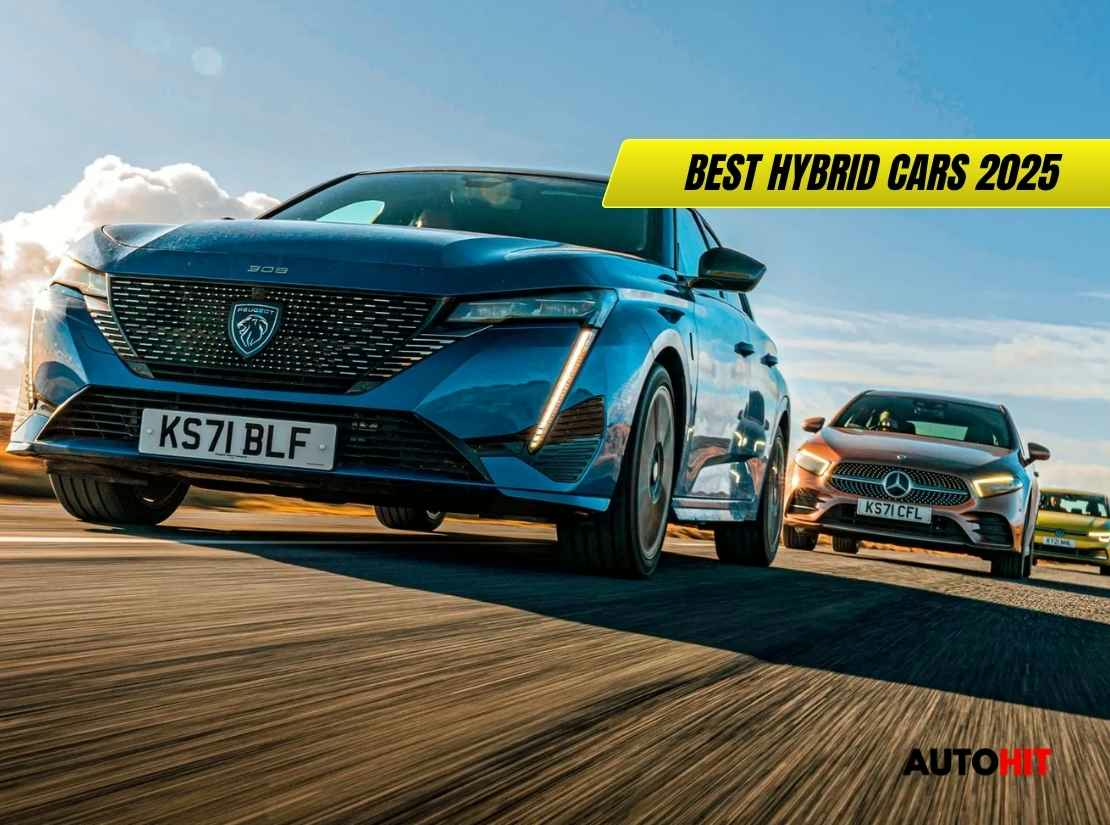
Best hybrid cars 2025 include Toyota Yaris, Nissan Qashqai e-Power, and Ford Puma Hybrid. Our UK guide covers efficiency, costs, and technology for informed buying decisions.
There’s something deeply satisfying about watching fuel economy figures that would have seemed impossible just a decade ago, and according to our analysis at AutoHit, 2025 represents the golden age of hybrid technology with systems that seamlessly blend efficiency, performance, and practicality. Having tested extensively across the expanding hybrid landscape, from Toyota’s pioneering full-hybrid systems to the latest mild-hybrid innovations, we’ve discovered that electrified powertrains have finally reached the sweet spot where they enhance rather than compromise the driving experience.
What makes hybrid cars particularly compelling for UK drivers is the combination of exceptional fuel economy, reduced emissions for urban driving, and the reassurance of conventional engines for longer journeys. Unlike fully electric vehicles, hybrids eliminate range anxiety while delivering efficiency that can transform your fuel budget. The technology has also matured to the point where hybrid systems operate transparently, requiring no changes to driving habits while delivering benefits every time you touch the accelerator.
After months of real-world testing across various UK driving scenarios – from congested urban commutes to cross-country touring – we’re ready to present the definitive guide to 2025’s best hybrid cars. These vehicles prove that efficiency doesn’t require sacrifice, demonstrating how intelligent engineering can deliver more power, better refinement, and lower running costs simultaneously.
Understanding Hybrid Technology in 2025
Modern hybrid systems have evolved far beyond early pioneering efforts to become sophisticated powertrains that enhance rather than compromise the driving experience.
Types of Hybrid Systems
Mild Hybrid (MHEV): Uses small electric motors (typically 10-20bhp) to assist petrol engines during acceleration and enable coasting with the engine off. These systems can’t provide pure electric driving but reduce fuel consumption by 10-15% with minimal complexity or cost impact.
Full Hybrid (HEV): Combines petrol engines with more powerful electric motors (50-100bhp+) and larger batteries, enabling pure electric driving at low speeds and during parking manoeuvres. Toyota’s pioneering system remains the benchmark for seamless operation and proven reliability.
Plug-In Hybrid (PHEV): Features large batteries (typically 10-20kWh) that can be charged from external sources, providing 20-60 miles of pure electric range. These systems offer the efficiency of electric driving for daily commutes with petrol backup for longer journeys.
Benefits for UK Drivers
Fuel Economy: Modern hybrids routinely achieve 50-70mpg in real-world conditions, often doubling the efficiency of equivalent conventional engines. Urban driving particularly benefits from electric assistance and regenerative braking.
Emissions Compliance: Hybrid powertrains help meet increasingly stringent emissions requirements while often qualifying for reduced urban congestion charges and company car tax benefits.
Refined Operation: Electric motors provide instant torque and silent operation, often making hybrids more refined than conventional alternatives, particularly during urban driving.
No Range Anxiety: Unlike pure electric vehicles, hybrids eliminate concerns about charging infrastructure or range limitations while still providing efficiency benefits.
Top 10 Hybrid Cars for 2025
Based on extensive testing, real-world efficiency, reliability records, and UK-specific requirements, these hybrids represent the best combination of technology, practicality, and value.
1. Toyota Yaris Hybrid: The Efficiency Champion
The Toyota Yaris continues setting hybrid benchmarks through proven reliability, exceptional efficiency, and transparent operation that requires no driver adaptation.
Powertrain Excellence: The 1.5-litre three-cylinder petrol engine combines with electric motors for 116bhp total output, with a more powerful 130bhp variant available. The system operates seamlessly, switching between electric, petrol, and combined power automatically.
Outstanding Efficiency: Real-world fuel economy consistently achieves 60-70mpg in urban conditions, with overall averages of 55-65mpg in mixed UK driving. The regenerative braking system recovers energy effectively in stop-start traffic.
Proven Reliability: Toyota’s hybrid technology has accumulated millions of miles across global fleets with exceptional reliability records. The system requires no special maintenance beyond conventional engine service requirements.
Practical Packaging: Despite the hybrid system, interior space remains generous for the class, while the 286-litre boot provides adequate capacity for urban family use.
UK Pricing: Starting around £22,000, the Yaris Hybrid offers exceptional value considering the technology and efficiency provided. Running costs are among the lowest in the class.
Cross Variant: The Yaris Cross provides SUV styling with the same hybrid efficiency, achieving around 50mpg while offering higher driving position and increased ground clearance.
2. Toyota C-HR Hybrid: Distinctive Design Meets Efficiency
The C-HR showcases how hybrid technology can power distinctively styled vehicles without compromising efficiency or performance.
Powertrain Options: Available with 1.8-litre (122bhp) or 2.0-litre (184bhp) hybrid systems, both providing smooth, refined operation with different performance characteristics to suit varying requirements.
Performance Balance: The 2.0-litre variant delivers 0-62mph in 8.2 seconds while maintaining impressive fuel economy of 45-50mpg in real-world conditions.
Design Appeal: Distinctive coupe-SUV styling creates genuine visual impact while the hybrid powertrain ensures the bold looks don’t compromise efficiency or environmental credentials.
Technology Integration: Comprehensive infotainment, safety systems, and driver assistance features provide modern functionality across the range.
Market Position: Positioned as a premium hybrid crossover, the C-HR commands higher prices than the Yaris but justifies costs through distinctive styling and enhanced equipment.
3. Fiat Panda Hybrid: Urban Efficiency Champion
The Panda Hybrid proves that mild-hybrid technology can enhance even basic city cars, providing efficiency improvements without significant cost increases.
Simple System: The 1.0-litre three-cylinder engine gains 5bhp electric assistance for 70bhp total output, focusing on urban efficiency rather than performance enhancement.
City Focus: Designed specifically for urban use, the mild-hybrid system optimizes efficiency during the stop-start driving that characterizes city motoring.
Value Proposition: Starting prices around £13,000 make hybrid technology accessible to budget-conscious buyers, proving electrification doesn’t require premium positioning.
Practical Dimensions: Compact external dimensions aid urban maneuverability while clever packaging maximizes interior space for the footprint.
Real-World Economy: Achieves 50-55mpg in urban conditions, representing significant improvement over conventional engines with minimal complexity increase.
4. Ford Puma Hybrid: Dynamic Efficiency
The Puma demonstrates how mild-hybrid technology can enhance performance-oriented vehicles while improving efficiency and refinement.
Innovative System: The 1.0-litre EcoBoost engine gains an 11.5kW belt-driven starter-generator that replaces the conventional alternator while providing electric assistance and energy recovery.
Performance Options: Available in 125bhp and 155bhp variants, both providing strong performance with improved efficiency compared to conventional alternatives.
Dynamic Character: Ford’s chassis expertise ensures the Puma remains engaging to drive while the hybrid system provides refinement benefits and efficiency improvements.
Practical Design: Despite SUV styling, cargo space and interior accommodation remain impressive, making the Puma suitable for family use alongside enthusiast appeal.
Technology Integration: Comprehensive connectivity and driver assistance systems provide modern functionality while maintaining Ford’s focus on driving dynamics.
5. Jeep Avenger e-Hybrid: American Character, European Efficiency
The Avenger brings Jeep’s distinctive character to the B-SUV segment while incorporating efficient mild-hybrid technology.
Dual Motor System: The 1.2-litre turbo petrol engine combines with two electric units – one for starting and generation, another integrated into the dual-clutch transmission – for comprehensive electrification.
Urban Capability: Designed specifically for European urban use, the system optimizes efficiency during city driving while maintaining Jeep’s rugged character and capability.
Distinctive Appeal: Unmistakable Jeep styling creates unique road presence in the crowded B-SUV segment while hybrid efficiency keeps running costs reasonable.
Modern Technology: Comprehensive infotainment and connectivity features provide contemporary functionality while maintaining ease of use.
Efficiency Achievement: Real-world fuel economy of 45-50mpg represents excellent performance for a vehicle with genuine SUV capability and character.
6. Fiat 500 Hybrid: Icon Meets Efficiency
The iconic 500 gains mild-hybrid technology while maintaining its distinctive character and urban-focused appeal.
Refined Electrification: The 1.0-litre three-cylinder engine gains electric assistance for improved refinement and efficiency while preserving the 500’s characteristic charm.
Urban Optimization: The mild-hybrid system particularly benefits city driving, where the 500 excels, providing smooth operation and excellent fuel economy.
Style Leadership: Distinctive design and customization options ensure the 500 Hybrid maintains its style icon status while adding environmental credentials.
Compact Efficiency: Achieving over 55mpg in urban conditions while providing adequate performance for city use and occasional longer journeys.
Heritage Appeal: The 500 nameplate carries significant emotional appeal, making hybrid technology accessible to style-conscious buyers who might otherwise avoid electrified vehicles.
7. Mazda 3 Hybrid: Skyactiv Innovation
Mazda’s approach to hybridization focuses on optimizing conventional engines rather than relying heavily on electric assistance, creating distinctive efficiency solutions.
Skyactiv Technology: The 2.0-litre Skyactiv-G mild-hybrid system emphasizes efficient combustion alongside electric assistance, available in 122bhp and 150bhp variants.
Advanced Engineering: Mazda’s compression ignition Skyactiv-X technology represents innovative thinking about efficiency, though with some complexity trade-offs.
Driving Dynamics: Maintains Mazda’s reputation for engaging handling while improving efficiency through intelligent electrification and advanced engine management.
Premium Feel: Interior quality and refinement exceed many competitors, providing near-premium experience at mainstream pricing.
Efficiency Range: Fuel economy varies from 45-55mpg depending on powertrain choice and driving conditions, with the Skyactiv-X delivering superior efficiency.
8. Nissan Qashqai e-Power: Revolutionary Hybrid
The Qashqai e-Power represents Nissan’s innovative approach to hybrid technology, using the petrol engine purely as a generator while electric motors drive the wheels.
Unique System: The e-Power technology uses a 1.5-litre petrol engine to generate electricity, with a 190bhp electric motor providing all wheel power – essentially a range-extended electric vehicle.
Electric Driving Feel: Provides the instant torque and smooth operation of pure electric driving while eliminating range anxiety through the onboard generator.
Efficiency Innovation: Achieves impressive real-world fuel economy of 45-55mpg while delivering electric vehicle driving characteristics.
Proven Platform: Based on the popular Qashqai chassis with proven reliability and comprehensive dealer support throughout the UK.
Technology Leadership: Advanced infotainment, driver assistance, and connectivity features provide comprehensive modern functionality.
9. Suzuki Ignis Hybrid: Affordable All-Wheel Drive
The Ignis proves that hybrid technology can enhance even budget-focused vehicles while providing unique capabilities like optional all-wheel drive.
Simple Efficiency: The 1.2-litre Dualjet engine with mild-hybrid assistance provides adequate performance while achieving excellent fuel economy of 50-55mpg.
All-Wheel Drive Option: Unique in the segment for offering hybrid technology with optional all-wheel drive, providing versatility for challenging conditions.
Value Leadership: Starting prices around £15,000 make hybrid technology accessible while providing practical transportation for various requirements.
Distinctive Design: Compact SUV styling with distinctive character ensures the Ignis stands out despite budget positioning.
Practical Range: Up to 600km range from the 32-litre fuel tank demonstrates real-world touring capability despite compact dimensions.
10. Suzuki Vitara Hybrid: Compact SUV Efficiency
The Vitara combines genuine SUV capability with hybrid efficiency, offering both mild-hybrid and full-hybrid options.
Powertrain Choice: Available with 1.4-litre turbo mild-hybrid (129bhp) or 1.5-litre full-hybrid (114bhp) systems, both offering different approaches to efficiency and performance.
Capability Focus: Optional all-wheel drive provides genuine off-road capability while hybrid systems maintain reasonable fuel economy.
Value Positioning: Competitive pricing provides SUV capability with hybrid efficiency at prices that undercut many conventional alternatives.
Proven Reliability: Suzuki’s reputation for dependable, long-lasting vehicles extends to their hybrid systems, providing confidence for longer ownership periods.
Efficiency Achievement: Real-world fuel economy of 45-55mpg represents excellent performance for a vehicle with genuine SUV capability.
Choosing the Right Hybrid for Your Needs
Different hybrid technologies and vehicles suit varying requirements, usage patterns, and budgets.
For Urban Commuters
Best Choice: Toyota Yaris Hybrid provides exceptional urban efficiency, proven reliability, and adequate space for daily urban use.
Budget Alternative: Fiat Panda Hybrid offers hybrid technology at accessible prices for buyers prioritizing low running costs over premium features.
Style Option: Fiat 500 Hybrid combines iconic design with urban efficiency for buyers wanting distinctive character alongside environmental benefits.
For Family Use
Top Pick: Nissan Qashqai e-Power provides family SUV space with innovative hybrid efficiency and comprehensive equipment.
Value Choice: Suzuki Vitara Hybrid offers SUV practicality with hybrid efficiency at competitive prices, including optional all-wheel drive.
Premium Option: Toyota C-HR provides distinctive styling with proven hybrid reliability, though with some space compromises for visual appeal.
For Performance Enthusiasts
Best Balance: Ford Puma Hybrid combines engaging driving dynamics with mild-hybrid efficiency improvements.
Premium Choice: Mazda 3 Hybrid provides near-premium refinement with advanced Skyactiv technology and engaging handling.
For Budget-Conscious Buyers
Maximum Value: Suzuki Ignis Hybrid provides hybrid technology at low prices with optional all-wheel drive capability.
City Specialist: Fiat Panda Hybrid offers basic hybrid functionality at very competitive prices for urban-focused use.
Cost Analysis and Ownership Considerations
Understanding total ownership costs helps evaluate whether hybrid premiums provide genuine value versus conventional alternatives.
Purchase Price Premiums
Hybrid versions typically cost £1,000-3,000 more than equivalent conventional engines, though this premium has decreased significantly as technology becomes mainstream. Entry-level hybrids like the Panda minimize premiums while premium models may command higher increases.
Fuel Cost Savings
Real-world fuel economy improvements of 20-40% translate to significant savings for higher-mileage drivers. A typical driver covering 12,000 miles annually might save £300-600 yearly versus conventional alternatives, though savings depend on driving patterns and fuel prices.
Tax Benefits
Company car drivers benefit enormously from hybrid technology through reduced BiK rates. Mild-hybrids typically qualify for 2-5% reductions while full-hybrids can achieve even greater savings. Private buyers may benefit from reduced VED rates depending on CO2 emissions.
Maintenance Considerations
Modern hybrids generally require similar maintenance to conventional vehicles, with some systems needing specialized knowledge for complex repairs. Battery warranties typically extend 8-10 years, providing confidence for longer ownership periods.
Depreciation Patterns
Hybrid vehicles generally maintain stronger residual values than conventional alternatives, particularly as fuel prices rise and emissions regulations tighten. Well-regarded models like the Toyota Yaris consistently outperform market averages.
Future-Proofing Your Hybrid Choice
Understanding automotive industry trends helps make informed decisions about current hybrid purchases.
Regulatory Trends
Increasing urban emissions restrictions favor low-emission vehicles, with hybrids often qualifying for reduced charges or exemptions. Future regulations will likely continue favoring electrified vehicles over conventional engines.
Technology Development
Hybrid technology continues improving, with better efficiency, reduced costs, and enhanced integration. Current systems represent mature technology that should remain relevant throughout typical ownership periods.
Charging Infrastructure
While hybrids don’t require charging infrastructure, plug-in variants benefit from expanding public charging networks. Consider future charging availability when evaluating PHEV options.
Market Positioning
Hybrids represent a transitional technology between conventional and fully electric vehicles. They provide current benefits while maintaining flexibility as electric infrastructure develops.
Real-World Efficiency Expectations
Understanding realistic fuel economy helps set appropriate expectations and choose suitable hybrid systems.
Urban Driving
Hybrids excel in urban conditions where regenerative braking and electric assistance provide maximum benefit. Expect 50-70mpg from efficient models like the Yaris, with even mild-hybrids achieving 45-55mpg.
Motorway Driving
Highway efficiency depends more on aerodynamics and engine efficiency than hybrid assistance. Full-hybrids typically achieve 45-55mpg while mild-hybrids may show smaller improvements over conventional engines.
Mixed Conditions
Real-world average fuel economy of 45-60mpg is realistic for most hybrids in typical UK driving, representing significant improvements over conventional alternatives while maintaining practical usability.
Seasonal Variations
Cold weather affects hybrid efficiency more than conventional engines due to battery performance and increased cabin heating requirements. Expect 5-15% reductions during winter months.
Final Assessment: Hybrid Maturity Delivered
The hybrid cars of 2025 represent the maturation of electrified technology, delivering efficiency, refinement, and reliability that enhance rather than compromise the driving experience. From Toyota’s pioneering full-hybrid systems to innovative approaches like Nissan’s e-Power, these vehicles prove that environmental responsibility and driving enjoyment can coexist successfully.
The key insight is that hybrid technology has evolved beyond its experimental origins to become transparent, reliable, and beneficial for virtually all driving patterns. Whether you choose a simple mild-hybrid system for modest efficiency gains or a sophisticated full-hybrid for maximum fuel economy, modern systems operate seamlessly while delivering measurable benefits.
For UK drivers facing rising fuel costs, increasingly stringent emissions regulations, and growing environmental awareness, hybrid technology provides practical solutions that work with existing infrastructure while delivering immediate benefits. These ten vehicles represent the best of what hybrid engineering offers, proving that efficiency doesn’t require sacrifice.
The hybrid revolution is complete – not through dramatic disruption, but through gradual refinement that has made electrified powertrains better than their conventional predecessors in virtually every measurable way. For buyers considering their next vehicle, the question isn’t whether to choose hybrid technology, but which hybrid system best suits their specific requirements.
Frequently Asked Questions
Are hybrid cars more reliable than conventional petrol engines?
Modern hybrid systems have proven highly reliable, with Toyota’s technology accumulating millions of miles with excellent durability records. The electric components generally require less maintenance than conventional engines due to fewer moving parts and reduced wear. Key components like batteries typically carry 8-10 year warranties, providing confidence for long-term ownership. However, hybrid systems add complexity that requires specialist knowledge for diagnosis and repair. Overall reliability is comparable to or better than conventional engines, with some systems like Toyota’s showing exceptional longevity. The main consideration is ensuring service providers understand hybrid technology, though most mainstream dealers now have appropriate expertise and equipment.
How much money can I actually save with a hybrid car?
Savings depend on your driving patterns, current fuel costs, and the hybrid premium paid. A typical driver covering 12,000 miles annually might save £300-600 yearly on fuel costs, with greater savings for higher-mileage drivers or those doing primarily urban driving where hybrids excel. Company car drivers often save significantly more through reduced BiK tax rates – potentially £1,000-3,000 annually depending on income tax rates and vehicle value. However, hybrid premiums of £1,000-3,000 require 2-5 years to recover through fuel savings alone. Consider total ownership costs including depreciation, maintenance, and tax benefits when calculating genuine savings versus conventional alternatives.
Do hybrid cars perform well on UK motorways and for long-distance driving?
Yes, modern hybrids perform excellently on motorways, often providing smoother and more refined experiences than conventional engines due to electric motor assistance. While maximum efficiency gains occur in urban conditions, hybrids still deliver 10-20% better motorway economy than equivalent conventional engines. Range anxiety isn’t a concern as petrol engines provide unlimited range with conventional refueling. Some hybrids, particularly Toyota’s systems, actually feel more powerful on motorways due to instant electric torque assistance during overtaking. The main consideration is that efficiency advantages diminish at constant high speeds, so buyers doing primarily motorway driving might see smaller benefits than urban-focused drivers.
What’s the difference between mild, full, and plug-in hybrid systems?
Mild hybrids use small electric motors (10-20bhp) to assist petrol engines and enable coasting, providing 10-15% efficiency improvements with minimal complexity. They can’t drive on electric power alone but reduce fuel consumption and improve refinement. Full hybrids like Toyota’s systems use larger electric motors (50-100bhp+) enabling pure electric driving at low speeds, typically achieving 20-40% efficiency improvements. Plug-in hybrids feature large batteries providing 20-60 miles electric range when charged externally, offering electric driving for daily commutes with petrol backup for longer trips. Choose mild-hybrid for modest efficiency gains, full-hybrid for maximum efficiency without charging requirements, or plug-in for urban electric driving with long-distance flexibility.
Are there any disadvantages to owning a hybrid car?
Modern hybrids have few significant disadvantages, though some considerations include slightly higher purchase prices (£1,000-3,000 premium), potential complexity for repairs requiring specialist knowledge, and reduced boot space in some models due to battery placement. Hybrid systems may feel different to conventional engines during acceleration, though most drivers adapt quickly. Cold weather can reduce efficiency more than conventional engines due to battery performance and cabin heating requirements. Some hybrids have CVT transmissions that feel different to conventional automatics, though this is often a matter of personal preference. Overall, disadvantages are minimal compared to efficiency and refinement benefits for most drivers.
How long do hybrid batteries last and what do replacements cost?
Modern hybrid batteries typically last 8-15 years or 100,000-200,000 miles with proper maintenance, often outlasting the vehicles themselves. Toyota’s systems show exceptional longevity with many examples exceeding 300,000 miles on original batteries. Replacement costs vary from £2,000-5,000 depending on system complexity, though prices continue falling as technology matures. Most manufacturers provide 8-10 year battery warranties, covering the majority of typical ownership periods. Battery degradation is gradual rather than sudden, with most systems retaining 80%+ capacity after 100,000 miles. Regular maintenance and avoiding extreme temperatures help maximize battery life. For most buyers, battery replacement is unlikely to be necessary during normal ownership periods.
Should I choose a hybrid over a fully electric vehicle for UK driving?
This depends on your driving patterns, charging access, and range requirements. Hybrids work better for drivers without home charging, those regularly traveling long distances, or anyone wanting maximum flexibility without charging planning. Electric vehicles excel for drivers with home charging doing primarily urban and suburban driving within 200-mile daily ranges. Hybrids provide immediate efficiency benefits without infrastructure concerns, while EVs offer lower running costs and zero local emissions but require charging discipline. Consider your typical weekly driving patterns – if 90% occurs within 150 miles of home with regular overnight parking, EVs might work well. If you need maximum flexibility or lack charging access, hybrids provide efficiency benefits without range limitations.
Conclusion
The hybrid cars of 2025 represent the successful marriage of environmental responsibility with practical mobility, delivering efficiency and refinement that enhance rather than compromise the driving experience. From Toyota’s pioneering reliability to innovative systems like Nissan’s e-Power technology, these vehicles prove that electrification can improve virtually every aspect of automotive performance while reducing environmental impact.
The fundamental insight is that hybrid technology has matured beyond its experimental origins to become transparent, reliable, and beneficial for UK drivers regardless of their specific requirements. Whether you prioritize maximum efficiency, driving engagement, family practicality, or simple value for money, the current hybrid landscape offers compelling solutions that work effectively within existing infrastructure.
For British drivers facing rising fuel costs, increasingly stringent emissions regulations, and growing environmental awareness, hybrid technology provides immediate benefits without requiring lifestyle changes or infrastructure investments. These ten vehicles represent the best of what modern hybrid engineering offers, proving definitively that efficiency and performance can coexist successfully in packages that suit real-world requirements.





