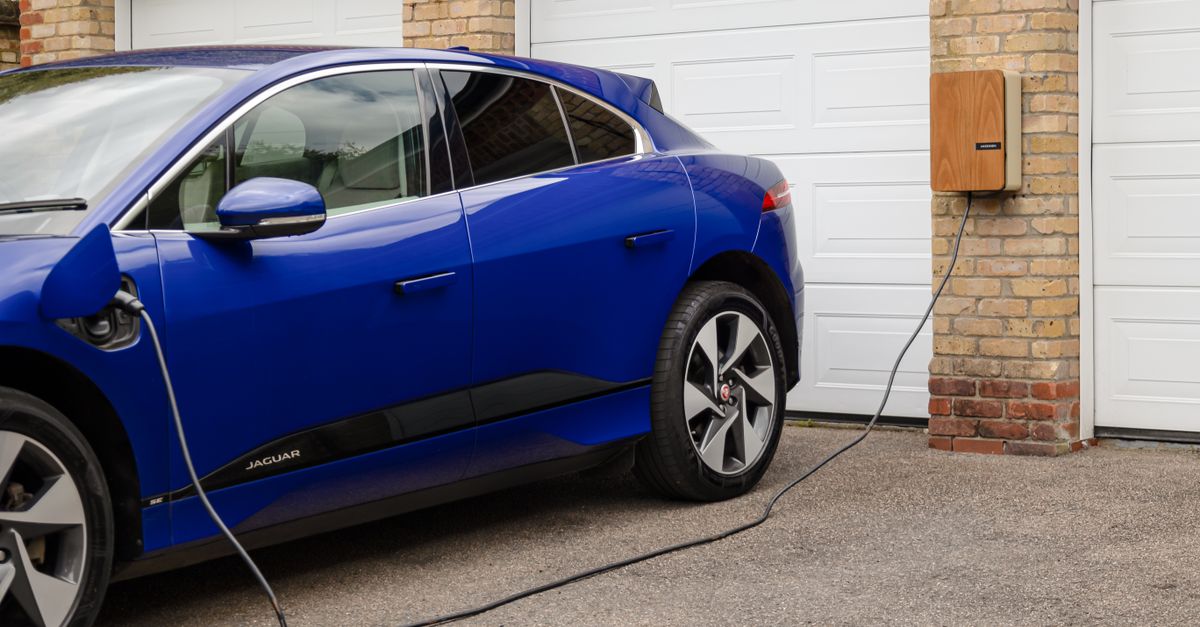
An electric car that can send power back to the electricity network could become more than a means of transport. Vehicle-to-grid (V2G) technology allows a compatible car to return stored electricity to the grid, while vehicle-to-home (V2H) allows the battery to supply power to a property.
For UK drivers, the attraction is clear: charge the car when electricity is cheaper, then use or export that stored energy when prices or demand are higher. However, V2G is not yet a universal feature of electric cars, and the potential saving depends on the vehicle, charger, tariff and energy-service arrangement involved.
What do V2G and V2H mean?
The terms describe two related but different uses for an electric car’s battery:
| System | What it does |
|---|---|
| Vehicle-to-grid (V2G) | Sends stored electricity from the car back to the wider electricity grid. |
| Vehicle-to-home (V2H) | Uses the car’s battery to supply electricity to the property. |
The International Energy Agency’s overview of V2G technology explains how a car can be charged and discharged according to electricity prices or grid demand. A PG&E explainer on using an EV to power a home also sets out the distinction between returning power to the grid and using it within a property.
That means V2G is more than simply plugging in overnight. The vehicle must be able to accept electricity in both directions, with a suitable bidirectional charger and a system that controls when charging and discharging take place.
How could V2G reduce an electricity bill?
The basic idea is to charge the car during a period when electricity costs less, then discharge the battery when prices or demand are higher. In a V2H arrangement, the stored electricity could supply the property at a time when it might otherwise need to draw more power from the grid.
The potential benefit is not limited to the individual household. Shifting charging away from busy periods could help manage peak demand and reduce pressure on electricity networks. The IEA and UK parliamentary evidence both identify this flexibility as one of the reasons V2G could become valuable as more transport and household energy use is electrified.
The exact financial result will depend on the tariff and the agreement with the energy provider or V2G service. A car that is technically capable of bidirectional charging will not automatically produce a saving simply because it is connected to a wallbox.
What do the UK figures show?
Evidence published by the House of Lords Environment and Climate Change Committee cites average annual energy-bill savings of £420 among more than 300 V2G customers. The same evidence refers to a government estimate that savings could reach up to £1,000 a year. The figures are discussed in the committee’s material on the UK’s electric-vehicle strategy, available here.
Those numbers should be treated as examples from particular V2G arrangements, not as a guaranteed return for every UK EV owner. The evidence itself highlights the difference between an average observed saving and the higher potential estimate. Electricity prices, household usage, the vehicle’s compatibility and the terms of the service will all affect the outcome.
What does a UK driver need?
A household considering V2G would need several pieces to work together:
- a car with V2G or V2H capability;
- a compatible bidirectional charger;
- a suitable electricity tariff or energy-service arrangement; and
- rules and infrastructure that allow electricity to be exported to the grid where V2G is being used.
This is why a conventional electric car and a standard home charger should not be assumed to support two-way charging. Availability remains limited rather than universal, and a manufacturer’s ability to sell an EV does not by itself confirm that V2G is available with every charger, tariff or UK energy provider.
Before signing up, buyers should ask which exact vehicle and charger combinations are supported, how the service calculates any saving, and whether the arrangement is V2G, V2H or ordinary smart charging. They should also check the conditions under which the car may be charged or discharged, particularly if the vehicle needs to be ready for a journey at a particular time.
Could V2G help the electricity network?
If large numbers of cars can delay charging or return electricity during periods of high demand, the network could gain a flexible source of energy storage. The IEA says V2G could help shift demand, while the House of Lords evidence points to the possibility of deferring some grid investment.
That wider benefit will require more than willing car owners. Suitable chargers, clear regulation, workable market arrangements and energy companies offering compatible services will all be needed before V2G can operate at scale.
The verdict for EV buyers
V2G and V2H could turn an electric car’s battery into a useful part of a home’s energy system, with the possibility of lowering electricity costs as well as supporting the wider grid. The £420 average saving cited in parliamentary evidence is encouraging, and the £1,000 government estimate shows why the technology is attracting attention.
Neither figure should be treated as a promise. For now, UK buyers should regard V2G savings as a potential benefit to verify alongside the car, charger and tariff—not as a standard feature of every electric vehicle.