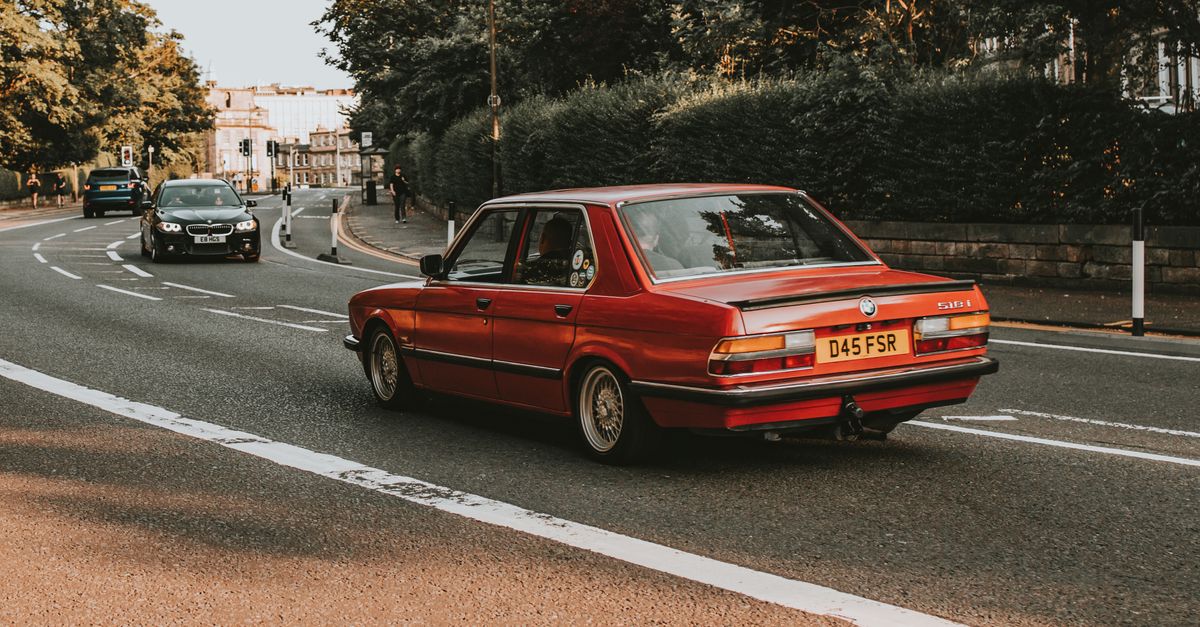
Number plates may look like a small styling detail, but their appearance and construction are tightly regulated in the UK. The rules cover the background colour, reflective material, lettering, spacing and even the markings supplied with the plate. That matters when replacing a damaged plate, ordering a customised design or fitting one to a motorcycle.
A plate altered to make a registration resemble a word can be non-compliant even when the individual characters look broadly correct. The safest approach is to treat a number plate as a regulated identification item, not an area for unrestricted personalisation.
What every standard UK plate must show
Under the current government rules, number plates must:
- use reflective material;
- show black characters on a white background at the front;
- show black characters on a yellow background at the rear; and
- have no patterned background.
They must also show the plate supplier’s details and the relevant British Standard marking. Plates fitted after 1 September 2021 must generally display BS AU 145e. The UK government’s number-plate guidance sets out these requirements, while the Road Vehicles (Display of Registration Marks) Regulations provide the underlying legal framework.
These requirements apply to the plate itself, not just to the registration allocated to the vehicle. A correctly issued registration can still be displayed on a plate with the wrong colour, markings or construction.
The legal font and standard dimensions
The prescribed lettering is commonly known as the Charles Wright font. For ordinary cars and large vehicles, the standard character height is 79mm. Most characters are 50mm wide, with a 14mm stroke. The usual gap between individual characters is 11mm, while the separation between the age identifier and the remaining registration characters is 33mm.
Those measurements are summarised in the British Number Plate Manufacturers Association’s guide to legal fonts and reflected in the DVSA MOT inspection manual.
The law does not require every character to look identical to a particular computer typeface, but it does require the prescribed font or something substantially similar. Characters must remain clearly distinguishable. A plate that uses distorted lettering to make one character resemble another is therefore not made legal simply because the registration is technically correct.
Why spacing is a legal issue
Spacing is often changed on personalised or novelty-looking plates to create a word or a different visual grouping. That is precisely where a plate can fall outside the rules. Moving characters closer together, widening a gap or removing the normal separation between registration groups may make the display non-compliant.
The relevant test is not whether the result looks tidy from a short distance. The characters and their arrangement must remain clear and follow the prescribed layout. The MOT manual’s identification section is useful here because it gives testers a reference for the font, character form and spacing requirements.
This also means a raised or fashionable-looking plate is not automatically legal or illegal based on appearance alone. Its dimensions, character shape, visibility and required markings still have to comply.
Motorcycles follow a different layout
Motorcycles and motor tricycles have their own number-plate rules. Vehicles in these categories registered on or after 1 September 2001 must display a rear plate only, with the registration characters arranged over two lines. A front plate is not required for those vehicles.
Older motorcycles and tricycles may also display a front plate, although it is not required. The government’s number-plate guidance and the MOT inspection manual for motorcycles explain the distinction.
In practice, a motorcycle plate should not simply be treated as a smaller car plate. The vehicle’s registration date and the required two-line rear arrangement are important when ordering a replacement.
Are 3D characters, green flashes and flags legal?
Three-dimensional raised characters can be legal. Their presence alone does not make a plate unlawful, but the plate must still meet the requirements for character shape, visibility, material and markings.
A green flash may be displayed for a zero-emission vehicle. Certain flags, symbols and national identifiers may also be permitted, but the regulations restrict additional markings. They should not be confused with permission to add arbitrary graphics or decorative features.
The characters themselves must not be reflective or removable. Newer plates must also use a single shade of black for the characters. These details are included in the government guidance and the published regulations.
A quick check before buying a replacement
Before fitting a new plate, check that:
- the front or rear background colour is correct;
- the material is reflective and the background has no pattern;
- the characters use the prescribed or a substantially similar font;
- the character height, stroke and spacing have not been altered to create a word or unusual layout;
- the supplier’s details and the relevant British Standard marking are present; and
- a motorcycle plate follows the correct two-line rear layout for the vehicle’s registration date.
For a plate fitted after 1 September 2021, check for the generally applicable BS AU 145e marking. If the vehicle is an older model, an import or a motorcycle with unusual construction, the exact rules may depend on its registration date and specification. The DVLA’s INF104 guide to vehicle registration numbers and number plates is a useful additional reference.
The main point is simple: legal number plates are standardised for readability and identification. A different finish or raised character may be acceptable, but changing the font, spacing, colour or required markings to achieve a particular look can put the plate outside the rules.
Source 1 · Source 2 · Source 3 · Source 4 · Source 5 · Source 6 · Source 7 · Source 8