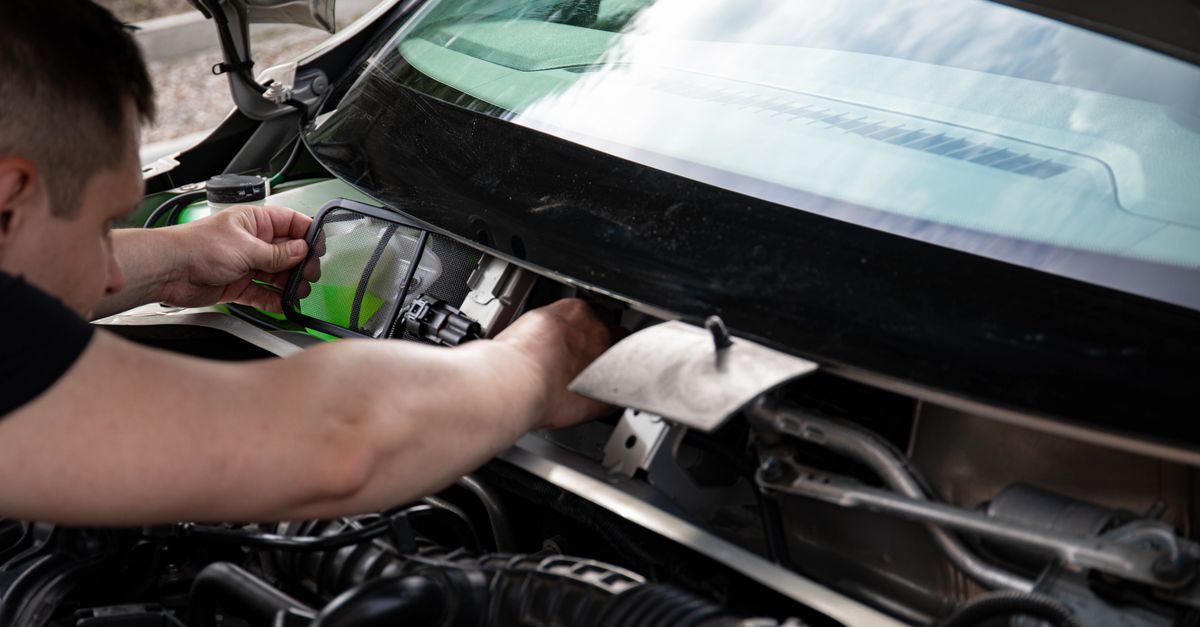
A small stone chip does not automatically mean a new windscreen. It does mean the glass should be assessed promptly. Moisture, dirt, frost, vibration and temperature changes can worsen the damage, turning a repairable chip into a replacement job, according to Motability’s windscreen and glass guidance and the RAC’s advice on damaged windscreens.
For UK drivers, size is only part of the answer. The damage’s depth, position, proximity to the windscreen edge, whether cracks have spread and whether it affects the driver’s view all matter. A qualified windscreen technician must make the final repair-or-replacement assessment.
When a chip may be repairable
A small, localised chip may be suitable for a resin repair when it is not too large, deep or extensive and sits away from the driver’s primary viewing area and the edge of the glass. Damage without multiple or extensive cracks is generally more likely to be repairable. Halfords’ windscreen chip repair guidance and the RAC’s windscreen advice both emphasise that the final decision depends on the damage’s size and location.
That means an online size guide should not be treated as a diagnosis. Two chips of a similar size can have different outcomes if one is deeper, closer to the edge or directly in the driver’s line of sight.
When replacement is more likely
A full windscreen replacement is more likely when the damage:
- sits in the driver’s line of sight;
- is close to the edge of the windscreen;
- is too large or deep for a simple repair;
- has spread into a long, multiple or extensive crack; or
- compromises visibility or the safe use of the vehicle.
The RAC’s windscreen replacement guidance and its advice on damaged windscreens identify these situations as more likely to require replacement rather than a straightforward repair. In practical terms, replacement is the route when a technician decides the damage cannot be repaired safely.
How the MOT limits fit in
The commonly cited UK MOT guidance gives drivers useful warning figures. Guidance from Motability, Halfords and Fleet Motor Glass states that:
- damage greater than 10mm in the driver’s primary viewing area is unacceptable; and
- damage up to 40mm elsewhere in the area swept by the wipers may be permitted, provided the windscreen remains safe and the driver’s view is not significantly affected.
Those figures are MOT guidance, not a guarantee that the glass is safe to ignore or that it can be repaired. A smaller defect may still need replacement because of its depth or position, while damage within the cited limit still deserves professional assessment.
What to do after a chip or crack appears
- Arrange an assessment promptly. Delaying can allow dirt, moisture, frost, vibration or temperature changes to worsen the damage.
- Do not continue driving if visibility or safety is compromised. The RAC warns that damaged glass which obstructs the road view can create safety, legal and roadworthiness problems.
- Check the insurance policy before booking work. Windscreen repair or replacement may be covered separately, with its own excess and a requirement to use an approved repairer. The RAC and Motability both advise checking the policy details.
- Let the technician make the repair-or-replacement decision. The MOT measurements can indicate urgency, but they cannot account for every factor affecting the glass.
The bottom line
A small, isolated chip away from the driver’s view and the windscreen edge may be repairable. Damage in the primary viewing area, close to the edge, deep within the glass or spreading into multiple cracks is more likely to need a replacement. The safest approach is to have any new damage assessed early, before a potentially repairable chip becomes a larger and more disruptive job.