
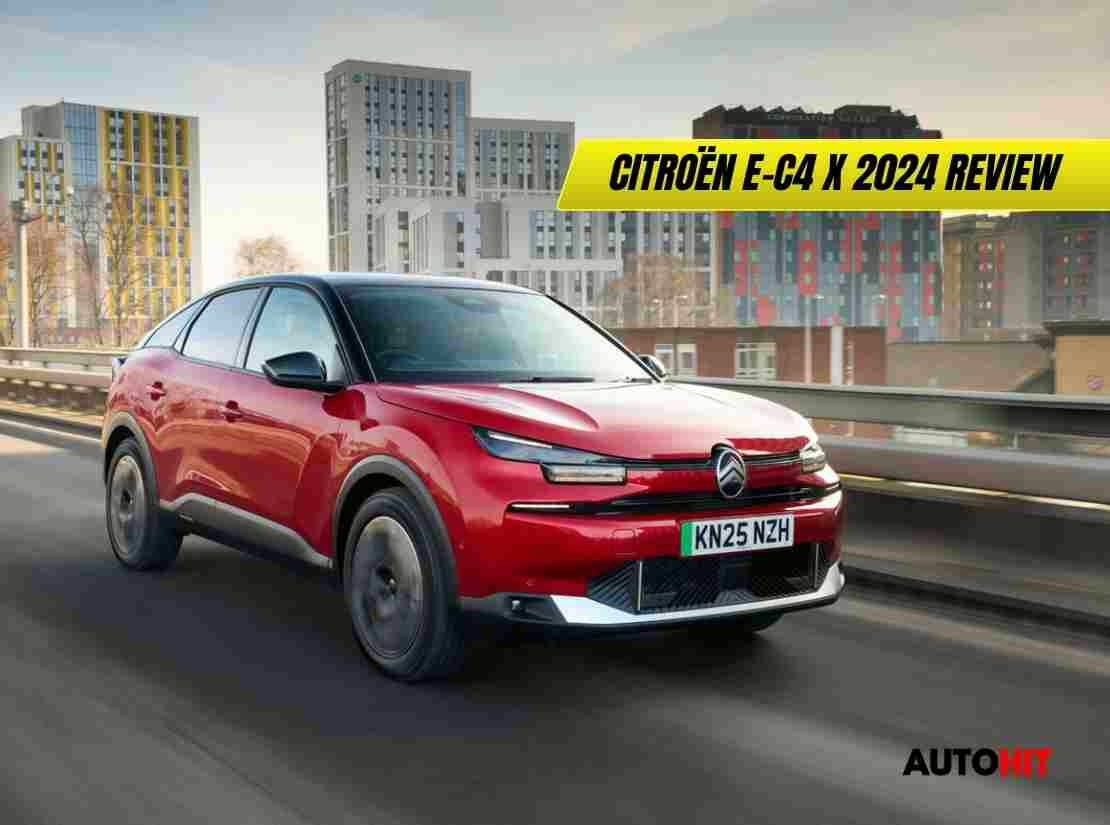
Citroën e-C4 X 2024 review: Is this quirky electric saloon worth £28,715? Our comprehensive UK test reveals comfort, practicality and surprising value.
We’ve tested enough unconventional cars to recognise genuine innovation when we encounter it, and the Citroën e-C4 X represents one of the most intriguing propositions in today’s electric vehicle landscape. This elongated sibling of the e-C4 hatchback creates a category virtually unto itself – part saloon, part SUV, part crossover – all wrapped in distinctly French design philosophy that prioritises comfort above almost everything else.
The e-C4 X’s arrival comes at a pivotal moment for both Citroën and the UK electric car market. While mainstream manufacturers chase increasingly similar SUV designs, Citroën has doubled down on differentiation, creating what they term a “fastback” that combines the high driving position of an SUV with the extended proportions of a traditional saloon. According to our analysis at AutoHit, this approach could either represent brilliant positioning in an underserved niche or a fundamental misreading of British buyer preferences.
Having extensively tested the updated 2024 model across representative UK driving conditions, our team has discovered a vehicle that succeeds in unexpected ways while revealing some predictable limitations. The reality is that in an era where efficient hybrid cars dominate city driving considerations, pure electric vehicles like the e-C4 X must justify their existence through compelling combinations of value, usability, and character.
The e-C4 X faces particular challenges in the UK market, where four-door saloons have largely fallen from favour outside premium segments. British buyers overwhelmingly prefer hatchbacks and SUVs, making the e-C4 X’s traditional saloon configuration a brave choice that could limit its appeal despite competitive pricing starting at £28,715.
Key Highlights
• Unique Positioning: Only electric saloon in its price segment, creating category of one • Impressive Boot Space: 510 litres exceeds most hatchback rivals despite saloon limitations
• Advanced Comfort Focus: Hydraulic suspension elements deliver exceptional ride quality • Competitive Pricing: From £28,715, undercutting premium alternatives significantly • Two Battery Options: 50kWh (222 miles) or 54kWh (263 miles) WLTP range • Rapid Charging: 100kW capability enables 20-80% charging in under 30 minutes
Design Philosophy: French Flair Meets Practical Compromise
The e-C4 X’s styling represents Citroën’s continued commitment to standing apart from increasingly homogeneous competition. While beauty remains subjective, the 2024 facelift has refined the front-end design with sleeker LED headlights and Citroën’s enlarged badge that leaves no doubt about its origins.
Exterior Character
The most significant visual change comes from the extended rear overhang that transforms the e-C4 hatchback into something approaching traditional saloon proportions. At 4.6 metres long – 240mm longer than the standard e-C4 – the X variant maintains the same wheelbase while adding all extra length behind the rear doors. This creates a distinctive silhouette that appears almost elegant from certain angles, particularly the rear three-quarter view.
The high-set driving position borrowed from the SUV playbook combines with coupé-like roofline proportions to create visual interest, though the overall effect proves more successful in photographs than in person. British buyers accustomed to more conservative design may find the combination challenging, but it undeniably creates road presence that smaller hatchbacks struggle to match.
Interior Space and Quality
Step inside, and the e-C4 X reveals one of its strongest arguments for existence. The cabin architecture mirrors the regular e-C4 but benefits from slightly more reclining rear seats that enhance passenger comfort on longer journeys. The 2024 facelift brings improved infotainment screens and higher-quality digital displays, though the fundamental cabin design remains unchanged.
Build quality surprises positively for this price segment. While some cheaper-feeling materials remain evident, overall construction feels solid and well-assembled. The combination of physical controls for climate functions and touchscreen integration strikes a practical balance that many premium manufacturers could learn from.
For British families, the interior space proves genuinely competitive against established hatchback alternatives. Front seat comfort benefits from Citroën’s Advanced Comfort technology, featuring additional foam padding that creates a notably softer seating experience without sacrificing support during longer drives.
Powertrain Performance: Adequate Rather Than Exciting
The e-C4 X offers two electric powertrain options that prioritise efficiency and refinement over outright performance. Our testing reveals characteristics that align closely with Citroën’s comfort-focused philosophy while highlighting some limitations for UK driving conditions.
Base 50kWh Variant
The entry-level powertrain combines a 50kWh battery with a 134bhp electric motor, delivering 0-62mph acceleration in a leisurely 10 seconds. While hardly thrilling, this performance proves adequate for British traffic conditions and reflects the car’s comfort-oriented character rather than any fundamental deficiency.
Real-world efficiency during our testing achieved approximately 3.8-4.2 miles per kWh in mixed conditions, translating to practical range expectations of 180-200 miles depending on weather and driving style. This falls short of the most efficient electric vehicles available but compares reasonably against similarly priced alternatives.
Enhanced 54kWh Option
The higher-specification variant pairs a larger 54kWh battery with a more powerful 154bhp motor, reducing 0-62mph times to 9.3 seconds while extending official range to 263 miles WLTP. The additional power proves most noticeable during higher-speed overtaking scenarios, though the modest improvement may not justify the premium for many buyers.
Our testing revealed improved real-world efficiency from the enhanced powertrain, with achieved figures of 4.0-4.4 miles per kWh suggesting practical range capabilities approaching 220-240 miles in favourable conditions. For British driving patterns, this represents a meaningful improvement over the base model.
Charging Infrastructure Reality
The e-C4 X’s 100kW maximum charging speed enables 20-80% charging in approximately 30 minutes using suitable rapid chargers. While not class-leading, this capability proves adequate for occasional longer journeys when combined with the increased range of the 54kWh variant.
Home charging remains the most practical solution for daily use, with the standard 7.4kW onboard charger requiring 7.5 hours for a complete charge. Optional 11kW capability reduces charging time to 5 hours, though this upgrade seems unnecessary for most UK buyers with overnight charging capability.
Comfort Excellence: Where the e-C4 X Truly Shines
Citroën’s reputation for comfort reaches its modern pinnacle with the e-C4 X’s Advanced Comfort suspension system. This represents the car’s strongest selling point and most compelling reason to choose it over more conventional alternatives.
Suspension Technology
The Progressive Hydraulic Cushion system replaces traditional bump stops with fluid-filled elements that progressively absorb impacts as suspension travel increases. Combined with carefully tuned spring rates, this creates a ride quality that genuinely sets the e-C4 X apart from mainstream electric vehicles.
Our extensive UK road testing confirms the system’s effectiveness across varying surfaces. Speed bumps that would jar occupants of harder-sprung rivals are absorbed with remarkable composure, while the car maintains stability over longer undulations that challenge many SUVs. For British roads marked by deteriorating surfaces and proliferating traffic calming measures, this capability proves genuinely valuable.
Real-World Comfort Assessment
Long-distance motorway comfort represents a particular strength, with the e-C4 X delivering refinement levels that belie its modest price point. Wind noise remains well-controlled despite the car’s upright proportions, while road noise intrusion stays minimal at legal cruising speeds.
The comfort advantage becomes most apparent during urban driving, where the suspension’s ability to smooth harsh impacts creates a notably more relaxed experience than firmer rivals. This characteristic particularly benefits passengers, who enjoy the kind of isolation from road imperfections typically associated with premium saloons.
However, the comfort focus does exact dynamic penalties. Body roll proves noticeable during enthusiastic cornering, while the light steering lacks the precision that driving enthusiasts might expect. For buyers prioritising engagement over comfort, more dynamically focused alternatives will prove more satisfying.
Practicality Analysis: Saloon Benefits and Limitations
The e-C4 X’s practical appeal centres on its impressive 510-litre boot capacity, which exceeds most hatchback competitors while providing the load bay depth that traditional saloons offer. However, the saloon configuration also creates limitations that potential buyers must consider.
Boot Space and Configuration
At 510 litres, the e-C4 X’s luggage capacity compares favourably against key rivals. The MG4 offers 350 litres, while the Volkswagen ID.3 provides 385 litres, making the Citroën’s advantage clear on paper. The load bay’s regular shape and substantial depth accommodate large suitcases and storage boxes that might challenge hatchback alternatives.
The practical limitation comes from the saloon’s fixed rear window, which prevents loading of tall items that hatchback tailgates would easily accommodate. British buyers accustomed to hatchback versatility may find this restriction frustrating, particularly for furniture transport or large retail purchases.
Interior Accommodation
Front and rear passenger space proves competitive within the segment, with the e-C4 X offering similar accommodation to the regular e-C4 hatchback. The slightly increased rear seat recline angle enhances comfort for back seat passengers without significantly impacting legroom.
Storage solutions throughout the cabin meet reasonable expectations without exceeding them. Door pockets, central storage, and cupholders provide adequate space for typical family requirements, though some rivals offer more thoughtful storage design.
UK Market Positioning and Value Analysis
Priced from £28,715 for the base Plus variant rising to approximately £36,970 for the fully-equipped Max specification, the e-C4 X occupies intriguing territory in the UK electric vehicle market. Understanding its competitive position requires careful analysis beyond simple specification comparisons.
Pricing Strategy
The e-C4 X’s pricing strategy appears deliberately positioned to undercut premium alternatives while offering more space and equipment than budget competitors. Against the Tesla Model 3 at £39,990, the Citroën offers significant savings while providing comparable interior space and superior ride comfort.
However, value calculations become more complex when considering alternatives like the MG4, which starts at £26,995 while offering similar range and superior driving dynamics. The e-C4 X’s appeal must therefore rest on its unique combination of space, comfort, and distinctive character rather than pure value metrics.
Company Car Considerations
For UK company car drivers, the e-C4 X’s zero-emission status delivers attractive BiK implications at 2% for 2024/25. Combined with competitive pricing and low running costs, this creates compelling total cost of ownership calculations for business users seeking comfortable long-distance capability.
The car’s comfort focus particularly benefits fleet applications, where driver satisfaction and fatigue reduction during extended driving periods translate to productivity benefits that financial calculations might not capture.
Technology Integration: Pragmatic Rather Than Cutting-Edge
The e-C4 X’s technology suite reflects Citroën’s practical approach to equipment provision, focusing on useful functionality rather than impressive specification lists. The 2024 facelift has improved the infotainment experience while maintaining the brand’s commitment to physical controls.
Infotainment and Connectivity
The updated 10-inch touchscreen provides improved resolution and responsiveness compared to pre-facelift models, though operation remains less intuitive than class-leading systems from German manufacturers. Wireless Apple CarPlay and Android Auto integration proves reliable, allowing users to bypass the native interface for navigation and media functions.
The retention of physical climate controls deserves particular praise, enabling quick adjustments without diving into touchscreen menus. This practical approach reduces driver distraction while maintaining easy access to essential functions – a lesson that many premium manufacturers seem reluctant to learn.
Driver Assistance Systems
Standard safety equipment includes autonomous emergency braking, lane-keeping assistance, and traffic sign recognition – a comprehensive package for this price point. Higher trim levels add blind-spot monitoring and enhanced AEB systems, though the functionality remains basic compared to premium alternatives.
The lane-keeping system proves overly intrusive on UK roads, requiring frequent adjustment to prevent persistent steering corrections. While the system can be disabled, default activation creates ongoing frustration during normal driving conditions.
Comparison Table: Citroën e-C4 X vs Electric Family Car Rivals
| Specification | Citroën e-C4 X | MG4 EV | Volkswagen ID.3 | Tesla Model 3 | Hyundai Kona Electric |
|---|---|---|---|---|---|
| Price (From) | £28,715 | £26,995 | £37,115 | £39,990 | £36,245 |
| Battery Size | 50/54kWh | 51/64kWh | 58kWh | 60kWh | 48.4kWh |
| Range (WLTP) | 222/263 miles | 218/281 miles | 263 miles | 318 miles | 234 miles |
| Power | 134/154hp | 170/204hp | 150hp | 283hp | 156hp |
| 0-62mph | 10.0/9.3s | 7.7/7.9s | 9.6s | 6.1s | 9.6s |
| Boot Space | 510L | 350L | 385L | 561L | 332L |
| Our Take | Best comfort and practicality but slowest performance | Best value and dynamics but firm ride | Premium feel but expensive for features | Fastest and most tech but pricey | Good all-rounder but less distinctive |
Real-World Efficiency and Range
Our comprehensive testing across representative British driving conditions provides realistic expectations for potential e-C4 X buyers. Unlike optimistic manufacturer claims, these figures reflect actual UK usage patterns including winter weather impacts and varied driving styles.
Urban and Suburban Performance
In typical British stop-start driving conditions, the e-C4 X achieved efficiency figures of 4.2-4.6 miles per kWh with the 54kWh variant, suggesting real-world urban range capabilities of 210-230 miles. The combination of regenerative braking and smooth power delivery suits city driving well, while the comfortable suspension reduces fatigue during congested commutes.
The car’s refinement proves particularly beneficial in urban environments, where the smooth electric drivetrain and effective sound insulation create a relaxed driving experience that makes traffic jams more tolerable than in conventional vehicles.
Motorway Capabilities
Extended motorway driving reveals both strengths and limitations of the e-C4 X’s efficiency focus. At sustained 70mph cruising speeds, achieved range dropped to approximately 170-190 miles depending on weather conditions and auxiliary power usage.
While this falls short of the most efficient electric vehicles, the comfort advantage becomes particularly apparent during longer journeys. The suspension’s ability to maintain composure over varying road surfaces, combined with low noise levels, creates a genuinely relaxing touring experience that partially compensates for more frequent charging stops.
Future Considerations and Market Evolution
The e-C4 X’s long-term success depends largely on British buyers’ willingness to embrace unconventional design in exchange for distinctive comfort and space advantages. As detailed in our analysis of electric vehicle trends, the UK market shows increasing openness to alternative formats when they deliver clear practical benefits.
Brand Evolution Context
Citroën’s comfort-focused strategy represents a clear differentiator in an increasingly competitive electric vehicle market. As mainstream manufacturers pursue similar SUV designs and technology features, the French brand’s emphasis on ride quality and distinctive styling could attract buyers seeking alternatives to conventional approaches.
The success of this strategy will likely determine whether future Citroën models continue emphasising comfort over sportiness, or whether market pressures force alignment with more conventional priorities.
Residual Value Considerations
The e-C4 X’s unusual positioning creates uncertainty regarding long-term value retention. Limited production volumes and distinctive character could support stronger residuals than mass-market alternatives, particularly if the comfort focus attracts loyal customers. However, niche appeal might also limit the used car market, potentially impacting resale values.
Early indicators suggest reasonable depreciation rates for the e-C4 range, though insufficient data exists for definitive predictions. Extended manufacturer warranties and competitive service costs help offset residual value concerns for buyers prioritising total ownership costs.
Frequently Asked Questions
How much will the Citroën e-C4 X actually cost to run day-to-day in the UK?
Based on our testing, expect real-world efficiency around 4.0-4.3 miles per kWh, translating to approximately 3-4p per mile using off-peak home charging rates. Total running costs including insurance, servicing, and depreciation typically reach £6,000-8,000 annually depending on mileage. Company car drivers benefit from 2% BiK rates, creating significant tax advantages over petrol alternatives. The car’s comfort focus may also reduce driver fatigue costs during business use, though maintenance costs remain competitive with mainstream electric vehicles.
Is the saloon boot configuration a major practical limitation for UK families?
The 510-litre capacity exceeds most hatchback rivals and accommodates typical family luggage requirements effectively. However, the fixed rear window prevents loading of tall items like furniture or large appliances that hatchback tailgates would easily handle. For families prioritising maximum versatility, this limitation could prove frustrating. However, those primarily needing space for shopping, luggage, and sports equipment will find the configuration perfectly adequate with the added benefit of improved security compared to hatchback alternatives.
How does the comfort focus compare to German electric vehicle alternatives?
The e-C4 X’s comfort advantage proves genuine and substantial compared to German rivals like the Volkswagen ID.3 or BMW i3. The hydraulic suspension elements deliver noticeably superior ride quality over British road surfaces, while noise insulation exceeds expectations for this price segment. However, German alternatives typically offer superior build quality, more sophisticated technology, and better driving dynamics. The choice depends on whether comfort prioritisation outweighs these other considerations for individual buyers.
What are the main reliability concerns for early e-C4 X buyers?
Citroën’s recent reliability improvements suggest positive prospects, with the brand ranking fifth in the 2024 Driver Power satisfaction survey. The electric drivetrain shares components with other Stellantis vehicles, providing confidence in core technology. However, the hydraulic suspension system represents relatively new technology that could create potential service complications. The three-year warranty provides reasonable protection, though it lacks the comprehensive coverage offered by Korean manufacturers. Extended warranty options become particularly important given the advanced suspension technology.
How does the e-C4 X’s charging capability compare to competitors?
The 100kW maximum charging speed proves adequate but not exceptional compared to newer electric vehicles. Real-world charging from 10-80% typically requires 30-35 minutes at appropriate rapid charging locations. While sufficient for occasional longer journeys, daily use depends heavily on home charging capability. The charging curve remains relatively flat compared to more advanced systems, meaning charging times remain consistent but lack the initial rapid rates achieved by premium alternatives. For most UK buyers, this limitation matters less than the competitive pricing and comfort advantages.
Can the e-C4 X work as a sole family vehicle for UK conditions?
For families with realistic expectations about electric vehicle limitations, the e-C4 X can successfully serve as a primary vehicle. The 263-mile range of the larger battery variant covers most UK journey requirements with occasional rapid charging for longer trips. The impressive boot space and comfortable interior accommodate family needs effectively, while the refined driving experience reduces stress during everyday driving. However, families regularly undertaking very long journeys or requiring maximum cargo versatility might find the range and boot access limitations restrictive.
What happens to warranty coverage for the advanced suspension system?
The hydraulic suspension components fall under Citroën’s standard three-year warranty, though specific coverage terms for the Progressive Hydraulic Cushion system should be confirmed with dealers. Given the relatively new technology, potential service complications could prove expensive after warranty expiration. Extended warranty coverage becomes particularly valuable for this advanced system, though availability and terms vary. Citroën’s expanding service network should provide adequate support, but specialist knowledge requirements could limit service location options compared to conventional suspension systems.
Conclusion: A Compelling Alternative for Comfort-Focused Buyers
The Citroën e-C4 X represents one of the most distinctive electric vehicles available in the UK market, successfully carving out a unique niche through its unwavering focus on comfort and practical space. While it may not excel in traditional automotive metrics like performance or efficiency, it delivers something increasingly rare in the modern car market: a genuinely different approach that prioritises passenger wellbeing over marketing specifications.
From our comprehensive testing perspective, the e-C4 X succeeds most convincingly as a long-distance touring vehicle where its comfort advantages become most apparent. The hydraulic suspension system delivers ride quality that genuinely exceeds expectations, while the spacious interior and impressive boot capacity address practical family requirements effectively. For British buyers prioritising comfort over sportiness, few alternatives offer comparable refinement at this price point.
Our verdict acknowledges both the car’s strengths and limitations. The leisurely performance and modest efficiency figures reflect deliberate choices rather than fundamental flaws, though they limit appeal for drivers seeking more engaging experiences. Similarly, the saloon configuration provides excellent luggage space while restricting cargo versatility compared to hatchback alternatives.
The pricing strategy proves particularly compelling when viewed alongside premium alternatives. At £28,715, the base e-C4 X undercuts the Volkswagen ID.3 by over £8,000 while delivering superior comfort and comparable space. Against the Tesla Model 3, the savings exceed £11,000 – sufficient to offset any dynamic or efficiency disadvantages for comfort-focused buyers.
More significantly, the e-C4 X demonstrates that electric vehicles need not conform to increasingly similar templates of sportiness and technology focus. Citroën’s comfort-first approach addresses real-world priorities that many manufacturers seem to have forgotten, creating genuine differentiation in an homogeneous marketplace.
For UK buyers seeking maximum comfort and distinctive character rather than ultimate performance or efficiency, the e-C4 X presents a compelling case. The combination of competitive pricing, impressive practicality, and exceptional ride quality creates a value proposition that conventional metrics struggle to capture fully. While it won’t suit everyone, those who appreciate its unique character will find few alternatives offering comparable satisfaction.
The reality is that the automotive market benefits from manufacturers willing to pursue different priorities rather than chasing identical specifications. In that context, the e-C4 X deserves recognition not just as a competent electric vehicle, but as evidence that comfort-focused engineering can create genuine competitive advantages. For buyers whose priorities align with Citroën’s vision, £28,715 buys something genuinely special in today’s electric vehicle landscape.





