
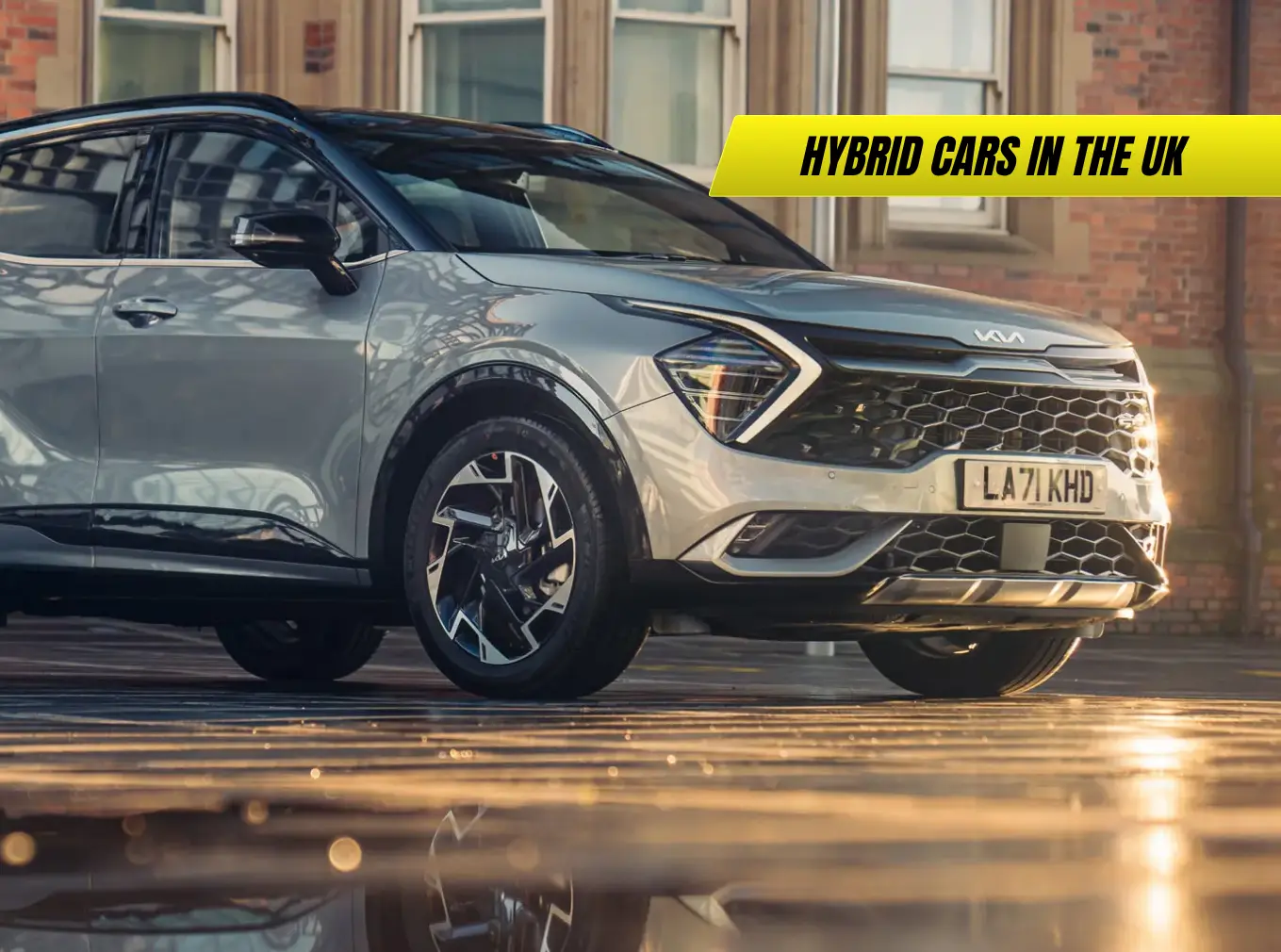
Hybrid cars remain the middle ground between combustion and electric technology. In 2025, with ULEZ expansion, rising fuel prices, and stricter CO₂ regulations, hybrids appeal to UK drivers seeking lower running costs without full EV limitations. This guide covers how hybrids work, their benefits and drawbacks, and which models lead the market this year.
Key Points
- Combine petrol/diesel engines with electric motors for higher efficiency.
- No charging required for self-charging hybrids; plug-in hybrids (PHEVs) offer 25–60 miles electric range.
- Qualify for lower tax bands and ULEZ exemptions.
- Ideal for urban commuters and mixed driving routes.
- Best-selling models in 2025: Toyota Yaris Hybrid, Honda Jazz e:HEV, Kia Niro Plug-in, and Ford Kuga PHEV.
How Hybrids Work
Hybrids use two power sources: an internal combustion engine (ICE) and an electric motor powered by a small battery.
They automatically switch between or combine both systems depending on speed, load, and battery charge.
Types of Hybrids
| Type | Description | Example |
|---|---|---|
| Mild Hybrid (MHEV) | Small 48V motor assists acceleration; cannot drive on electricity alone | Ford Puma, Suzuki Swift |
| Full Hybrid (HEV) | Short electric-only range; recharges via regenerative braking | Toyota Yaris, Honda Jazz |
| Plug-In Hybrid (PHEV) | Charges externally; 25–60 miles pure electric range | Kia Niro PHEV, BMW 330e |
In my experience, full hybrids suit most urban drivers, while plug-in versions benefit commuters with off-street parking.
Advantages of Hybrid Cars
- Lower running costs – Average 55–70 mpg for HEVs, 100+ mpg for PHEVs.
- Reduced CO₂ emissions – Many under 100 g/km, qualifying for cheaper road tax.
- Automatic gearboxes – Smooth acceleration and ideal for city driving.
- ULEZ compliant – All new hybrids meet Euro 6 or zero-emission capable standards.
- Regenerative braking – Converts kinetic energy into battery charge.
Drawbacks to Consider
- Higher purchase price than petrol equivalents.
- Complex servicing (dual systems increase maintenance cost).
- Limited electric range on non-plug-in models.
- Heavier weight affects handling and boot space.
- Company car tax higher than full EVs (BiK: 8–12% vs 2%).
For some drivers, a used full hybrid offers better value than an expensive PHEV driven mainly on petrol.
Running Costs vs Alternatives (2025)
| Vehicle Type | Average Fuel/Energy Cost per Mile | Road Tax | ULEZ Status |
|---|---|---|---|
| Petrol | £0.17 | £190 | Pay |
| Diesel | £0.15 | £190 | Pay |
| Full Hybrid | £0.10 | £120 | Exempt |
| Plug-in Hybrid | £0.07 | £10–£20 | Exempt |
| Electric | £0.03 (off-peak) | £0 | Exempt |
Data from SMMT 2025 and GOV.UK VED tables.
Maintenance and Reliability
Hybrids often outperform diesels for reliability because:
- Brakes last longer (regenerative braking).
- Electric motors have fewer moving parts.
- Toyota, Honda, and Lexus hybrids regularly exceed 150,000 miles with minimal degradation.
Servicing intervals remain similar to petrol cars: every 12 months or 10,000 miles.
Charging and Range for PHEVs
| Model | Electric Range (miles) | CO₂ (g/km) | Official MPG | Charge Time (3.6 kW) |
|---|---|---|---|---|
| Kia Niro PHEV | 40 | 18 | 232 | 2h 45m |
| Ford Kuga PHEV | 41 | 21 | 201 | 3h 0m |
| BMW 330e | 38 | 33 | 176 | 3h 15m |
| Hyundai Tucson PHEV | 38 | 31 | 180 | 3h 10m |
Plug-in hybrids benefit most when charged regularly at home.
Without regular charging, fuel economy drops to 40–45 mpg.
Best Hybrid Cars in the UK 2025
Toyota Yaris Hybrid
- Price: from £22,500
- MPG: 68
- CO₂: 92 g/km
- Verdict: Efficient, compact, and proven reliability. Perfect for city drivers.
Honda Jazz e:HEV
- Price: from £24,000
- MPG: 62
- CO₂: 98 g/km
- Verdict: Spacious and efficient; best-in-class safety features.
Kia Niro Plug-in Hybrid
- Price: from £32,000
- Electric Range: 40 miles
- Verdict: Excellent all-rounder with family practicality and strong economy.
Ford Kuga PHEV
- Price: from £36,000
- Electric Range: 41 miles
- Verdict: Popular SUV choice for suburban commuters.
Lexus UX 250h
- Price: from £37,000
- MPG: 54
- CO₂: 120 g/km
- Verdict: Premium hybrid refinement and top safety score.
Hybrid Incentives and Tax Benefits (2025)
- ULEZ exemption in London and most clean air zones.
- BiK tax between 8–12% (EVs at 2%).
- First-year VED discounts for CO₂ below 100 g/km.
- Congestion charge exemption for zero-emission capable hybrids (PHEVs).
You can check current Clean Air Zone rules on GOV.UK.
My Point of View
From my point of view, hybrids offer the ideal compromise in 2025.
They suit drivers not yet ready for full EV ownership but wanting low emissions and urban freedom.
For short commutes and ULEZ zones, full hybrids make perfect sense; for longer motorway trips, plug-in versions deliver flexibility with measurable savings.
FAQs
Are hybrids cheaper to run than petrol cars?
Yes, typically 30–40% cheaper in fuel costs.
Do I need to charge a hybrid?
Only plug-in hybrids require external charging.
Are hybrids ULEZ compliant?
Yes. All new hybrids meet emission standards.
How long do hybrid batteries last?
8–10 years on average; most covered by manufacturer warranty.
Can I tow with a hybrid?
Yes, though towing limits are lower than diesels due to extra weight.
Hybrid cars remain the logical choice for UK drivers in transition.
In my experience, they blend petrol dependability with electric efficiency, offering flexibility, savings, and ULEZ compliance — the perfect balance for Britain’s evolving roads in 2025.





