
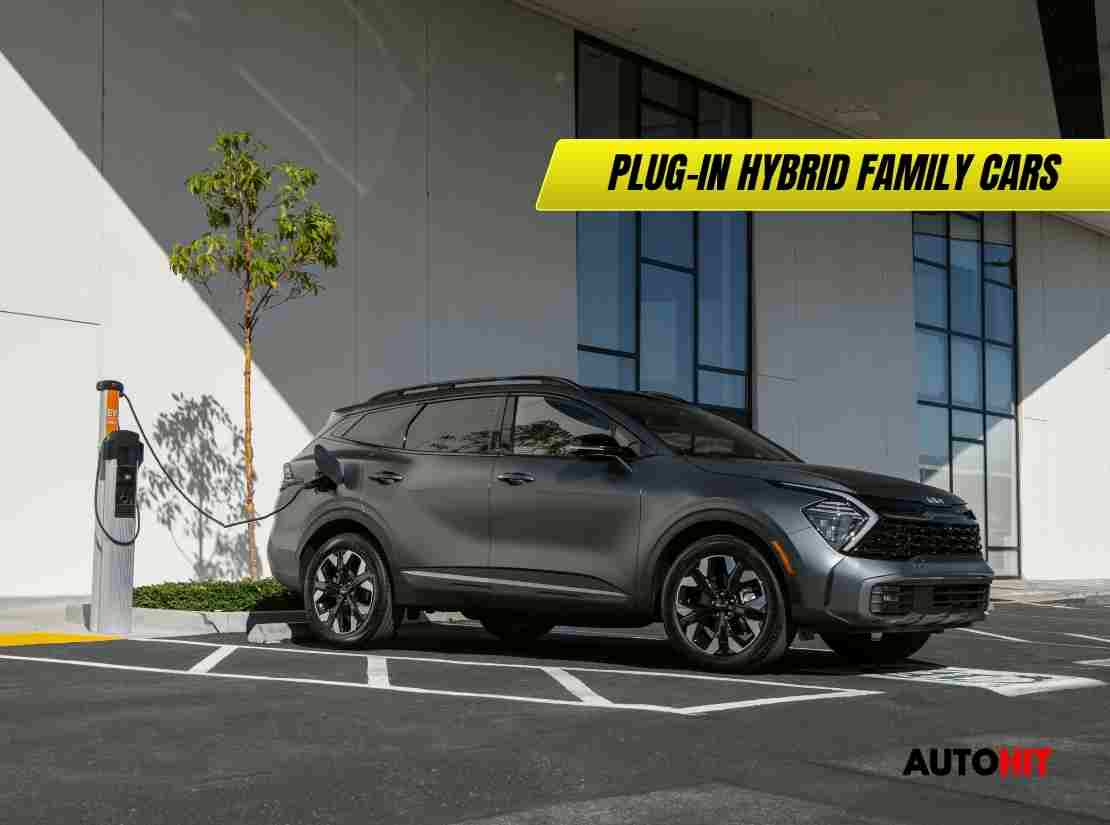
Our comprehensive guide to the best plug-in hybrid family cars in 2025, covering company car tax benefits, real-world performance, and which PHEVs deliver the best value for UK families.
Plug-in hybrid family cars have never been more relevant for UK buyers. According to our analysis at AutoHit, 2025 represents a sweet spot for PHEV ownership, with impressive electric ranges, attractive company car tax rates, and a mature technology that actually works in real-world conditions. But with new emissions testing threatening to increase some PHEVs’ tax liability and pure electric cars gaining ground, choosing the right model has never been more critical.
The appeal is obvious: combine the efficiency of electric driving for daily commutes with the long-range flexibility of a petrol engine for family holidays. For company car drivers especially, the tax advantages remain compelling despite recent increases. But we’ve tested enough PHEVs to know that the reality often differs dramatically from the marketing promises.
Having extensively evaluated the current PHEV landscape, we can say with confidence that 2025 offers some genuinely excellent family-focused plug-in hybrids. However, success depends entirely on choosing models that match your actual driving patterns rather than aspirational usage scenarios. The wrong PHEV can prove more expensive and less efficient than a conventional hybrid or even a modern petrol car.
From a UK perspective, the combination of improving charging infrastructure, favourable BiK rates for low-emission models, and increasingly sophisticated hybrid systems creates compelling reasons to consider a plug-in hybrid family car – if you choose wisely.
Key Highlights: • Tax Advantage Window: 2025 BiK rates remain favourable for PHEVs with good electric range, but changes are coming from 2026 onwards • Real-World Range: The best PHEVs now offer 60-80+ miles of electric driving, covering most daily UK commutes without using petrol • Family Practicality: Leading models successfully integrate PHEV systems without compromising boot space or passenger accommodation • Charging Infrastructure: UK rapid charging network improvements make longer electric-only journeys increasingly viable • Value Proposition: Smart PHEV choices can deliver genuine savings over conventional cars, particularly for company car drivers • Future-Proofing: Select models offer pathways to EV ownership while maintaining petrol backup during the transition period
Understanding the PHEV Advantage in 2025
The fundamental appeal of plug-in hybrid family cars lies in their flexibility. Unlike pure electric vehicles, PHEVs eliminate range anxiety while still offering substantial electric-only driving capability. For UK families, this translates into practical benefits that pure EVs struggle to match: no charging delays during long journeys, the ability to visit areas with limited charging infrastructure, and reduced electricity costs compared to larger EV battery packs.
The technology has matured significantly. Early PHEVs offered token electric ranges of 15-25 miles that proved insufficient for real-world usage. Today’s leading models provide 60-80+ miles of electric driving – enough to cover the average UK daily drive distance of 37 miles with margin to spare. This transforms the ownership proposition from occasional electric driving to predominantly electric operation with petrol backup.
Battery capacity improvements drive these extended ranges. While early PHEVs made do with 10-15kWh battery packs, current models feature 20-25kWh units that approach entry-level EV specifications. Combined with more efficient electric motors and improved energy management systems, this creates genuine electric car experiences for daily driving.
The charging infrastructure equation has also improved dramatically. With over 50,000 public charging points now available across the UK, topping up a PHEV’s smaller battery has become increasingly convenient. Many models support DC rapid charging at speeds up to 50kW, enabling 20-80% charges in 25-30 minutes – quick enough for shopping trips or meal breaks.
However, the key to PHEV success remains home charging capability. Families with driveways or garages can easily install 7kW home chargers that fully replenish typical PHEV batteries in 3-4 hours. This overnight charging enables pure electric commuting while maintaining petrol flexibility for longer journeys.
Company Car Tax: The PHEV Sweet Spot
For company car drivers, plug-in hybrids offer compelling tax advantages that make them attractive alternatives to both conventional and fully electric vehicles. The BiK tax system rewards low emissions and electric capability, creating substantial savings for PHEV drivers who maintain their batteries charged.
Current BiK rates for the best PHEVs range from 5-8%, compared to 25-37% for conventional petrol and diesel cars. A typical family PHEV like the BMW 330e attracts just 6% BiK tax, while an equivalent 320i petrol model faces 29% taxation. For higher-rate taxpayers, this difference can save £4,000+ annually compared to conventional alternatives.
The 2025 landscape includes some important changes. BiK rates for all electrified vehicles increased by 1% from April 2025, and this pattern continues through 2028. However, PHEVs with good electric ranges maintain significant advantages over conventional cars. Electric vehicles remain at just 3% BiK rate, but their higher purchase prices and range limitations may not suit all company car users.
More significantly, new emissions testing procedures introduced in 2025 affect some PHEVs’ official CO2 figures. The extended test distance from 497 to 1,367 miles better reflects real-world usage patterns, but increases official emissions for models with limited electric ranges. This particularly impacts luxury PHEVs that previously offered very low BiK rates despite modest electric capability.
Smart company car choices focus on PHEVs with substantial electric ranges that maintain low BiK rates under the new testing regime. Models like the Skoda Superb iV, with 82 miles of electric range, continue offering attractive taxation while providing genuine family practicality.
The calculation becomes even more attractive when considering salary sacrifice schemes. Many employers offer PHEVs through salary sacrifice, reducing both income tax and National Insurance contributions. Combined with low BiK rates, this creates compelling total cost packages that often undercut private purchase costs significantly.
Top PHEV Family Cars: Our 2025 Recommendations
Premium Family Choice: BMW 330e
The BMW 330e represents the gold standard for premium PHEV family cars. Recent updates increased electric range to 62 miles – sufficient for most UK commutes without using petrol. The integration between electric motor and 2.0-litre turbo petrol engine is seamless, providing smooth performance whether running electrically or in hybrid mode.
Interior quality matches BMW’s high standards, with excellent build quality and intuitive technology. The rear-wheel-drive chassis delivers engaging driving dynamics that differentiate it from front-wheel-drive rivals. At 6% BiK tax, it offers significant savings over equivalent petrol models while maintaining the premium appeal that matters to many company car drivers.
Boot space suffers slightly compared to non-hybrid 3 Series models, dropping to 375 litres, but remains adequate for family use. The 330e Touring estate variant provides additional cargo capacity for families requiring maximum practicality.
Best Value: MG HS PHEV
For families prioritising value, the MG HS PHEV delivers impressive capability at competitive prices. Starting around £35,000, it significantly undercuts premium European rivals while offering comparable electric range and family accommodation.
The 75-mile electric range leads the affordable PHEV segment, enabling substantial electric-only driving for most families. While build quality and driving dynamics trail premium alternatives, the HS provides smooth, comfortable transportation with generous equipment levels even in base trim.
The seven-year warranty addresses concerns about MG’s reliability record, while the spacious interior and large boot make it genuinely practical for family use. For buyers seeking PHEV capability without premium pricing, the HS represents excellent value.
Ultimate Practicality: Skoda Superb iV
The Skoda Superb iV combines exceptional practicality with impressive PHEV capability. The 82-mile electric range leads the family car segment, while the enormous boot and limousine-like rear legroom provide unmatched space efficiency.
Build quality reflects Skoda’s Volkswagen Group heritage, with solid construction and logical interior design. The driving experience prioritises comfort over excitement, making it ideal for family duties and long-distance touring. Crucially, the PHEV system doesn’t significantly compromise the Superb’s renowned practicality.
At around £40,000, it positions between premium and value alternatives while offering arguably the best combination of space, efficiency, and capability in the family PHEV segment.
Luxury Option: Mercedes-Benz GLC 300e
For families wanting luxury SUV appeal with PHEV efficiency, the Mercedes GLC 300e combines impressive electric range with premium refinement. The air suspension system manages the additional battery weight effectively, providing comfortable ride quality across varied road surfaces.
Interior quality showcases Mercedes’ latest infotainment systems and premium materials. The elevated driving position and substantial road presence appeal to buyers seeking SUV characteristics rather than traditional saloon proportions.
Electric range approaches 70 miles in optimal conditions, while the 2.0-litre turbo petrol engine provides strong performance when required. At around £68,000, it commands premium pricing but delivers correspondingly sophisticated experiences.
Best All-Rounder: Kia Sportage PHEV
The Kia Sportage PHEV successfully balances family practicality, efficiency, and value in an attractive package. The 43-mile electric range suits daily driving, while the practical SUV body style appeals to families seeking elevated driving positions and flexible cargo space.
Kia’s seven-year warranty provides exceptional peace of mind, while the interior combines modern technology with straightforward operation. Build quality is impressive for the price point, and the driving experience offers sufficient refinement for family use.
The Sportage represents sensible compromise for families wanting PHEV benefits without extreme pricing or complexity. It delivers reliable, efficient family transport with the flexibility that makes PHEVs attractive.
Real-World Ownership: What to Expect
Living with a plug-in hybrid family car requires understanding both its capabilities and limitations. The most successful PHEV families establish charging routines that maximise electric driving while accepting that longer journeys will involve petrol engine operation.
Daily driving typically occurs in electric mode, providing silent, smooth operation ideal for urban and suburban use. School runs, shopping trips, and commutes under 60 miles can often complete without starting the petrol engine. This creates genuine electric car experiences while maintaining the security of petrol backup.
Longer journeys reveal the PHEV’s flexibility advantages. Unlike pure electric cars requiring charging stops, PHEVs simply switch to hybrid mode when batteries deplete. This seamless transition enables spontaneous longer journeys and eliminates charging anxiety during family holidays or visiting relatives in remote areas.
However, fuel economy during extended petrol engine operation often disappoints compared to conventional hybrids. Carrying depleted batteries adds weight without benefit, reducing efficiency compared to lighter hybrid alternatives. This highlights the importance of regular charging for optimal PHEV economics.
Charging infrastructure continues expanding rapidly, making opportunity charging increasingly viable. Many families develop habits of topping up during shopping trips or leisure activities, extending electric driving even during longer journeys. The smaller PHEV batteries charge quickly enough to make this practical.
Maintenance requirements generally mirror conventional cars, with electric systems proving reliable in most cases. Battery degradation concerns appear minimal based on early high-mileage examples, though long-term data remains limited. Most manufacturers provide 8-year battery warranties that address degradation concerns.
The 2025 PHEV Market Landscape
The plug-in hybrid market continues evolving rapidly, with manufacturers improving electric ranges and efficiency while expanding model availability. European regulations requiring lower fleet emissions drive continued PHEV development, though the long-term outlook faces uncertainty as pure electric alternatives improve.
Current models benefit from economies of scale that reduce pricing compared to early PHEVs. Battery costs continue declining, enabling longer electric ranges without proportional price increases. This improves the value proposition for families considering PHEV ownership.
However, the regulatory landscape is shifting. The 2035 ban on new hybrid sales creates a finite window for PHEV technology, while improving EV infrastructure and declining battery costs strengthen pure electric alternatives. This doesn’t diminish current PHEV appeal but suggests families should consider their long-term transportation needs.
Company car tax advantages continue through the current parliament but may face pressure as EV adoption increases. The gradual BiK rate increases through 2028 reflect government policy encouraging electric vehicle adoption while maintaining PHEV attractiveness during the transition period.
For 2025, the PHEV sweet spot appears optimal. Electric ranges are sufficient for daily driving, charging infrastructure is adequate, and tax advantages remain attractive. Future years may see this balance shift toward pure electric alternatives as technology and infrastructure continue improving.
Choosing the Right PHEV for Your Family
Successful PHEV selection requires honest assessment of driving patterns, charging access, and family requirements. The technology works best for families with predictable daily routines that fit within electric range capabilities, combined with occasional longer journeys that benefit from petrol flexibility.
Home charging access is crucial for optimal PHEV economics. Families relying solely on public charging often find the economics less compelling than pure electric or conventional hybrid alternatives. The ability to start each day with a full battery transforms the ownership experience.
Consider real-world electric range rather than official figures. Cold weather, heating use, and driving style significantly impact electric driving distance. Conservative estimates suggest planning for 70-80% of official electric range during winter conditions in typical UK driving.
Family space requirements vary dramatically between models. Some PHEVs maintain full practicality compared to conventional variants, while others sacrifice boot space or passenger accommodation for battery packaging. Test actual family scenarios rather than relying on specification sheets.
Total cost of ownership calculations should include charging costs, fuel savings, tax advantages, and depreciation patterns. PHEVs often command premium purchase prices that require several years of efficient operation to recover through running cost savings.
Frequently Asked Questions
How much can I actually save with a plug-in hybrid family car?
Savings depend heavily on your driving patterns and charging behaviour. Company car drivers typically save £2,000-4,000 annually through reduced BiK tax compared to equivalent petrol models. Private buyers can save £800-1,500 yearly on fuel costs if they charge regularly and drive predominantly electric. However, higher purchase prices mean total savings require 3-4 years to materialise fully. The key is maintaining regular charging habits to maximise electric driving.
What happens if I forget to charge my PHEV regularly?
A depleted PHEV operates like a conventional hybrid, but often with worse fuel economy due to carrying dead battery weight. Most models achieve 35-45mpg when running primarily on petrol, compared to 50-60mpg for dedicated hybrid alternatives. While the car remains fully functional, you’ll lose the main economic and environmental benefits. Establishing charging routines is crucial for optimal PHEV ownership.
Are plug-in hybrids reliable and what about battery replacement costs?
Modern PHEVs have proven generally reliable, with electric systems requiring minimal maintenance. Battery degradation appears modest in real-world use, with most retaining 85-90% capacity after 100,000 miles. Manufacturer warranties typically cover battery performance for 8 years/100,000 miles. Replacement costs remain high (£8,000-15,000), but failures are rare within warranty periods. Overall reliability matches or exceeds conventional cars.
How do BiK tax rates work for plug-in hybrids?
BiK rates depend on CO2 emissions and electric range. Most family PHEVs with good electric capability attract 5-8% BiK rates, compared to 25-37% for conventional cars. However, new emissions testing from 2025 may increase some models’ official CO2 figures, potentially raising BiK rates. Electric vehicles remain at just 3% BiK, but higher purchase prices may offset tax advantages. Check specific model BiK rates as they vary significantly.
Should I buy a PHEV now or wait for better electric cars?
For families needing immediate transport solutions, today’s PHEVs offer compelling capabilities with established charging infrastructure. If you can charge at home and your daily driving suits electric range, PHEVs provide practical benefits without EV compromises. However, if you’re comfortable with EV limitations and have adequate charging access, pure electric alternatives may prove more future-proof. Consider your specific requirements rather than general market trends.
What real-world electric range should I expect from a family PHEV?
Expect 60-80% of official electric range in typical UK conditions. Cold weather, heating use, and driving style significantly impact range. A PHEV claiming 70 miles might deliver 45-55 miles in winter motorway driving, but could exceed official figures in gentle summer driving. Plan charging around conservative estimates rather than optimistic official figures to avoid disappointment.
Do I need a special home charging point for a plug-in hybrid?
While PHEVs can charge from standard 13-amp sockets, dedicated home chargers are highly recommended. A 7kW home charger reduces charging time from 8-10 hours to 3-4 hours for typical PHEV batteries. Government grants can reduce installation costs to £500-800. The convenience and faster charging make home charging points worthwhile investments for regular PHEV users.
Our Verdict: The Right Choice at the Right Time
Plug-in hybrid family cars represent a mature technology hitting its stride just as pure electric alternatives gain momentum. According to our analysis at AutoHit, 2025 offers an optimal window for PHEV ownership, combining genuine electric capability with proven reliability and attractive taxation.
The best current PHEVs successfully deliver on their fundamental promise: electric driving for daily use with petrol flexibility for longer journeys. Models like the BMW 330e, Skoda Superb iV, and MG HS PHEV offer compelling combinations of electric range, family practicality, and economic advantages that pure electric cars struggle to match for many families.
However, success requires honest assessment of driving patterns and charging capabilities. PHEVs work brilliantly for families with predictable daily routines, home charging access, and occasional longer journey requirements. They’re less suitable for buyers who can’t charge regularly or those whose driving patterns favour either very short trips (where conventional hybrids excel) or predominantly long-distance use (where modern petrol cars prove more efficient).
The company car tax advantages remain compelling despite recent increases, creating genuine savings for employed drivers choosing appropriate models. Private buyers benefit from improved technology and competitive pricing, though the economic case requires several years to fully materialise.
Looking forward, the PHEV window appears finite as pure electric alternatives improve and charging infrastructure expands. However, for families seeking practical electrification without EV compromises, 2025 represents an excellent time to embrace plug-in hybrid technology.
Bottom Line: The best plug-in hybrid family cars now offer genuine electric car experiences for daily driving while maintaining the flexibility that makes long journeys stress-free. For the right buyers with appropriate usage patterns, they represent the sweet spot between conventional and fully electric alternatives.





