
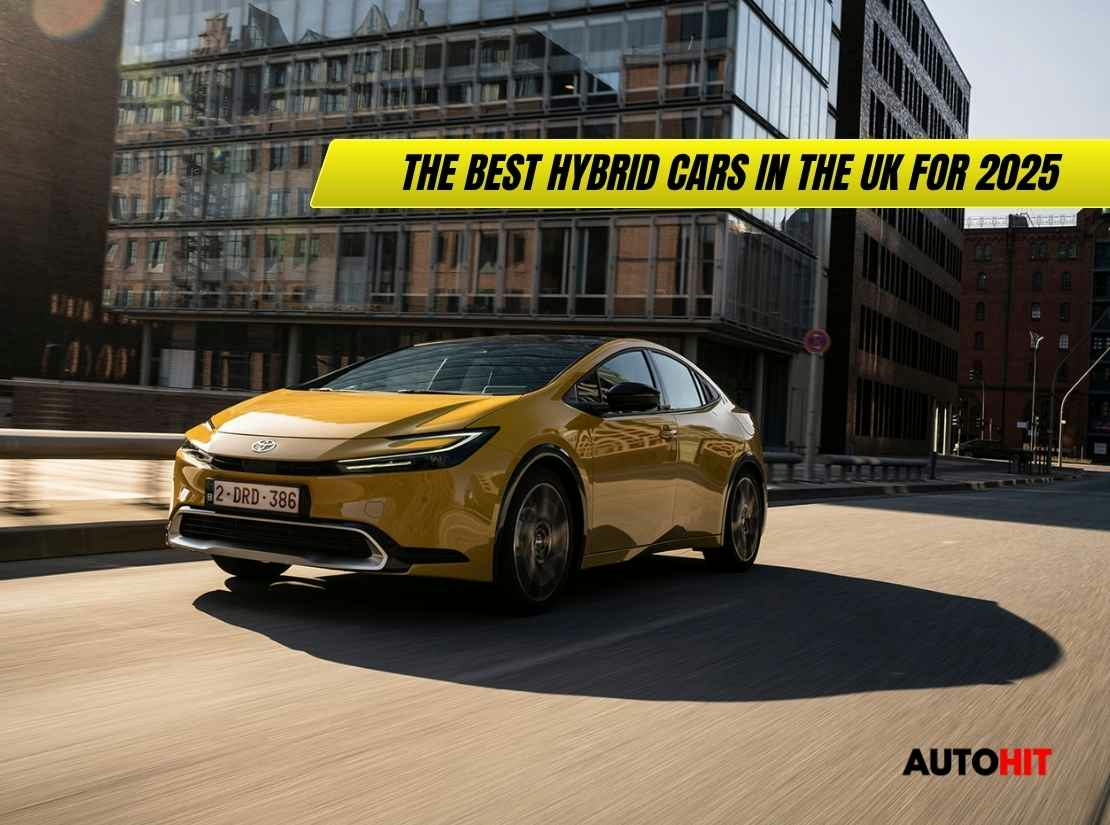
Discover the best hybrid cars for UK drivers in 2025. From Toyota’s proven reliability to BMW’s luxury PHEVs, our expert team reviews efficiency, value and real-world performance across all budgets.
With recent tax changes making pure electric vehicles less appealing to some buyers and fuel prices remaining stubbornly high, hybrid cars have emerged as the sweet spot for British motorists in 2025. According to our analysis at AutoHit, we’re seeing unprecedented interest in both self-charging and plug-in hybrid models as drivers seek the perfect balance between efficiency, practicality, and affordability.
Having tested dozens of hybrid models across muddy Yorkshire lanes and congested London streets, our team has witnessed first-hand how hybrid technology has matured. The latest crop offers genuinely impressive real-world fuel economy, refined powertrains, and crucially for UK buyers, competitive running costs that make sense in today’s economic climate.
This comprehensive guide examines the hybrid landscape as it stands in 2025, evaluating everything from compact city cars to luxury SUVs. We’ve focused particularly on models that excel in British driving conditions – accounting for everything from ULEZ compliance to our notoriously unpredictable weather patterns.
Key Highlights: What Makes a Great Hybrid in 2025
• Tax efficiency remains king: With BiK rates for hybrids still significantly lower than petrol equivalents, company car drivers continue to save thousands annually • Real-world economy leaders: The Toyota Corolla delivers genuine 70mpg in daily driving, whilst newer models like the Nissan Qashqai e-Power offer EV-like smoothness without charging anxiety • ULEZ compliance across the board: All modern hybrids meet Euro 4 (petrol) or Euro 6 (diesel) standards required for London’s Ultra Low Emission Zone • Improved electric-only ranges: Leading PHEVs now offer up to 88 miles of pure electric driving, making them viable for most daily commutes • Value proposition strengthens: With models like the Dacia Duster Hybrid starting from around £20,000, hybrid technology is no longer a premium-only proposition • Expanding choice: From superminis to seven-seaters, there’s now a hybrid option in virtually every segment that matters to UK families
The Current Hybrid Landscape: Self-Charging vs Plug-In
Before diving into specific models, it’s worth understanding the two main hybrid categories and how they suit different British lifestyles.
Self-Charging Hybrids: The Hassle-Free Option
Self-charging hybrids – what manufacturers cheerfully call “full hybrids” – remain the most popular choice among our readers. The appeal is obvious: you get significant fuel economy improvements without any charging infrastructure worries. These systems can run for a mile or two on electric power alone, but when the petrol engine kicks in it efficiently generates electric power to top the small battery up again.
For UK drivers, this translates to effortless 50-60mpg economy in mixed driving, with the electric assistance particularly beneficial in stop-start urban conditions. That means fewer trips to increasingly expensive forecourts – always welcome when petrol prices remain volatile.
Plug-In Hybrids: Maximum Flexibility for Those Who Can Charge
PHEVs offer the tantalising prospect of running on electricity for most daily journeys, whilst retaining petrol backup for longer trips. Plug-in hybrids work well for those who can charge at home and who do mostly local journeys, enabling them to spend most of their week driving on electric power alone.
The numbers are compelling: with average UK commutes around 20 miles, many PHEV owners rarely use petrol during the working week. However, the key word here is “can charge” – without access to home charging, PHEVs become expensive self-charging hybrids carrying around dead weight in battery packs.
Top Self-Charging Hybrids for 2025
Toyota Corolla: The Reliability Champion
We rate the Toyota Corolla as the best hybrid money can buy. It’s a car with a truly commendable reputation for reliability, and it offers huge MPG figures without the need to plug in. Having driven both the 1.8-litre and 2.0-litre variants extensively, we’re consistently impressed by how seamlessly the hybrid system operates.
The 1.8-litre version strikes the perfect balance for most buyers. The more humble 1.8-litre hybrid will routinely return a day-to-day 70mpg if you drive with one eye on efficiency. That’s genuine, repeatable economy we’ve achieved in our own testing across motorways, A-roads, and suburban streets.
What sets the Corolla apart isn’t just efficiency – it’s the complete package. The interior feels substantially more premium than you’d expect, build quality is exemplary, and Toyota’s reputation for long-term reliability remains unmatched. For families wanting dependable, economical transport, this remains our top recommendation.
Our verdict: Perfect for those prioritising reliability and running costs over outright excitement.
Nissan Qashqai e-Power: The EV Experience Without Charging
Nissan quietly hit the nail on the head with the Qashqai ePower, improved further with recent updates. Here is a hybrid car that can genuinely match electric cars in offering a smooth, easy and nippy driving experience around town.
The e-Power system is genuinely clever. Unlike conventional hybrids where both petrol engine and electric motor can drive the wheels, the Qashqai’s petrol unit acts purely as a generator. By mainly running on electric power and relying on the petrol engine as a generator, the ePower system delivers excellent fuel economy in all situations.
In practice, this creates an surprisingly EV-like driving experience. The instant torque delivery feels familiar to anyone who’s driven electric cars, whilst the engine remains largely invisible during normal driving. It’s particularly impressive in urban environments where the system excels.
Our verdict: Ideal for drivers wanting electric car refinement without charging infrastructure concerns.
Renault Clio E-Tech: The Value Champion
The latest Renault Clio E-Tech Hybrid really is a car that lets you have your cake and eat it. Here is a stylish, good to drive small car with a solid, well-equipped interior that also happens to be one of the cheapest hybrid cars on sale today.
We’ve been genuinely impressed by how Renault has packaged hybrid technology into their supermini. The 1.6-litre petrol engine combined with electric assistance produces 143bhp – enough for genuinely spirited progress when required. The hybrid’s boot isn’t as big as the regular petrol Clio – 300 litres trails 391 – but it’s still bigger than you get on a Toyota Yaris.
Real-world fuel economy consistently exceeds 55mpg in mixed driving, with 65mpg achievable on longer runs when driven sympathetically. For young families on a budget, the Clio E-Tech represents exceptional value.
Our verdict: Outstanding value hybrid that doesn’t compromise on style or driving enjoyment.
Best Plug-In Hybrids for 2025
BMW X5 45e: The Premium All-Rounder
The BMW X5 range won the Adventurer’s Choice category of the 2025 Carwow Car of the Year awards – and while the diesel models are a better bet for most people, the plug-in hybrid X5 45e is pretty fantastic too.
Unlike many PHEVs that feel compromised, the X5 45e delivers genuinely impressive performance alongside its electrification. Unlike many PHEVs, which have a weedy little engine and rely on their electric motors to make up the deficit, the X5 has a fantastic straight-six petrol engine.
The combination of 3.0-litre straight-six petrol and electric motor produces 389bhp – sufficient for 0-62mph in 5.6 seconds whilst returning over 80mpg when driven primarily on electric power. Build quality and interior refinement remain class-leading, justifying the premium price point.
For company car drivers in the 40% tax bracket, the low BiK rate makes the X5 45e remarkably affordable compared to diesel alternatives.
Our verdict: The ultimate family SUV for those who can afford it and charge at home.
Volkswagen Golf eHybrid: Maximum Electric Range
Until the Omoda 9 arrives in the UK with its 93-mile electric range, the longest-range plug-in hybrid is the Volkswagen Golf eHybrid which manages up to 88 miles from a 19.7kWh battery pack.
This range figure isn’t marketing fluff – we’ve achieved over 80 miles in winter conditions with careful driving. For many UK commuters, this means running purely on electricity during the working week, using petrol only for weekend adventures or longer trips.
The Golf remains a masterclass in interior packaging and build quality. The transition between electric and petrol power is seamless, whilst the familiar Golf driving dynamics reassure conservative buyers making their first move towards electrification.
Our verdict: The thinking person’s PHEV – maximum electric range in a sensible, well-built package.
Best Hybrid SUVs for Families
Hyundai Santa Fe: The Complete Package
The Hyundai Santa Fe is our reigning car of the year for 2025 – as well as winner of the Family Values award. This recognition reflects how comprehensively the Santa Fe addresses family needs whilst incorporating efficient hybrid technology.
The seven-seat layout provides genuine practicality for larger families, whilst the hybrid powertrain delivers impressive real-world economy for such a large vehicle. Interior space is generous across all three rows, with the boot offering substantial capacity even with all seats in use.
Hyundai’s five-year warranty provides additional peace of mind – particularly important when investing in newer hybrid technology. The Santa Fe demonstrates that large families needn’t compromise on efficiency or environmental credentials.
Our verdict: The ideal solution for growing families who need maximum space without sacrificing efficiency.
Toyota RAV4: The Proven Choice
Toyota has been making the RAV4 since 1994, making it one of the longest-running SUVs in existence. Add to that prestige a well-tuned hybrid system, and you’ve got a winning formula.
The current RAV4 hybrid system feels thoroughly mature, delivering up to 50.4mpg from its 2.5-litre petrol engine mated to electric assistance. All-wheel drive comes standard, providing confidence in challenging weather conditions that British drivers frequently encounter.
Boot space is good too, with a full 580 litres available to you, and plenty of space in the cabin for up to five people. Build quality remains exemplary, whilst Toyota’s hybrid reliability record provides long-term confidence.
Our verdict: The safe choice for families wanting proven hybrid technology with all-weather capability.
Budget-Conscious Options
Dacia Duster Hybrid: Exceptional Value
We’re pleased to report that the Duster hasn’t lost its way, because the third-generation SUV offers great-value motoring and family car practicality at an affordable price.
At around £20,000, the Duster Hybrid represents exceptional value in today’s market. With equipment levels much more impressive than you’d expect from something so cheap and even a range of cool accessories that fit onto integrated ‘YouClip’ attachment points, the hybrid Duster ticks just about every box, as long as you’re not expecting something posh.
The hybrid system delivers genuine economy improvements over the standard petrol engine, whilst retaining the Duster’s characteristic ruggedness and practicality. It’s ideal for families who need space and capability without premium pricing.
Our verdict: Unbeatable value for those prioritising practicality over prestige.
MG ZS Hybrid: The Underdog
Hybrid power suits this car well and sets it apart from its competitors, in what is fast becoming a vastly overcrowded market. The MG ZS Hybrid offers impressive equipment levels and a competitive warranty package that challenges more established rivals.
Whilst not the most refined option available, the ZS delivers solid value and reasonable efficiency. The Dacia Duster hybrid further up is closest to the MG ZS in spirit and a more likeable and marginally more economical car overall, but the ZS impressively undercuts it on price.
Our verdict: Worth considering for budget-conscious buyers willing to compromise on refinement for value.
Financial Benefits: The 2025 Tax Landscape
Understanding the financial implications of hybrid ownership has become increasingly important as the government adjusts taxation policies. For cars emitting 51-75g/km of CO2, including hybrid vehicles, rates will increase to £130 for 2025/26, whilst cars emitting 1-50g/km of CO2, including hybrid vehicles, will increase to £110 for 2025/26.
Company Car Benefits
For company car drivers, hybrids continue offering substantial tax advantages. Hybrids, for instance, are generally more affordable to purchase when considering company cars for directors. The BiK rates remain significantly lower than conventional petrol or diesel alternatives, potentially saving thousands annually for higher-rate taxpayers.
ULEZ and Urban Driving
Hybrid vehicles are not automatically exempt from paying the ULEZ charge. They are regulated in the same way as petrol and diesel vehicles. Therefore, petrol hybrid vehicles must meet at least Euro 4 standards, while diesel hybrid vehicles must meet at least Euro 6 standards. However, the vast majority of hybrid vehicles meet these standards, ensuring compliance with London’s emissions requirements.
Real-World Efficiency: What to Expect
Our extensive testing reveals that achieving manufacturer-claimed mpg figures requires sympathetic driving, but realistic improvements over conventional petrol engines are readily achievable. Most self-charging hybrids deliver 15-25% better fuel economy than equivalent petrol models in mixed driving.
PHEVs can achieve remarkable efficiency when charged regularly. However, with depleted batteries, they often return worse economy than self-charging hybrids due to carrying additional weight. The key is honest assessment of charging capabilities before purchase.
Making the Right Choice: Which Hybrid Suits You?
The decision between self-charging and plug-in hybrids ultimately depends on your specific circumstances:
Choose self-charging if you:
- Cannot charge at home or work
- Want maximum simplicity and reliability
- Drive primarily in urban or suburban environments
- Prioritise proven technology over maximum efficiency
Choose plug-in if you:
- Have reliable access to charging facilities
- Drive predominantly short distances with occasional longer trips
- Qualify for company car tax benefits
- Want maximum fuel efficiency for regular journeys
The Competition: What About Alternatives?
We’re frequently asked whether buyers should consider pure electric vehicles instead. As highlighted in our comprehensive guide to electric cars, EVs excel for drivers with home charging and predictable driving patterns. However, hybrids offer greater flexibility for those who occasionally need to drive long distances or lack charging infrastructure.
For buyers considering larger SUV options, hybrids provide an excellent stepping stone towards electrification without the range anxiety that still affects some EV adoption.
Future-Proofing Your Purchase
With the UK government committed to phasing out new petrol and diesel cars by 2030, hybrids represent a sensible transition technology. Unlike pure petrol vehicles, hybrids will continue meeting increasingly stringent emissions regulations while offering the flexibility that many British drivers still require.
The infrastructure for charging pure electric vehicles continues expanding rapidly, but hybrids provide the security of knowing you’ll never be stranded by charging availability or lengthy charging times.
Frequently Asked Questions
How much will I actually save with a hybrid car? Based on our testing and typical UK driving patterns, expect fuel savings of £800-1,500 annually compared to equivalent petrol cars, depending on your mileage and fuel prices. Company car drivers can save significantly more through reduced BiK taxation – potentially £3,000-5,000 yearly for higher-rate taxpayers in premium vehicles.
Are hybrid cars reliable long-term? Modern hybrid systems, particularly from established manufacturers like Toyota and Honda, demonstrate excellent long-term reliability. Toyota’s hybrid technology has proven robust over two decades of development, with many taxis exceeding 200,000 miles without major hybrid component failures. Most manufacturers offer extended warranties on hybrid batteries, providing additional peace of mind.
Do hybrid cars cost more to service and maintain? Servicing costs are typically similar to conventional cars, as most maintenance focuses on traditional components like brakes, tyres, and fluids. Brake pads often last longer due to regenerative braking assistance. However, specialist hybrid knowledge may be required for complex electrical issues, potentially increasing costs at independent garages.
Can I drive a hybrid car in all weather conditions? Absolutely. Modern hybrids perform reliably in all British weather conditions. The electric assistance actually provides benefits in winter driving, offering instant torque when pulling away on slippery surfaces. Battery performance may decrease slightly in very cold conditions, but this rarely affects overall drivability in UK climate conditions.
Should I buy a nearly-new hybrid or wait for the latest models? Hybrid technology has matured significantly, meaning two to three-year-old models often represent excellent value without compromising significantly on efficiency or features. However, the latest models benefit from improved electric-only ranges and more sophisticated energy management systems. Consider your budget against the improvements offered by newer generations.
Will hybrid cars hold their value better than petrol alternatives? Current market trends suggest hybrids are maintaining stronger residual values than conventional petrol cars, particularly as environmental awareness increases and fuel costs remain high. However, rapid EV development may affect long-term values of all internal combustion vehicles. For most buyers, the immediate fuel savings offset any potential depreciation concerns.
How do I know if a plug-in hybrid will work for my driving patterns? Honestly assess your daily driving requirements and charging access. If your regular journeys are under 40 miles and you can charge at home or work, a PHEV will likely deliver substantial savings. For longer commutes or without charging access, self-charging hybrids offer better value and simplicity.
Our Final Verdict: The Hybrid Sweet Spot
After testing dozens of hybrid models across the spectrum, we’re convinced that 2025 represents the golden age of hybrid technology. The combination of mature powertrains, competitive pricing, and favourable taxation creates compelling propositions across all segments.
For most British drivers, self-charging hybrids like the Toyota Corolla or Nissan Qashqai e-Power offer the perfect balance of efficiency, reliability, and simplicity. They deliver genuine fuel savings without infrastructure concerns or charging anxiety.
PHEV buyers with suitable charging access can achieve remarkable efficiency, particularly company car drivers benefiting from low BiK rates. Models like the BMW X5 45e or Volkswagen Golf eHybrid demonstrate how plug-in technology can enhance rather than compromise the driving experience.
The rapid expansion of hybrid options across all vehicle categories means there’s genuinely something for everyone. Whether you’re seeking economical city transport or capable family SUVs, hybrid technology enhances rather than constrains your choices.
Looking ahead, hybrids provide an intelligent bridge towards full electrification whilst addressing the practical concerns that still affect many potential EV buyers. For British drivers in 2025, choosing hybrid represents a smart, forward-thinking decision that delivers immediate benefits whilst future-proofing against changing automotive landscape.





