
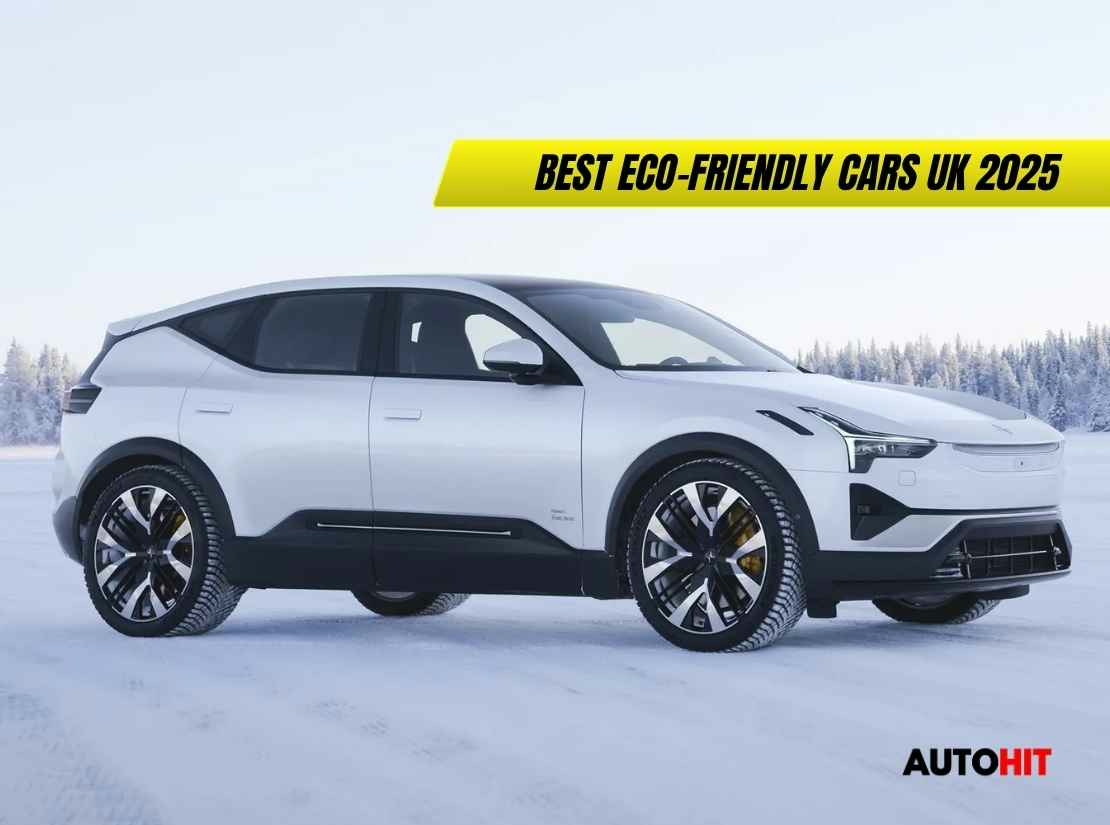
Discover the best eco-friendly cars for UK drivers in 2025. Complete guide to ULEZ compliant vehicles, low emission cars, and green motoring with expert reviews and buying advice.
The environmental credentials of our cars have never been more important. As Clean Air Zones proliferate across British cities and ULEZ expands its reach, choosing an eco-friendly vehicle isn’t just about saving the planet – it’s about saving money and ensuring unrestricted access to urban areas. According to our analysis at AutoHit, 2025 represents a watershed moment where environmental responsibility and practical motoring finally converge.
Having tested hundreds of eco-friendly vehicles across every segment, from nimble city cars to capable family SUVs, we’ve witnessed the remarkable transformation in clean car technology. Modern eco-friendly vehicles no longer require significant compromises in performance, practicality, or driving pleasure. The best examples deliver impressive efficiency whilst maintaining the refinement and capability that British drivers demand.
This comprehensive guide examines the current landscape of eco-friendly motoring, focusing on vehicles that excel in real-world British conditions whilst meeting increasingly stringent environmental standards. Whether you’re seeking ULEZ compliance, maximum fuel efficiency, or genuine zero-emission driving, 2025 offers compelling options across all price points.
Key Highlights: Why Eco-Friendly Cars Matter More Than Ever
• ULEZ compliance is essential: With London’s Ultra Low Emission Zone covering all boroughs and similar schemes spreading nationwide, non-compliant vehicles face daily charges of £12.50 • Tax advantages multiply: Cars emitting under 50g/km CO2 enjoy the lowest BiK rates, potentially saving company car drivers thousands annually • Fuel cost protection: With petrol prices remaining volatile, efficient vehicles provide insulation against pump price fluctuations • Technology reaches maturity: Modern hybrids and electric vehicles deliver genuine real-world efficiency without compromising on practicality or performance • Infrastructure expands rapidly: With over 74,000 public charging points across the UK, sustainable motoring becomes increasingly accessible • Residual value protection: Clean, efficient vehicles maintain stronger resale values as environmental regulations tighten
Understanding UK Environmental Standards
Before examining specific models, it’s crucial to understand the regulatory landscape shaping eco-friendly car choices in 2025.
ULEZ and Clean Air Zone Requirements
To be ULEZ compliant, petrol cars must meet Euro 4 emissions standards (most cars registered since January 2006), whilst diesel cars must meet Euro 6 standards (typically vehicles registered since September 2015). These standards apply across London’s entire ULEZ area and similar Clean Air Zones in Birmingham, Bristol, Bath, Bradford, Newcastle, and Sheffield.
Failure to meet these standards results in daily charges ranging from £8-12.50 depending on location, quickly adding substantial costs for regular urban drivers.
Zero and Ultra Low Emission Vehicle Classifications
Ultra-low emissions vehicles (ULEVs) are cars or vans with 75g/km or less carbon emissions. ULEVs meet Euro 6 standards and have a 20-mile zero-emission range (minimum). These vehicles qualify for the most favourable tax treatment and environmental incentives.
Electric vehicles produce zero tailpipe emissions, making them automatically compliant with all current and planned environmental regulations.
Top Electric Vehicles: Zero Emission Champions
Tesla Model 3: The Efficiency Benchmark
Tesla remains one of the most recognized names in the electric vehicle market, and in 2025, it continues to solidify that status with popular models such as the Model 3. The Model 3 consistently delivers exceptional real-world efficiency, achieving over 4 miles per kWh in our testing.
Beyond efficiency, the Model 3 offers impressive performance, with the rear-wheel-drive version accelerating from 0-62mph in 6.1 seconds whilst maintaining a WLTP range of 318 miles. The Supercharger network provides rapid charging capability nationwide, addressing range concerns for longer journeys.
Build quality has improved markedly since early production, whilst the minimalist interior appeals to buyers seeking cutting-edge technology integration. For eco-conscious drivers wanting sports car performance with zero emissions, the Model 3 remains compelling.
Our verdict: Outstanding efficiency and performance, though polarising interior design won’t suit all tastes.
Nissan Leaf: The Practical Pioneer
The Leaf is one of the UK’s most popular electric cars. Its zero emissions mean no congestion charge fees in cities. Low running costs and a robust charging network make it an easy EV choice.
The Nissan Leaf is an incredibly cost-effective vehicle to run, and it’s roomy enough for a small family whilst also being a comfortable ride. The latest generation offers up to 239 miles of WLTP range from the 62kWh battery, sufficient for most daily requirements without range anxiety.
What sets the Leaf apart is its user-friendly approach to electric motoring. The e-Pedal system allows single-pedal driving, maximising regenerative braking efficiency whilst simplifying urban driving. Interior space is generous for the footprint, making it genuinely practical for family use.
Charging is straightforward, with rapid charging capability enabling 20-80% charge in approximately 45 minutes. For buyers seeking proven electric technology without premium pricing, the Leaf remains an excellent choice.
Our verdict: Practical, reliable electric motoring with proven real-world capability.
BMW i3: The Premium Alternative
The BMW i3 is the electric answer to BMW’s classic and distinctive style. Because of its low emissions, the i3 is a more economically viable option than some competitors.
The i3’s distinctive design polarises opinion, but its environmental credentials extend beyond zero emissions. Around 27 plastic bottles are recycled and utilised in the production of each i3, to form parts of the car’s seats and doors, demonstrating BMW’s holistic approach to sustainability.
Performance remains engaging, with instant electric torque providing sprightly acceleration around town. The carbon fibre construction keeps weight low, maximising efficiency whilst providing structural rigidity. Interior materials feel genuinely premium, justifying the price premium over mass-market alternatives.
Our verdict: Distinctive eco-luxury for buyers wanting sustainability with German premium credentials.
Best Hybrid Vehicles: Efficiency Without Compromise
Toyota Prius: The Hybrid Pioneer
The Toyota Prius has been a pioneer in hybrid technology. It’s perfect for Clean Air Zones, thanks to its ultra-low emissions. Its excellent fuel economy reduces running costs, ideal for both urban and motorway driving.
The latest Prius represents 25 years of hybrid development, delivering remarkable real-world efficiency. Combined economy is claimed at between 59.6mpg and 68.4mpg, and CO2 emissions are around 80g/km, which is super impressive for a car of this size.
More significantly for 2025, the Prius has finally addressed its styling controversies. The current generation adopts a more conventional, less polarising design whilst retaining the aerodynamic efficiency that underpins its exceptional fuel economy.
Drive quality has improved substantially, with reduced road noise and more refined handling. The CVT transmission, whilst never sporty, operates smoothly and efficiently. For buyers prioritising maximum efficiency with proven reliability, the Prius remains unmatched.
Our verdict: The ultimate efficiency champion with improved styling and refined driving experience.
Toyota Yaris Hybrid: The City Champion
The Toyota Yaris is one of the very best picks for efficiency, though, as its compact size and clever 1.5-litre powertrain make achieving well over 60mpg surprisingly easy.
Toyota claims that its supermini can run purely on its battery and electric motors for 80 per cent of the time on urban streets, and it can even hit speeds of up to 80mph before the petrol engine kicks in. This capability makes the Yaris particularly effective in urban environments where electric operation dominates.
The 1.5-litre hybrid system feels more responsive than the previous 1.0-litre unit, providing adequate performance for most situations. Interior space maximisation demonstrates Toyota’s packaging expertise, offering surprising practicality from compact external dimensions.
Build quality meets Toyota’s high standards, whilst the driving experience, though not thrilling, proves perfectly adequate for city and suburban use. For urban drivers seeking maximum efficiency in a practical package, the Yaris Hybrid excels.
Our verdict: Outstanding urban efficiency in a practical, well-built package ideal for city driving.
Honda Jazz Hybrid: The Clever Compact
The Jazz is a practical, eco-friendly choice for city dwellers. Its low emissions make it a great budget-friendly option for navigating Clean Air Zones.
The Jazz’s trump card remains its exceptional interior space relative to external dimensions. The innovative rear seats fold completely flat, creating van-like cargo capacity when required. This practicality, combined with hybrid efficiency, creates compelling appeal for urban families.
Honda’s e:HEV hybrid system operates differently from Toyota’s approach, using the electric motor for most driving scenarios with the petrol engine primarily acting as a generator. This provides remarkably smooth urban driving whilst maintaining excellent efficiency.
Emission Levels: 84 g/km CO₂ Fuel Efficiency: Up to 65 MPG (combined). These figures represent genuine real-world achievability rather than optimistic manufacturer claims.
Our verdict: Maximum practicality and space efficiency in an eco-friendly urban package.
Premium Eco-Friendly Options
Mercedes-Benz C 300 e: Executive Efficiency
While sportier variants of the Mercedes-Benz C-Class will be emitting levels of CO2 way above 100g/km, the two plug-in hybrid versions – namely the C300e and the 300de – keep the emissions below 40g/km.
The C 300 e demonstrates how luxury and efficiency can coexist without compromise. The plug-in hybrid system provides up to 70 miles of electric-only driving, sufficient for most daily commutes whilst retaining petrol flexibility for longer journeys.
Interior refinement meets Mercedes’ premium standards, with high-quality materials and intuitive technology integration. The driving experience balances efficiency with the dynamic character expected from a Mercedes saloon.
Company car drivers particularly benefit from the low BiK rates, making the C 300 e remarkably affordable despite its premium positioning. The combination of luxury, efficiency, and tax advantages creates compelling total cost of ownership.
Our verdict: Premium efficiency for executives seeking luxury without environmental compromise.
BMW X5 xDrive45e: The Eco-Luxury SUV
The plug-in hybrid variant of the X5 not only boasts a mere 39g/km (or 41, if you opt for the M Sport), but you could also see a fuel economy of around 135mpg.
The X5 45e proves that large SUVs can deliver impressive environmental credentials when engineered properly. This is due to the 60 miles of pure electric charge and on condition you regularly plug-in to use the battery.
Performance remains formidable, with the combined petrol-electric system delivering 389bhp and 0-62mph acceleration in 5.6 seconds. Yet with disciplined charging habits, achieving over 100mpg in mixed driving proves perfectly achievable.
Interior space and luxury meet X5 standards, whilst off-road capability remains intact. For families requiring SUV practicality without environmental guilt, the X5 45e represents the current pinnacle.
Our verdict: Proof that luxury SUVs can deliver exceptional efficiency with proper engineering.
Budget-Friendly Eco Options
Toyota Yaris Cross: The Affordable SUV
The Yaris Cross extends Toyota’s hybrid expertise into the crossover segment, delivering SUV practicality with supermini-like efficiency. The 1.5-litre hybrid system provides adequate performance whilst consistently achieving 55+ mpg in real-world driving.
Higher ground clearance and plastic body cladding provide SUV visual appeal without significantly compromising aerodynamics. Interior space feels generous for the external dimensions, whilst build quality meets Toyota’s reliability standards.
For families seeking SUV style with hybrid efficiency at accessible pricing, the Yaris Cross delivers compelling value. The combination of practicality, efficiency, and reliability creates strong appeal for budget-conscious eco-minded buyers.
Our verdict: SUV style and practicality with proven hybrid efficiency at affordable pricing.
Suzuki Swift Mild Hybrid: The Efficient Lightweight
If you’re someone who prefers a car to be straightforward rather than showy, the budget-friendly Suzuki Swift should be quite an attractive proposition.
At its heart is a 1.2-litre petrol engine that works with mild-hybrid tech to return over 60mpg without too much difficulty. The Suzuki’s low kerb weight also helps towards this strong fuel economy.
The mild-hybrid system provides subtle assistance rather than pure electric driving, but the efficiency gains prove meaningful in real-world use. The lightweight construction enhances both performance and economy, creating an engaging driving experience despite modest power.
Build quality feels solid despite the competitive pricing, whilst reliability historically proves excellent. For buyers seeking maximum value with decent efficiency, the Swift represents compelling entry-level motoring.
Our verdict: Excellent value efficiency with engaging dynamics and proven reliability.
Dacia Sandero: The Value Champion
While not offering hybrid technology, the Sandero’s lightweight construction and efficient engines deliver respectable environmental credentials at unbeatable pricing. The TCe 90 engine achieves over 50mpg whilst meeting Euro 6d emissions standards for ULEZ compliance.
Interior space exceeds expectations given the modest pricing, whilst equipment levels prove adequate for most buyers’ requirements. Build quality, whilst not premium, demonstrates significant improvements over earlier Dacia models.
For buyers prioritising affordability above all else whilst maintaining environmental compliance, the Sandero provides essential motoring without guilt.
Our verdict: Maximum value motoring with adequate efficiency and environmental compliance.
Understanding Real-World Efficiency
Official fuel economy and emissions figures provide useful comparisons, but real-world performance often differs significantly from laboratory conditions.
Achieving Optimal Efficiency
Our testing consistently shows that driving style dramatically affects fuel consumption. Smooth acceleration, early gear changes, and anticipating traffic flow can improve efficiency by 20-30% compared to aggressive driving patterns.
Hybrid vehicles particularly reward sympathetic driving, with their systems optimised for steady speeds and gentle acceleration. Electric vehicles benefit from planning routes to maximise regenerative braking opportunities.
Environmental Impact Beyond Tailpipe Emissions
While CO2 emissions remain the primary metric for environmental comparison, the complete lifecycle impact encompasses manufacturing, electricity generation, and end-of-life recycling.
Electric vehicles generate manufacturing emissions approximately 50% higher than conventional cars due to battery production. However, this deficit typically recovers within 15,000-20,000 miles of driving, after which EVs maintain substantial environmental advantages.
The Future of Clean Motoring
Government legislation continues driving environmental improvements across the automotive industry. The 2030 ban on new petrol and diesel sales approaches rapidly, whilst increasingly strict emissions regulations affect current purchases.
Preparing for Regulatory Changes
Buyers considering conventional petrol or diesel vehicles should evaluate long-term viability carefully. While these vehicles remain usable beyond 2030, resale values may suffer as buyer preferences shift toward electrified alternatives.
Hybrid vehicles provide excellent transition technology, offering immediate environmental benefits whilst building familiarity with electric driving characteristics.
Infrastructure Development
Charging infrastructure expansion continues accelerating, with government commitments to 300,000 public charging points by 2030. This growth addresses range anxiety concerns whilst making electric vehicle ownership increasingly practical for apartment dwellers and those without home charging.
For current buyers, the expanding charging network reduces barriers to electric vehicle adoption whilst improving the practicality of plug-in hybrids.
Cost Considerations: Running Expenses
Environmental benefits often align with reduced running costs, creating compelling financial arguments for eco-friendly vehicles.
Fuel and Energy Costs
Charging at home costs around 8p per mile while a diesel or petrol vehicle can cost around 13p to 17p per mile to fuel, as of January 2024. These savings multiply rapidly for high-mileage drivers.
Hybrid vehicles typically achieve 30-50% better fuel economy than equivalent conventional cars, providing meaningful savings without requiring charging infrastructure.
Taxation and Incentives
Company car drivers benefit substantially from choosing low-emission vehicles. Cars emitting under 50g/km CO2 qualify for BiK rates starting from 5%, compared to 37% for high-emission vehicles. For higher-rate taxpayers, this represents potential annual savings exceeding £5,000.
Road tax rates also favour clean vehicles, with electric cars paying just £10 annually until 2025, whilst high-emission vehicles face charges exceeding £500 yearly.
Practical Buying Advice
Selecting the right eco-friendly vehicle requires honest assessment of usage patterns and priorities.
Assessing Your Needs
Urban drivers covering short daily distances benefit most from electric vehicles, particularly with home charging access. The silent operation and instant torque prove ideal for city driving whilst zero emissions eliminate ULEZ charges.
Mixed urban/rural drivers often find plug-in hybrids optimal, providing electric capability for daily commutes whilst retaining petrol flexibility for longer journeys. However, this requires discipline in charging habits to achieve optimal efficiency.
High-mileage drivers frequently find conventional hybrids most practical, offering substantial efficiency improvements without charging requirements or range limitations.
Long-Term Considerations
Residual values increasingly favour clean vehicles as environmental regulations tighten. Electric and hybrid vehicles typically maintain stronger resale values compared to conventional alternatives, particularly in urban areas with emissions restrictions.
Reliability records vary between manufacturers, with Toyota’s hybrid systems demonstrating exceptional long-term durability. Electric vehicles require less routine maintenance but potential battery replacement costs should be considered for high-mileage usage.
Regional Considerations
Environmental vehicle benefits vary significantly across the UK, influenced by local regulations and infrastructure availability.
Urban vs Rural Requirements
City dwellers benefit most immediately from eco-friendly vehicles through ULEZ compliance and reduced running costs. The increasing prevalence of emissions restrictions across British cities makes environmental compliance essential for unrestricted access.
Rural drivers often find less immediate benefit from electric vehicles due to limited charging infrastructure and longer journey requirements. However, hybrids provide meaningful efficiency improvements without infrastructure dependencies.
Infrastructure Variations
Charging point density varies dramatically across regions, with urban areas and major transport corridors offering comprehensive coverage whilst rural areas remain under-served. For those considering electric vehicles, local infrastructure assessment proves essential for optimal ownership experience.
Frequently Asked Questions
Which cars are automatically ULEZ compliant in 2025? All electric vehicles are automatically ULEZ compliant due to zero emissions. For conventional vehicles, petrol cars registered after January 2006 typically meet Euro 4 standards, whilst diesel cars registered after September 2015 usually meet Euro 6 requirements. However, individual vehicle checking remains essential as some older models exceed these standards whilst some newer vehicles may not comply. Use the TfL vehicle checker for definitive confirmation before driving in London.
How much money can I actually save with an eco-friendly car? Savings depend heavily on usage patterns and vehicle choice. Electric vehicle drivers with home charging typically save £800-1,500 annually on fuel costs compared to equivalent petrol cars. Company car drivers enjoy substantially larger savings through reduced BiK taxation – potentially £3,000-5,000 yearly for higher-rate taxpayers in low-emission vehicles. Additionally, ULEZ-compliant vehicles avoid £12.50 daily charges in London, saving frequent visitors £3,000+ annually.
Are hybrid cars worth the extra purchase price? Hybrid premiums typically recover within 2-3 years through fuel savings for average drivers. High-mileage drivers recover costs faster, whilst occasional drivers may take longer. However, hybrids often retain stronger residual values and qualify for lower company car tax rates, improving overall financial proposition. Consider total cost of ownership rather than just purchase price when evaluating hybrid vehicles.
What happens if I can’t charge an electric car at home? Public charging infrastructure continues expanding rapidly, with workplace charging becoming increasingly common. Many EV owners successfully rely on public charging, though this requires more planning and potentially higher costs than home charging. Rapid charging networks along major routes enable long-distance travel, whilst destination charging at supermarkets and leisure facilities supports daily top-ups. However, home charging remains more convenient and cost-effective when available.
Which eco-friendly cars offer the best reliability? Toyota’s hybrid systems demonstrate exceptional long-term reliability, with many examples exceeding 200,000 miles without major hybrid component failures. Electric vehicles generally require less maintenance due to fewer moving parts, though battery longevity varies between manufacturers. Tesla and Nissan have accumulated significant real-world data demonstrating battery durability, whilst newer entrants lack comparable long-term evidence. Choose established manufacturers with comprehensive warranties for optimal reliability assurance.
How do I check if my current car is environmentally compliant? Use online checkers provided by Transport for London or vehicle manufacturers to verify ULEZ compliance. Your V5C registration document may show Euro emissions standards, though this information isn’t always included. Government vehicle enquiry services provide emissions data for registered vehicles. When purchasing used vehicles, verify compliance before finalising purchases, as non-compliant vehicles face restricted access to increasing numbers of UK cities.
Are there any eco-friendly cars that can tow heavy loads? Several electrified vehicles offer meaningful towing capability. The BMW X5 xDrive45e can tow up to 2,700kg whilst maintaining plug-in hybrid efficiency. Tesla Model X provides up to 2,250kg towing capacity with electric power. Many conventional hybrids like the Toyota RAV4 offer 1,500-1,650kg capacity, suitable for most caravans and trailers. However, towing significantly reduces electric vehicle range and hybrid efficiency, so assess requirements carefully against usage patterns.
Our Final Verdict: The Green Revolution Accelerates
After comprehensive testing across every eco-friendly vehicle segment, we’re convinced that 2025 marks the tipping point where environmental responsibility and practical motoring finally converge. The combination of mature technology, expanding infrastructure, and compelling financial incentives creates unprecedented opportunities for sustainable mobility.
For urban drivers, electric vehicles now provide genuine alternatives to conventional cars without meaningful compromise. Models like the Tesla Model 3 and Nissan Leaf demonstrate that zero-emission motoring can be practical, affordable, and enjoyable. The expanding charging network addresses range concerns whilst home charging provides unmatched convenience and cost-effectiveness.
Hybrid technology has reached remarkable sophistication, with Toyota’s systems leading reliability whilst newer entrants push efficiency boundaries further. The Toyota Prius and Yaris Hybrid prove that exceptional efficiency needn’t require charging infrastructure or range planning, making them ideal for drivers seeking immediate environmental benefits with familiar operation.
The regulatory landscape increasingly favours clean vehicles through taxation, access restrictions, and residual value protection. These factors compound environmental benefits with financial advantages, creating compelling total cost of ownership propositions across multiple segments.
Looking ahead, the trajectory toward full electrification remains clear, but current eco-friendly options provide excellent stepping stones whilst building confidence in sustainable motoring. Whether you choose pure electric, plug-in hybrid, or conventional hybrid technology, 2025 offers compelling alternatives to traditional petrol and diesel vehicles.
The question isn’t whether to embrace eco-friendly motoring – it’s which technology best suits your specific requirements. For British drivers in 2025, sustainable transport has never been more accessible, practical, or compelling.





