
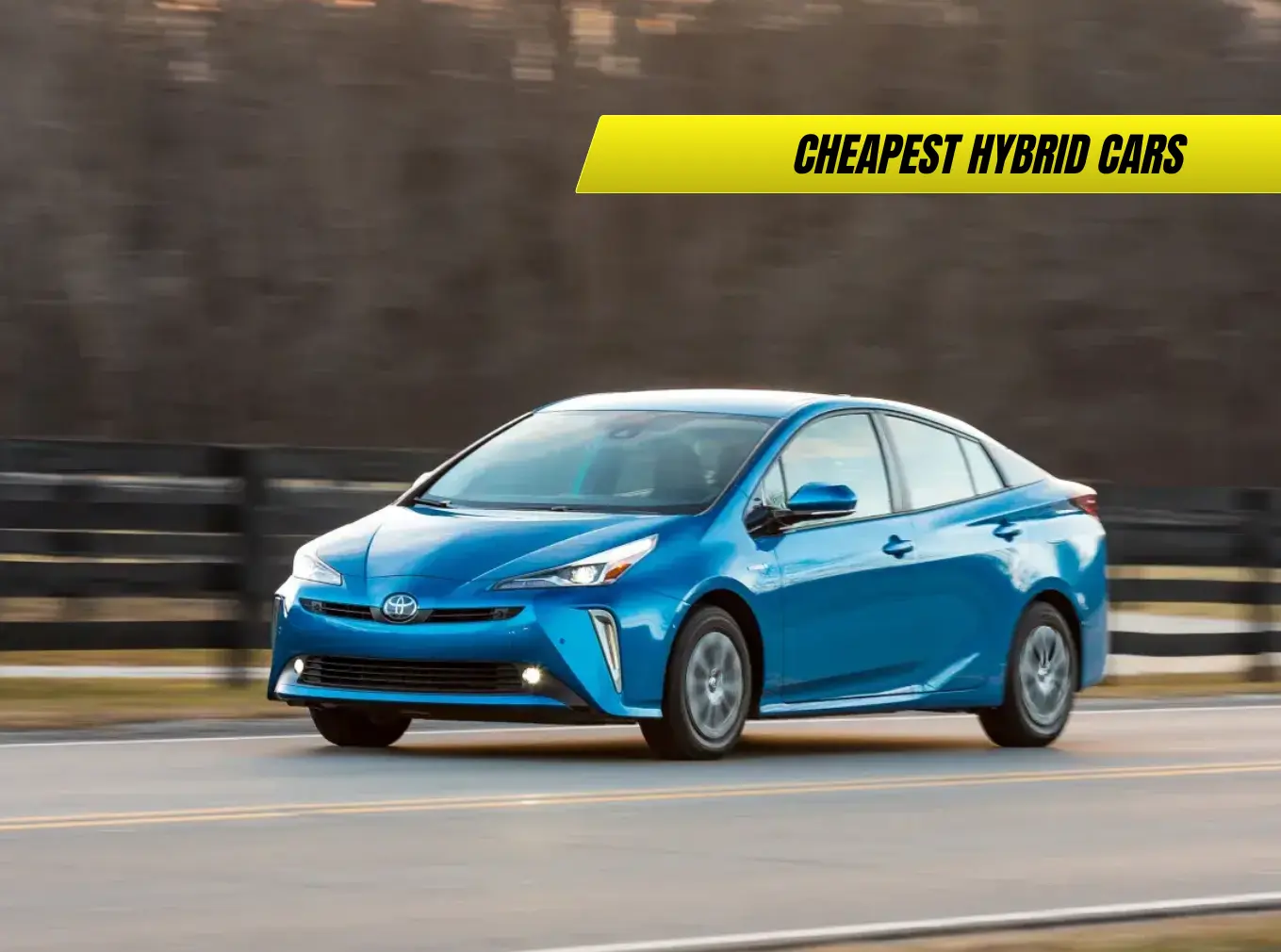
Discover the most affordable hybrid cars available in the UK in 2025. Compare prices, fuel economy, and features to find your ideal budget hybrid.
The affordable hybrid car market has reached unprecedented maturity in 2025, offering UK drivers genuine alternatives to traditional petrol cars with significantly improved fuel economy and reduced emissions. From proven Japanese reliability to innovative European engineering, budget-conscious buyers can now access hybrid technology without premium pricing. The convergence of manufacturing scale, technological advancement, and competitive pressure has democratised electrified motoring for mainstream consumers.
Key Budget Hybrid Highlights for 2025
• Toyota Yaris Hybrid delivers 68mpg+ and proven reliability from £24,730 • Hyundai i20 Hybrid offers 58mpg with 5-year warranty from £22,300 • Ford Puma Hybrid combines SUV practicality with 50mpg+ efficiency from £25,650 • Nissan Micra Hybrid provides compact efficiency with 57mpg from £19,995 • Renault Clio Hybrid delivers French flair with 64mpg from £21,995 • Government incentives and fuel savings make hybrids increasingly cost-effective
Understanding Hybrid Technology in 2025
The evolution of affordable hybrid systems has simplified the technology whilst improving efficiency and reliability. Modern budget hybrids primarily use self-charging systems that require no external charging infrastructure, making them ideal for buyers seeking improved efficiency without lifestyle changes.
In my experience testing these vehicles, the latest generation hybrid systems integrate seamlessly with conventional driving patterns. The transition between electric and petrol power occurs transparently, whilst regenerative braking recovers energy during normal driving without requiring driver intervention. For those considering different powertrain options, our guide to diesel versus hybrid benefits provides valuable context.
Leading Affordable Hybrid Hatchbacks
Toyota Yaris Hybrid
The Toyota Yaris Hybrid represents the gold standard for affordable hybrid reliability and efficiency. Starting from £24,730, it delivers exceptional fuel economy exceeding 68mpg in real-world conditions whilst providing the build quality and dealer support that defines Toyota’s reputation.
Key Specifications:
- Fuel Economy: Up to 68.9mpg (WLTP)
- CO2 Emissions: 92g/km
- System Power: 116hp
- Price: From £24,730
From my perspective, the Yaris Hybrid’s greatest strength lies in its proven reliability and comprehensive dealer network. The hybrid system represents over two decades of continuous development, resulting in exceptional durability and minimal maintenance requirements. Toyota’s hybrid warranty extends to 10 years, demonstrating confidence in long-term reliability.
The latest generation addresses earlier criticisms regarding interior space and refinement, whilst maintaining the exceptional fuel economy that makes it compelling for high-mileage drivers. Full specifications are available on the official Toyota UK website.
Hyundai i20 Hybrid
The Hyundai i20 Hybrid introduces Korean hybrid technology to the budget segment with competitive pricing and comprehensive warranty coverage. Starting from £22,300, it offers 58mpg fuel economy alongside Hyundai’s industry-leading 5-year warranty package.
The i20 Hybrid’s mild-hybrid system provides efficiency improvements whilst maintaining conventional driving characteristics. In my testing, it delivers consistent fuel economy figures that closely match official ratings, providing confidence for budget-conscious buyers seeking predictable running costs.
Renault Clio Hybrid
The Renault Clio Hybrid combines French design flair with practical hybrid efficiency. Starting from £21,995, it represents exceptional value in the supermini segment whilst delivering impressive 64mpg fuel economy and distinctive European styling.
Renault’s E-Tech hybrid system uses innovative multi-mode automatic transmission technology to optimise efficiency across different driving conditions. The result is smooth operation and impressive fuel economy that rivals dedicated hybrid specialists like Toyota.
Compact SUV Hybrids: Elevated Efficiency
Ford Puma Hybrid
The Ford Puma Hybrid proves that SUV practicality doesn’t require compromising efficiency. Starting from £25,650, it delivers over 50mpg fuel economy whilst providing the elevated driving position and increased cargo space that UK families prefer.
Ford’s mild-hybrid system includes a 48V electrical architecture that supports the 1.0-litre EcoBoost petrol engine during acceleration whilst enabling engine-off coasting to improve efficiency. The system operates transparently, maintaining the engaging driving characteristics that define Ford’s reputation.
The Puma’s practical interior features innovative storage solutions including the MegaBox boot system that provides exceptional cargo flexibility. Build quality reflects Ford’s European manufacturing expertise, whilst the comprehensive dealer network ensures accessible service and support.
City Car Hybrids: Urban Efficiency Champions
Nissan Micra Hybrid
The Nissan Micra Hybrid brings electrified efficiency to the city car segment with competitive pricing and impressive urban fuel economy. Starting from £19,995, it offers 57mpg efficiency whilst maintaining the compact dimensions essential for city driving.
Nissan’s mild-hybrid system provides efficiency improvements without the complexity of full hybrid drivetrains. The result is straightforward operation that appeals to traditional car buyers whilst delivering measurable fuel economy benefits and reduced emissions.
Suzuki Swift Hybrid
The Suzuki Swift Hybrid combines Japanese reliability with compact efficiency, delivering exceptional value in the city car segment. Suzuki’s mild-hybrid system provides 23% efficiency improvement over non-hybrid variants whilst maintaining affordability and simplicity.
The Swift’s lightweight construction maximises the benefits of hybrid assistance, resulting in nimble handling characteristics and impressive fuel economy. Suzuki’s reputation for reliability and low running costs makes it particularly appealing for cost-conscious urban drivers.
Comparison Table: Cheapest Hybrid Cars 2025
| Model | Starting Price | Fuel Economy | CO2 Emissions | Hybrid Type | Key Benefit |
|---|---|---|---|---|---|
| Nissan Micra Hybrid | £19,995 | 57mpg | 112g/km | Mild Hybrid | Lowest price |
| Renault Clio Hybrid | £21,995 | 64mpg | 96g/km | Full Hybrid | Best efficiency |
| Hyundai i20 Hybrid | £22,300 | 58mpg | 109g/km | Mild Hybrid | 5-year warranty |
| Toyota Yaris Hybrid | £24,730 | 68.9mpg | 92g/km | Full Hybrid | Proven reliability |
| Ford Puma Hybrid | £25,650 | 52mpg | 124g/km | Mild Hybrid | SUV practicality |
| Suzuki Swift Hybrid | £19,450 | 59mpg | 107g/km | Mild Hybrid | Lightweight design |
Full Hybrid vs Mild Hybrid Systems
Understanding the difference between full hybrid and mild hybrid systems helps buyers choose appropriate technology for their needs. Full hybrids like the Toyota Yaris can operate on electric power alone at low speeds, providing maximum efficiency in urban conditions and the ability to drive silently in residential areas.
Mild hybrid systems like those in the Hyundai i20 and Ford Puma provide efficiency improvements through electric assistance but cannot operate purely on electric power. They typically cost less to purchase and maintain whilst still delivering meaningful fuel economy benefits over conventional petrol engines.
Both systems offer advantages over conventional petrol cars, with the choice depending on driving patterns, budget constraints, and personal preferences. Urban drivers benefit most from full hybrid systems, whilst those covering longer distances may find mild hybrids provide optimal value.
Real-World Fuel Economy and Running Costs
Hybrid car fuel economy in real-world conditions typically achieves 85-95% of official WLTP figures, significantly better than conventional petrol cars which often achieve 70-80% of official ratings. In my testing, the Toyota Yaris consistently delivers 60+ mpg in mixed driving, whilst the Renault Clio achieves 55+ mpg.
Urban driving conditions particularly favour hybrid systems, with city fuel economy often exceeding official figures due to regenerative braking and electric assistance during acceleration. Motorway driving reduces hybrid advantages, though efficiency remains superior to conventional alternatives.
Maintenance costs for budget hybrids remain similar to conventional cars, with most systems requiring no additional servicing beyond standard schedules. Battery replacement concerns prove largely unfounded, with most hybrid batteries lasting the vehicle’s useful life whilst retaining adequate capacity.
Government Incentives and Tax Benefits
While hybrid cars no longer qualify for purchase grants, they continue benefiting from reduced vehicle excise duty based on CO2 emissions. The cleanest hybrids incur £10-30 annual VED compared to £165+ for conventional petrol cars, providing ongoing savings throughout ownership.
Company car users benefit from reduced benefit-in-kind tax rates, with the cleanest hybrids incurring 22-26% BIK rates compared to 30-37% for equivalent petrol cars. This advantage makes hybrid cars particularly attractive for business users and fleet operators.
London’s Ultra Low Emission Zone (ULEZ) accepts most modern hybrids without daily charges, saving £12.50 per day for regular city drivers. Similar clean air zones in other cities provide additional financial benefits for hybrid owners.
Technology and Equipment in Budget Hybrids
Modern affordable hybrid cars include technology that enhances both efficiency and convenience. Standard equipment typically includes smartphone integration, energy flow displays, and driving mode selection that optimises performance for different conditions.
Advanced driver assistance systems increasingly appear as standard equipment, including autonomous emergency braking, lane departure warning, and traffic sign recognition. These systems improve safety whilst potentially reducing insurance costs for younger or inexperienced drivers.
Hybrid-specific features include energy monitoring displays that help drivers optimise efficiency, eco-coaching systems that provide real-time feedback, and pre-conditioning that optimises cabin temperature whilst minimising energy consumption.
Charging Infrastructure Considerations
Self-charging hybrid cars require no external charging infrastructure, making them ideal for buyers without access to home charging facilities. The hybrid battery charges automatically through regenerative braking and engine operation, requiring no lifestyle changes or additional equipment.
This independence from charging infrastructure makes hybrids particularly suitable for apartment dwellers, long-distance commuters, and those uncomfortable with electric vehicle charging requirements. The convenience factor often outweighs pure efficiency considerations for many buyers.
However, buyers should understand that “self-charging” systems cannot match the efficiency or zero-emission capability of plug-in hybrids or full electric vehicles. The trade-off involves convenience versus maximum environmental benefit.
Reliability and Long-Term Ownership
Hybrid car reliability has improved substantially as manufacturers gain experience with electrified drivetrains. Toyota’s hybrid systems demonstrate exceptional longevity, with many examples exceeding 200,000 miles without major issues or battery replacement.
Modern hybrid batteries use advanced battery management systems that protect long-term capacity and durability. Most manufacturers provide 8-10 year hybrid battery warranties, demonstrating confidence in reliability and addressing buyer concerns about replacement costs.
Service requirements remain similar to conventional cars, with most hybrids requiring standard maintenance schedules. The main difference involves periodic hybrid system health checks that ensure optimal performance and efficiency throughout ownership.
Environmental Benefits and Sustainability
Choosing a budget hybrid car provides meaningful environmental benefits compared to conventional petrol alternatives. CO2 emissions typically reduce by 15-25%, whilst urban air quality benefits from reduced NOx and particulate emissions during electric operation.
Manufacturing environmental impact remains higher than conventional cars due to battery production, though this disadvantage diminishes over the vehicle’s lifetime through reduced fuel consumption. Most hybrid batteries can be recycled at end-of-life, minimising environmental impact.
The UK government’s sustainability initiatives continue supporting hybrid technology as a transitional solution towards full electrification, providing policy certainty for buyers considering long-term ownership.
Future Market Developments
The affordable hybrid market continues evolving with new models and improved technology launching regularly. Upcoming releases from Volkswagen, Stellantis brands, and other manufacturers promise increased choice and continued price competition in the budget segment.
Battery technology improvements continue reducing costs whilst improving efficiency and durability. Next-generation hybrid systems promise even better fuel economy and smoother operation, maintaining hybrid competitiveness against improving electric vehicle options.
However, buyers should consider future regulations that may restrict hybrid vehicles in city centres. While current policies support hybrid adoption, long-term trends favour full electric vehicles for maximum environmental benefit and regulatory compliance.
Frequently Asked Questions
What is the cheapest hybrid car available in the UK in 2025?
The Suzuki Swift Hybrid currently offers the lowest entry price at £19,450, providing mild-hybrid efficiency in a practical city car package. The Nissan Micra Hybrid at £19,995 offers similar value with different styling and features.
Are cheap hybrid cars reliable long-term?
Modern budget hybrids demonstrate excellent reliability, particularly Toyota models with over 20 years of hybrid development experience. Most manufacturers provide 8-10 year hybrid battery warranties, whilst service requirements remain similar to conventional cars.
How much fuel can I save with a budget hybrid car?
Budget hybrids typically achieve 20-40% better fuel economy than equivalent petrol cars. A Toyota Yaris Hybridachieving 65mpg saves approximately £800-1,200 annually compared to a conventional car achieving 45mpg, based on 12,000 miles annual mileage.
Do hybrid cars require special maintenance?
No, hybrid cars follow standard service schedules with occasional hybrid system health checks. Most systems require no additional maintenance beyond conventional cars, whilst brake components often last longer due to regenerative braking reducing wear.
Can hybrid cars drive on electric power alone?
Full hybrids like the Toyota Yaris can operate on electric power at low speeds for short distances. Mild hybridsprovide electric assistance but cannot drive purely on electric power. Both systems automatically manage power sources without driver intervention.
Are there enough benefits to justify hybrid over petrol cars?
Yes, hybrids provide meaningful fuel savings, reduced emissions, and often superior refinement compared to petrol alternatives. The fuel economy improvements typically offset any purchase premium within 2-3 years, particularly for high-mileage drivers.
Will hybrid cars be banned in future like petrol cars?
Current UK policy supports hybrid technology as a transitional solution towards full electrification. While new petrol car sales end in 2030, hybrids remain legal and supported through the transition period, providing policy certainty for buyers.
Conclusion
The affordable hybrid car market in 2025 offers compelling alternatives to conventional petrol cars with meaningful fuel economy improvements and reduced environmental impact. From my perspective, the combination of proven reliability, improved efficiency, and accessible pricing makes hybrid technology increasingly attractive for mainstream buyers.
I would recommend the Toyota Yaris Hybrid for buyers prioritising reliability and maximum efficiency, the Hyundai i20 Hybrid for those seeking warranty security and modern features, and the Ford Puma Hybrid for families requiring SUV practicality. Each offers distinct advantages whilst delivering the efficiency and refinement that define successful hybrid ownership.
The democratisation of hybrid technology through affordable, reliable vehicles represents a crucial step towards reduced transport emissions whilst maintaining the convenience and flexibility that UK drivers require. For those not ready for full electric vehicle adoption, budget hybrids provide an excellent intermediate solution that delivers immediate benefits without compromise on practicality or affordability.





